Step Down Transformer: A Complete Buyer Guide
Quick answer: a step down transformer lowers a higher mains voltage (220V, 230V or 240V) to a lower output (110V or 120V), so 110V appliances run safely in 220–240V countries. It is a copper-wound device that converts voltage continuously and safely — the opposite of a step up transformer, which raises it.
Key Takeaways
- A step down transformer lowers 220-240V mains to 110-120V.
- Essential in 220V countries running US/JP appliances.
- Size for start-up surge; RCD for home safety.
- Dual-direction units cover both step up and down.
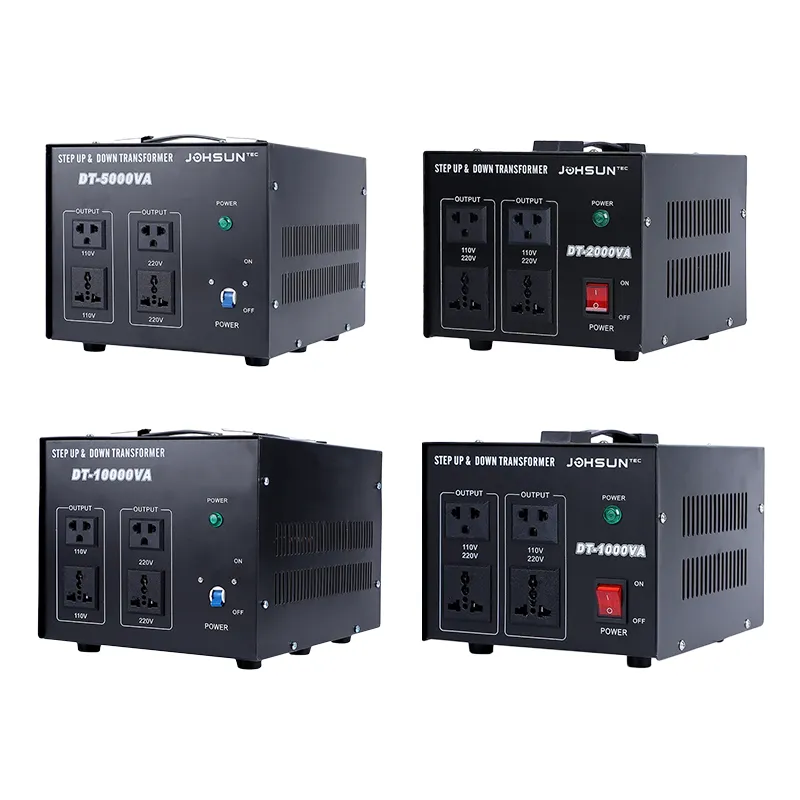
Quick Size Guide
| Load | Transformer |
| Up to 700W | 1000VA |
| Up to 1600W | 2000VA |
| Up to 4500W | 5000VA |
How a Step Down Transformer Works
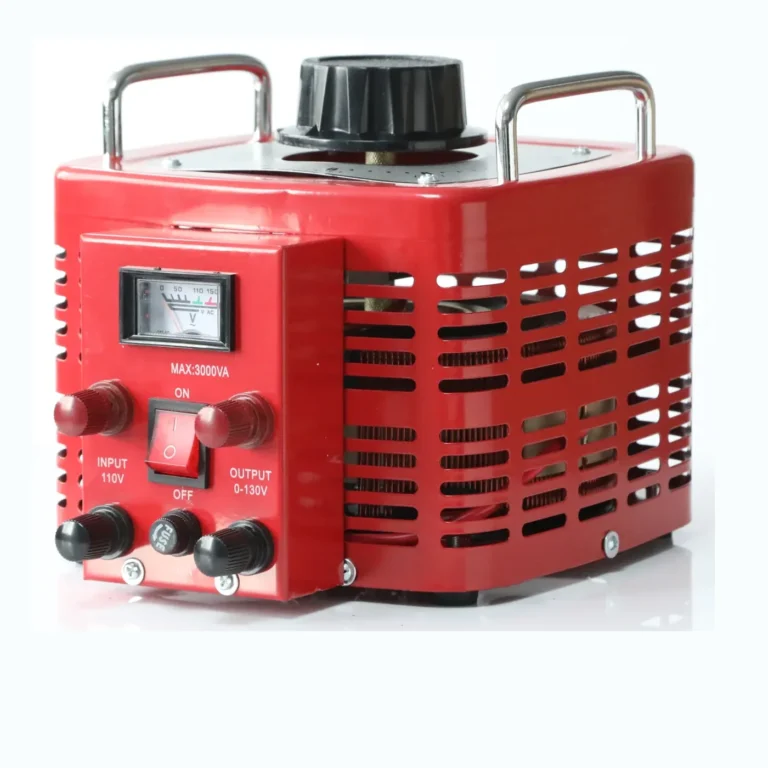
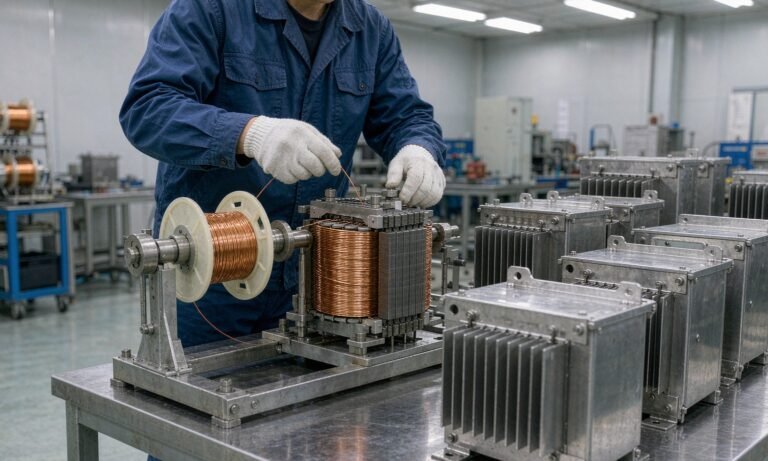
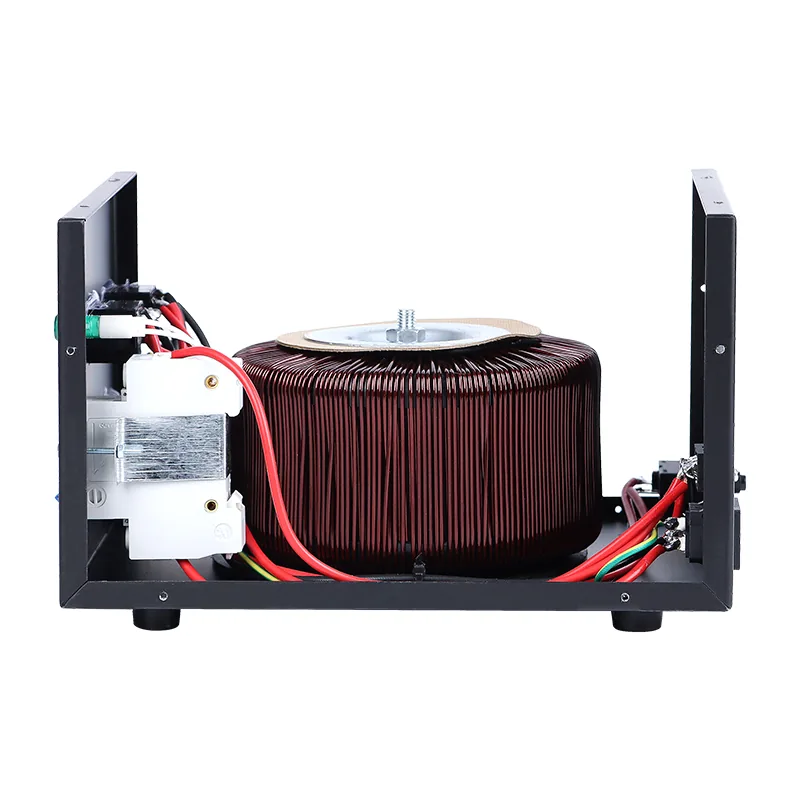
Inside is a core of silicon steel with two windings: more turns on the input side, fewer on the output. The ratio of turns sets the output voltage — feed 220V in, and the output is 110V. Because it is a magnetic device, not electronics, it handles continuous loads, motors and compressors without overheating or failing.
Who Needs a Step Down Transformer?
- People in 220–240V countries (Middle East, Africa, Asia) running US or Japanese 110V appliances
- Expats and travelers with 110V electronics
- Workshops running 110V tools and machines
- Distributors stocking for local voltage conversion needs
Step Down Transformer Size Guide
Add 20–30% to the running watts, then size up. Full guidance in our size guide:
| Appliance load | Recommended size |
| Up to 400W | 500VA |
| Up to 700W | 1000VA |
| Up to 1100W | 1500VA |
| Up to 1600W | 2000VA |
| Up to 2600W | 3000VA |
| Up to 4500W | 5000VA |
Remember: fridges, freezers, pumps and ACs spike 3-5x at start-up — size for the surge, not the label.
Step Down vs Step Up vs Dual-Direction
Not sure which you need? Here is the quick rule:
- 220V country, 110V appliance → step down
- 110V country, 220V appliance → step up
- Both situations → a step up down transformer covers both
Quality and Safety Checks
- Copper winding — cooler, quieter, longer life than aluminium.
- Built-in RCD (for home units) — cuts power on earth leakage.
- Fuse / MCB + thermal protection .
- CE / RoHS / ISO9001 certified production.
Our ST-2000 step down transformer ticks every box: copper-wound, RCD-equipped, fused, certified.
FAQ
What is the difference between a step down transformer and a converter?
A transformer changes voltage with windings and handles continuous loads. Many “converters” are electronic switchers for light loads only. See our converter vs transformer guide.
Can a step down transformer run a refrigerator?
Yes, when sized for the compressor’s start-up surge — at least 2000VA for a standard fridge.
Do I need a transformer for 230V to 110V?
Yes — 230V mains still needs stepping down for a 110V appliance. Our units accept 220–240V input.
Can I plug multiple appliances into one transformer?
Yes, if their combined wattage stays within the transformer’s safe load. Add the watts together, then size.
How long does a step down transformer last?
Properly sized and ventilated, a copper-wound transformer runs for many years — that is why we back ours with a 12-month warranty and lifetime support.
Still not sure which model fits?
Tell us your appliance, wattage and country — we reply within 24 hours with a straight recommendation.
The buyer’s checklist before purchase
Before you buy a step down transformer, run this checklist. Confirm the input voltage matches your mains, 220V, 230V, or 240V, and the output matches your appliance, 110V or 120V. Confirm the VA covers your appliance list under the 80% rule. Confirm the plug matches your outlet, and the output socket matches your appliance plug. Confirm the unit is copper-wound and full-load tested.
The checklist takes five minutes and prevents the three most common returns: wrong direction, wrong size, and wrong plug. If the seller cannot confirm the winding material or the test procedure, that is the answer in itself.
Buying for resale vs personal use
For personal use, one transformer sized for your appliances is the purchase. For resale, the purchase is a range, and the stock mix follows the market. The 1000VA and 2000VA are the volume sizes, the 3000VA covers commercial buyers, and the isolation variants cover the premium niche of audio and medical buyers.
For resellers, the details that move stock are the plug configuration matched to the market, the carton design that stacks well, and the warranty that is simple to explain. We supply the ST series with market-matched plugs, brand labels from 100 pcs, and a 12-month replacement policy that resellers can pass to their customers.
The warranty and after-sales that matter
A step down transformer is a long-life product, so the after-sales matters more than the purchase price. The warranty should cover manufacturing defects with a replacement policy, and the supplier should answer sizing questions after the sale, not just before it. The 12-month warranty on the ST series covers manufacturing defects, and our sizing support continues for the life of the unit.
For buyers in markets with weak local support, the replacement-first policy is the difference between a failed unit becoming a paperweight and becoming a swap. We ship replacements with the next container to the distributor, which keeps the customer’s machine running and the relationship intact.
The complete buyer journey
The buyer journey for a step down transformer runs through five steps: identify the appliance voltage, decide the direction, size the VA, pick the plug, and confirm the quality. Each step is a question with a clear answer, and the guide has walked through all five. The buyer who follows the five steps ends up with the right unit on the first purchase.
The sixth step, which most guides skip, is the installation. A transformer that is undersized, unventilated, or on the wrong circuit fails despite being the right model. The installation rules, the 80% margin, the ventilation, and the circuit rating, are part of the purchase, and the guide covers them because they decide whether the unit lasts a decade or a season.
The reseller’s guide to the market
For resellers, the step down market splits into the household volume, the commercial mid-range, and the isolation premium. The household volume is the 1000VA and 2000VA, the commercial mid-range is the 3000VA and 5000VA, and the isolation premium is the audio and medical niche. The stock mix that covers the market is roughly 50% 1000VA, 30% 2000VA, 15% 3000VA, and 5% premium.
The reseller’s edge is the sizing consultation. A shop that answers the wattage question at the counter converts more sales and gets fewer returns, and the sizing card we supply does exactly that. The shop that bundles the transformer with the appliance sells faster, and the shop that stocks the isolation variants wins the premium buyers.
The after-sales that builds repeat orders
The after-sales is where the transformer business builds its repeat orders. The customer who got the right size and a straight answer comes back for the next appliance, and the distributor who handles a warranty claim with a replacement keeps the account. The 12-month replacement policy and the free sizing support are the after-sales that turn a first order into a decade of reorders.
We keep the popular sizes in stock for our distributor customers, which cuts the lead time from 15 to 25 days to immediate dispatch, and the replacement units ship with the next container. The relationship is a pipeline, not a transaction, and the guide is written to help buyers start that pipeline right.
And a final note on the buyer’s own diligence: before you trust any supplier’s spec sheet, ask for the test report for your batch. A spec sheet describes what the supplier intends to build, a test report describes what was actually shipped, and the two are different documents. We provide the per-batch test certificate with every order, and it is the document our distributors file with their own quality records. If a supplier cannot produce a test report for your batch, the spec sheet is a description of a product that may not exist, and the price should be discounted accordingly.
And the last word for the complete guide: the transformer is the quiet workhorse of the voltage world, and the buyer who sizes it right, installs it right, and buys it from a factory that tests it, gets a decade of silent service. The wrong purchase fails in a season, the right purchase outlives three generations of appliances. The rules in this guide, the 80% margin, the copper winding, the ventilation, the circuit rating, and the test report, are the difference, and they apply to every size and every market in this range. Buy the right unit once, and the transformer is the last power question you will ask for years.
Whatever your appliance list, the step down transformer is the single purchase that unlocks the whole 110V world inside a 220V country, and the guide has covered the sizing, the installation, and the buying process from end to end.
For quick reference, the ST-2000 step down transformer covers 80% of household 110V appliance needs, and the STU-3000 covers mid-range workshop and kitchen use. Tell us your appliance and country, and we recommend the right model within twenty four hours.