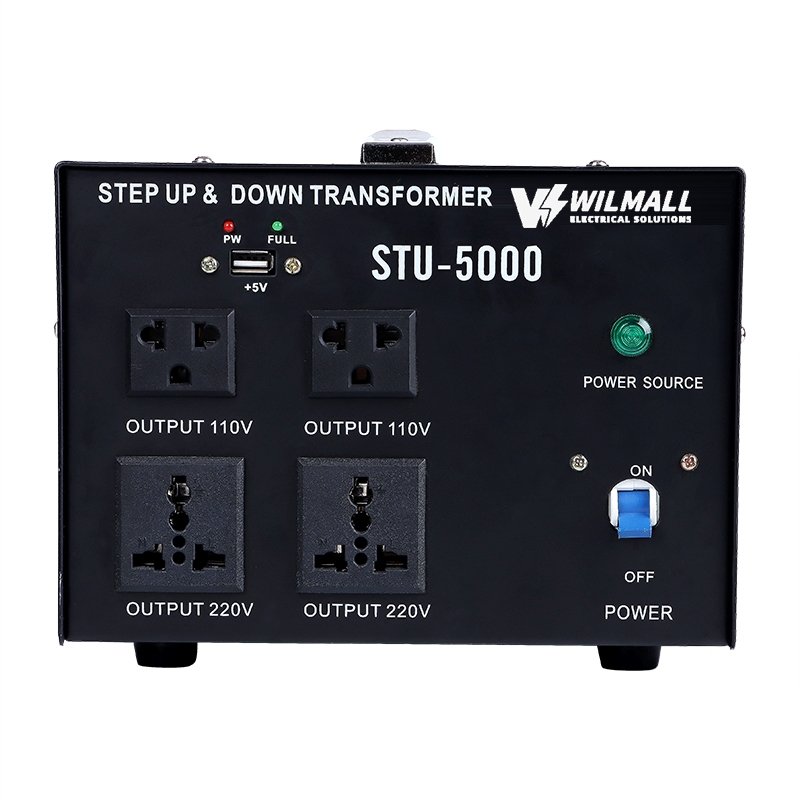
How to Test a Transformer: A Safe 3-Step Check
Quick answer: test a transformer with a multimeter only — never by plugging it in and touching the terminals. Check three things in order: winding continuity, winding resistance values, and (if safe) output voltage under a small load. If any reading looks wrong, stop and replace the unit.
Key Takeaways
- Test with a multimeter, never by touch.
- Check continuity, resistance, then voltage under load.
- Primary reads higher ohms than secondary.
- Hot + humming with no load = defective, replace.

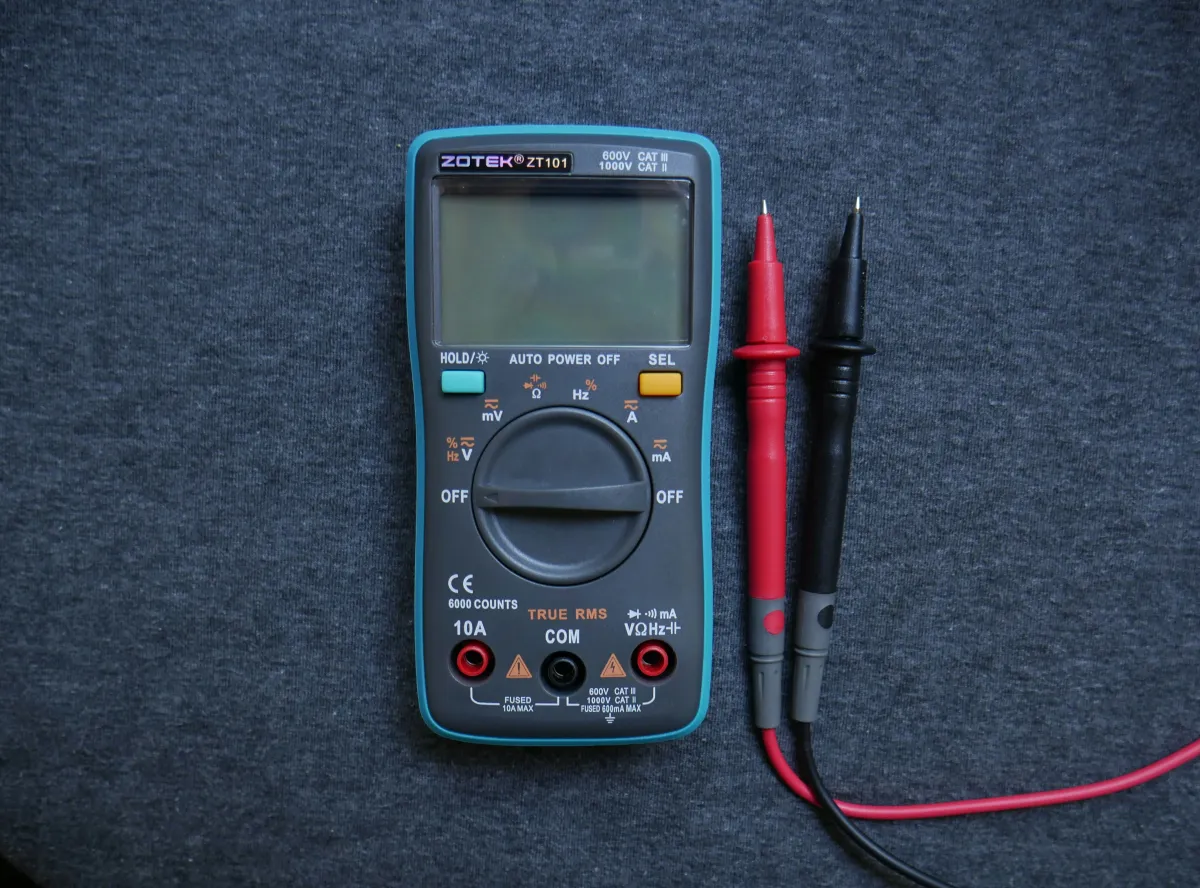
Test at a Glance
| Test | Healthy result |
| Continuity | Both windings low ohms |
| Resistance | Primary higher than secondary |
| Output under load | Rating +/- 5% |
Before You Test: Safety First
Transformers step voltage up as well as down. A step-up unit fed from 110V can give you a nasty 220V+ on the output side. Test with the unit unplugged for continuity and resistance, and only power it up with everything connected and insulated. If you are not confident with a multimeter, ask an electrician — a transformer is cheap, your hands are not.
Test 1: Winding Continuity
Set the multimeter to continuity/ohms. Touch the probes across the primary terminals, then across the secondary terminals.
- Beeps / low ohms on both: windings are intact. Good sign.
- No continuity on one side: the winding is open — internal break, unit is dead.
- Continuity between primary and secondary (or to the case): short circuit / insulation failure — dangerous, discard.
Test 2: Resistance Values
Compare the measured resistance to the nameplate expectations. The primary side (220V input) will read higher ohms than the secondary (110V output) — roughly proportional to the voltage ratio squared. As a sanity check: a healthy 220V→110V transformer might read ~50-200 ohms on primary and ~15-60 ohms on secondary depending on size. Wildly out-of-range readings mean a damaged winding.
Test 3: Output Voltage Under Load
Only after the first two tests pass, plug the transformer in and measure the output voltage with a proper load attached (like the actual appliance or a small resistive load).
| Condition | Expected | If You See |
|---|---|---|
| No load | Output slightly above rating (e.g. 115-120V for a 110V unit) | Normal — regulation effect |
| Full load | Close to rated voltage (110V ± 5%) | Normal |
| Voltage collapses under load | — | Undersized or shorted winding — replace |
| Humming + hot within 2 minutes | — | Shorted turns — replace |
A transformer that heats up fast with no load is already failing. No amount of “letting it warm up” fixes a shorted turn.
What You Cannot Test with a Multimeter
Intermittent shorted turns under load, insulation quality at high temperature, and noise level need proper test gear. If the unit behaves but buzzes loudly or smells of varnish when running, treat it as failed and replace it.
Questions Customers Ask Us
Can I test without a multimeter?
Do not guess. A $10 multimeter is worth more than the appliance it protects.
My transformer hums loudly but outputs fine. Is it broken?
Loose laminations or a failing winding. If it is new and loud, ask for a replacement — it will only get worse.
Is it normal for the case to feel warm?
Warm is fine. Hot to the touch after 30 minutes at light load is not.
My test shows an open winding. Repair or replace?
For a low-voltage transformer, replacement is almost always cheaper than a rewind. Ask us for a quote on the same spec.
Still not sure which model fits?
Tell us your appliance, wattage and country — we reply within 24 hours with a straight recommendation.
The three checks, in detail
The first check is the continuity test: with the transformer unplugged, measure across the primary winding with a multimeter. A healthy winding shows a low resistance, a few ohms to a few hundred ohms depending on the size. An open reading means the winding is broken, and the transformer is dead. The same check across the secondary confirms the output winding is intact.
The second check is the insulation test: measure between the primary and the secondary, and between each winding and the case. A healthy unit shows a very high resistance, in the megohm range, an infinity reading on most multimeters. A low reading means the insulation has broken down, which is a safety hazard as much as a functional fault.
The live voltage test
The third check is the live voltage test: power the transformer and measure the output voltage under no load and under load. The no-load voltage should sit within 5% of the rated output. Under load, it should not sag more than 5 to 10%. A large sag under load points to a winding short or an undersized transformer, and the unit should be investigated before it is trusted.
When you do the live test, follow the safety basics: connect the meter leads before powering on, keep your hands away from the terminals, and do not touch the case if it is hot. A step down transformer output is still live electricity, and the test is quick and safe when the discipline is right.
What the readings tell you
A transformer that passes all three checks is healthy and can be trusted. One that fails the continuity check is a broken winding, replace it. One that fails the insulation check is a safety hazard, do not use it. One that passes cold but fails under load is overheated or undersized, check the duty cycle and the rating.
If you are testing a transformer before a purchase, ask the seller for the readings rather than doing it yourself on a unit you do not own. The three-check process takes ten minutes, and it is the difference between buying a working unit and buying a problem.
What the multimeter settings should be
Set the multimeter to the right range before each test. For the continuity test, use the resistance range, and expect a low reading on a healthy winding, a few ohms to a few hundred. For the insulation test, use the highest resistance range, and expect a reading in the megohm range or the infinity symbol. For the live voltage test, switch to AC volts and select the range above the expected output.
The common error is testing with the wrong range and misreading the result. A winding that shows zero on a low resistance range may simply be saturating the meter, and a winding that shows a high reading on a high range may be fine. Repeat each test at two ranges if the reading looks borderline.
Safety rules for the live test
The live test involves mains power, so the rules are strict. Use a multimeter with proper insulation, CAT II rated or better. Connect the leads before applying power. Keep one hand in your pocket while measuring, so a fault cannot pass through your body. Never touch the terminals or the bare wire with the power on. If the unit smells or smokes, power down immediately and step back.
A step down transformer output at 110V is less dangerous than the 220V input, but it is still live, and a fault can present the input voltage on the output side. Treat both sides as live, and the test is as safe as any electrical work when the discipline holds.
When to call in a professional
If the transformer is large, 5000VA and above, if it is wired into a panel, or if you are not comfortable with the tests, call an electrician. The three-check process is for small plug-in units that a competent homeowner can test safely. A unit that is hard-wired or part of a commercial installation needs a licensed professional, because the risks scale with the size.
For a professional test, we provide the spec sheet with the expected readings for each model, so the electrician knows what a healthy unit should show. The spec sheet travels with the unit or is available on request.
What the multimeter settings should be
Set the multimeter to the right range before each test. For the continuity test, use the resistance range, and expect a low reading on a healthy winding, a few ohms to a few hundred. For the insulation test, use the highest resistance range, and expect a reading in the megohm range or the infinity symbol. For the live voltage test, switch to AC volts and select the range above the expected output.
The common error is testing with the wrong range and misreading the result. A winding that shows zero on a low resistance range may simply be saturating the meter, and a winding that shows a high reading on a high range may be fine. Repeat each test at two ranges if the reading looks borderline.
Safety rules for the live test
The live test involves mains power, so the rules are strict. Use a multimeter with proper insulation, CAT II rated or better. Connect the leads before applying power. Keep one hand in your pocket while measuring, so a fault cannot pass through your body. Never touch the terminals or the bare wire with the power on. If the unit smells or smokes, power down immediately and step back.
A step down transformer output at 110V is less dangerous than the 220V input, but it is still live, and a fault can present the input voltage on the output side. Treat both sides as live, and the test is as safe as any electrical work when the discipline holds.
When to call in a professional
If the transformer is large, 5000VA and above, if it is wired into a panel, or if you are not comfortable with the tests, call an electrician. The three-check process is for small plug-in units that a competent homeowner can test safely. A unit that is hard-wired or part of a commercial installation needs a licensed professional, because the risks scale with the size.
For a professional test, we provide the spec sheet with the expected readings for each model, so the electrician knows what a healthy unit should show. The spec sheet travels with the unit or is available on request.