LED Driver vs Low Voltage Transformer: What Is the Difference?
Ask ten people why their LED strip flickers or their new LED spots only glow at half brightness and you will get ten guesses, most of them wrong. The real cause is usually one mistake: they powered an LED with the wrong kind of unit. An LED driver and a low voltage transformer both feed power to lighting, but they think differently about what they are feeding. This is the difference we explain every week, and once it clicks, most LED wiring problems disappear on their own.

LED Driver vs Low Voltage Transformer: Different Answers to Different Questions
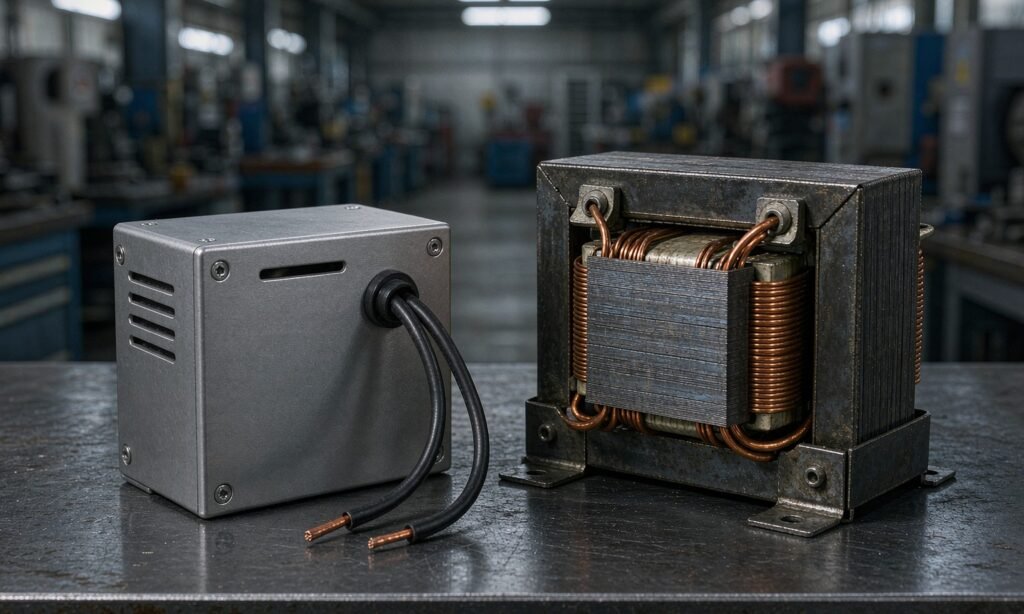
Start with what each device actually regulates. A low voltage transformer steps the mains down to a fixed low voltage, usually 12V or 24V AC, and then stops thinking. Whatever you connect to it sees that voltage and draws whatever current it wants. That arrangement works beautifully for conventional lamps and for LED fixtures that carry their own internal driver, because the fixture does the current management. The transformer just supplies a steady supply voltage.
An LED driver takes over the job of current control instead. LEDs are current-hungry components in a precise way: feed an LED chip slightly too much current and it burns bright for a week then dies, feed it too little and it never reaches full output. A driver exists to hold the current steady regardless of what the LED wants to do, which is why drivers cost more and live closer to the chips than transformers do. The driver is protecting an investment in LEDs; the transformer is just feeding a circuit.
That single difference in job description explains almost every practical question in this guide. If you understand whether your LED needs a regulated voltage or a regulated current, you already know which box to buy. Everything else, AC or DC, dimming, wiring, is detail on top of that one decision.
Constant Current vs Constant Voltage: The Two Families of LED Power
Walk into the subject a step deeper and you meet the two families inside the driver world. A constant current driver is rated in milliamps, something like 350mA or 700mA, and it pushes that exact current through a string of LED chips regardless of how many chips you connect within its range. Its output voltage window sits printed on the label, for example 20V to 36V, and as long as your LED string sits inside that window, the driver holds the current at the set value. This is the family used for bare LED modules, COB chips, and high bay fixtures where the LEDs have no onboard current control.
A constant voltage power supply is the simpler cousin. It holds a fixed output, 12V DC or 24V DC being the common ones, and the connected LED products do their own current regulation. LED strips are the classic example: the strip carries resistors or tiny driver circuits, and it expects a steady 12V or 24V DC feed. Feed the strip the right fixed voltage and it manages itself, which is why constant voltage supplies are cheap, plentiful, and popular with DIY strip lighting.
Mixing the two families is the classic accident. Hook a constant current driver to an LED strip that expects fixed 12V and the driver will try to force its rated current through a strip that is not built for it, with a bright flash and dead LEDs as the usual result. Hook a constant voltage supply to bare LED modules that need current control and the modules will draw uncontrolled current and burn. Read the LED product’s label and match its family; that rule prevents nine out of ten failures.
AC Output vs DC Output, and Why the Distinction Decides Everything
Now add the second axis: AC or DC. A low voltage transformer outputs AC, because it is a magnetic device and alternating current is what it does. An LED driver usually outputs DC, because LED chips are semiconductors that want one-direction current. This distinction is why the two boxes are rarely interchangeable, even when both say 12V on the case. A 12V AC output and a 12V DC output are not the same food, and the LED will notice.
LED products designed for mains replacement usually state their input clearly. Some LED strip power supplies and many LED bulbs run on DC. Older-style LED landscape fixtures, on the other hand, are often built to run on 12V AC because the whole low voltage garden system has always been AC, and the fixture rectifies it internally. If the fixture rectifies internally, it can run from either AC or DC, which is why people get away with swapping sources until one day they do not.
When in doubt, read the input marking on the LED product. “12V AC/DC” means the product accepts either, and you are free to use whatever you have. “12V DC only” means a transformer outputting AC will destroy the product’s driver or make it behave erratically. If you are comparing a transformer against a switch-mode supply for the same job, our page on transformer vs inverter technology is worth a read before you spend.

Can a 12V AC Transformer Run LED Lights? The Matching Rules
The short answer is yes, but only if the LED was built to accept 12V AC. That is the matching rule in one sentence. A magnetic 12V AC transformer is still the standard power source for outdoor landscape lighting, and plenty of LED path lights and well lights are designed specifically to take that AC feed, with the rectifying and current control built into the fixture. For those fixtures, a transformer is not a compromise, it is the intended partner, and it brings surge tolerance and long service life that a fragile switch-mode supply often lacks.
The trouble starts when people use a 12V AC transformer to power LED products that were never designed for AC. Screw-in LED bulbs made for electronic transformers, LED strips that specify DC input, and LED modules with no internal rectifier will all misbehave on transformer AC output. The symptoms are flicker, uneven brightness, a hum from the transformer as it drives an awkward load, and in the worst cases a driver that dies young. If the LED label does not say AC, do not feed it AC.
There is a special caution about low wattage loads on magnetic transformers. A magnetic unit is happiest with a real load on it, and a handful of tiny LED fixtures may sit below the unit’s comfort zone, which shows up as flicker or lights that refuse to switch off cleanly. If your whole run adds up to only a few watts, a properly matched LED driver is often the better answer than a big magnetic transformer. If you are planning a full landscape system, our guide to choosing a low voltage transformer for LED lighting walks through the pairing rules in detail.
Dimming: Why LED Drivers and Transformers Dim Differently
Dimming is the place where buyers discover that “dimmable” is not a single promise. A magnetic transformer dims with a magnetic low voltage dimmer on the primary side, and the LED fixtures downstream must themselves be dimmable and happy with the phase-cut waveform that the dimmer chops. A constant current driver dims through its own control scheme, usually 0-10V, PWM, or DALI, and it expects a control signal rather than a chopped mains waveform. Confusing the two dimming languages produces the classic symptoms of lights that jump instead of dim, or flicker at the bottom of the range.
Match the whole chain and dimming is smooth. That means the dimmer type must suit the transformer type, and the LED must be dimmable by the method the transformer or driver provides. If you already own a dimmer, buy the power source to match it. If you are starting fresh, pick the dimming method first, then buy everything else to fit, because retrofitting a different dimming scheme into finished wiring is the most expensive way to learn this lesson.
One honest warning from the factory bench: cheap LED products and cheap dimmers both cut corners, and their corners meet exactly where you do not want them to. When a customer tells us their dimmable LED setup flickers, the fix is usually upgrading one weak link in the chain, and it is rarely the transformer or the driver that is at fault. Tell us the full chain, dimmer brand, transformer or driver, and fixture, and we will usually spot the mismatch in one message.
Quick Matching Rules for Buying the Right Power Source
If you have an LED strip, buy a constant voltage DC supply at the strip’s stated voltage, usually 12V or 24V, sized at the strip’s watts per meter times the total length plus headroom. If you have bare LED modules or COB chips, buy a constant current driver whose current matches the chips and whose voltage window covers the string. If you have LED landscape fixtures designed for low voltage systems, a 12V AC magnetic transformer is a legitimate and durable choice, provided the fixtures state AC input. And if the product label is silent about its input, treat that silence as a red flag and ask the seller before you buy.
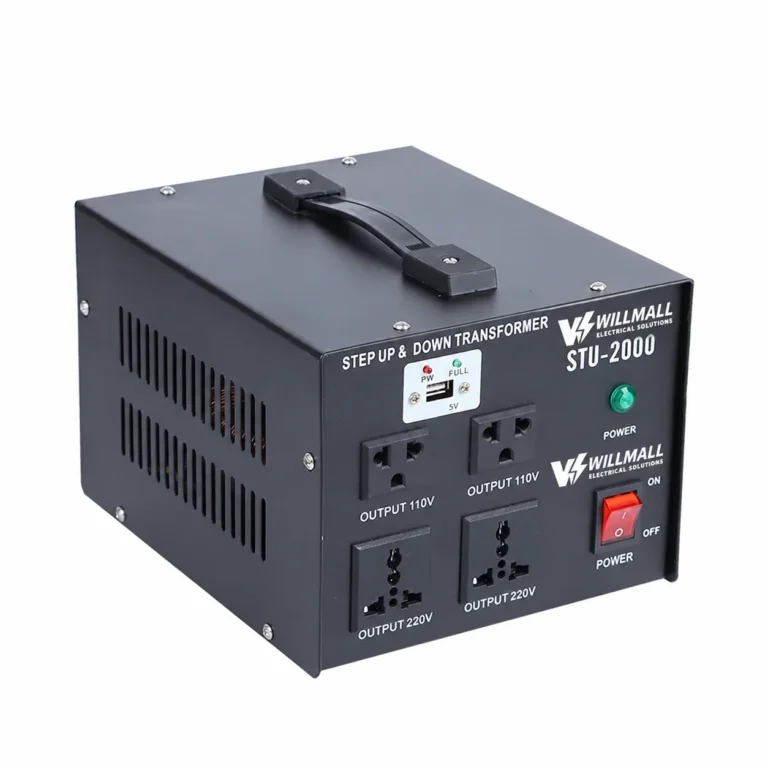
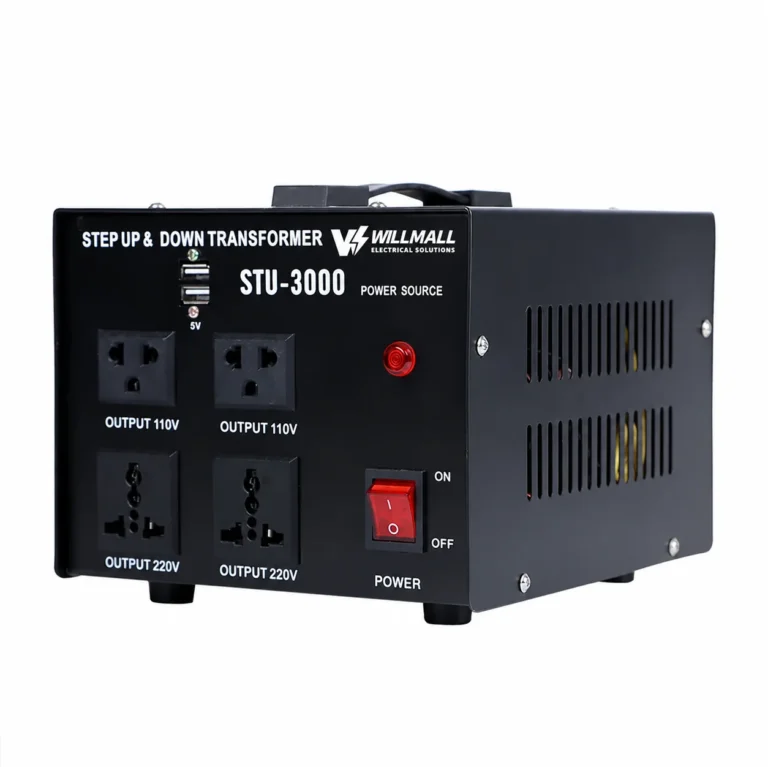
For the lighting control transformers we build, the classic job is still powering low voltage lighting circuits that expect 12V or 24V AC, and we wind them with copper for continuous outdoor duty. That is a different role from the switch-mode driver that sits inside an LED fixture, and the two should not be confused. If your application is a low voltage lighting system rather than raw LED chips, our JMB lighting control transformer range shows the style of unit we ship for that job.
Still unsure? That is normal, because the LED market mixes AC and DC, constant current and constant voltage, and the labels are not always clear. Send us a photo of the LED product label and the transformer or driver you are considering, and we will tell you whether they are compatible before you wire them together. A two-minute check now beats a burnt-out batch of LEDs next week.
LED Driver vs Low Voltage Transformer: Common Questions
The same questions reach us repeatedly, so here are the straight answers we give on WhatsApp.
Can I use a low voltage transformer instead of an LED driver for my LED strip?
Only if your LED strip accepts AC input, which most strips do not. LED strips almost always want a constant voltage DC supply at 12V or 24V, and a low voltage transformer outputs AC. Feeding AC to a DC strip causes flicker and damage. This is the classic mistake in the led driver vs low voltage transformer question.
What is the difference between a constant current and a constant voltage LED driver?
A constant current driver pushes a fixed current, like 350mA, through a string of LED chips and lists an output voltage window. A constant voltage supply holds a fixed voltage, usually 12V or 24V DC, and the connected LED strip or fixture regulates its own current. Match the driver family to what your LED product expects.
Will a 12V AC magnetic transformer run my LED landscape lights?
Yes, if the fixtures are built to accept 12V AC input, which most low voltage landscape LED fixtures are. The transformer supplies AC and the fixture rectifies and regulates internally. If the fixture states DC only, a magnetic transformer outputting AC is wrong for it, so check the fixture label before connecting.
Why do my dimmable LED lights flicker when I use a transformer?
Flicker usually means a mismatch somewhere in the chain: the dimmer type does not suit the transformer or driver, or the LED itself is not dimmable by that method. Magnetic transformers need an MLV dimmer and LED fixtures need to accept it. Check every link, because the fix is usually one wrong component, not several.
LED driver vs low voltage transformer: how do I know which one to buy?
Check the LED product label first. If it wants a fixed DC voltage, buy a constant voltage LED driver. If it wants a set current, buy a constant current driver. If it accepts 12V AC, a low voltage transformer is the right and durable choice. Not sure which? Send us a photo of the label.
Not sure which unit your LEDs actually need? Send us a photo of the LED label and your setup and we will confirm driver or transformer before you order. We build copper wound lighting transformers in Yueqing, China, 100% load tested per unit. MOQ 10 pcs, lead time 15-25 days, FOB Ningbo or Shanghai, 12-month warranty.
Get a Free Quote WhatsApp +86 197 3022 6757 · sales@wilmall.com