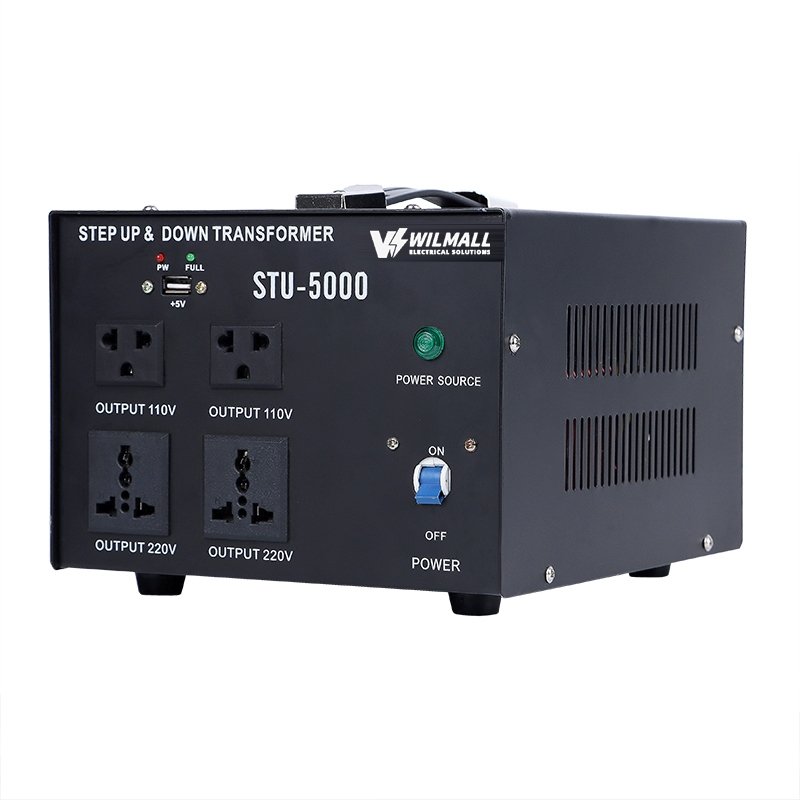
Transformer Overheating: Causes, Warning Signs and Fixes
Quick answer: a transformer that is hot to the touch after light use is overloaded or undersized. The top four causes are: overload (running above rated VA), wrong VA rating, poor ventilation, and a defective unit. Check them in that order — and remember a warm case is normal, a hand-burning one is not.
Key Takeaways
- Warm case is normal; hand-burning is not.
- Overload is the #1 cause of overheating.
- Keep total load at 70-80% of VA rating.
- Hot with no load = defective, claim warranty.

Heat at a Glance
| Heat level | Action |
| Warm 40-55C | Normal |
| Hot 55-70C | Check the load |
| Too hot / smell | Find cause now |
Normal Heat vs Dangerous Heat
| Reading | Status |
|---|---|
| Case warm to the touch (40-55°C) | Normal at load |
| Hot, you can hold it for a few seconds (55-70°C) | Running hard — check the load |
| Too hot to touch / varnish smell (70°C+) | Problem — find the cause now |
| Smoke, buzzing + heat within minutes | Defective — unplug immediately |
Windings rated for Class B insulation can technically run hot, but “technically allowed” shortens lifespan. Keep the case below ~60°C for years of trouble-free service.
Cause 1: Overload
Plugging in more appliances than the VA rating supports is the #1 cause. Every extra device pushes the transformer closer to saturation, where losses (and heat) climb steeply. Fix: add up all loads, keep total at 70-80% of the VA rating, and upgrade the transformer if you outgrew it.
Cause 2: Wrong VA Rating
Motors, compressors and ACs draw 3-5x their running current at start-up. A 1500W appliance on a “2000W” transformer works fine for a week, then the transformer starts cooking on every start. Fix: size motors and compressors at 1.5-2.0x, and buy one size up if in doubt.
Cause 3: Poor Ventilation
A transformer inside a sealed cabinet, packed against a wall, or under a pile of cables cannot shed heat. Airflow is part of the design. Fix: keep 10-15cm clear on all sides, and if it lives in a cabinet, add ventilation holes or a small fan.
Cause 4: Defective Unit
Shorted turns inside a winding make a transformer heat up fast even with no load, usually with a loud hum. This is a manufacturing defect, not user error. Fix: unplug it and stop using it — a shorted winding can fail catastrophically. Claim the warranty and replace.
Overheating is never “the transformer’s personality”. It is always one of these four causes. Diagnose before replacing, or you will burn the next one too.
Quick Diagnostic Checklist
- Add up every connected load in watts → compare to 70-80% of transformer VA.
- Any motor/compressor/AC in the mix? Apply the 1.5-2.0x rule.
- Is the unit in open air with clearance? If not, move it.
- Hot with NO load connected? → defective, claim warranty.
Questions Customers Ask Us
My transformer is warm but works fine. Should I worry?
Warm is normal. Measure with your hand: if you can hold it comfortably, fine. If not, check the load.
Can I fix an overheating transformer myself?
Only the diagnosis. The fix is usually load management or replacement, not internal repair.
What warranty do you give on transformers?
12 months on every unit. If a unit is defective within that period, we replace it on the next shipment.
How do I pick the right size so this never happens?
Send us the appliance list — we will calculate the exact VA. That is a 5-minute message that saves you a burned transformer.
Still not sure which model fits?
Tell us your appliance, wattage and country — we reply within 24 hours with a straight recommendation.
The overheating causes, one by one
Overload is the most common cause of transformer overheating, running the unit above its VA rating for long periods. The windings heat, the insulation degrades, and the unit eventually fails. The fix is sizing with the 80% rule. The second cause is poor ventilation, a transformer in a sealed cabinet or buried behind other equipment cannot shed heat, and it overheats even at the right load.
The third cause is ambient temperature, a transformer rated for 40 degrees ambient runs hotter in a 45 degree Gulf summer. The fourth is voltage, feeding a 220V-rated unit with 240V input adds core heat. The fifth is a winding fault, which produces localized hot spots. Each cause has a different fix, and identifying the cause is the first step.
Warning signs to catch early
The warning signs are: the case is too hot to hold, the hum gets louder under load, a burning smell from the case, the output voltage sags more than 5%, and the thermal fuse trips repeatedly. Any one of these means the transformer is stressed, and two or more together mean it is failing. Catching the signs early turns a replacement into a simple swap.
The burning smell is the one to take seriously immediately. It is the insulation breaking down, and it means the unit has already been damaged. Stop using the transformer, let it cool, and check the load and the sizing before you consider running it again.
Preventing overheating in the first place
Prevention is sizing, ventilation, and location. Size for the 80% rule. Give the transformer air on all sides, and add a fan if it is in a warm enclosed space. Keep it out of direct sun and away from heat sources. For continuous-duty applications, choose the fan-ventilated case option.
Prevention also includes matching the input voltage, a transformer fed with the wrong voltage runs hot for its whole life. Check the input range against your mains, and for the Gulf and African markets use the 220V to 240V input range unit, which is what the ST series ships with as standard.
The thermal fuse and what it protects
Every real transformer has a thermal fuse that opens when the winding temperature exceeds the safe limit. The fuse is a one-shot device, once it opens, the transformer is dead until the fuse is replaced, and a transformer that pops its thermal fuse repeatedly has a problem that a new fuse will not fix.
The thermal fuse is the last line of defense, not the first. It protects the winding from catastrophic failure, but the underlying cause, overload, poor ventilation, or a fault, must be found and fixed. A transformer that keeps tripping its fuse is telling you the load or the installation is wrong, and the fix is sizing or ventilation, not fuse replacement.
Diagnosing the hot case
A transformer case that is warm to the touch after an hour at load is normal. A case that is too hot to hold, around 70 degrees and above, is overloaded or poorly ventilated. The diagnostic is: check the ambient temperature, check the load against the 80% rule, check the ventilation, and check the input voltage against the rating.
If all four check out and the unit still runs hot, the winding may have a developing short, which produces localized heat. The smell test, a faint electrical or varnish smell, confirms the insulation is stressed. At that point the unit should be replaced, not nursed, because the insulation failure accelerates once it starts.
Preventive habits that extend life
The habits that extend a transformer’s life are: never run it above 80% of rating for long, keep the vents clear, keep it out of direct sun and away from heat sources, check the terminals yearly, and replace it at the first sign of a burning smell. These five habits take minutes a year and double the lifespan.
We put the same five habits on a maintenance card that ships with every ST unit. The card lives on the transformer, and the distributor can hand it to the end customer, which turns a technical topic into a habit that the customer actually follows.
The thermal fuse and what it protects
Every real transformer has a thermal fuse that opens when the winding temperature exceeds the safe limit. The fuse is a one-shot device, once it opens, the transformer is dead until the fuse is replaced, and a transformer that pops its thermal fuse repeatedly has a problem that a new fuse will not fix.
The thermal fuse is the last line of defense, not the first. It protects the winding from catastrophic failure, but the underlying cause, overload, poor ventilation, or a fault, must be found and fixed. A transformer that keeps tripping its fuse is telling you the load or the installation is wrong, and the fix is sizing or ventilation, not fuse replacement.
Diagnosing the hot case
A transformer case that is warm to the touch after an hour at load is normal. A case that is too hot to hold, around 70 degrees and above, is overloaded or poorly ventilated. The diagnostic is: check the ambient temperature, check the load against the 80% rule, check the ventilation, and check the input voltage against the rating.
If all four check out and the unit still runs hot, the winding may have a developing short, which produces localized heat. The smell test, a faint electrical or varnish smell, confirms the insulation is stressed. At that point the unit should be replaced, not nursed, because the insulation failure accelerates once it starts.
Preventive habits that extend life
The habits that extend a transformer’s life are: never run it above 80% of rating for long, keep the vents clear, keep it out of direct sun and away from heat sources, check the terminals yearly, and replace it at the first sign of a burning smell. These five habits take minutes a year and double the lifespan.
We put the same five habits on a maintenance card that ships with every ST unit. The card lives on the transformer, and the distributor can hand it to the end customer, which turns a technical topic into a habit that the customer actually follows.