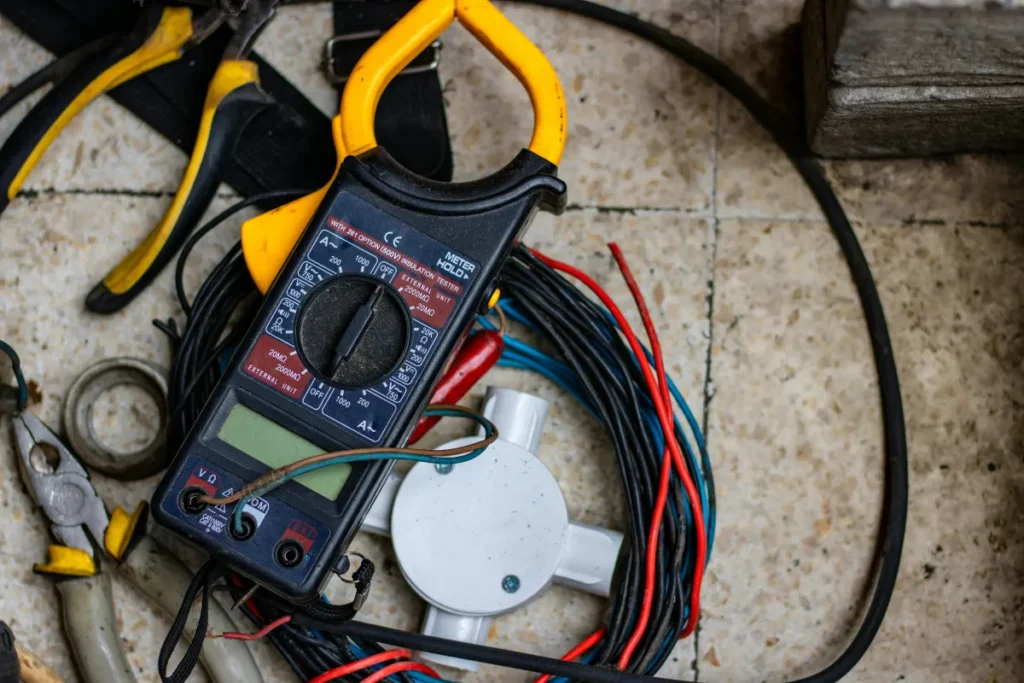
How to Check a Transformer with a Multimeter: 4 Tests
Before you install a transformer, or after a suspected failure, four multimeter tests tell you most of what you need to know. Here they are, step by step, with the readings you should expect.
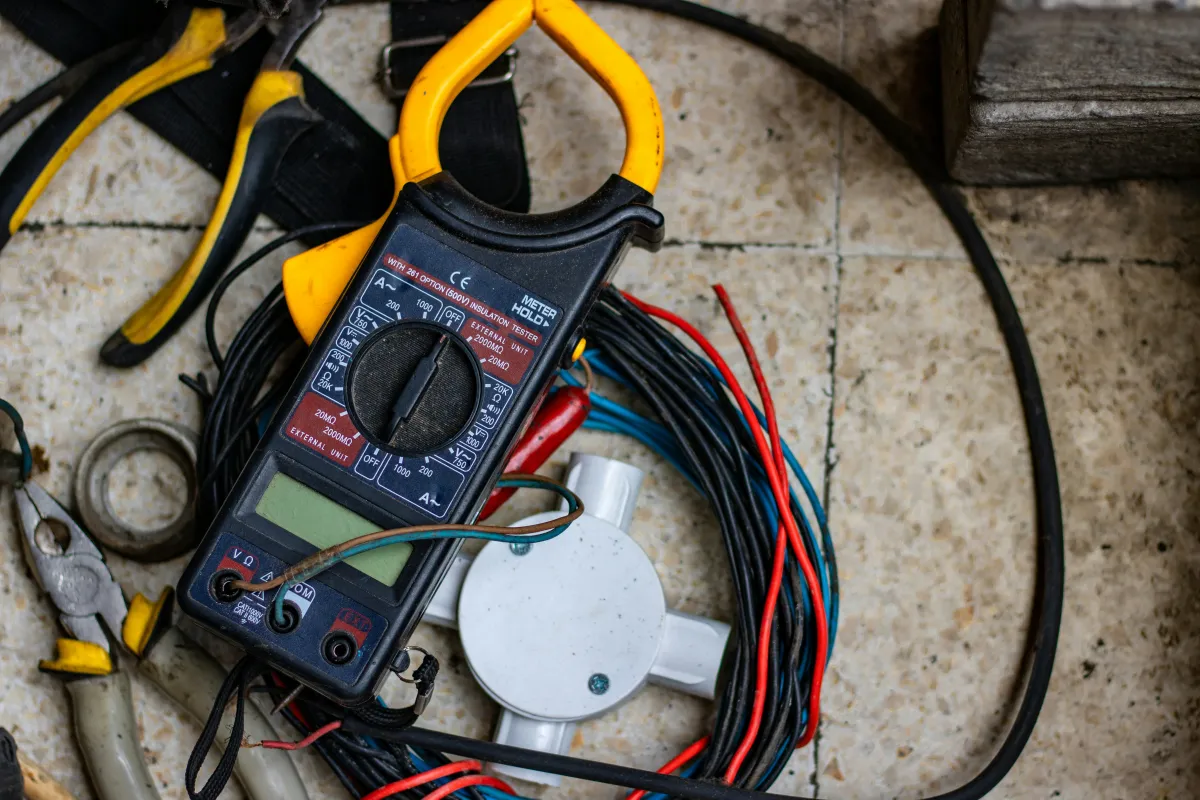
Safety first
Disconnect the transformer from the mains before testing. Use a multimeter with a CAT rating suitable for the circuit, and keep both hands free of live conductors. These tests are performed on a de-energised transformer; never measure a live transformer with the resistance range.
Test 1: Continuity of the windings
Set the meter to resistance (ohms). Measure across the primary terminals — you should see low resistance, typically a few ohms to tens of ohms depending on the rating. Then measure the secondary — also low. An open circuit (OL) reading means a broken winding; a reading of zero may indicate a shorted winding, especially on large units.
Compare both readings to the nameplate or to a known-good unit of the same model. A primary that reads far lower than expected could indicate shorted turns, which will overheat under load.
Test 2: Primary to secondary isolation
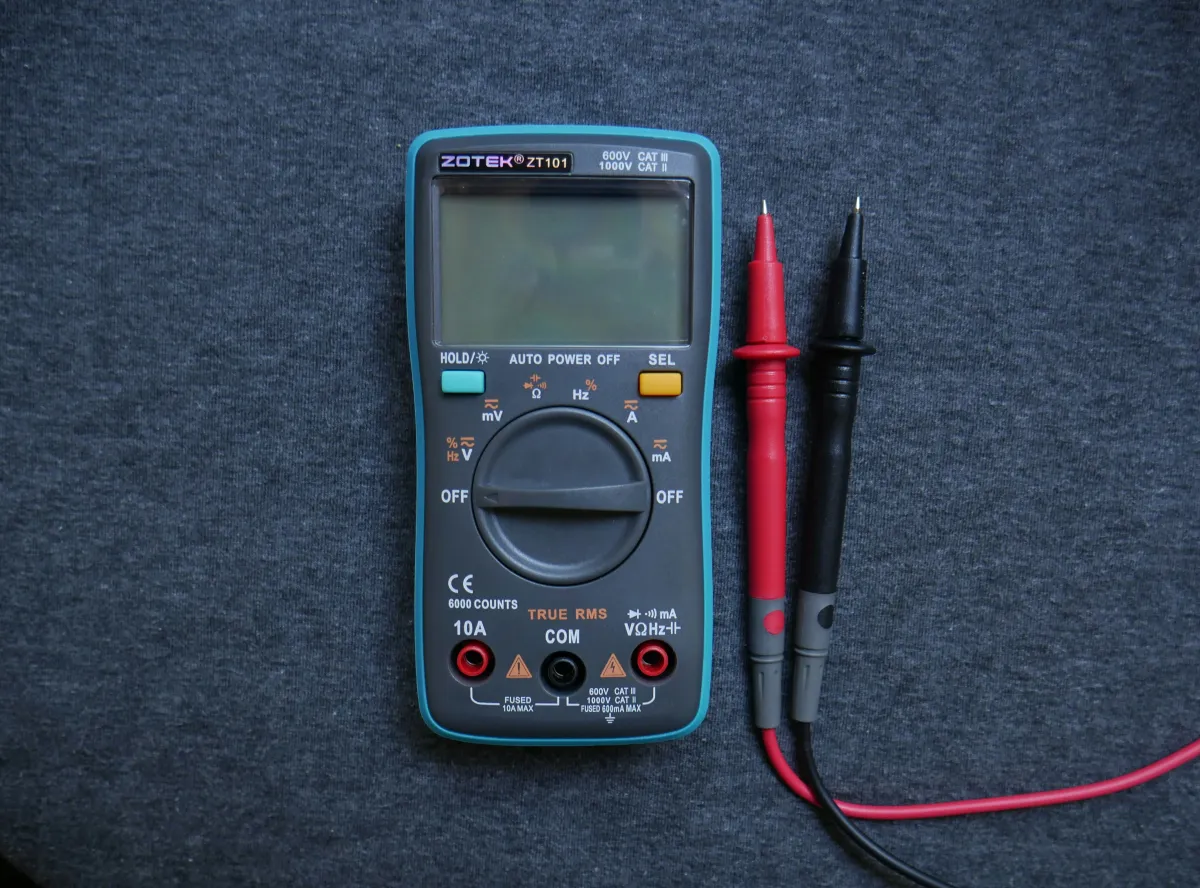
Measure resistance between the primary and secondary windings. It should read open circuit (OL) — there must be no electrical connection between them. Low resistance here means the insulation is failing or the windings are shorted together, and the transformer is unsafe to use.
Test 3: Insulation to ground / frame
Measure from each winding to the metal frame or core. It should read OL (infinite). Any finite reading suggests degraded insulation, which is a shock and fire risk, especially in humid environments. If the transformer has a grounding terminal, verify it is continuous to the frame.
Test 4: Output voltage under power
Reconnect the input with the correct fuse, then measure the output voltage at no load and under load. The no-load output may run a few percent high — that is normal for transformers. Under load it should be close to the nameplate voltage. A large voltage drop under load points to a weak winding or an undersized unit.
What the results tell you
| Symptom | Likely fault |
|---|---|
| OL on primary continuity | Open primary winding — replace |
| OL on secondary continuity | Open secondary — replace |
| Primary to secondary reads low | Insulation breakdown — unsafe, replace |
| Winding to frame reads low | Earth leakage — unsafe, replace |
| Output sags under load | Undersized or weak winding |
Beyond the basic four tests
For a deeper check, measure the primary and secondary current with the transformer under load. Excessively high primary current at no load suggests shorted turns in the core or winding. If you have a megohmmeter, the insulation tests can be run at 500V for a more definitive reading, but only on units rated for it — check the nameplate first.
Also compare the actual output voltage to the nameplate. A healthy transformer reads within a few percent at rated load. If you see a large deviation, the tap settings may be wrong, the input may be off, or the transformer is damaged.
When to stop testing and replace
If the transformer smells burnt, shows discoloured windings, or fails any insulation test, stop testing and replace it. Testing a damaged transformer wastes time and risks your meter and your safety. A replacement from the factory — with a proper rating for your load — is the reliable answer.
Testing before installation
Even new transformers benefit from a quick continuity and insulation check before installation. Transit vibration can loosen connections, and storage in humid conditions can affect insulation. A two-minute test on arrival — continuity on both windings and isolation between them — prevents the awkward discovery of a faulty unit after it is wired in.
Tools you need
- Digital multimeter with resistance and AC voltage ranges — the core tool for all four tests.
- Megohmmeter (optional) for definitive insulation testing at 500V, on units rated for it.
- Load bank or known load for the output voltage under load test.
- Safety equipment — insulated gloves, fused test leads, and a clear workspace.
You do not need expensive equipment for the basic checks; a standard multimeter covers tests 1-4 for most low-voltage transformers.
Interpreting marginal readings
Some readings are neither clearly pass nor clearly fail. A winding that reads slightly high on resistance may be a thinner winding or a warm unit — compare with a known-good sample. Insulation that reads a few megohms is acceptable for low-voltage units, but below 1 megohm deserves caution. If you are unsure, treat the unit as suspect and verify with a load test or replace it.
Testing a transformer before buying used
The same four tests apply when you evaluate a used transformer. Run continuity and isolation checks before paying, then verify output voltage under load after installation. A used unit that passes all four tests is often a sound purchase at the right price, especially for common ratings where new units are available as a benchmark.
Frequently asked questions
The Resistance Test: What the Ohmmeter Should Show
The resistance test is the first check in the four-test sequence, and it tells you a lot about the transformer’s health. Set your multimeter to the ohms range and measure across the primary winding. A healthy transformer shows a low resistance, typically a few ohms to a few hundred ohms depending on the size, because the winding is just a long copper wire. The secondary shows an even lower value, often under one ohm for low-voltage outputs. What you are looking for is continuity, not a specific number. If the meter shows open circuit, the winding is broken, and if it shows zero, there is a short. The useful comparison is between the primary and secondary readings: the ratio between them should roughly match the turns ratio, so a 10:1 transformer shows about ten times more resistance on the primary than on the secondary.
Testing for Shorts to the Core and the Case
Beyond the winding checks, the multimeter test should confirm there is no short between the windings and the core or the case. Set the meter to the highest resistance range and measure between each winding terminal and the core or case. A healthy transformer shows open circuit, because the windings are insulated from the core. If you read continuity, the insulation has broken down, and the transformer is unsafe to use because the mains voltage can reach the case. This is the check that catches the dangerous faults, not just the ones that stop the unit working. On a new unit, this test is part of our factory quality control, and on a used unit, it is the reason to test before trusting it. If a transformer fails this check, do not try to repair it, replace it.
Testing Under Load: The Real-World Check
The static tests confirm the transformer is not broken, but the load test confirms it works under real conditions. Connect a suitable load within the unit’s rating and measure the output voltage while it is loaded. A healthy transformer holds its output close to the rated value, with a small drop that is normal. If the output sags significantly, or the unit heats up quickly, or the hum gets much louder, the transformer is weak, possibly due to a shorted turn in the winding, and it should be replaced. This load test is exactly what our factory does on every batch before shipping, and it is the test that separates a transformer that works on paper from one that works in the field. If you are testing a used transformer before buying it, ask to run it under load, because a no-load test alone can miss a weak unit.
The No-Load Test: What It Tells You
The no-load test is the second check in the sequence, and it catches problems the resistance test cannot see. With the transformer unplugged from any load, apply power and measure the output voltage with a multimeter. A healthy transformer delivers the rated output within a few percent, so a 220V to 110V unit should read roughly 105 to 115V at no load. Listen for abnormal noise and check the case temperature after a few minutes; a faint hum and a barely warm case are normal. If the output is far from the rating, the winding ratio is wrong or the unit is mislabeled. If it hums loudly or heats quickly at no load, there is likely a shorted turn, and the unit should be replaced. This test takes two minutes and is the same check our factory runs on every unit before it ships.
What to Do If a Transformer Fails a Test
If a transformer fails any of the four tests, the safe answer is usually replacement, not repair. A broken winding, a short to the core, or a unit that sags badly under load cannot be reliably fixed with a solder joint, and a partially rewound transformer never matches the original quality or safety. For a new unit that fails, contact the supplier for a warranty replacement, and keep the test results and the batch number to make the claim simple. For a used unit that fails, replace it, because the cost of a new transformer is small compared with the damage a failing unit can cause to the appliances it feeds. We stand behind our units with a 12-month replacement-first warranty, and the batch test report gives you the evidence you need if anything arrives faulty. Testing before you trust a transformer is cheap insurance.
What does an OL reading on a transformer mean?
OL (open loop) on a winding continuity test means the winding is broken. The transformer cannot deliver power and should be replaced.
What resistance should a transformer winding show?
A healthy winding shows low resistance — a few ohms to tens of ohms. The exact value depends on the rating; compare with the nameplate or a known-good unit.
How do I test transformer insulation?
Measure resistance between primary and secondary, and from each winding to the frame. It should read open circuit. Low readings mean degraded insulation.
Can I test a transformer while it is connected?
Only the output voltage test is done under power. Continuity and insulation tests must be performed with the transformer disconnected from the mains.
When should I replace a transformer?
Replace it if any winding is open, insulation fails, the output sags badly under load, or it runs hot under rated load.
Related reading
- How to Check a Transformer with a Multimeter
- How to Test a Transformer: 3-Step Check
- Transformer Overheating: Causes and Fixes
Get a factory-direct quote
If your transformer fails the tests, replace it with a properly rated unit. Email sales@wilmall.com or WhatsApp +86 197 3022 6757 for pricing.