Voltage Converter for Jordan: 230V to 110V Guide
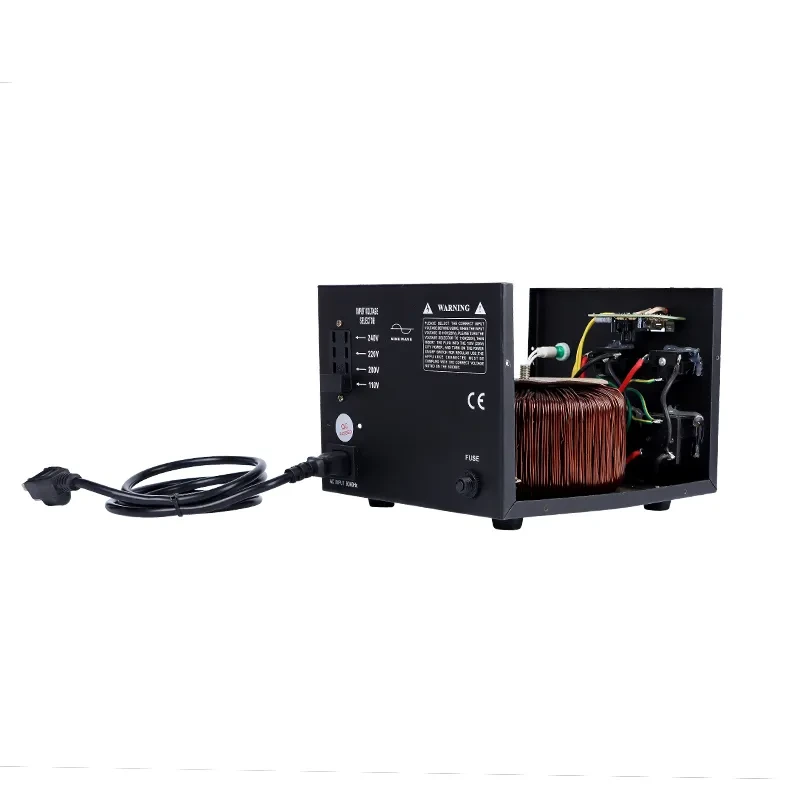
Most people in Jordan who search for a voltage converter are actually shopping for a transformer. The two words get used interchangeably online, but they are not the same product, and picking the wrong one is the fastest way to burn out a refrigerator compressor or a treadmill motor. If your 110V appliance has a motor in it, a compressor, a heating element that draws real power, or anything that runs for hours at a time, you want a transformer with copper windings and genuine capacity behind it. If you are only charging a laptop, you do not need either one.
We build transformers in Yueqing, China, and we ship into the Middle East regularly. Jordan is a market where the supply is generally good, the summers are not, and the socket situation can be described politely as mixed. Those three facts shape almost every recommendation I make there, so let me take them one at a time.
Jordan at a Glance: 230V, 50Hz and Four Socket Patterns
Jordan runs on 230V at 50Hz, with 220V still appearing in older documentation and occasionally in older buildings. The national supply is more stable than in many countries at a similar income level, and in Amman you can go weeks without seeing anything unusual at the socket. That said, stability is not the same as precision. A summer afternoon with air conditioning running across a whole district will pull the voltage down, and the further you are from a main substation, the more of that dip you get to see.
The sockets are the part that catches visitors out. Across Jordan you will meet Type B, Type C, Type D and Type G patterns in the same city, sometimes in the same building. Type G, the British pattern with three rectangular pins, is what most newer construction uses. Type D, with three round pins in a triangle, shows up in older buildings. Type C, the European two pin, is common in kitchens and in equipment imported from the continent. Type B turns up in some newer installations and in equipment panels that were specified for the US market. Four patterns, four different plugs, one wall.
So please do not order a transformer and then start hunting for adapters. Tell us what you need on both ends. Your building’s supply needs an input plug that matches the wall, and your 110V appliance needs an output socket that matches its cord. We build units with the plug and socket combination you specify, and that is a normal production request rather than a custom project. A photograph of your wall socket next to your appliance plug is enough for us to confirm the configuration before you pay a deposit.
Converter or Transformer? The Word Really Does Matter
Here is the thing that costs Jordanian buyers the most money. The light, cheap device sold online as a travel voltage converter is not the same animal as a step down transformer, and it is usually rated for a fraction of the load it gets asked to carry. Those small devices often switch or chop the waveform rather than transforming it properly, which is fine for a charging brick and terrible for a motor.
A transformer does one honest thing. It takes 230V in and gives you 110V out through a fixed turns ratio, using copper windings around a laminated core, with no electronics in the power path. There is nothing to malfunction, nothing to reset, and nothing that cares about the shape of the waveform. That is why the units that survive ten years in a hot climate are the heavy ones.
If you have been quoted a very light box for a 2000W load, ask what the winding material is and how the unit was tested. We wind with copper, we test 100 percent of our output in our own factory here in Yueqing, and every shipment goes out with a batch test record showing input voltage, output voltage under load and no-load current. For a market like Jordan, where equipment is expensive and summers are long, that paperwork is worth more than a small saving at the checkout.
What Buyers in Jordan Run on 110V
Our Jordanian inquiries usually come from hotels, clinics, gyms, restaurants, appliance retailers and private households with imported equipment. The appliances fall into a familiar pattern.
- US-spec kitchen appliances — mixers, blenders, air fryers, coffee machines, 700W to 1800W, mostly resistive and easy to run.
- 110V refrigerators and display chillers — 150W to 600W running, compressor driven, and the start is the hard part.
- Laundry equipment built for the US market — 500W to 2000W, with the dryer usually the heavier machine.
- Air conditioners and split units on 110V — 1000W to 2500W, the single hardest household load in a Jordanian summer.
- Gym equipment — treadmills and ellipticals at 1000W to 2200W, motor plus control board, and sensitive to supply quality.
- Dental and medical equipment — US-spec chairs, sterilisers and small imaging units, where downtime is measured in cancelled appointments.
- Water pumps and booster sets — 300W to 1500W induction motors, common in buildings where rooftop tanks feed the upper floors.
- Televisions, audio and office equipment — 50W to 400W each, individually light but often running as a group.
The other half of the list does not need any of this. Laptops, phone chargers, most monitors, a large share of modern televisions and a long tail of small electronics carry a 100-240V, 50/60Hz rating. Those work on Jordanian mains with nothing more than a plug adapter. Putting them on the transformer just eats capacity you were saving for a compressor, and compressors are unforgiving about an undersized supply. Read the nameplate first. It takes thirty seconds and it often changes the model you should buy.
Sizing for Jordanian Conditions: Summer Peaks and Rooftop Solar
My advice for Jordan starts with 25 to 30 percent spare capacity above your running watts, and goes up from there for motor loads and for anything that has to run through a hot afternoon.
There are two reasons. When the input voltage dips during a summer peak, a transformer running at or near its rating works harder and runs hotter, because the same load current at a lower input voltage means more primary current and more heat in the winding. Headroom keeps it out of that zone. The second reason is practical: households and businesses in Jordan add equipment over time, and a unit sized exactly for today’s load is one you replace in two years.
Rooftop solar deserves a mention because it is so common in Jordan. If your transformer is running behind a hybrid inverter rather than straight from the grid, the quality of that supply depends on the inverter, and cheaper inverters do not always produce a clean sine wave. A transformer will pass whatever waveform it is given straight through, so a rough supply stays rough at the output. If your setup is solar-fed, size the transformer generously and keep sensitive electronics on a proper uninterruptible supply.
Let me put numbers on the sizing decision. A restaurant with a 110V display chiller at 400W, a 1500W commercial blender, a 2000W imported fryer and 300W of audio. The fryer and the blender can easily overlap during service, so call it 3800W of mixed load plus the chiller compressor. Add 30 percent headroom and you are looking at a 5000VA unit, which is exactly the STU-5000. Take the same site and split the loads across two smaller units in different parts of the kitchen, and the numbers get more comfortable, but you must not run extension leads from one transformer into three different rooms. In a hot climate, an overloaded transformer is a transformer with a short life.
| Typical load in Jordan | Running watts | Load type | Suggested unit |
|---|---|---|---|
| 110V fridge or display chiller | 150 – 600 W | Compressor motor | ST-2000 |
| Kitchen appliance group | 900 – 1800 W | Resistive, high inrush | ST-2000 or STU-3000 |
| Washer or dryer, US spec | 500 – 2000 W | Motor plus heater | STU-3000 |
| Air conditioner or split unit | 1000 – 2500 W | Compressor, heavy start | STU-3000 or STU-5000 |
| Treadmill or gym machine | 1000 – 2200 W | Motor and drive board | STU-3000 |
| Water pump or booster set | 300 – 1500 W | Induction motor | STU-3000 |
| TV, audio and small electronics | 50 – 400 W | Electronic | DT-1000VA or ST-2000 |
| Dental or clinic equipment | 200 – 1200 W | Mixed, sensitive | ST-2000 |
If you are not sure what your appliances add up to, send us the list and we will add it up with you. That is genuinely the fastest way through this.
Summer in Aqaba and the Jordan Valley: Derating Is Not Optional
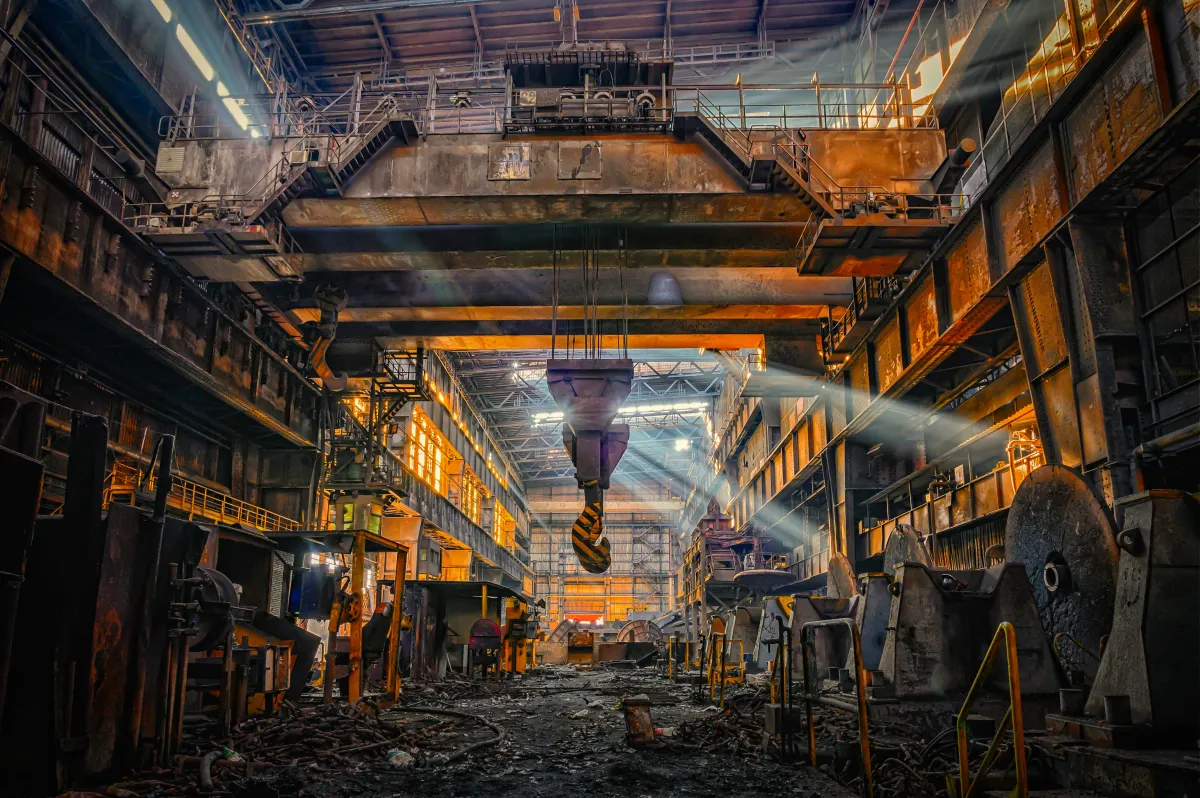
An equipment room in Aqaba or the Jordan Valley in July is not a normal operating environment. Ambient temperatures over 45 degrees Celsius are routine, and a transformer comfortable at 25 degrees runs far hotter at 45, with a lower usable capacity as a result. This is how insulation classes work, and it applies to every brand and every country of origin. Nobody escapes it.
Three habits help. Mount the unit where air can move around it, not in a closed cupboard with the cleaning supplies. Keep it off the floor and out of direct sun, because a steel case sitting in sunlight is a heat collector. And if the unit has to live in an unconditioned room, buy the next size up so it runs at half its rating instead of three quarters. That one decision will do more for service life than any other change you can make.
Dust is the other quiet killer in this region. Fine dust blocks vents, and a transformer with blocked vents has no way to shed heat. Clean the vents monthly through summer, do not stack boxes on top of the case, and keep the cable entries sealed so insects and moisture stay where they belong. We use copper windings rather than aluminium for exactly this reason. Aluminium runs hotter at the same rating, and hot insulation is what ends a transformer’s life.
The Units We Send to Jordan
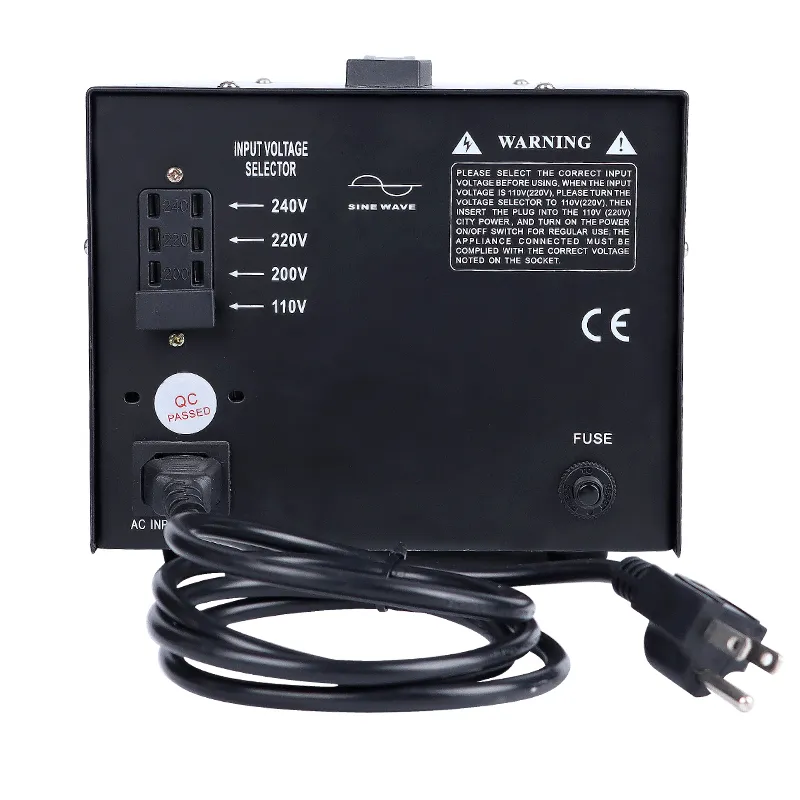
The ST-2000 is our 2000VA step down transformer, 220V to 110V, with RCD protection built in. It suits a refrigerator, a television and audio setup, a kitchen appliance group used one at a time, or an office printer. The RCD matters in a building where the earthing may not be what a US appliance expects, and in older Jordanian buildings that is worth having.
The STU-3000 and STU-5000 are the bidirectional high power units and they carry the loads that define the Jordanian market: air conditioners, laundry equipment, treadmills, pumps and commercial kitchen machines. Bidirectional means the same box steps up as well as down, so a hotel that ends up with both 110V and 230V equipment gets one answer instead of two products.
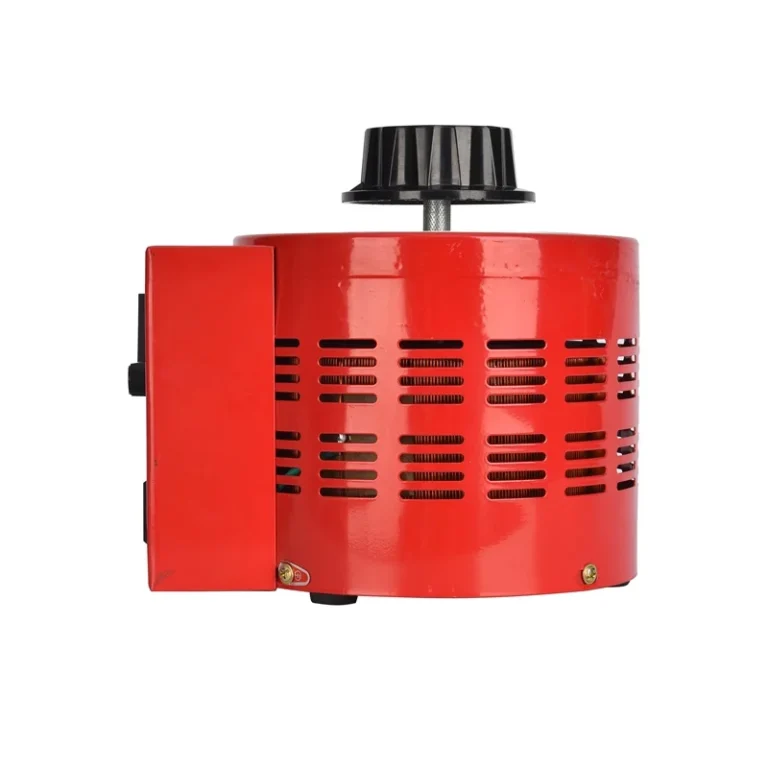
The DT-1000VA is the bidirectional automatic unit for lighter duties, useful for a reception counter, a small office with a router and CCTV, or one fixed-input device. Our Variac range at 500VA, 1KVA, 2KVA and 3KVA gives you adjustable output voltage, and service technicians in the region tend to want one, because it lets them bring an unfamiliar machine up gradually rather than feeding it full mains on a day when the mains is misbehaving anyway.
MOQ, Lead Time and Shipping Through Aqaba
On the commercial side there are no surprises. MOQ is 10 pieces, so a household order usually means a small stock or a shared order with neighbours, while hotels, clinics and contractors order comfortably above the minimum. Production runs 15 to 25 days depending on quantity and customisation, we ship FOB Ningbo or Shanghai, and every unit carries a 12-month warranty.
Almost all of our Jordanian freight enters through Aqaba, the country’s only seaport, and then moves inland by truck to Amman, Zarqa, Irbid, Madaba or wherever you are working. The booking stays in your name so you keep control of costs, and if you do not have a forwarder we will share the names our other buyers in the region use. For urgent single units, air freight into Queen Alia is workable, and clinics often take that route.
On paperwork, expect the commercial invoice, packing list, bill of lading and certificate of origin. Jordan’s standards authority runs a conformity assessment programme for a range of imported electrical goods, so ask your customs broker which requirements apply to your HS code before the goods leave China, not after they land in Aqaba. Jordan also applies a general sales tax, currently 16 percent on most goods, so build that into your landed cost. We supply the technical file, test records and declarations you need to support the clearance.
Customisation for Jordan usually means the right input plug for the building, a 110V output socket that suits your appliance, output set to 110V or 120V to match the labels, and Arabic or bilingual labelling where the buyer wants it. If you are fitting out several sites, share the schedule and we will stage deliveries around your installation plan. For a look at how a nearby market is wired, our guide to a Voltage Converter for Turkey: 230V to 110V Guide covers a country with a similar 230V picture and its own quirks. You can also browse our step up & down transformers range, and there are voltage guides by country across the site.
What to Send Us for a Jordan Quote
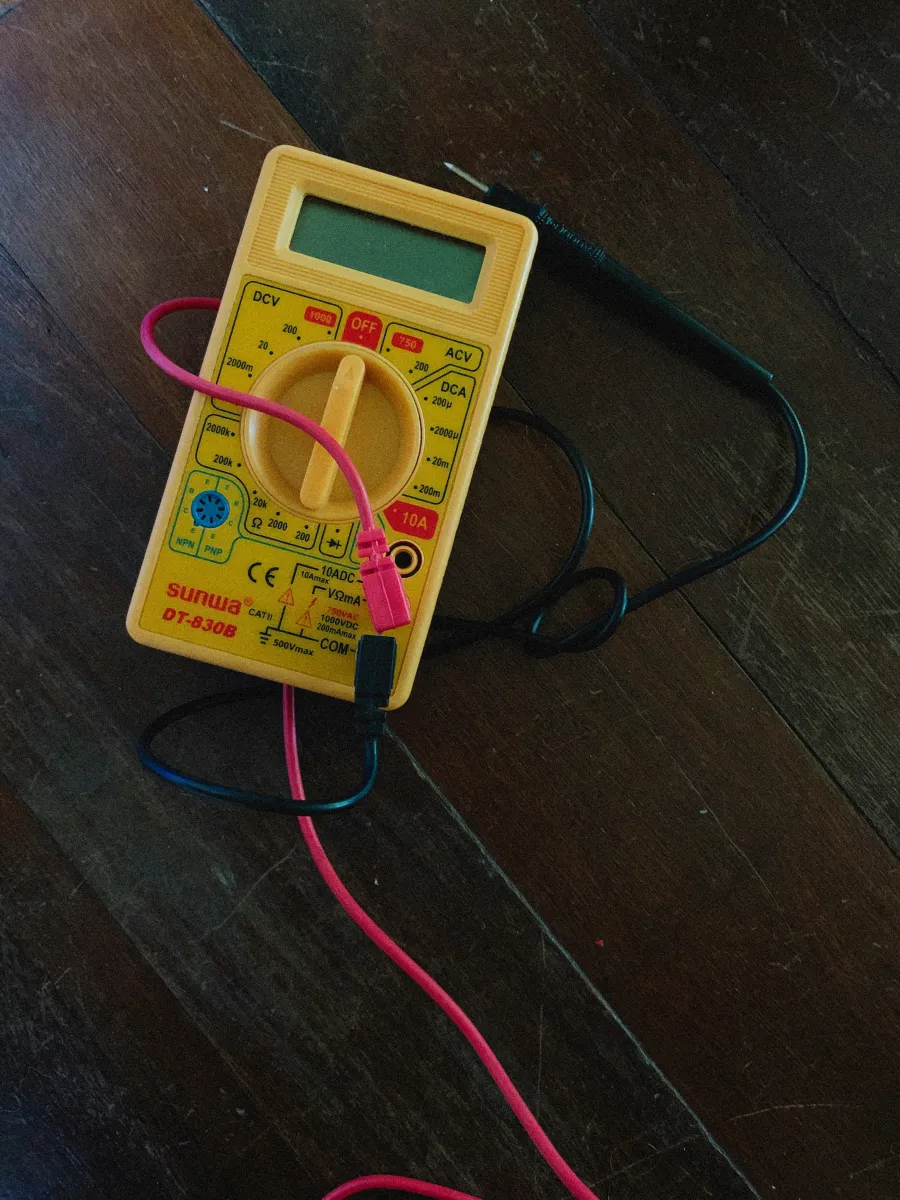
Send your appliance list with the watts from each nameplate, a photo of one or two labels, the socket pattern in the building, whether the supply is grid or solar-fed, and how the equipment will be used. Mention if the unit will sit in an unconditioned room in Aqaba or the Valley, because that changes the size I would recommend and I would rather adjust before quoting than after you tell me the case is running hot.
A half finished list is fine. Working out whether a 1500W air fryer needs more capacity than a 2000W dryer is exactly the kind of question we answer all day, and asking is far cheaper than replacing a compressor.
Voltage Converter Questions Buyers in Jordan Ask Most
These come up again and again in our Jordan inbox, answered the way I would answer them on a call.
What voltage and plug types does Jordan use?
Jordan runs 230V at 50Hz, with 220V still quoted in older buildings. You will meet Type B, Type C, Type D and Type G sockets, sometimes in the same building. Send us a photo of your wall socket and your appliance plug and we will build the transformer with the correct input plug and output socket.
Do I need a voltage converter or a step down transformer?
If your 110V appliance has a motor, a compressor or a real heating element, you want a step down transformer with copper windings. The light travel converters are rated for a fraction of that load and cannot carry a fridge or a treadmill. For a laptop or phone charger you need neither, only a plug adapter.
How hot is too hot for a transformer in Jordan?
Ambient temperature above 40 degrees costs you usable capacity, and rooms in Aqaba or the Jordan Valley often sit well above that in summer. Mount the unit where air can circulate, keep it out of direct sun and off the floor, and choose the next size up so it runs at half its rating rather than three quarters.
Can I run a 110V air conditioner in Jordan on 230V?
Yes, but size it for the compressor, not the running watts. Start at 150 percent of running watts and round up to the next model, which usually means the STU-3000 or STU-5000. Keep the unit where air can move around it, and never run a compressor at the transformer rating.
What are your MOQ, lead time and shipping terms for Jordan?
MOQ is 10 pieces, production takes 15 to 25 days depending on quantity and customisation, and we ship FOB Ningbo or Shanghai with a 12-month warranty. Freight clears through Aqaba and moves inland by truck. We supply the test records and technical documents your customs broker will ask for.
Send us your appliance list and the socket you have on the wall, and we will size the converter for Jordan. Tell us the watts, whether the site is grid or solar-fed, and which city you are in. We will come back with a recommended model, a quantity and a price, normally the same working day.
Or talk to us directly: WhatsApp +86 197 3022 6757 · Email sales@wilmall.com
MOQ 10 pcs · Lead time 15-25 days · FOB Ningbo or Shanghai · 12-month warranty