Step Down Transformer for Argentina: 220V to 110V Guide
Argentina surprises people. It is one of the very few countries in the Americas that runs on 50Hz rather than 60Hz, and its wall socket is the only Type I pattern in the world that will not accept the Type I plugs used in Australia, New Zealand or China. So a buyer in Buenos Aires trying to run an imported 110V appliance is dealing with two mismatches at once, not one. Voltage is the easy half. Frequency is the half that quietly shortens the life of anything with a motor in it.
We manufacture step down transformers in Yueqing, China, and Argentina is a market where we spend most of the first email correcting expectations rather than quoting a price. Buyers arrive with a US-market appliance, a 220V wall, a socket nothing fits, and an assumption that any transformer box will do the job. Usually it will, but the size and the spec have to be right, so let me walk you through what actually matters there.
Argentina: 220V at 50Hz and a Socket Nothing Else Fits
Argentina’s nominal supply is 220V at 50Hz. Some networks measure closer to 230V, and older documentation still refers to 220V, so treat 220V as the figure to design around and expect the real number to sit somewhere nearby. Plugs and sockets follow the Argentine standard, which is Type I as most people describe it, with two flat pins set at an angle and a vertical earth pin. What trips people up is that the Argentine version mirrors the Australian and Chinese pattern, so the pins are in the wrong places for each other. Do not assume a plug you brought from Sydney, Auckland or Shenzhen will seat properly in an Argentine socket. Often it will not.
Inside the building there is a second wrinkle. In many Argentine apartments and houses, the 220V available at an outlet is taken between two phases of a 380V three-phase service rather than between a phase and neutral. That is normal engineering there, but it means the reference to earth is not always where an imported appliance expects it to be. If your appliance has a metal case and you are running it through a transformer on a two-phase supply, the earth continuity of the whole chain deserves ten minutes of an electrician’s time. In our experience that ten minutes is what separates a clean install from a puzzling one.
Where Argentine Voltage Moves Most
Greater Buenos Aires is a large load on an old distribution network. On an ordinary day the voltage holds well enough. During a January heat wave, with air conditioning running across whole neighbourhoods from morning until midnight, feeders sag and the reading at your wall can drop noticeably. The effect is worse at the edges of the metropolitan area than in the centre, and worse again in buildings where several apartments share a distribution board that was never designed for the load it now carries.
Outside the metropolitan area the picture varies. Córdoba, Rosario and Mendoza are generally steady. Head further out and the low voltage runs get longer and the swings get wider. In parts of the north and the south, an afternoon in summer can move the supply by 10 percent or more in the space of an hour.
Here is why that matters to your choice of transformer. A step down transformer does not hold a voltage steady, it multiplies it by a fixed ratio. A 220V to 110V design has a ratio of exactly 0.5. If your wall is at 240V you get 120V at the outlet, which most 110V appliances tolerate. If your wall drops to 198V, you get 99V, and a compressor or an induction motor at 99V pulls more current and runs hotter than it was ever designed to. The transformer did nothing wrong. It simply reported the truth about your supply, and the appliance paid for it.
The Miami Shopping Trip and What It Puts in Argentine Homes
Ask anyone in Buenos Aires about buying appliances abroad and you will hear the same story: a trip north, a suitcase or a container, and a house suddenly full of 110V equipment. Add the imported medical and industrial gear that arrives through the same channels, and the list we see in our inbox looks like this.
- US-spec kitchen equipment — mixers, blenders, air fryers, coffee machines, pressure cookers, mostly 700W to 1800W and resistive.
- 110V refrigerators and freezers — 150W to 600W running, with a compressor that starts hard and does not enjoy low voltage.
- Laundry equipment built for the US market — 500W to 2000W, the dryer being the heavier machine and the more demanding one.
- Fitness equipment — treadmills and elliptical machines at 110V, often 1000W to 2200W, driven by a motor and a controller board that is sensitive to supply quality.
- Power tools and workshop machines — 500W to 2000W, used in bursts and hard on start-up.
- Dental and clinic equipment — US-spec chairs, sterilisers and small imaging units, where a voltage problem becomes a patient scheduling problem.
- Audio, television and gaming gear rated 110V only — 50W to 400W each, individually light but often installed as a group.
- Water pumps and pressure sets — 300W to 1500W induction motors, common in houses and small apartment buildings.
Then there is the list of things that do not need a transformer at all. Laptops, phone chargers, most monitors, a good share of modern televisions, camera chargers and countless small gadgets carry a 100-240V, 50/60Hz label. Those work on Argentine mains with a plug adapter, nothing more. If you put them on the transformer you are burning capacity that your refrigerator compressor needs, and compression loads are the ones that punish an undersized unit.
50Hz in a 60Hz Neighbourhood
Argentina runs at 50Hz, while almost everything designed for the United States was built for 60Hz. This is the point most buyers miss, and it is worth understanding because it changes what you can reasonably expect from a transformer.
Resistive appliances do not care. A kettle, an iron, a toaster or a space heater produces the same heat on 50Hz as on 60Hz. Where frequency shows up is in motors and in anything that uses line frequency as a clock reference. An induction motor designed for 60Hz will run about 17 percent slower at 50Hz, and because its cooling fan is mounted on the same shaft, it also moves less air while drawing a little more magnetising current. A treadmill motor or a compressor that was already running near its thermal limit in Buenos Aires in January is a machine with very little margin left.
Given all of that, the practical advice is straightforward. Give motor loads much more headroom than resistive loads, avoid running a compressor or a treadmill at the transformer’s rated limit, and never chain equipment through a single undersized box so that three rooms can share one transformer. The appliance will work. It just will not work forever, and a transformer that is generously sized is the cheapest life insurance you can buy for it.
Sizing Against Argentine Voltage Swings
For a market with stable power I would suggest 25 percent spare capacity on top of your running watts. For Argentina I would go to 30 percent, and I would add another step if the unit is going to live in a hot room or run all day.
There are two reasons for that. A transformer running near its rating on a sagging supply gets hotter than one loafing at half load, and heat is what ends the working life of insulation. The other reason is human. Nobody buys the appliances they think they will buy. Two years from now the same household has a second fridge, a bigger television and a treadmill, and the transformer that was correctly sized for year one is now the bottleneck in year three.
Take a worked example. A house with a 110V fridge drawing 400W, a 1500W microwave, a 1200W air fryer and 300W of audio and television. The microwave and the air fryer will overlap, so call the realistic peak about 3000W of mixed load, then add the fridge compressor on top. With 30 percent headroom, you are looking at a 4000VA to 5000VA unit, which is STU-5000 territory. If the same house only ever runs kitchen appliances one at a time, an STU-3000 covers it comfortably. That difference of one model is worth getting right at the quotation stage rather than discovering in February.
| Typical Argentine load | Running watts | Load type | Suggested unit |
|---|---|---|---|
| 110V fridge or freezer | 150 – 600 W | Compressor motor | ST-2000 |
| Microwave, air fryer, kitchen group | 900 – 1800 W | Resistive, high inrush | ST-2000 or STU-3000 |
| Washer or dryer, US spec | 500 – 2000 W | Motor plus heater | STU-3000 |
| Air conditioner or split unit | 1000 – 2500 W | Compressor, heavy start | STU-3000 or STU-5000 |
| Treadmill or gym machine | 1000 – 2200 W | Motor and drive board | STU-3000 |
| Water pump or pressure set | 300 – 1500 W | Induction motor | STU-3000 |
| TV, audio and small electronics | 50 – 400 W | Electronic | DT-1000VA or ST-2000 |
| Dental chair or clinic device | 200 – 1200 W | Mixed, sensitive | ST-2000 |
Send us the appliance list and we will do this arithmetic with you. It is the fastest way to land on the right model, and it costs nothing.
Heat, Dust and the Argentine Summer
An Argentine summer can push a room past 40 degrees Celsius for days at a time, and a transformer that was perfectly happy at 25 degrees will run much hotter in that room. Two habits make a real difference: keep the unit where air can circulate around it instead of inside a closed cupboard, and keep it out of direct sun and off the floor. If the unit has to live in an unconditioned space, buy the next size up so it runs at half its rating rather than three quarters. That single decision is the difference between a five-year unit and a fifteen-year unit.
Dust is the second half of the story. Vents clog quietly, and a transformer with blocked vents has no way to shed the heat it makes. Clean the vents once a month through summer, do not stack anything on top of the case, and keep the cable entries sealed so insects and moisture stay out.
We wind with copper rather than aluminium, and hot climates are exactly where that matters. Aluminium windings run hotter at the same rating, and hot insulation is what finally kills a transformer. Every unit we make is tested 100 percent in our own factory in Yueqing and ships with a batch test record showing input voltage, output voltage under load and no-load current, so if a question ever comes up we can look at the numbers rather than guess. All of our units carry a 12-month warranty.
Models We Send to Argentina
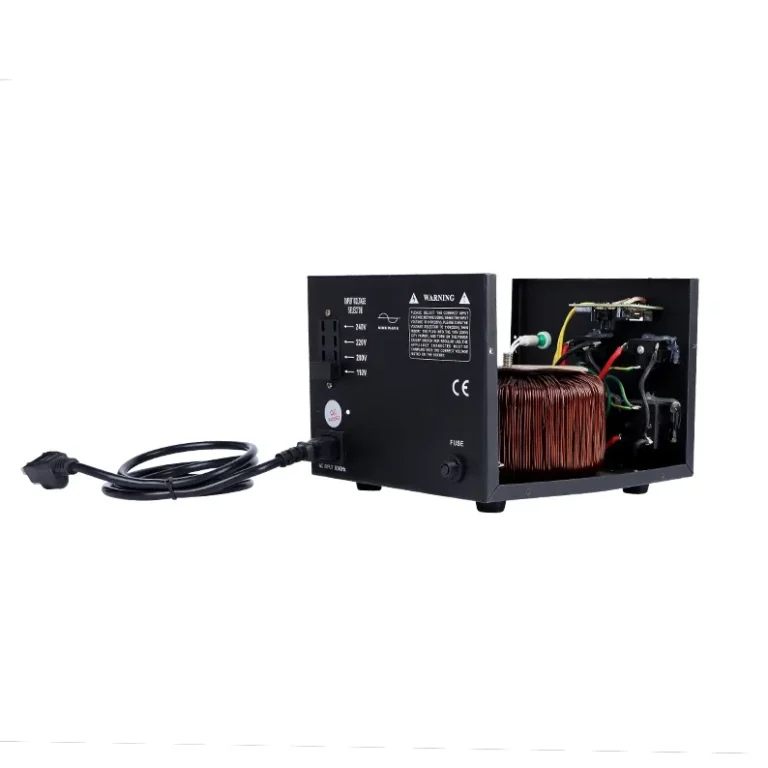
The ST-2000 is our 2000VA step down transformer, 220V to 110V, with RCD protection built in. It handles a single refrigerator, a television and audio setup, a kitchen appliance group used one at a time, or an office printer. The RCD earns its place in buildings where the earthing may not be what a US appliance expects, and that covers a good many Argentine apartments.
The STU-3000 and STU-5000 are our bidirectional high power units, and they carry the loads that matter most in Argentina: air conditioners, laundry equipment, treadmills, pumps and workshop machines. Bidirectional means the same box steps up as well as down, so the day you buy a 110V device and the day you buy a 220V device are both covered by one purchase.
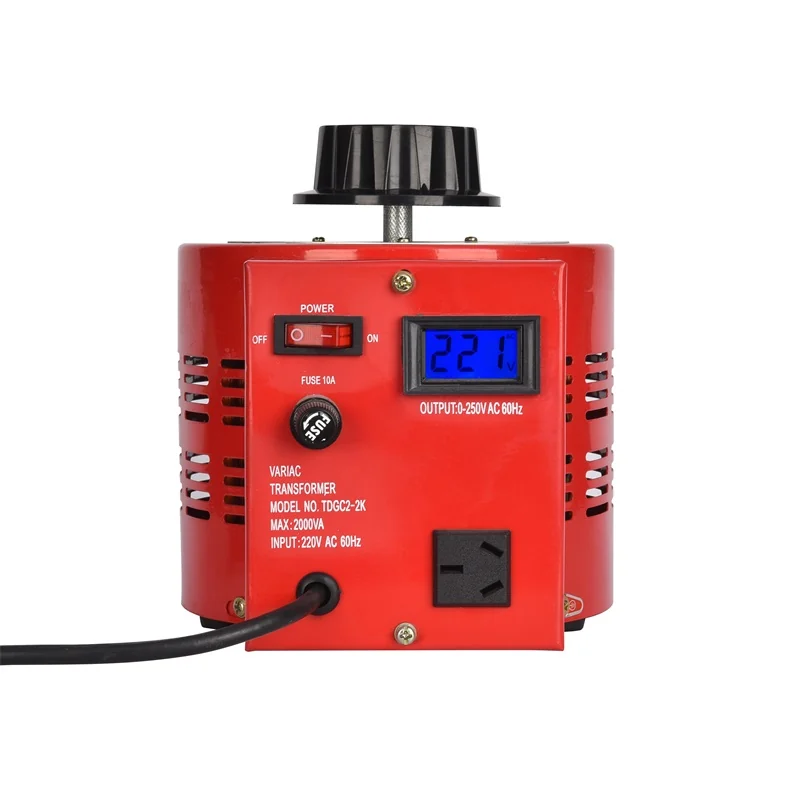
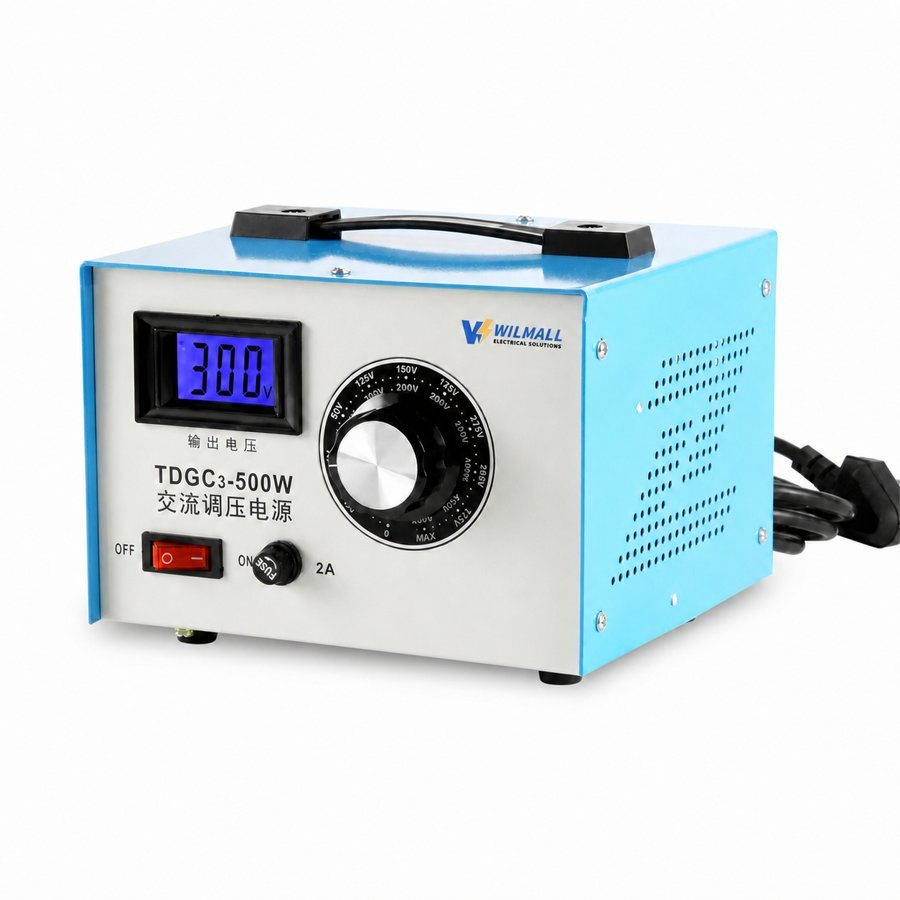
The DT-1000VA is the bidirectional automatic unit for smaller jobs, useful for a shop counter, a small office running a router and CCTV, or one fixed-input device. Our Variac range, at 500VA, 1KVA, 2KVA and 3KVA, gives you an adjustable output voltage. Service technicians in Argentina tend to like having one, because it lets them bring an unfamiliar machine up gradually instead of feeding it full mains on a day when the mains is misbehaving anyway.
Lead Time, MOQ and Shipping Into Buenos Aires
Commercially, there is nothing complicated. MOQ is 10 pieces, so a household order usually means ordering a small stock or joining with neighbours, while shops, gyms, clinics and contractors order well above the minimum. Production takes 15 to 25 days depending on quantity and customisation. We ship FOB Ningbo or Shanghai, and every unit carries a 12-month warranty.
On the shipping side, most Argentine container freight enters through the Port of Buenos Aires, with Zárate and Rosario used for some cargo and Bahía Blanca further south. Air freight through Ezeiza makes sense for small urgent orders, and clinics often go that route for a single machine. The booking is yours so you keep control of the cost, and if you do not have a forwarder we will happily share the names other buyers in the region work with.
Documentation needs more attention in Argentina than in most markets. Expect the commercial invoice, packing list, bill of lading and certificate of origin as standard, and expect your customs broker to ask about mandatory safety certification for the product category, which has to be issued in the name of the importer of record. Argentine customs also applies VAT and additional withholdings on many import transactions, so ask your broker for a landed cost estimate before you commit to a retail price. We supply the technical file, test records and declarations you need to support the application.
Customisation for Argentina usually means the Argentine Type I plug on the input, a 110V output socket that suits your appliance, output set to 110V or 120V to match the labels, and Spanish labelling where the buyer wants it. If you want a wider view of how the region is wired, our guide to a Step Down Transformer for Brazil: 220V to 127V Guide covers the neighbour that uses an entirely different voltage and frequency pattern. You can also browse our step up & down transformers range, and there are voltage guides by country on the site if you are working across several markets.
What We Need From You for an Argentine Quote
Send the watts from each appliance nameplate, a photo of one or two labels, whether the supply is a house, an apartment or a workshop, the socket situation in the building, and how the equipment will be used. If you know your voltage has been wandering, say so, because that shifts my recommendation and I would rather adjust before the quotation than after you tell me the outlet reads 99V.
Half a list is fine. Deciding whether a 1500W treadmill or a 2000W dryer needs the bigger unit is exactly the kind of question we answer all day, and it is a great deal cheaper to ask us than to replace a motor controller.
Argentina Voltage Questions Buyers Ask Most
These are the questions we get most often from Argentina, answered the way I would answer them on a call.
What voltage and frequency does Argentina use?
Argentina runs 220V at 50Hz, with some networks measuring nearer 230V. It is one of the few countries in the Americas on 50Hz rather than 60Hz, which matters for anything with a motor. Reading 220V and 50Hz on an appliance label means it is already correct for Argentine power.
Which plug type does Argentina use, and will my imported plug fit?
Argentina uses the Type I socket, with two angled flat pins and an earth pin. The pin positions are mirrored compared with the Australian and Chinese versions, so those plugs will not seat correctly. We build the transformer with the Argentine plug on the input and the output socket your 110V appliance needs.
Will a step down transformer hold 110V steady when Argentine voltage sags?
No. A transformer multiplies by a fixed ratio, which is 0.5 for a 220V to 110V unit, so 240V gives 120V and 198V gives 99V. If your supply genuinely swings, put a stabiliser or automatic voltage regulator ahead of the transformer rather than buying a bigger box and hoping.
Can I run a 110V treadmill or air conditioner in Argentina?
Yes, but size it generously. Motor loads should start at 150 percent of the running watts, and a 60Hz motor running on Argentine 50Hz turns about 17 percent slower with less cooling. A 1500W treadmill points to the STU-3000 rather than a smaller unit. Never run a compressor or treadmill at the transformer rating.
What are your MOQ, lead time and shipping terms for Argentina?
MOQ is 10 pieces, production runs 15 to 25 days depending on quantity and customisation, and we ship FOB Ningbo or Shanghai with a 12-month warranty. Most container freight clears through Buenos Aires, with Zarate and Rosario for some cargo. We supply test records and technical documents for your customs broker.
Send us your appliance list and we will size the transformer for Argentine conditions. Tell us the watts, whether you are on a house or apartment supply, and which city you are in. We will reply with a recommended model, a quantity and a price, usually the same working day.
Or talk to us directly: WhatsApp +86 197 3022 6757 · Email sales@wilmall.com
MOQ 10 pcs · Lead time 15-25 days · FOB Ningbo or Shanghai · 12-month warranty