Transformer Taps and Voltage Regulation Explained
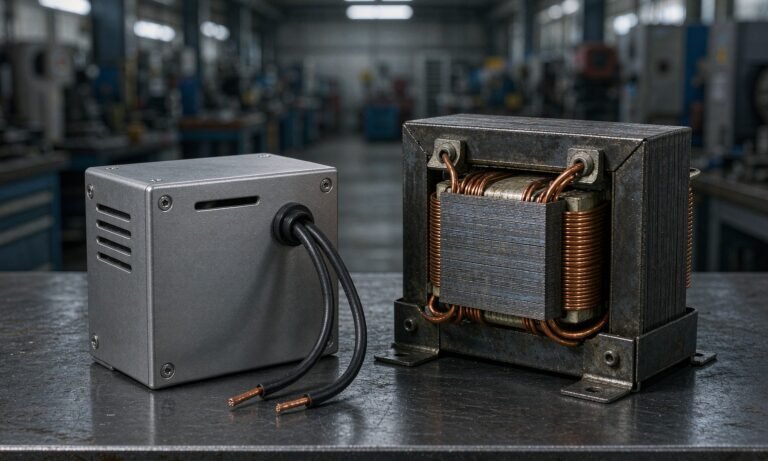
The little wires sticking out of a transformer are not decoration — they are taps, and they are the difference between an appliance that runs right and one that runs hot, slow or dead. Taps let you adjust the output voltage to match the supply, and understanding them saves real money and real headaches. This guide explains what taps are, when you need them, and how to use them correctly.
What taps are
A tap is an extra connection point on a transformer winding that lets you choose the input voltage the unit is wound for. A transformer with 220V / 230V / 240V input taps can be wired for any of those supplies, keeping the output accurate whatever your grid delivers. Without taps, the unit is wound for one voltage, and anything different pushes the output off-spec.
The output side can have taps too — a 100V / 110V secondary tap lets you match the appliance voltage, which matters for Japanese 100V equipment. Taps are cheap to build into the winding and they make one transformer serve a range of inputs and outputs.
When you need input taps
| Your grid | Fixed-winding transformer | With input taps |
|---|---|---|
| 220V nominal | Works as designed | Same — use the 220V tap |
| 230V nominal | Output runs ~4% high | Use the 230V tap, output accurate |
| 240V nominal | Output runs ~9% high | Use the 240V tap, output accurate |
| Voltage varies by area | Output drifts | Match the tap to the reading |
The table tells the story. If your country runs 230V or 240V and the transformer is wound for 220V, the output rises proportionally — a 110V unit can deliver 115-120V. Sensitive electronics notice. Taps fix it for free at the factory and remove the question forever.
Output taps for appliance voltage
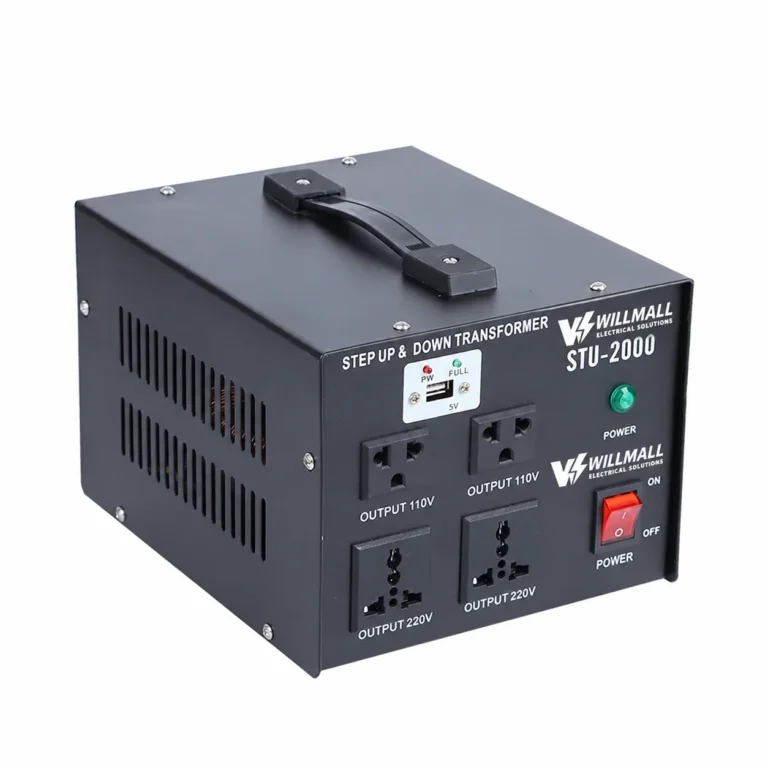
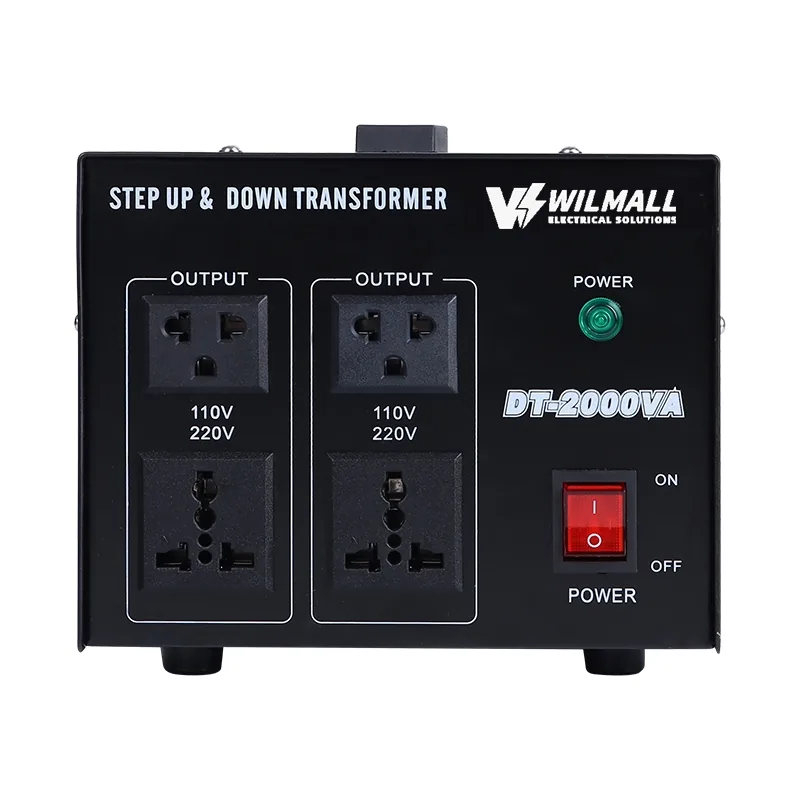
Here is the thing: output taps matter as much as input taps. A transformer with a 100V / 110V secondary serves both Japanese appliances (100V) and US appliances (110V) from one unit. We build this as standard on the ST series because the mixed-appliance household is the norm across Asia, the Middle East and Africa.
If your appliance is 100V 50Hz-only and motorised, the 100V tap is the one to use. If it is a US 110V appliance, the 110V tap. One transformer, both answers.
How to use taps correctly
- Check your grid voltage first. A multimeter reading of the wall settles which input tap to use.
- Wire the tap that matches. Do not leave a 240V unit on the 220V tap — the output runs low.
- Match the appliance to the output tap. Japanese 100V on 100V, US 110V on 110V.
- Never bridge two taps. That shorts the winding and burns the unit.
- Keep the tap wiring diagram. It ships with the unit; tape it to the case if useful.
Voltage regulation and why it matters
Voltage regulation is how much the output voltage changes between no load and full load. A good transformer holds its output within a few percent under load — the voltage is stiff. Poor regulation means the output sags when the appliance draws current, which makes motors labour and electronics brown out. Copper winding and correct core design give good regulation. The batch test record shows the measured regulation for your unit.

Common mistakes with taps
- Using the wrong input tap. The output runs high or low and the appliance suffers.
- Bridging taps. A short circuit that burns the winding instantly.
- Ignoring output taps. A 100V Japanese appliance on a 110V output runs hot.
- Assuming one voltage fits all. Grids vary by region; taps match the reality.
- Not asking for taps. They are free at the factory and impossible to add later.
Why buy from a factory directly
Wilmall builds input and output taps into the ST series as standard options, and the connection diagram shows exactly how to wire each tap. Every unit is tested at no-load and full load, with the regulation documented in the batch test record. MOQ 10 pcs per model, 15-25 day lead time, FOB Ningbo or Shanghai with CE / RoHS documents.
The tap question in mixed-voltage households
Households across Asia, the Middle East and Africa mix Japanese 100V appliances and US 110V appliances in the same kitchen. A transformer with a 100V / 110V output tap serves both from one unit. This is why we build the tap as standard — the mixed-appliance household is the norm, not the exception, in our markets.
Distributors who stock the tap version answer every customer with one product. It is the single most practical feature for the markets we serve.
Regulation and the batch test record
Every Wilmall transformer ships with a batch test record showing the no-load and full-load measurements, including the voltage regulation. That record tells you exactly how stiff the output is under load. A unit with documented regulation above 3-5% is a quality unit; a claim without a record is just a claim.
When you compare suppliers, ask for the test record. It settles the quality question in minutes.
The short version
Taps let one transformer match your grid and your appliances, and regulation tells you how stiff the output is under load. Ask for input taps to match your voltage, output taps to match the appliances, and the test record to prove the regulation. That is the whole taps story.
The tap question in mixed-voltage households
Households across Asia, the Middle East and Africa mix Japanese 100V appliances and US 110V appliances in the same kitchen. A transformer with a 100V / 110V output tap serves both from one unit. This is why we build the tap as standard — the mixed-appliance household is the norm, not the exception, in our markets.
Distributors who stock the tap version answer every customer with one product. It is the single most practical feature for the markets we serve.
Regulation and the batch test record
Every Wilmall transformer ships with a batch test record showing the no-load and full-load measurements, including the voltage regulation. That record tells you exactly how stiff the output is under load. A unit with documented regulation within a few percent is a quality unit; a claim without a record is just a claim.
When you compare suppliers, ask for the test record. It settles the quality question in minutes.
The short version
Taps let one transformer match your grid and your appliances, and regulation tells you how stiff the output is under load. Ask for input taps to match your voltage, output taps to match the appliances, and the test record to prove the regulation. That is the whole taps story.
Taps and the supply voltage question
The most common tap question we get: my grid is 230V, the transformer says 220V input — what happens? The answer is the output runs about 4% high, which is tolerable for most appliances but not ideal for sensitive electronics. The tap version fixes it: wire the 230V tap, the output returns to spec, and the question disappears.
The tap costs nothing at the factory and is impossible to add later. For any market where the grid is not exactly 220V, the tap version is the right buy.
Talk to the factory
Send us your grid voltage and your appliance list, and we will confirm the right tap configuration in one message. Email sales@wilmall.com or WhatsApp +86 197 3022 6757 — that is what our export engineers are for.
The short version
Taps let one transformer match your grid and your appliances, and regulation tells you how stiff the output is under load. Ask for input taps to match your voltage, output taps to match the appliances, and the test record to prove the regulation. That is the whole taps story.
Frequently asked questions
What are transformer taps?
Taps are extra connection points on a transformer winding that let you choose the input or output voltage. A 220V / 230V / 240V input tap keeps the output accurate whatever your grid delivers.
When do I need input taps on a transformer?
If your grid is 230V or 240V, or the voltage varies by area. A 220V-wound unit on a 240V grid delivers output about 9% high. Taps fix it.
What are output taps for?
Output taps like 100V / 110V let one transformer serve both Japanese 100V and US 110V appliances. We build this as standard on the ST series.
How do I wire a transformer tap correctly?
Check your grid voltage with a multimeter, wire the matching input tap, and never bridge two taps. The connection diagram ships with the unit.
What is voltage regulation?
Regulation is how much the output changes between no load and full load. Good regulation means stiff output under load, which protects motors and electronics.
Related reading
- How to Read a Transformer Nameplate
- Transformer VA vs Watts: What Buyers Need to Know
- Step Up and Down Transformer Products
Get a factory-direct quote
Email sales@wilmall.com or WhatsApp +86 197 3022 6757 with your grid voltage and appliance list. We confirm the tap configuration within 24 hours. MOQ 10 pcs.