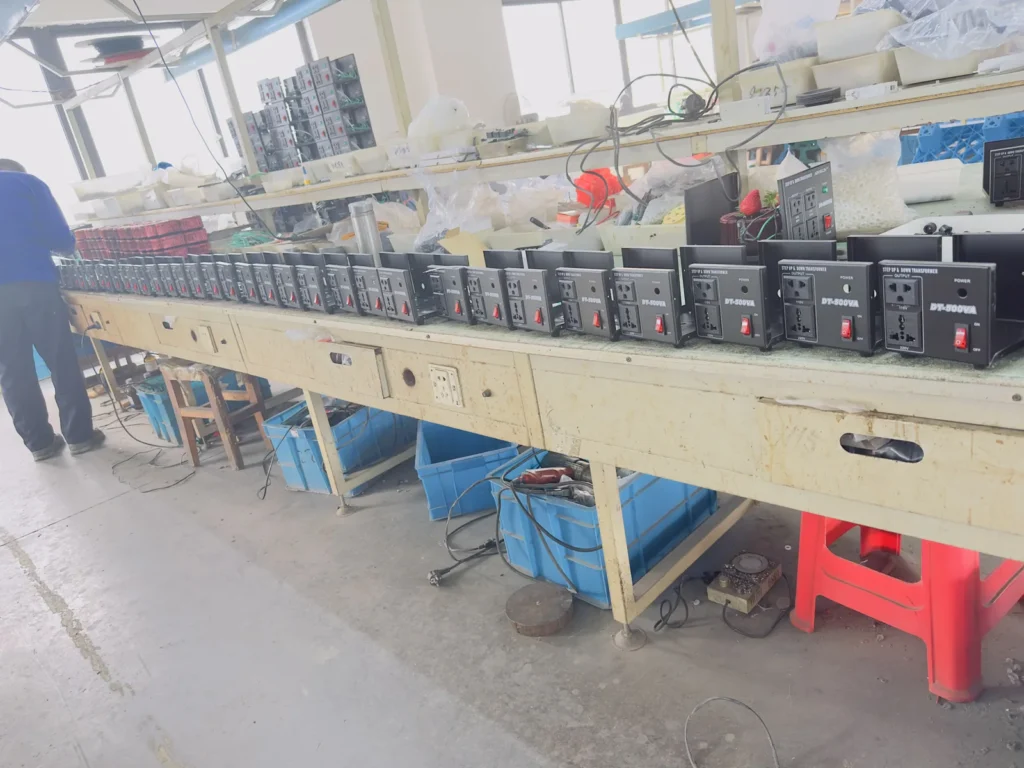
How Much Does a Transformer Cost: Price Guide 2026
How much does a transformer cost is the first question every buyer asks, and the honest answer is: it depends on four things — the VA rating, the winding material, the protection inside, and who you buy from. This guide breaks down the price drivers, gives realistic expectations for the common sizes, and explains why the cheapest quote is rarely the cheapest transformer.
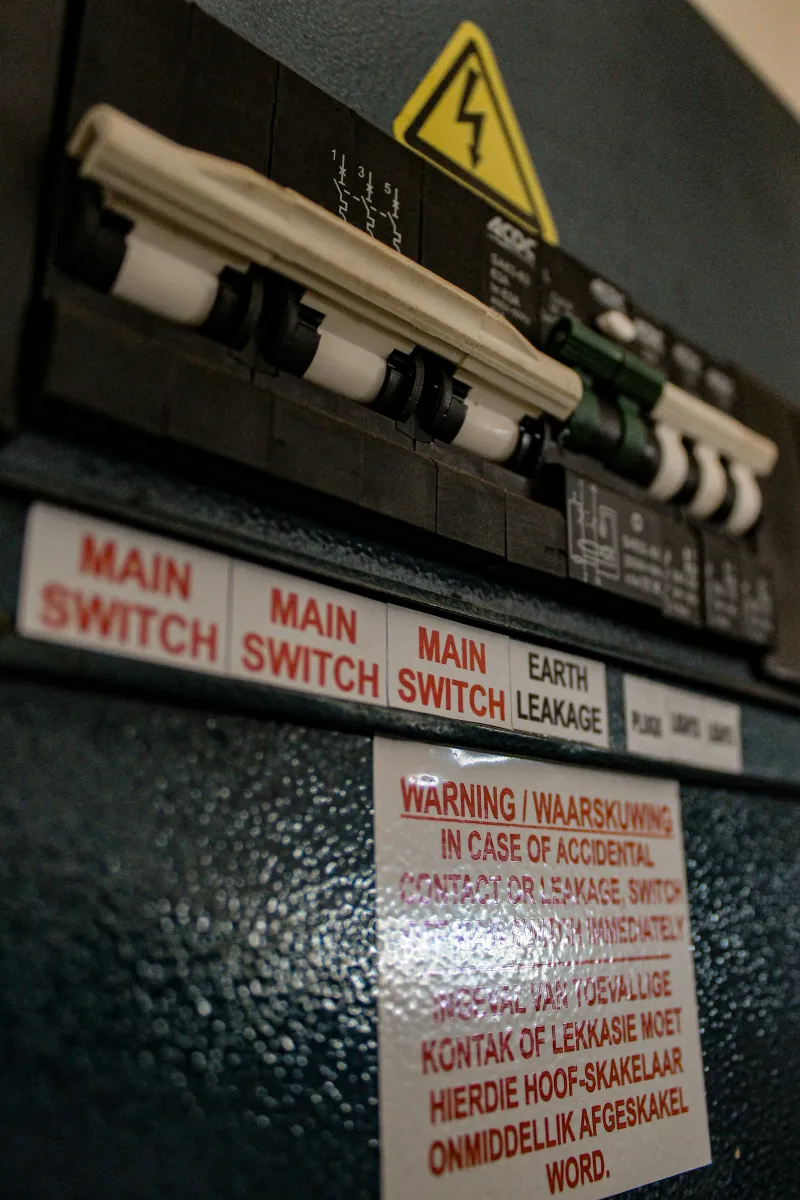
What drives the price of a transformer
- The VA rating. Bigger units cost more — more copper, more steel, more labour. The size is the biggest single price factor.
- The winding material. Copper costs more than aluminium and is worth it. The difference is in the running temperature and the lifespan.
- The protection package. RCD, thermal overload and a proper fuse add cost and add safety. Cheap units skip them.
- The supplier. Factory-direct removes the trading margin. The same unit costs 20-30% less from the factory than through a trader.
The price you see quoted depends on all four, which is why two quotes for the same VA can differ wildly. The cheap one is usually aluminium-wound, unprotected, and from a trader. The honest one is copper-wound, protected, and from the factory. Compare the specs, not just the numbers.
Typical price ranges for common sizes
| Transformer size | Copper, RCD, factory direct | What it covers |
|---|---|---|
| 500VA | budget to mid | Phone chargers, small appliances, blankets |
| 1000VA | budget to mid | Small kitchen, TV, bedroom loads |
| 2000VA | mid | Refrigerators, kettles, most kitchen |
| 3000VA | mid to upper | Washing machines, AC, workshops |
| 5000VA | upper | Dryers, commercial loads, multiple appliances |
These are honest ranges, not exact prices — copper prices move, and the exchange rate matters. The point is the shape: the jump from 2000VA to 3000VA is modest, and the jump to 5000VA is the biggest step. That is why the sizing advice matters — buying one size up is usually affordable, and it protects the appliance and the transformer.
Why copper costs more and is worth it
Here is the thing: copper wire costs roughly double aluminium per metre, and a transformer is mostly wire. That is the real price difference. What you get for it: copper conducts better, runs cooler at the same load, and lasts years longer. On a transformer that runs daily, the copper premium pays for itself in lifespan and fewer failures. Ask the supplier which winding material the quote covers — it is the most common way quotes get cheap.
The hidden costs of a cheap transformer
- A unit without RCD. The safety layer is missing, and retrofitting is not possible.
- No batch test record. You cannot verify what you bought.
- No warranty support. The cheap quote disappears when the unit fails.
- Aluminium winding. It runs hot and fails early on daily loads.
- No private labelling. If you resell, generic units carry no brand value.
The cheapest quote saves money twice: once at purchase, and once in your pocket when the unit fails and the supplier ignores you. Every distributor we work with has learned this the expensive way at least once.
How to compare quotes fairly
When you compare transformer quotes, ask five questions: what VA, what winding material, what protection is inside, is there a batch test record, and is there a warranty. If the answers are not on the quote, the quote is not complete. Send us a competitor quote and we will match or beat it honestly — same specs, not lower specs.
Why buy from a factory directly
Wilmall is a transformer factory in Yueqing, China. Buying factory direct removes the trading margin, gives you copper winding and RCD protection as standard, and every unit ships with a batch test record and a 12-month warranty. MOQ 1 pc for stock units, 10 pcs per model for custom voltage, 15-25 day lead time, FOB Ningbo or Shanghai with CE / RoHS documents.
Shipping, duty and the landed cost
The transformer price is the FOB price from Ningbo or Shanghai; the landed cost adds freight, insurance and destination duty. Sea freight for a mixed container is efficient — the transformer is compact and dense. Air freight is available for urgent small orders at higher cost. The landed cost question matters most for distributors, because it sets the retail margin.
We quote FOB clearly and help with the paperwork, but the destination-side duty is your broker’s job. Ask us for the packed weight and volume for freight planning — the numbers are on every quotation.
How to get the best factory-direct price
The best price comes from a clear specification and a realistic quantity. Send the VA, the winding material, the protection and the quantity, and the factory quotes against exactly that. A vague enquiry gets a padded quote; a precise one gets the honest number. MOQ 1 pc for stock units, 10 pcs per model for custom voltage keeps the trial order affordable.
Repeat orders get better pricing as the relationship builds — the same spec, the same batch quality, and the factory can plan production around your schedule. That is how distributors build margin over time.
Private labelling and the distributor margin
A branded transformer sells for more than a generic one, which is why private labelling matters to distributors. We print your logo, your colour and your warranty card from MOQ 1 pc for stock units, 10 pcs per model for custom voltage. The unit costs the same to build; the brand is pure margin on the retail side.
The batch test record can be printed with your branding too, which makes the whole package feel like a proprietary product. That is how importers build a category they own.
Working out your true landed cost before you compare prices
The unit price on a quotation is not the price you pay. Landed cost is the unit price plus freight plus insurance plus duty plus the cost of money while the container moves. For a 2000VA transformer at around 20 US dollars FOB, freight on a mixed container might add three to five dollars a unit, duty adds a percentage of the value in your market, and the whole of that is invisible until the goods arrive.
So compare quotations at the destination rather than at FOB. Ask every supplier for the carton dimensions and the gross weight per unit, because sea freight on transformers is charged on volume rather than weight. A supplier who packs tightly can be cheaper at the destination than one quoting a lower unit price and shipping loose cartons.
The second half of the landed cost is the cost of a wrong unit. A transformer that is undersized gets replaced, and the replacement carries the whole freight bill again. Paying 15 percent more for the correct size on the first order is cheaper than paying twice for the same item.
What the freight forwarder needs from you
For a transformer order the forwarder needs the HS code, the gross weight per carton, the carton count, the total volume and the declared value. Transformers sit under HS 8504 in most markets, with the exact subheading depending on type and rating, and your broker will confirm the local eight or ten digit line for your country.
Give the forwarder the same product description that appears on the invoice. If the invoice says step down transformer and the packing list says voltage converter, the broker will query it and a query costs days. We keep the description identical across the invoice, the packing list and the certificate so the set clears without a second look.
Where the buyer needs a specific conformity certificate, we arrange it at the quotation stage rather than after production. That sequence is what keeps the container moving, and it is the part of the process we control from this end.
Payment terms are part of the price
Payment terms are not separate from the price. A supplier offering 90 day terms has built the cost of that credit into the unit price, and a supplier asking for 30 percent deposit and 70 percent against the bill of lading copy has not. On a full container of transformers the gap can be several percent, which is real money on every shipment.
Our terms are 30 percent deposit with the order and 70 percent against the copy of the bill of lading, or an irrevocable letter of credit at sight, or Trade Assurance where the buyer prefers it. We do not accept usance or deferred letters of credit, because this business does not carry the financing cost of a 120 day bill without putting it back into the price. A buyer who needs longer terms is usually better served by a smaller first order paid in full than by a larger order on terms.
The buying guides cover the rest of the first-order checklist, from sampling to inspection.
Why the second order is cheaper than the first
The first order carries costs that never come back. There is the sample, the artwork for the label, the plug and socket decision, and the back and forth while the specification settles. The second order carries none of them. If you keep the same model, the same label and the same plug, the second order goes into production the day we confirm it and the price is the price you already agreed.
That is why we keep the approved specification on file against your company name. A repeat order becomes a one-line message and a confirmation instead of a new quotation cycle, and the freight forwarder already has the carton data from the last shipment.
This is also the reason our longest-standing distributors standardised on a short range of sizes. A narrow, well-chosen range is cheaper to stock, cheaper to ship and easier to sell than a long catalogue of near-identical ratings.
The short version
Transformer price is driven by VA, copper, protection and the supplier. Compare specs, not numbers, and buy factory direct with test records and a warranty. The cheapest quote is rarely the cheapest transformer, and the batch test record settles the quality question.
Frequently asked questions
How much does a step down transformer cost?
The price depends on the VA rating, the winding material, the protection and the supplier. Copper-wound, RCD-protected units from the factory cost more than aluminium units from traders — and last years longer.
Why is a copper-wound transformer more expensive?
Copper wire costs about double aluminium per metre, and a transformer is mostly wire. Copper conducts better, runs cooler and lasts longer, which is why the premium pays for itself.
Why is the cheapest transformer quote so much lower?
Cheap quotes usually mean aluminium winding, no RCD, no test record and no warranty — or a trader margin cut. Compare the specs, not just the numbers.
How should I compare transformer quotes?
Ask five questions: VA, winding material, protection inside, batch test record, and warranty. If the answers are not on the quote, the quote is not complete.
What is the MOQ for a factory-direct order?
Our MOQ is 1 pc for stock units, 10 pcs per model for custom voltage. Factory direct removes the trading margin, and the batch test record and warranty ship with every unit.
Related reading
- Transformer Buying Guide: How to Choose and Buy
- Copper vs Aluminium Winding Transformer
- Step Up and Down Transformer Products
Get a factory-direct quote
Email info@wilmall.com or WhatsApp +86 197 3022 6757 with your spec and quantity. We quote factory direct within 24 hours. MOQ 1 pc for stock units, 10 pcs for custom voltage.