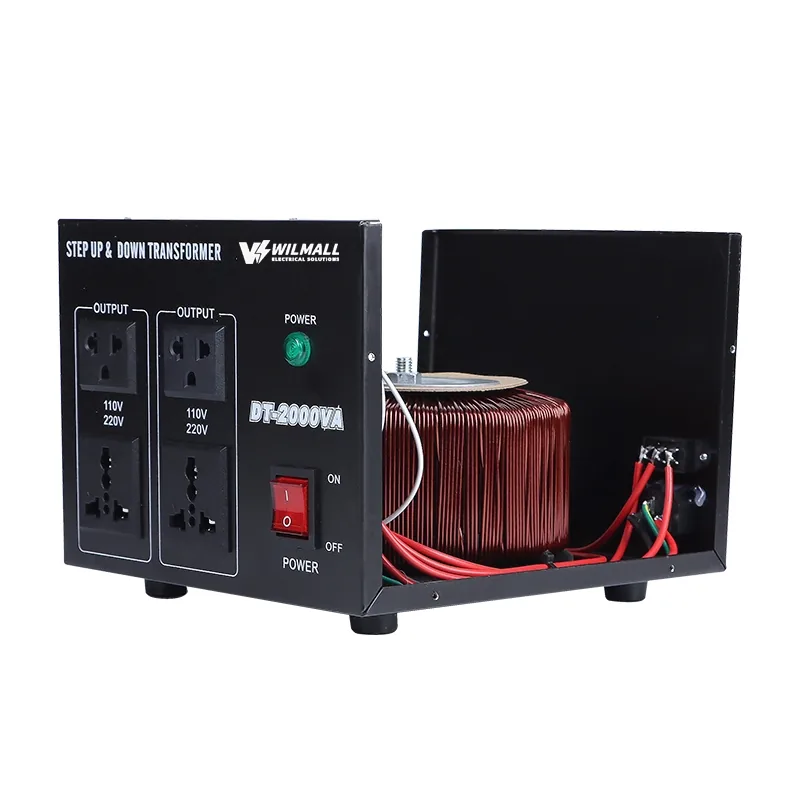
Step Down Transformer for Space Heater: 220V to 110V Guide
Space heaters are the biggest resistive load most homes ever plug in, and a US 110V heater in a 220V country is a burnout waiting to happen without a transformer. Heaters are simple loads — no motor surge, no power factor games — but they run at high wattage for hours, which makes continuous-duty rating and safety the real story. This guide covers sizing, the safety requirements, and why a heater transformer is a serious purchase.
Why heaters are simple but serious
A space heater is a pure resistive element with a fan and a thermostat. The element is the load — honest watts, no surge — and the fan is a small motor that barely matters. The sizing math is the simplest there is: the watts on the label are the watts the transformer must supply. What makes heaters serious is the duration: a heater runs for hours at high wattage, and the transformer absorbs all that heat.
A 1500W heater on a 2000VA transformer runs at 75% load for hours. That is the safe zone, but only with copper winding and real ventilation. An aluminium-wound unit at that load runs hot, and hours of heat shorten its life fast.
Step down transformer size for space heater
| Heater | Wattage | Duty | Recommended transformer |
|---|---|---|---|
| Small fan heater | 700-1000W | hours | 1500-2000VA |
| Standard space heater | 1200-1500W | hours | 2000VA |
| Large / industrial heater | 1500-2000W | hours | 3000VA |
| Oil-filled radiator | 900-1500W | hours | 2000-3000VA |
The ST-2000 covers a standard 1500W heater with margin. The STU-3000 handles large heaters and oil-filled radiators. Heaters with a fan add a tiny motor load on top of the element — negligible. The honest rule: buy the size that keeps the transformer at 70-80% load during the longest heating session of the year.
The overnight heating question
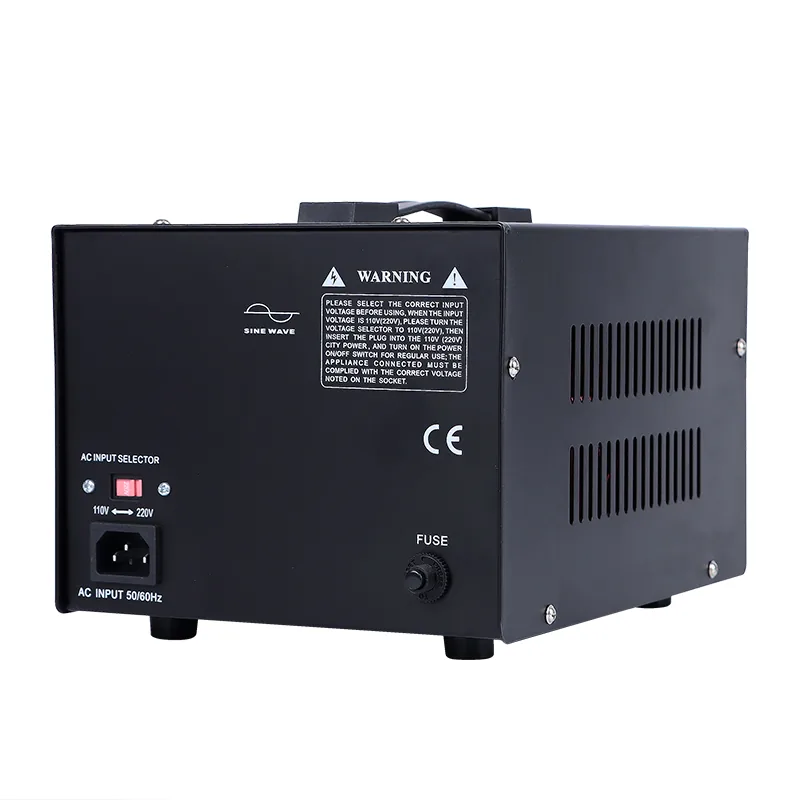
Here is the thing: heaters are most needed at night, and running one all night means the transformer runs all night. That is continuous duty at high load — the hardest duty there is. Copper winding, 25-30% margin and clear ventilation are not preferences here; they are the difference between a transformer that lasts a decade and one that fails in a season. The case should be warm, never hot, after a night of running.
RCD protection and fire safety
A heater running for hours near furniture and fabric deserves every protection layer. RCD protection trips on leakage in milliseconds. Thermal protection in the transformer shuts it down before it overheats. And the heater itself should have tip-over and overheat cutoffs — check before buying. The transformer is the supply-side protection; the heater should protect itself on the load side.
Common mistakes with heater transformers
- Buying a converter. Heaters run at full power for hours; converters overheat in minutes.
- Under-sizing for the duration. A heater is a long-cycle load; margin is essential.
- No RCD near fabric and furniture. Running heaters deserve full protection.
- Enclosing the transformer. Hours of heat need airflow, not a cabinet.
- Aluminium winding. Long heating sessions need copper to stay cool.
Why buy from a factory directly
Wilmall supplies step down transformers for heaters and heating products across Asia, the Middle East and Africa. Copper winding, RCD protection, thermal overload and continuous-duty rating with batch test records on every shipment. MOQ 1 pc for stock units, 10 pcs per model for custom voltage, 15-25 day lead time, FOB Ningbo or Shanghai.
Frequency and heaters
A heater is a resistive element plus a small fan motor. The element does not care about frequency, and the fan is a shaded-pole motor that runs on either. Space heaters are effectively frequency-immune — the transformer only needs to handle the voltage, and the heater runs identically on 50Hz or 60Hz.
One less consideration in the buying decision. Match the voltage, size for the duration, and the frequency is irrelevant.
Buying for resale: the heating range
Heating distributors stock the 2000VA size for standard heaters and the 3000VA for large units and radiators. Seasonal demand means ordering ahead of winter. Private labelling from MOQ 1 pc for stock units, 10 pcs for custom voltage, with the compatible wattage list on the carton so buyers match the size at a glance.
Heaters and transformers sell together naturally in cold months. Distributors who stock the pairing answer both needs at once.
Warranty and support
Every Wilmall transformer carries a 12-month warranty, and we keep common spares for fast resolution. Heaters are seasonal, high-use appliances — the transformer takes real abuse during winter. Batch test records ship with every order, and we respond to support enquiries within 24 hours.
The frequency note
Space heaters are resistive elements with a small fan — frequency does not matter to either. A 60Hz heater runs identically on 50Hz. The transformer only changes voltage, and the heater behaves the same on either grid frequency. One less consideration in the buying decision.
Ordering, shipping and lead time
Send us your heater specs, your country voltage and the quantity. We confirm the transformer size and the winding in writing, then produce in 15-25 days and ship FOB Ningbo or Shanghai. MOQ 1 pc for stock units, 10 pcs per model for custom voltage, private labelling available.
Why a heater is the easiest heavy load and the hardest one at the same time
A heater is the simplest thing you can put on a transformer. There is no motor, no electronics and no starting surge. The load is the element resistance and it stays the same from the first minute to the last. On paper a 2000W heater on a 2000VA transformer looks like a perfect match.
It is not, and the reason is time. A heater runs for hours. A transformer running at 92 percent of its rating for four hours reaches a much higher internal temperature than the same transformer running a blender for thirty seconds. The nameplate rating assumes the case can shed heat as fast as the winding makes it, and in a closed cabinet in a cold room it cannot. We treat 1.5 times the heater wattage as the floor for sizing and 2 times if the unit lives in a cabinet or a cupboard.
Why the cable becomes the weak point on a heater circuit
A 2000W heater at 110V draws about 18 amps. That is a real current and it flows for hours, not seconds. Most household extension leads sold in 110V markets are rated at 13 or 15 amps, which is why the lead rather than the transformer is the part that fails. Buy a lead rated at 20 amps or more, keep it under 3 metres, and feel the plug after the first hour of use. A warm plug is a warning and a hot plug is a fault.
On the transformer side, order the heavier output socket if you are running a 2000W heater. The standard US duplex socket is comfortable at 15 amps and marginal at 18. We fit the higher-current socket on request and the cost difference is small compared with replacing a melted plug.
The other habit worth having is to feel the case at the end of the first long run. If it is hot enough that you want to take your hand away, the unit is working too hard for its enclosure and needs more air around it.
Placement rules that matter more in cold weather
Cold rooms are usually closed rooms, and closed rooms are where transformers overheat. Leave 100 millimetres of clear air on every side of the case, never stand the unit on carpet, and never box it in to keep the dust off. If the room has no air movement at all, stand the unit on something solid and run a small fan during long heating sessions.
The cold-weather mistake people make in the other direction is bringing a transformer in from an unheated store and switching it straight on. If the unit has been below freezing, let it reach room temperature for a few hours first. Condensation on a cold winding is the one thing that shortens the life of otherwise healthy insulation, and it costs nothing to wait.
Everything in the step up and step down range is built for continuous duty, and we state the duty expectation on the spec sheet for each size so you can match it to how the heater will actually be used.
The placement question buyers ask least often is what happens when the heater and the transformer share one small room. A 2000W heater lifts the room temperature by several degrees over a few hours, and the transformer sits inside that warmer air. Its own temperature rise is measured from ambient, so a room that starts at 12 degrees and finishes at 20 degrees has quietly eaten into the margin the unit had. Keep the air gap, keep the transformer off the floor, and if the room has no window, run the heater on a lower setting rather than adding a second heater to the same circuit.
The short version
A heater transformer is sized for the wattage, rated for long continuous duty, RCD-protected, and copper-wound to survive the season. The ST and STU series cover every heater size, and the batch test record proves each unit. That is the complete answer for heater buyers.
Frequently asked questions
What size transformer do I need for a space heater?
A 1500W heater needs a 2000VA transformer. Large heaters and radiators need 3000VA. Heaters run at high wattage for hours, so margin is essential.
Can a transformer run a heater all night?
Yes, if it is rated for continuous duty with 25-30% margin and copper winding. The case should be warm, never hot, after a night of running.
Why can I not use a converter for a heater?
Converters are rated for small intermittent loads. A heater runs at full power for hours, which overheats a converter. Use a continuous-duty transformer.
Why does a heater transformer need RCD protection?
A heater runs for hours near fabric and furniture. RCD trips on leakage in milliseconds, and thermal protection shuts the transformer down before it overheats.
Can I order heater transformers with my brand?
Yes, private labelling from MOQ 1 pc for stock units, 10 pcs per model for custom voltage, with RCD and thermal protection as standard.
Related reading
- Step Down Transformer 220V to 110V: Sizing and Safety
- Transformer Overheating: Causes and Fixes
- Step Up and Down Transformer Products
Get a factory-direct quote
Email info@wilmall.com or WhatsApp +86 197 3022 6757 with your heater specs and country. We confirm the size within 24 hours. MOQ 1 pc for stock units, 10 pcs for custom voltage.