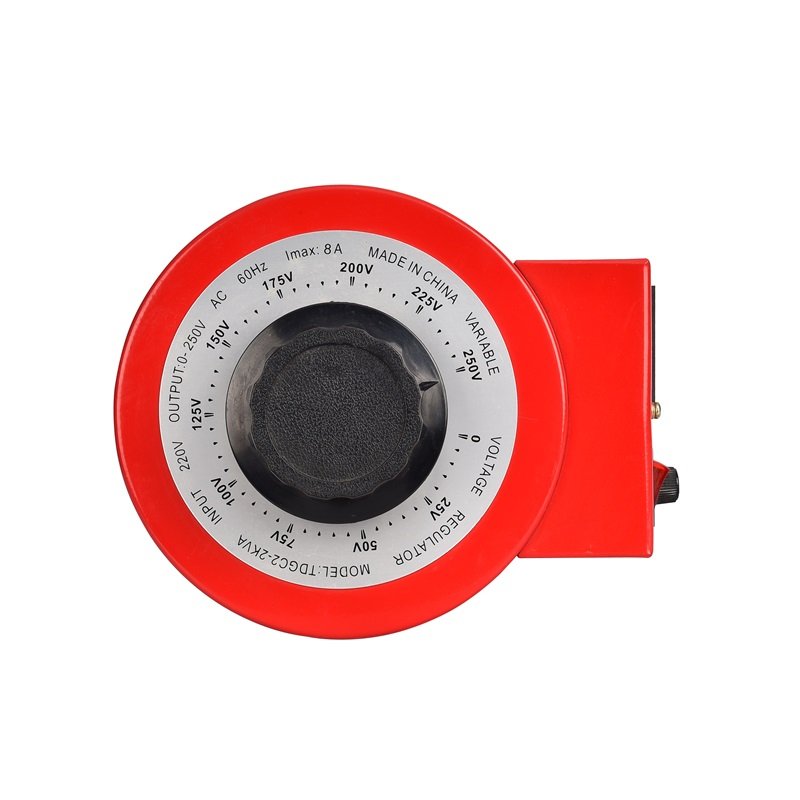
Step Down Transformer for Induction Cooktop: Sizing Guide

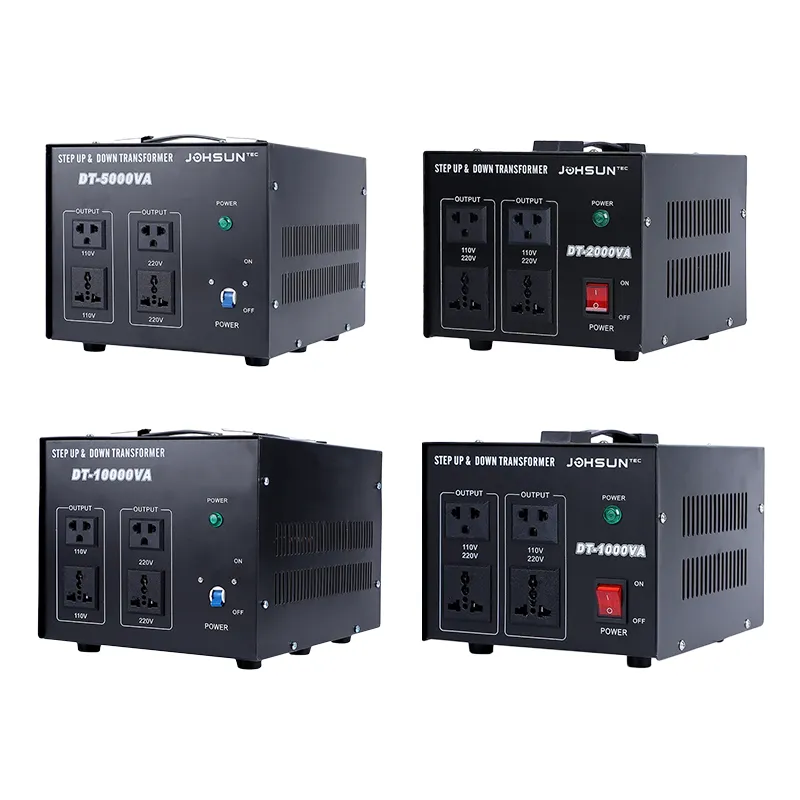
Quick answer: what size transformer for an induction cooktop
US-spec induction cooktops draw between 1200W and 1800W, so a 2000VA step down transformer is the right size for most models, and a 3000VA unit covers a large cooktop or one that runs with other kitchen appliances. The quick rule: take the wattage on the cooktop nameplate, add 30 percent, and pick the next size up. For a 1500W cooktop that lands on 2000VA, and for an 1800W unit it is the same answer.
Why an induction cooktop is a steady, heavy load
An induction cooktop draws a large current whenever it is heating, and it cycles on and off to hold the temperature. The draw is close to the full rating during the heating phase, so a 1500W cooktop pulls a steady 1500W while it works. The transformer must handle that sustained current without overheating, which is why the 30 percent headroom matters. The cooktop also has an internal fan that adds a small draw, and the cycling means the transformer handles repeated surges. Undersizing a cooktop transformer is the fastest way to feel the case get hot, because the load is heavy and sustained, not a brief burst like a toaster.
Sizing table for induction cooktops and hot plates
| Cooktop rating | Transformer size |
| Up to 1000W | 1500VA |
| Up to 1500W | 2000VA |
| Up to 1800W | 2000VA to 3000VA |
| Cooktop plus other appliances | 3000VA |
If you run a cooktop and a kettle, a microwave, or a toaster from the same transformer, add the wattages before choosing. A 1500W cooktop plus a 900W kettle needs 3000VA, not 2000VA. The simultaneous load is the number that decides, and it is the one we ask about before recommending a size. Most buyers overlook it, and it is the cause of most undersized transformers in the field.
Transformer vs converter for an induction cooktop
An induction cooktop is far beyond what an electronic converter can handle. The cooktop draws 1500W or more, and a converter, the small travel type, is typically rated for 200W to 500W. Even the largest converters struggle with the sustained draw of a cooktop and can overheat or shut down mid-cook. A transformer is a magnetic device that delivers the full current continuously, which is exactly what a cooktop needs. If you are cooking a meal, the transformer must work for the whole session without complaint. Our step down transformers are copper-wound and rated for continuous duty, so they run the heavy loads that converters cannot.
Copper windings and the heat from cooking
A cooktop pushes a transformer harder than almost any kitchen appliance, because the load is heavy and sustained. Copper windings run cooler and carry the current more efficiently, and they hold up better under the repeated heating cycles. Aluminium windings run hotter, and heat ages the insulation faster. Our ST series uses copper as standard, with a fuse and a thermal cut-out built in. The fuse protects the wiring if something shorts, and the thermal cut-out protects the transformer if it runs too hot. In a warm kitchen, the STU series with RCD protection adds the leakage safety layer. When you compare transformers for a cooktop, the winding material is the first thing to check, because it decides how hot the case gets and how long the unit lasts.
Three mistakes cooktop buyers make
The first mistake is buying a 1000VA transformer for a 1500W cooktop, which runs at overload and trips or overheats. The second is using a converter, which cannot handle the current. The third is forgetting the plug standard, a US cooktop has a NEMA plug that will not fit a 220V socket, so the transformer must have the right output socket or you need an adapter that fits. Our step down units come with the output socket matched to the appliance plug. Check the nameplate too, if the cooktop says 110-120V only, it needs the transformer, and if it says 100-240V, it only needs an adapter.
Placement and ventilation for a cooktop transformer
A cooktop transformer runs hot, so placement is critical. Keep it off the countertop next to the cooktop, where the heat from cooking adds to the transformer’s own heat. A shelf, a cabinet with ventilation, or a spot on the floor away from water works well. Leave space on all sides, at least 20 to 30 centimeters, and never cover the unit while it runs. If the case feels too hot to touch after cooking, check the size and the placement. A transformer at 60 percent of its rating runs warm but manageable; one that is scalding hot is telling you it is undersized or blocked. In a small kitchen, consider mounting the transformer higher, on a wall shelf, to keep it out of the heat and away from water.
Can one transformer serve the whole kitchen
An induction cooktop often needs a transformer that cannot share with other heavy appliances, because the cooktop alone uses most of a 2000VA or 3000VA unit. If you want one transformer for the whole kitchen, size it for the largest simultaneous combination, a cooktop plus a kettle can be 2400W, which needs 3000VA. The advantage of one large unit is simplicity. The trade-off is cost and idle time. Many households prefer a dedicated transformer for the cooktop and a second one for lighter appliances. Either way, size each transformer for the loads it actually feeds, and remember that the cooktop is the heaviest draw in the kitchen.
Why buy factory direct
You can buy a cooktop transformer locally, and for one urgent unit that is convenient. The trade-off is price and range. A local shop carries a few sizes at two to three times the factory price. Buying direct from us gives you the full range from 100VA to 10KVA, the socket matched to your appliance, the batch test certificate, and the 12-month replacement-first warranty. For a single unit, air freight is fast enough for most buyers. For distributors, the factory price plus the resale margin makes it the clear choice. Send us your quantity and destination, and we quote FOB or DDP with the freight estimate.
Induction cooktop efficiency and the transformer load
Induction cooktops are more efficient than traditional electric coils, because they heat the pan directly with a magnetic field instead of heating an element first. That efficiency does not reduce the transformer requirement, though, because the cooktop still draws its full rated wattage from the wall while it heats. A 1500W induction cooktop pulls close to 1500W regardless of the cooking efficiency, so the transformer must be sized for the nameplate input, not the useful cooking power. The good news is that induction cooktops heat faster, so the transformer runs at full load for less total time than a coil cooktop. The sizing math stays the same: nameplate wattage plus 30 percent, and for a shared outlet, add the other appliances.
Induction cooktop compatibility with the transformer
An induction cooktop is an electronic device with a control board, and it expects a clean supply voltage. A transformer delivers a clean sine wave output, which is exactly what the cooktop’s electronics want. A cheap converter with a modified or noisy output can confuse the cooktop’s control board and cause it to error or run erratically. This is a real reason to use a transformer rather than a converter for an induction cooktop, beyond the wattage issue. Our transformers output a clean sine wave, and the batch test report confirms the voltage is stable under load. If you have an induction cooktop that errors on a converter, the transformer is the fix, and it is the reason we tell buyers not to trust a small converter with a large electronic load.
The shared-outlet question for cooktops
Whether an induction cooktop can share a transformer with other appliances comes down to the numbers. A cooktop at 1500W uses most of a 2000VA transformer’s safe capacity, leaving only about 100W of headroom, which is nothing. Sharing it with a kettle or a toaster at the same time is not safe on a 2000VA unit. The options are a 3000VA transformer that covers the cooktop plus one other appliance, or a dedicated transformer for the cooktop and a second one for the lighter appliances. Most kitchens with a cooktop prefer the dedicated approach, because the cooktop is the heaviest draw and deserves its own unit. If you plan to run other appliances at the same time, size for the combined load, and when in doubt, use separate transformers.
Induction cooktop error codes and the transformer fix
When an induction cooktop shows an error code on a converter, the usual culprit is an unstable supply. Induction cooktops are sensitive to voltage quality, and a cheap converter can produce a noisy or sagging output that the cooktop’s control board reads as a fault. The fix is a transformer, which outputs a clean sine wave at a stable voltage. Our batch test report confirms the output voltage stays stable under load, so the cooktop gets the clean supply its electronics expect. If your cooktop errors intermittently, trips, or shows a code on the display, check the supply first, and if it is a converter, switch to a transformer sized for the cooktop’s wattage. This one change resolves most induction cooktop compatibility problems in the field.
FAQ
Can I run a 1500W cooktop on a 2000W transformer?
Yes, if nothing else runs at the same time. A 2000VA unit covers 1500W with margin. If a kettle shares the outlet, go to 3000VA.
Do I need a transformer for a US cooktop in Malaysia?
Yes, if the cooktop is 110V only. Malaysia runs on 240V, so you need a step down transformer rated 220-240V input.
What happens if I plug a 110V cooktop into 220V?
The control board and heating circuits burn out almost immediately. The transformer is not optional for a single-voltage cooktop.
Can a travel converter run a cooktop?
No. A cooktop draws far more than a converter is rated for. Use a transformer sized for the cooktop’s wattage plus margin.
Get the right transformer for your cooktop
Send us the cooktop model or the wattage from its nameplate, tell us what else runs at the same time, and we will confirm the right transformer within 24 hours. We supply step down transformers from 100VA to 10KVA, copper-wound, with the output socket matched to your appliance. WhatsApp us or use the inquiry form, and we will quote factory-direct pricing with the batch test certificate.