Step Down Transformer for Furniture Factories: 220V to 110V
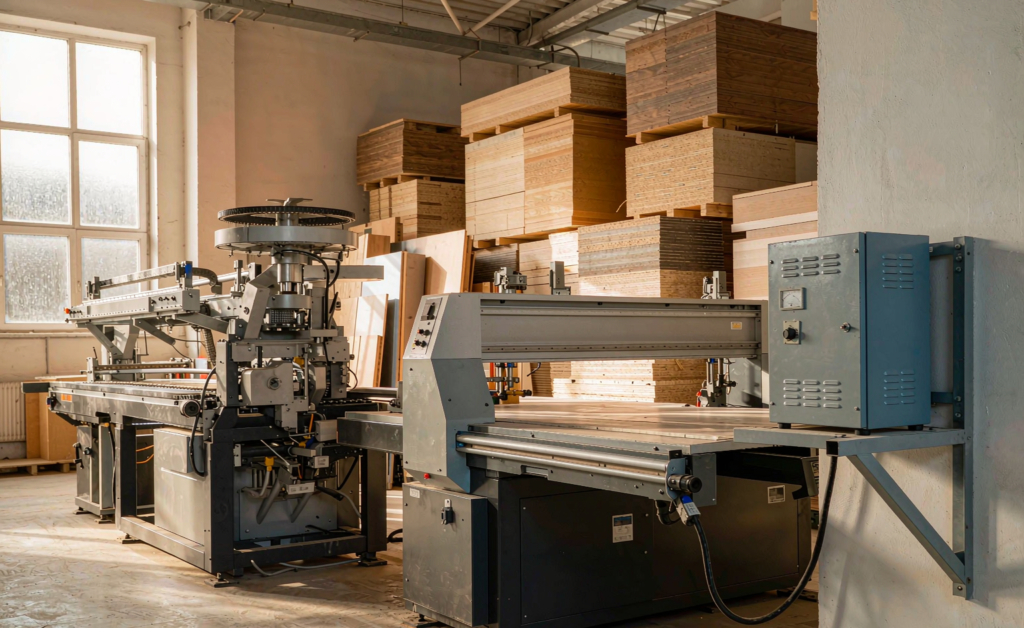
A furniture factory almost never decides to buy a transformer on purpose. The need creeps up on you. A used panel saw comes out of an auction, an edge bander arrives through a trader, a wide belt sander follows six weeks later, and then your electrician reads the nameplates and finds 110V stamped on machines that are supposed to live on a 220V shop supply. That is the moment a step down transformer stops being a catalogue item and becomes the thing standing between you and next week’s delivery.
Here is the short answer while you are still skimming. One 110V machine up to roughly 1.5 kW sits comfortably on a 2000VA or 3000VA unit, with headroom left for the motor kick. A woodshop running a dust extractor, a compressor and three or four 110V machines at the same time needs the heavy end of our range, or two units sitting on separate circuits. We wind these boxes in Yueqing, and the way I work the numbers out with a customer is the same way I would work them out for my own workshop floor.
Why Woodworking Equipment Often Shows Up at 110V
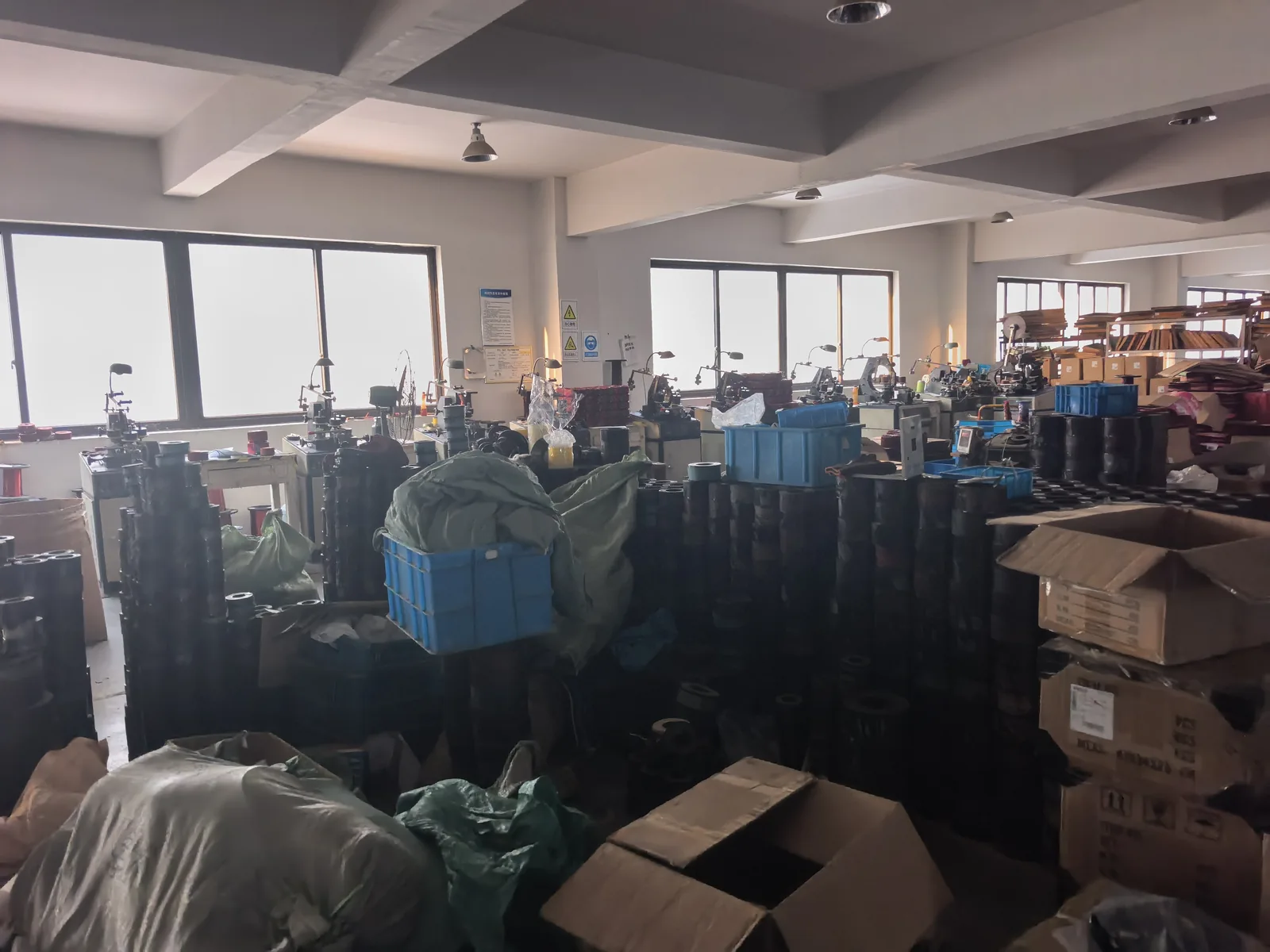
Woodworking is a trade where the secondhand market decides what you own. A large share of the panel saws, edge banders, stroke sanders and spindle moulders floating around the used circuit were built for North America, and North America runs 120V on the smaller gear. Buy a benchtop machine, a smaller sander or a vacuum clamping pump from that supply chain and you will very often find a 110V or 120V plate on the back of it.
Then comes the second wave, the hand tools. Routers, biscuit joiners, random orbit sanders, trim saws, small plunge cutters. Order them from the same distributors and they arrive 110V as well. With a table saw you spot the mismatch the day it lands. With a router you spot it about twenty minutes into a batch, when the smell starts.
Your shop, meanwhile, runs 220V or 230V. That is what the grid gives you and what your extraction system, your compressor and your three phase machinery are wired for. So a furniture plant ends up with two voltage families under one roof, and the step down transformer is simply the box that lets the odd one out join in without a rewind.
Which Machines in a Furniture Shop Usually Need One
Give me a plant’s machine inventory and the first job is sorting it into two columns: equipment that needs its own voltage supply, and equipment that is already fine. On the first list, in roughly the order I see them:
- Panel saws and sliding table saws, 1.1kW to 2.2kW, with a hard start every time the blade engages.
- Edge banders, 500W to 1.5kW running, plus a heating element that holds load for minutes at a time.
- Wide belt and drum sanders, 1.5kW to 4kW, the heaviest single load in most small plants.
- Portable dust extractors, 750W to 1.5kW, running for the whole shift rather than in bursts.
- Piston compressors, 1.5kW to 3kW, and they start against pressure, which is the worst case there is.
- Spray booth turbines and HVLP units, 750W to 2kW, often on a separate circuit near solvent vapour.
- Benchtop machines and hand tools, 300W to 1.5kW each, small individually, awkward in numbers.
What does not need us, and I say this often because it saves people money: modern LED lighting, control cabinets with a wide range input supply, laptops, and any machine whose plate reads 100-240V, 50/60Hz. That last one is already happy on your 220V socket. If you put a transformer in front of it you have bought a box you will trip over for the next ten years. Read the plates before you build the load sheet.
One more split worth making early. If most of your 110V equipment is handheld rather than bolted to the floor, the smaller end of the range is where you should be looking, and our notes on a step down transformer for power tools cover exactly that situation.
How to Size One Without Guessing
Write down the machines that could realistically be running at the same moment, not everything you own. A spray booth and a wide belt sander rarely work in the same minute, but a dust extractor runs whenever any cutting machine runs, so those two always travel together in the maths. Add the simultaneous watts, then add 25 to 30 percent on top. That percentage is not padding, it is what keeps the box from humming all afternoon.
The second correction is the one people forget. Anything with an induction motor pulls roughly two and a half to three times its running current for a fraction of a second at start. If two motors can start close together, size on the surge rather than the running figure. A 1.5kW extractor that draws about 1500W steady will ask for something near 4000VA for a moment when it spins up.
A quick worked example. A small cabinet shop lists a 900W edge bander, a 1100W extractor, a 700W hand tool bench and a 1500W panel saw, all 110V. Realistic worst case is all four live at once: 4200W. Add 30 percent and you are near 5500VA. Two 3000VA units on separate circuits handle it better than one giant box, and the reason is in the section below.
| Machine | Running load | Start surge | Unit I would quote |
|---|---|---|---|
| Edge bander | 500 – 1500 W | About 2.5x | ST-2000 2000VA |
| Panel saw | 1100 – 2200 W | About 3x | STU-3000 bidirectional |
| Dust extractor | 750 – 1500 W | About 2.5x | ST-2000 2000VA |
| Piston compressor | 1500 – 3000 W | About 3x | STU-5000 bidirectional |
| Hand tool bench | 300 – 1500 W | Low, universal motors | DT-1000VA automatic |
| Whole small shop | 3500 – 5000 W | Mixed | Two STU-3000 units |
Motor Inrush Is What Actually Kills an Undersized Unit
Let me be straight with you about the most common mistake I see on furniture orders. Somebody adds up the nameplate watts, buys a box rated just above that number, and then the unit runs hot and eventually gives up. Nothing was wrong with the arithmetic. The problem is that the box was never asked to hold the running load, it was asked to survive the start.
Extractors and compressors are the two worst offenders in a woodshop. A compressor starting against a charged tank draws locked rotor current for a moment that feels short to you and like a small earthquake to the transformer. Extend the life of the unit by giving it three times the running watts in headroom, or by wiring the compressor to its own transformer so its start does not drag the sander down with it.
Universal motors behave differently, which is why routers and sanders are easier. They draw less on start and more as load comes on. That is why a hand tool bench can sit on a smaller box than the raw tool list suggests, and why I will sometimes put a 1000VA unit where the numbers appear to say 2000VA.
Dust, Heat and Damp Air in a Woodshop
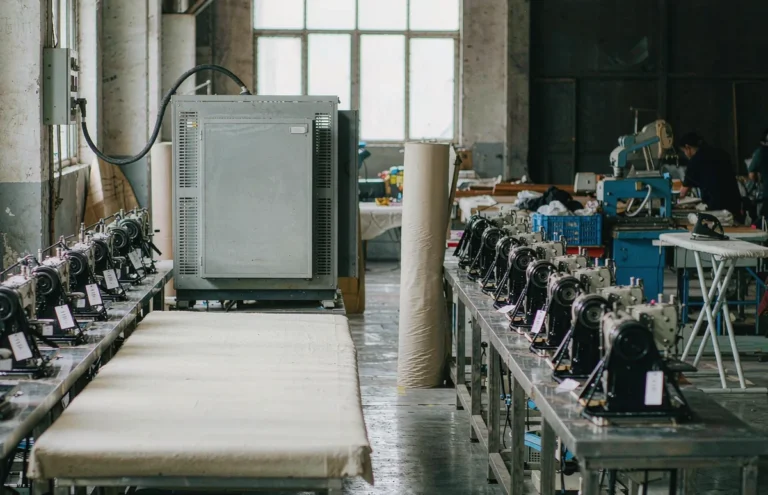
A furniture plant is a rough home for any electrical box. Fine dust finds its way into vents, humidity swings with the season, and in summer the corner where the transformer sits can be several degrees hotter than the office. Our enclosures are built to live in that environment, but placement still decides how long the unit lasts. Keep it off the floor, out of the sawdust pile, and away from the spray booth where solvent vapour hangs in the air.
Ventilation is the part people skip. A transformer that cannot shed heat will run warmer than it should and the insulation ages faster. Twenty or thirty centimetres of clear air on the louvred sides is usually enough. If you must put it in a closed cabinet, cut a vent low and high so air can move through, and check the vents every few months during a shutdown.
For a shop with a genuine dust problem, tell us when you order and we will talk about a sealed enclosure with a higher protection rating rather than the standard ventilated case. It costs a little more on the invoice and saves a lot on the replacement.
One Big Unit or One Unit Per Machine
This is a question I get nearly every week, and my answer is usually the same. For one or two 110V machines, one transformer is fine as long as you have the headroom. For a shop with five or more, split them.
There are three reasons. A fault on one circuit does not stop the whole shop, which matters when a spray booth is mid-cycle. Cables stay short, so you avoid volt drop down a long low voltage run to the far end of the building. And a spare becomes practical, because a second 2000VA unit on the shelf costs less than a lost production day.
When you split the load, label each unit with what runs on it, and tape that list inside the lid. Two years later, when somebody has added a sander to the wrong circuit, the label is the fastest way to find out why the box is warm.
The Models We Build for Shop Loads
The ST-2000 is the workhorse for a furniture plant. It takes 220V or 230V in and gives you 110V out at 2000VA, with the RCD inside the case so a fault on the tool side trips at the box rather than at a breaker on the other side of the workshop. For an edge bander or a portable extractor that is the unit I put on the quote first.
Once saws and compressors enter the picture you move up to the STU family, which we build at 3000VA and 5000VA and which work in either direction. Reversibility sounds like a brochure feature until your second-hand market sends you a 220V machine and a 110V machine in the same container. Doing that job with one box beats re-wiring a wall six months later.
For a bench where several small hand tools come and go, the DT-1000VA automatic bidirectional unit is the tidy answer, because nobody has to remember which way round it is. If you want to dial the output yourself while commissioning an imported machine, the Variac range covers 500VA, 1KVA, 2KVA and 3KVA with a knob on the front. Electricians who use one once tend to ask for one for the van.
Sizing one machine is quick work once you know the plate figures, but I know that most plants are dealing with a mixture rather than a single tool. Cabinet shops, joinery works, panel processors and furniture assembly lines all face a slightly different version of the same problem, and our application guides bring together what we have written for each of them.
Inside the Line Where Your Unit Gets Made
I spend my days in the same kind of building your machines sit in, so I know what a woodshop does to equipment. On our benches the cores are stacked and the coils go on one at a time, and every winding is copper rather than aluminium. That choice is not a slogan. Aluminium coils run hotter for the same rating, and a box that runs hot in a dusty workshop is a box that fails early.
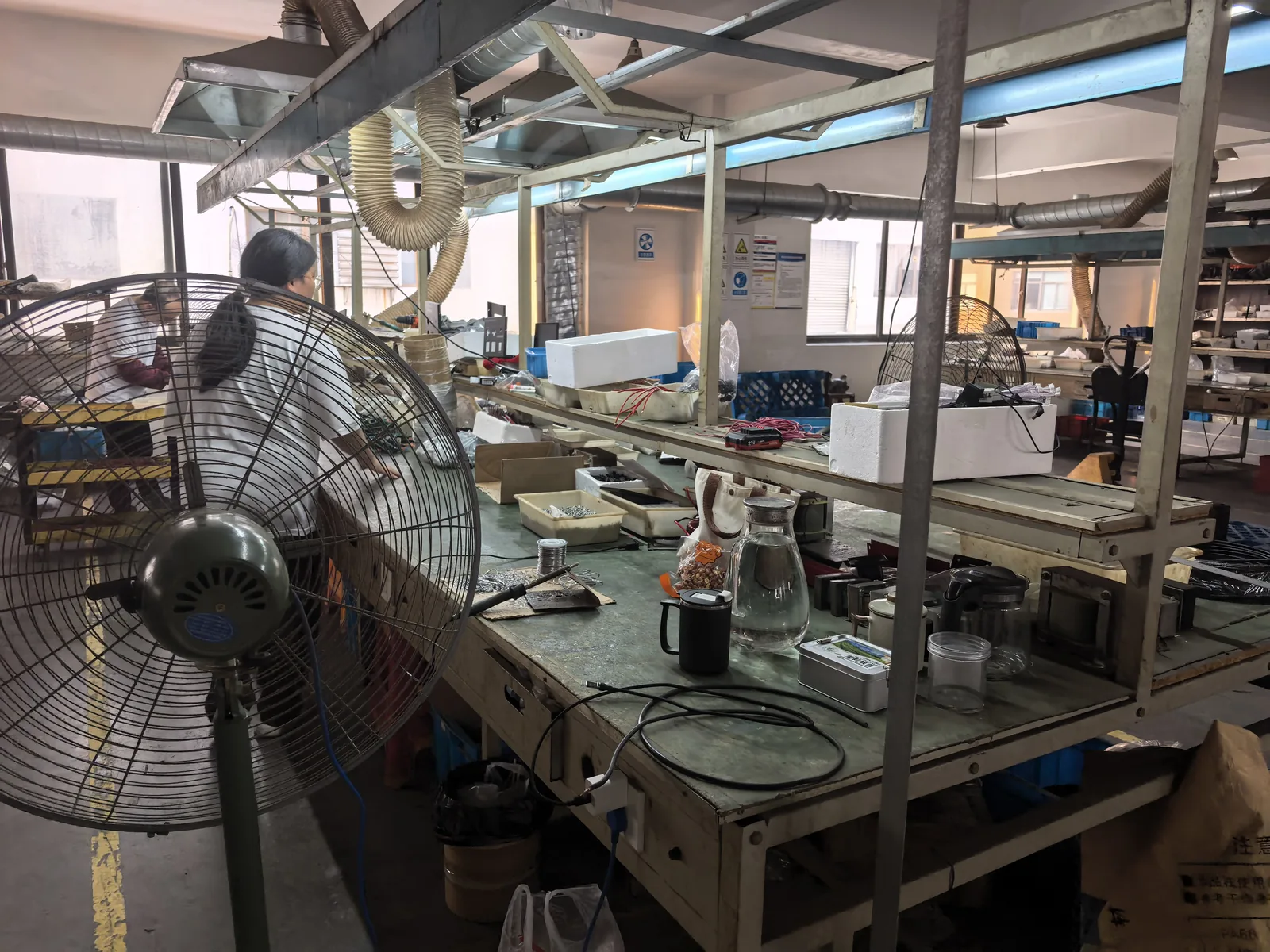
After winding, each unit is assembled on a bench like the one above, then load tested. Every transformer that leaves our floor is tested before shipment, with the input voltage, the loaded output and the no-load current written on a sheet that goes into the carton. When your electrician opens the crate, the paperwork for that specific unit is in there with it.
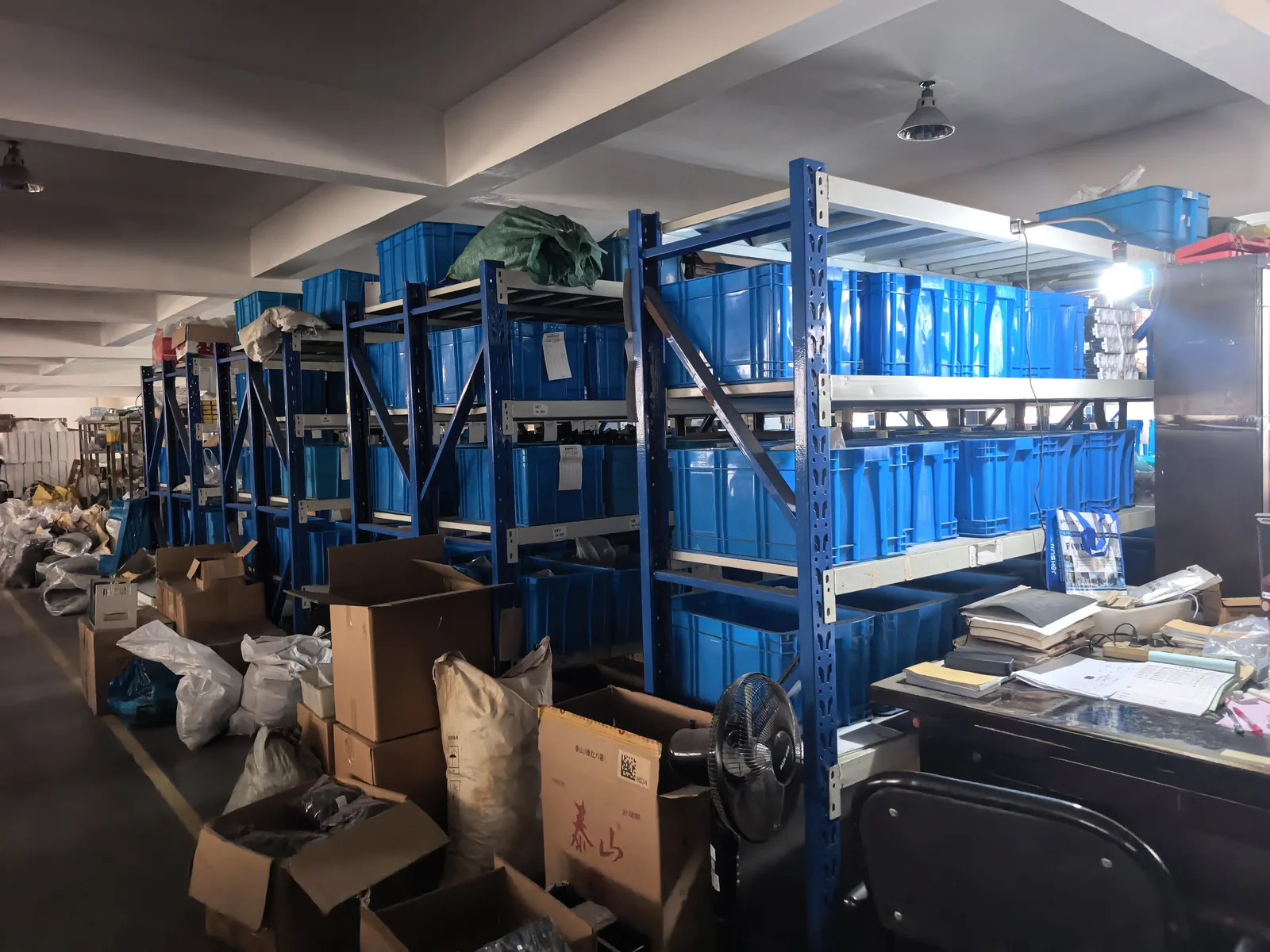
Around the benches sit the component racks, bins of terminals, fuse holders, sockets and mounting hardware, all within arm’s reach of the operator. It looks ordinary and that is the point. A line that has to walk to another building for a socket is a line that ships the wrong socket.
Ordering, Lead Time and What Goes in the Crate
Commercial terms first, since that is what most buyers want to see early. Our minimum order is 1 pc for stock units, 10 pcs for custom voltage, and a stock DT unit can go out as a single piece if you just need one to try. Custom voltage work starts at 10 pcs, a custom socket arrangement at 50 pcs, and full colour box printing at 1000 pcs. Production runs 15 to 25 days, with the exact day depending on quantity and whether your unit needs a special socket or a printed faceplate. Goods ship FOB Ningbo or Shanghai.
Payment is straightforward. Money moves as T/T, with 30 percent as deposit and the remaining 70 percent released against the copy of the bill of lading, or as a letter of credit at sight, or through Trade Assurance if you would rather run the order on a platform. A usance L/C is the one arrangement we turn down, so please do not build a 90 day term into your plan and expect us to sign it.
Warranty on every box is 12 months. On certification you will get CE and our test record, and if your market asks for something else, raise it before the order and we will talk it through case by case. Tell us the socket type you need, the output voltage your nameplates call for, and whether the units go to one site or several, and we will pack accordingly.
Frequently Asked Questions
What size step down transformer does a 110V panel saw need?
A 1.5kW panel saw draws about 1500W steady but asks for close to three times that for a moment at start. Allow 25 to 30 percent headroom on top of the running load and a 3000VA step down transformer such as our STU-3000 covers it with room to spare.
Can one transformer run a dust extractor and an edge bander together?
Yes, and that pairing is common in cabinet shops. Add both running loads, which is often around 2000W, then add headroom for the extractor start. A 3000VA unit handles the pair. If your compressor can start at the same moment, move that machine to its own transformer.
Will a step down transformer change the speed of a 60Hz motor?
No. A transformer changes voltage only, never frequency. Bring a 60Hz motor onto a 50Hz factory supply and it loses roughly a sixth of its speed, and it gets hotter doing the same work. Belts and pulleys can often be changed to bring the speed back, but check that before you buy.
Is one large transformer better than several smaller ones?
For one or two machines, a single unit is fine. Past four or five, split the load across separate units on separate circuits. You keep production running when one circuit trips, you avoid long low voltage cable runs, and you can keep a spare on the shelf for less than the cost of a stopped line.
What is the smallest order you accept for a furniture factory?
Our standard minimum is 10 pcs, and a stock DT unit can ship as a single piece if you only want one to test. Custom output voltage starts at 10 pcs, a custom socket at 50 pcs, and printed colour boxes at 1000 pcs. Lead time is 15 to 25 days, FOB Ningbo or Shanghai.
Send us a photo of the nameplate on the machine that is giving you trouble, and tell me what else runs in that part of the shop. That is usually all I need. You do not need a finished specification before we talk, and I would rather spend ten minutes on a message than have you buy a box that is one size too small for a saw you have not switched on yet. If you also run 220V machines and would rather feed everything from one direction, a step up and down transformer works both ways and saves you owning two kinds of box.
Tell us your machine list and we will size the transformer for free. Send the running watts from each 110V nameplate, your mains voltage, how many separate circuits you want to feed, and your target date. Most buyers get a unit choice, a quantity and an FOB price back within one working day.
Prefer to talk it through? WhatsApp +86 197 3022 6757 · Email info@wilmall.com
MOQ 1 pc (stock) / 10 pcs (custom) · 15-25 day lead time · FOB Ningbo or Shanghai · 12-month warranty