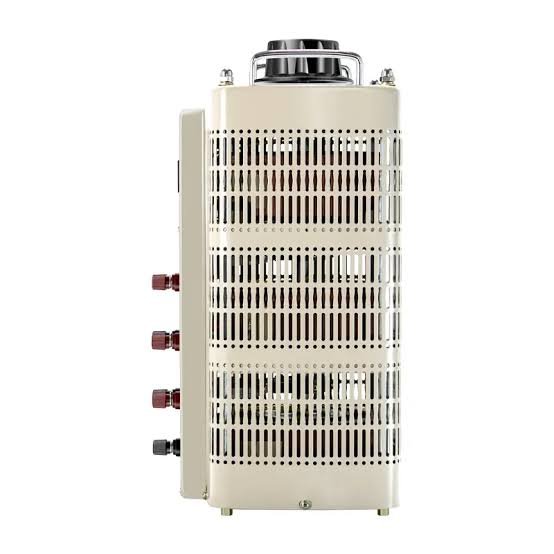
Step Down Transformer for Power Tools: Saw, Drill, Grinder
US 110V power tools are common on construction sites around the world. The right step-down transformer handles motor inrush, runs cool on continuous duty, and survives the rough conditions of a building site. This guide covers saws, drills, grinders, sanders and other portable power tools.
Why power tools need a robust transformer
A power tool motor draws several times its running wattage at start-up. A 1500W circular saw may pull 4000-6000W for the first second as the motor reaches speed. A transformer that can deliver 1500W continuously will trip thermal protection during that surge.
Power tools also run intermittently — 30 seconds of cutting, 10 seconds of repositioning, repeat. The cyclic load is easier on the transformer than continuous operation, but the peak surge still matters for sizing.
What size transformer do you need?
| Tool | Running wattage | Start-up surge | Recommended transformer |
|---|---|---|---|
| Cordless charger | 30-100W | — | 500VA |
| Drill (corded) | 500-900W | 1000-1500W | 1500VA |
| Circular saw | 1200-1800W | 2500-4500W | 3000-5000VA |
| Angle grinder | 700-1500W | 1500-3000W | 2000-3000VA |
| Router | 1000-1500W | 2000-3500W | 3000VA |
| Air compressor | 1000-2000W | 3000-6000W | 5000-7500VA |
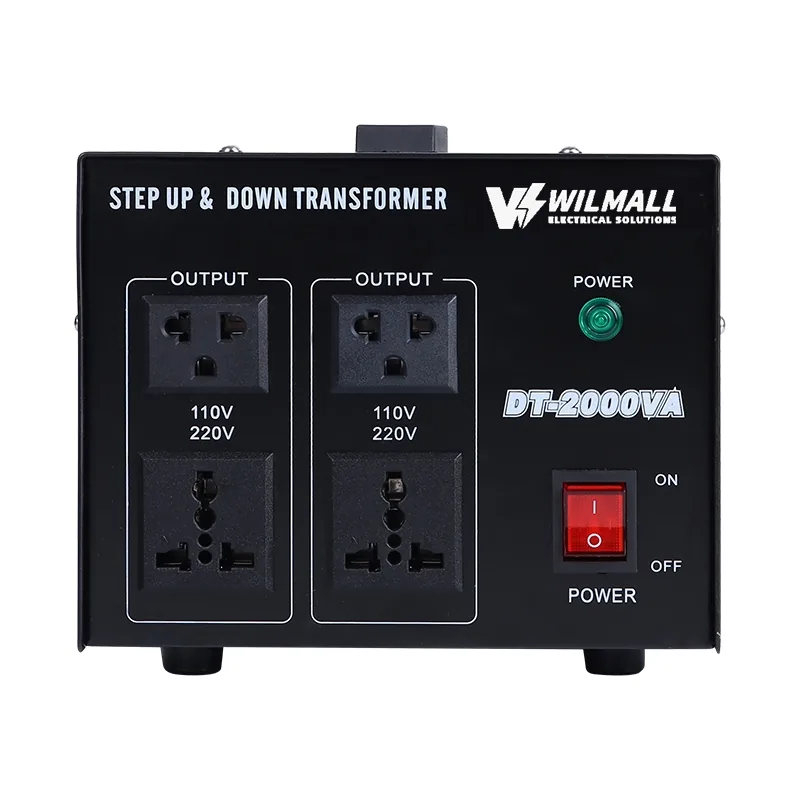
Choosing the right transformer for the site
For a small site with one or two tools running intermittently, a 2000-3000VA transformer is enough. For larger sites with multiple simultaneous users, choose a 5KVA or 7.5KVA unit.
Why an isolation transformer is right
Power tools on construction sites face harsh electrical conditions: generator power, long cable runs, shared distribution boards. An isolation transformer protects both the tool and the user. RCD protection is essential — Wilmall ST and STU units include RCD as standard.
Generator compatibility
Construction sites often run on generator power. A step-down transformer with healthy margin handles generator output swings without overheating. Choose a transformer with at least 30% margin over the highest tool surge.
Cable runs and outlet spacing
On a construction site, the transformer is often placed near the temporary distribution board. For long cable runs (50 metres), choose the next size up transformer to compensate for cable losses.
Wet and dusty site conditions
Construction sites are dusty and sometimes wet. Wilmall ST and STU units have IP20 enclosures suitable for dry indoor locations. For outdoor or wet site use, ask us about IP54 enclosures.
Common mistakes
- Sizing to running wattage. The tool motor surge is 2-4x.
- Using an electronic converter. Most cannot start universal motors.
- Skipping RCD protection. Construction sites are unforgiving.
- Sharing one transformer across multiple users. Peak may exceed rating.
- Mounting on the ground. Water ingress damages the transformer.
Recommended Wilmall transformers
For single-tool sites, the ST-2000 (2000VA) or STU-3000 (3000VA). For multi-tool sites, the STU-5000 (5000VA). For heavy industrial sites, project-sized three-phase units are available.
Why surge matters more than running watts
Power tools are the worst case for transformer sizing because a universal motor can draw 4-6 times its running current for the first 50-100 milliseconds. A 1200W angle grinder may surge past 5000W at the moment the switch closes. If the transformer cannot deliver this surge, the output voltage collapses, the motor stalls or fails to start, and the thermal protection may trip. Always size for the surge, not the steady load.
Tools that run together on site
On a busy site, several tools often run at once — a circular saw on one floor while a compressor cycles on another. The transformer must cover the sum of simultaneous surges, not just one tool. A practical rule for a two-man crew is to size the transformer at the combined running wattage of the two largest tools, plus 50% margin for simultaneous start-up.
Cordless charger and battery maintenance
Modern cordless tools use lithium-ion battery chargers that draw 30-150W. These chargers are usually dual-voltage and work directly on 220V mains without a transformer. Check the charger label; most say “100-240V”. Only older or US-spec chargers rated 120V-only need conversion, in which case a small 500VA transformer is plenty.
Extension cords and voltage drop
A long extension cord between the transformer and a power tool adds resistance, and the voltage drop under load can be significant. At 15A load, a 30-metre run of 1.5mm² cable drops about 7V — enough to slow a saw and overheat the cord. Use 2.5mm² cable for runs up to 30 metres, or choose a transformer one size larger to compensate.
Protection for expensive tools
Power tools are expensive, and a damaged tool from a poor-quality supply is a costly failure. RCD protection on the transformer protects the operator from shock; thermal protection protects the transformer; and a properly sized rating protects the tool from undervoltage stall. The Wilmall ST series combines all three protections in a single unit.
Buying for contractors and rental fleets
Contractors who rent or supply tools on site should standardise on one transformer size that covers the fleet. For a light-duty fleet (drills, grinders, sanders), the STU-3000 is a good standard. For a heavy fleet with compressors and large saws, the STU-5000 or project-sized three-phase units are the practical choice. Standardising reduces spare-part inventory and staff training.
Three-phase power tools and machinery
Some industrial tools and compressors run on three-phase 220V or 380V supply. A three-phase transformer steps down or steps up all three lines together, keeping the phases balanced. Wilmall builds project-sized three-phase step-down transformers for heavy industrial sites; specify the machine voltage, current and connection type (delta or star) for a quotation.
RCD protection and safety for operators
RCD protection on a site transformer is a life-safety feature. The device trips within 30 milliseconds on a fault current as low as 30mA, cutting the supply before the operator can receive a dangerous shock. On a wet or dusty construction site, this protection is essential. Wilmall ST series includes RCD as standard on all step-down units.
Cable sizing quick reference
For a 2000VA transformer at 110V output, the secondary current is about 18A. Use 12 AWG (2.5mm²) cable up to 5 metres and 10 AWG (4mm²) beyond that. On the 220V primary side, the current is about 9A, so 14 AWG (1.5mm²) is adequate for short runs. Heavy-gauge cable reduces voltage drop and keeps tools at full power.
How to buy from Wilmall for site use
Email sales@wilmall.com or WhatsApp +86 197 3022 6757 with your tool inventory, site voltage and the number of simultaneous users. We recommend the transformer size, price it factory-direct, and ship FOB Ningbo or Shanghai with full documentation. MOQ 10 pcs, 15-25 day lead time.
Drills, grinders and sanders: typical surge figures
A corded drill draws 500-900W running and surges to about 1500W at start. An angle grinder runs 700-1500W and surges to 2000-3000W. A belt sander runs 800-1500W and surges similarly. Using these figures with the 30% margin rule gives 1500VA for a drill, 3000VA for an angle grinder, and 3000VA for a belt sander.
Why aluminium-wound transformers fail early on sites
Construction sites are hard on transformers: heavy cyclic loads, dust, vibration and heat. Aluminium-wound transformers run hotter and age faster under these conditions. Copper winding, used in all Wilmall ST and STU series, conducts better, stays cooler and survives site conditions for years. Ask for the winding material before you order.
Rental and tool-hire fleets
Tool-hire companies rent US power tools across the Middle East and Africa, and each rental needs a matching transformer. Standardising on the STU-3000 for hand tools and STU-5000 for compressors and large saws simplifies stock management. Wilmall private-labels both transformers to match the hire company brand.
Final recommendation
Choose the transformer size from the highest tool surge in your fleet, add 30% margin, and standardise on one or two sizes. Email sales@wilmall.com with your tool list for a factory-direct quotation.
How many tools can one transformer run?
The answer depends on whether the tools run simultaneously. A 5000VA transformer can run one 2000W compressor plus one 1500W saw at the same time, because 3500W is within the 5000VA rating with 30% margin. Running two 2000W tools simultaneously pushes 4000W — still within rating but close. For three or more simultaneous tools, use a 7500VA or 10KVA unit or split the tools across two transformers.
Safety checklist for site transformers
Check the RCD monthly by pressing the test button. Inspect the cable and plugs for damage before each use. Keep the transformer off the ground on a board or bracket. Ensure the input plug matches the site socket type. Use only grounded outlets. These five checks prevent most site transformer incidents.
What to do if the transformer trips
If the transformer trips repeatedly, first check for a faulty tool — a damaged brush or shorted cable draws excessive current. Test each tool separately. If one tool trips the transformer, repair or replace it. If the transformer trips with every tool, the unit is undersized or defective. Return it under warranty.
Frequently asked questions
Power Tool Sizing: The Locked-Rotor Moment
Power tools are the classic case for generous transformer sizing, because the locked-rotor surge is the moment the transformer gets tested. When a saw blade or a drill bit meets resistance, the motor draws its maximum current, which can be four to six times the running current for a fraction of a second. A 1200W circular saw can spike far above its running draw at that moment. The practical sizing is to take the tool’s wattage and double or triple it, which puts a 1200W saw on a 2000VA to 3000VA transformer. If several tools run from the same transformer, add the surge of the largest. Our ST series is built for this kind of demanding duty, with copper windings and thermal protection. If you run power tools through a transformer, size generously, because a transformer that survives the locked-rotor moment will serve for years.
What size transformer do I need for power tools?
For one or two hand tools, 2000-3000VA. For larger sites with multiple users, 5KVA. For heavy industrial sites, 10KVA.
What is the surge wattage of a circular saw?
A 1500W circular saw may pull 4000-6000W at start-up. The surge is the sizing factor.
Can I use an electronic converter for power tools?
No. Most electronic converters cannot start universal motors.
Why does a power tool transformer need RCD protection?
Construction sites are dusty and sometimes wet. RCD trips on leakage current and protects the user.
Can a transformer run on generator power?
Yes. Choose at least 30% margin over the highest tool surge.
Related reading
Get a factory-direct quote
Email sales@wilmall.com or WhatsApp +86 197 3022 6757.