
Transformer Quotation Process: Enquiry to Proforma Invoice
Most of the frustration in this trade is not caused by price. It is caused by a buyer and a factory talking past each other for two weeks, with messages going backwards and forwards because half the information needed for a transformer quotation was never in the first email. I have watched a straightforward order of ten units take eleven days to even get priced, purely because nobody said which port the goods were going to.
So this is the whole path, written down the way I would walk a new buyer through it on a call: what to send, how fast we answer, what the transformer quotation sheet contains, how the proforma invoice works, what happens between deposit and dispatch, and which documents travel with the container. Nothing here is complicated. It just has to be done in the right order.
The Five Things We Need Before We Can Price Anything
A transformer quotation is only as good as the information behind it. Give me these five items and I can pick a model, price it and give you a date without a single follow-up question.
Input voltage. What is coming out of the wall at the point where the unit will be installed. Say 220V if that is what your site actually delivers, and if the site swings, give me the low and the high figure you have seen rather than the nominal one. This is the number that decides how the primary is wound.
Output voltage. What your equipment wants. For most North American machinery that is 110V, but I have also quoted 120V for equipment that runs better a little higher, and 100V for Japanese kit. Read the nameplate rather than the memory.
Power, or the equipment list. Either a total in watts or VA, or a list of the machines with the wattage from each nameplate. The list is better, because I can then apply a realistic simultaneity factor and spot the motors. If you have a compressor or an air conditioner in the list, mark it. That one note changes the answer more than anything else on the page.
Quantity. How many pieces you want now, and whether you expect to reorder. Our minimum order is 1 piece for stock units, 10 pieces for custom voltage, which suits a first trial order and a small installer equally well. If you are buying for a project, tell us the phase dates and we can stage the shipments instead of sending one pallet to sit in a store room.
Destination port. The discharge port and the consignee, or at least the destination city and country. We quote FOB Ningbo or Shanghai, so the port tells us which sailing group your cargo fits and lets us give you a realistic transit expectation. It also decides how the documents have to be drawn.
How Fast a Quotation Comes Back
Normally the same working day. China is eight hours ahead of Europe and twelve ahead of the east coast of the United States, so a message that lands in our morning is generally answered before your working day starts.
There are three honest reasons why it sometimes takes longer than a day, and I would rather name them than let you wonder. A mixed order with several ratings plus private labelling needs the artwork costed before I can put a per piece price on it, and that is a half day of internal work. A project brief that arrives as a photograph of a handwritten equipment list needs some translation into a load figure first, and I will usually come back with questions rather than a price. And occasionally the copper price moves enough in a week that I want to check the day rate before I commit to a number, because a transformer is mostly copper by value and I do not want to quote you something I will have to revise ten days later.
If your enquiry is urgent, say so and give the deadline. A commissioning date on a project site is a legitimate reason to move faster, and it also tells me whether to quote a model we can build from stock materials rather than one that needs a special winding order.
| Line on the quotation | What it tells you | Why it matters |
|---|---|---|
| Model and rating | ST-2000, 2000VA, 220V to 110V, RCD included | Confirms the build before you compare price |
| Unit price and total | Per piece and for the full quantity | Lets you work out your own landed cost |
| Packing detail | Carton size, pieces per carton, pallet count | Decides your freight volume and container plan |
| Gross and net weight | Per carton and for the whole order | Freight quotation and handling at both ends |
| HS code | 8504.31 up to 1kVA, 8504.32 above that | Gives your broker the classification for entry |
| Validity | 30 days from the date of issue | Copper and freight move, so prices age |
What Is Inside Our Transformer Quotation Sheet
A proper sheet is more than a price. Ours carries the model and full rating, the unit price, the total for the quantity, the packing detail, the gross and net weight, the HS code, the Incoterm, and the date the prices are valid to. If there is a tooling or artwork cost for private labelling, it appears as a separate line so you can see it rather than find it buried in the unit price.
The HS code line matters more than most buyers expect. Transformers and static converters sit under heading 8504, and within that, units rated up to 1kVA generally fall under 8504.31, while units above 1kVA and up to 16kVA normally fall under 8504.32. Your customs broker makes the final call, but quoting the right subheading up front means your duty estimate is in the right ballpark and your entry does not bounce. For a Variac or a control transformer the classification can differ from a plain step down unit, and I will flag that on the sheet so your broker is not surprised.
The validity period is 30 days and it is not a sales tactic. Copper moves, freight rates move, and a quotation that is two months old is a guess rather than an offer. If you need a price held longer for a tender, tell me at the start and I will tell you honestly whether I can hold it and for how long.
The Proforma Invoice and How to Check It
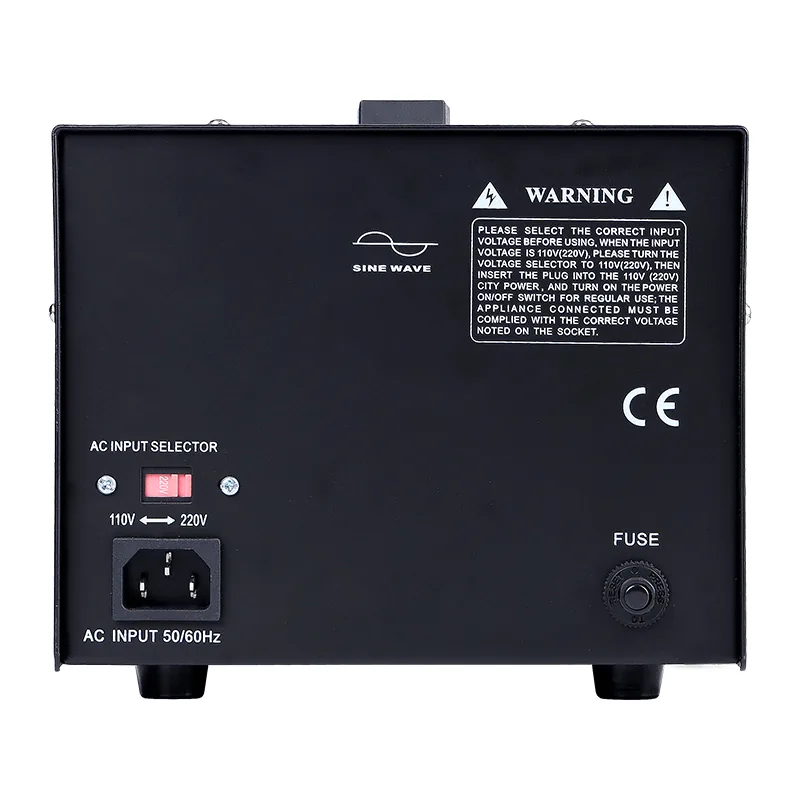
The proforma invoice is the document you pay against, and it is worth ten minutes of reading rather than a glance and a transfer. Our PI carries the seller and buyer details, the full specification of each line, the quantity, the unit price, the total, the Incoterm, the payment terms, the delivery window, the port of loading and the port of discharge, and our bank details.
Check four things before you send money. First, the specification on the PI has to match the quotation exactly, including the input and output voltage and any options such as the RCD or a specific socket. Second, the consignee name and address have to be exactly as they will appear on your customs entry, spelled the way your broker expects. Third, the Incoterm has to be the one you negotiated, FOB Ningbo or Shanghai in most of our orders. Fourth, the bank details have to match the bank account shown on our company letterhead.
That last point is not paranoia. Payment diversion fraud is a real problem in this trade, and if you ever receive an email telling you our bank details have changed, call or message us on the WhatsApp number you already have before you send anything. We will never announce a change of bank account by email alone. Treat any such message as suspect until a human being confirms it.
Payment terms themselves are a separate conversation with their own detail, so I will keep it to one line here. We work on a deposit with the balance against shipping documents, or an at-sight letter of credit where that suits the buyer, and our transformer payment terms page sets out the full structure, the amount tiers and the safety points if you want to read that before we get to the PI stage.
Deposit, Production Slot and What We Send While You Wait
Once the deposit clears, your order takes a slot on the line. That is the moment the lead time starts, not the moment the enquiry arrived, which is why a buyer who takes three weeks to approve a PI and then expects a two-week delivery ends up disappointed. The realistic window is 15 to 25 days from deposit, and where you land inside it depends on the quantity, on whether the order needs a custom winding, and on whether it carries private labelling that needs artwork approved.
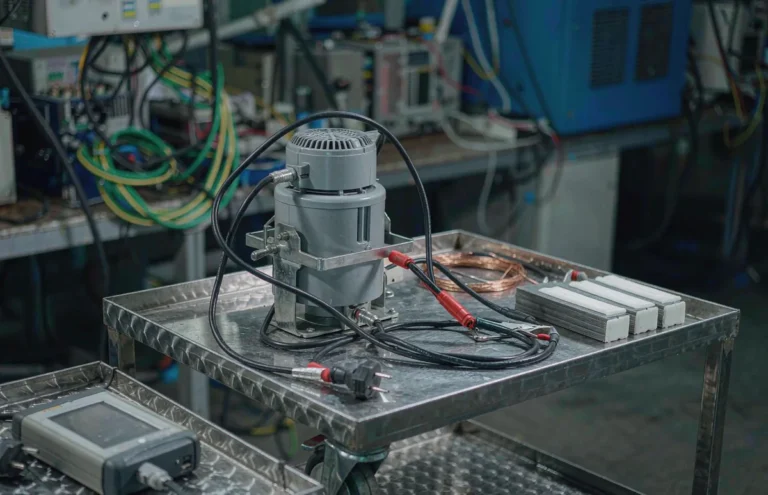
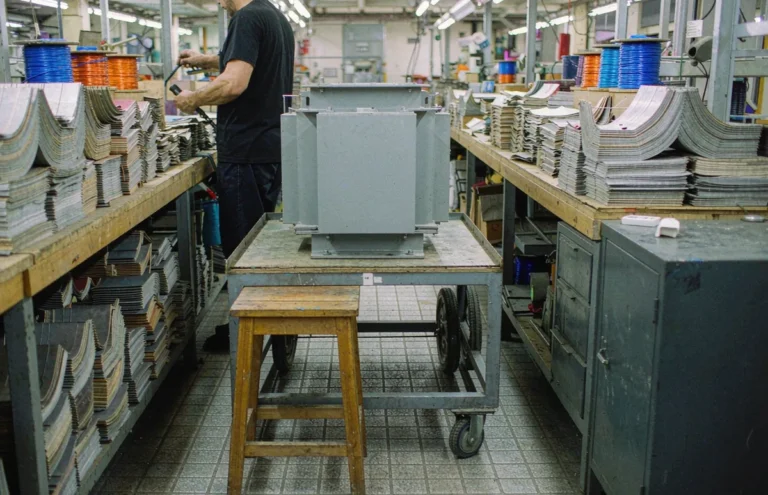
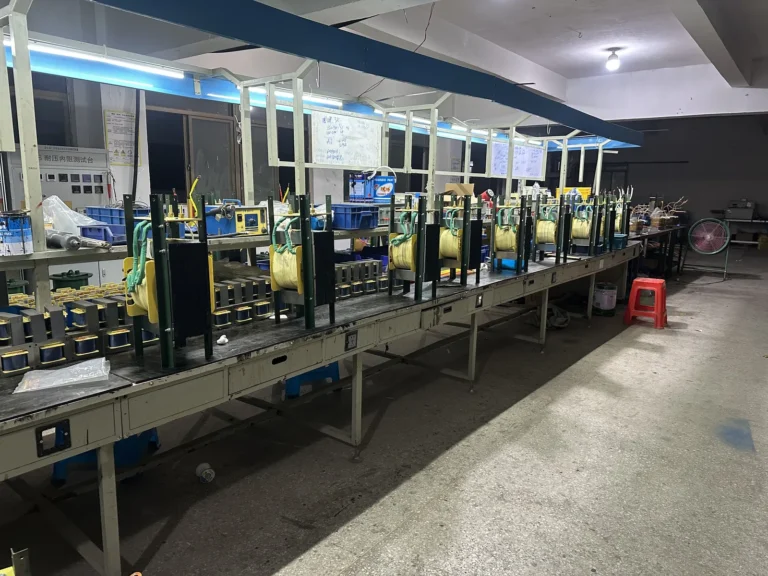
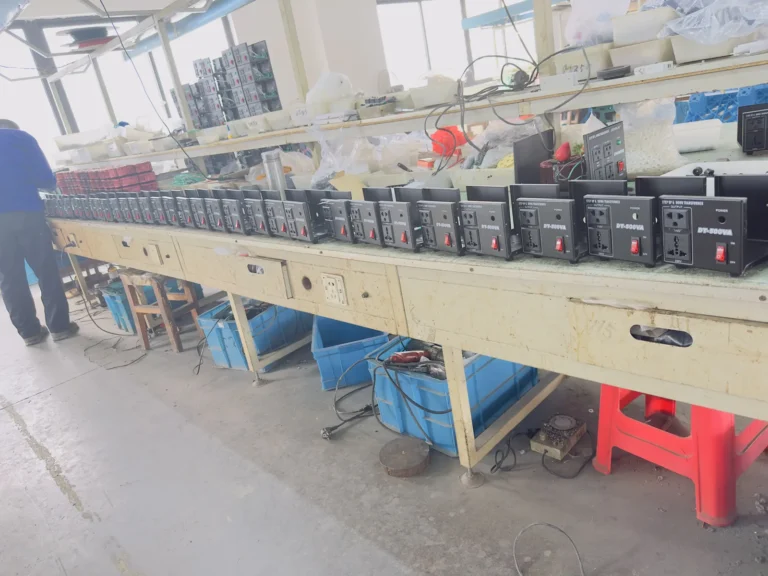
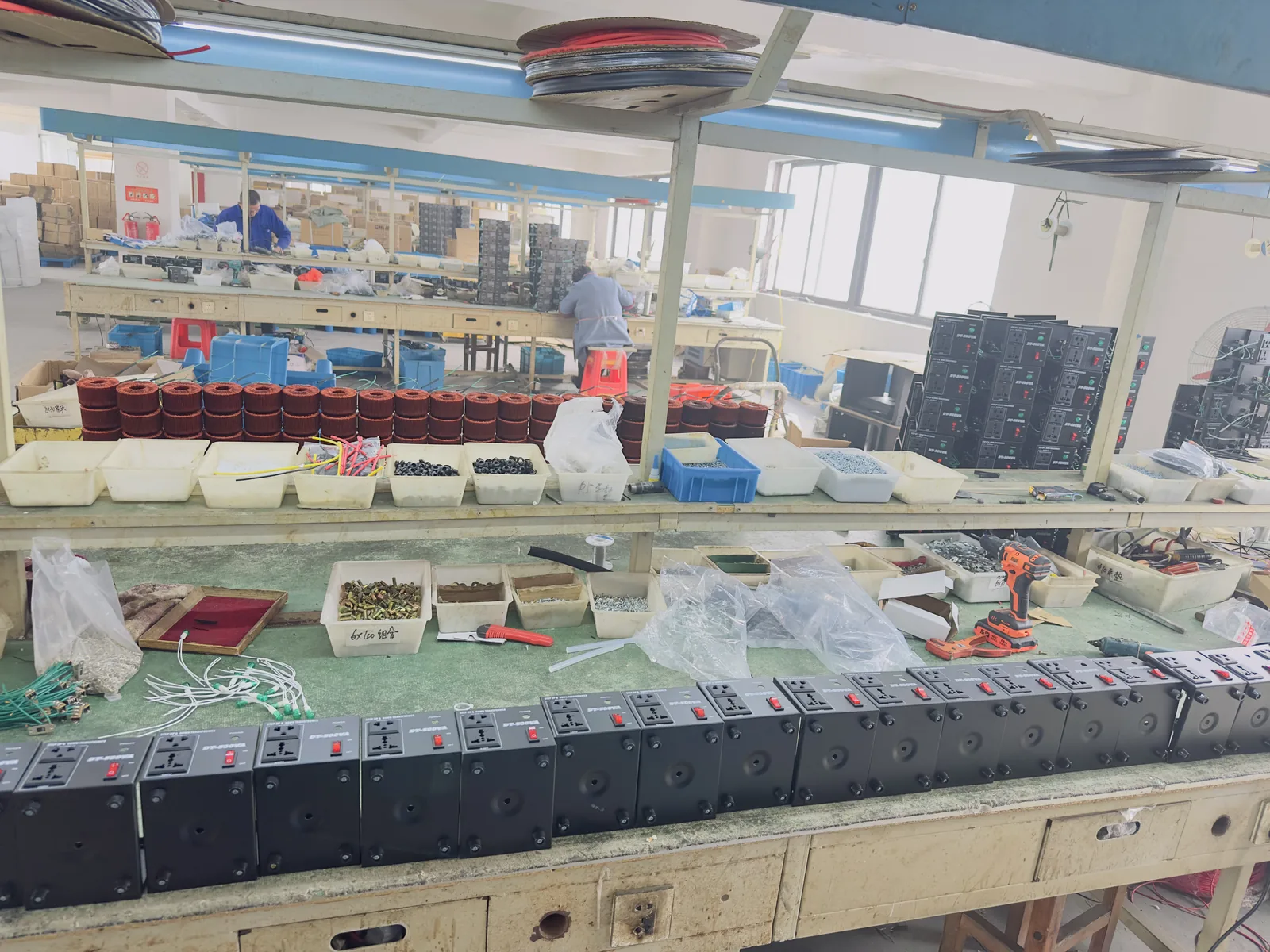
Production is not a black box, and it should not be. Here is what we send while your units are being built: a photo of the rating label artwork for approval before we print, photos of the winding and assembly stage so you can see the copper and the core going in, and the batch test record for your units showing input voltage, loaded output and no-load current. If the order is large enough to have several batches, you get the records for each.
That test sheet is the document worth keeping. It is the record of what your unit did on the bench before it was packed, and it is the first thing I ask for if a warranty question ever comes up. Photograph it and file it with the invoice.
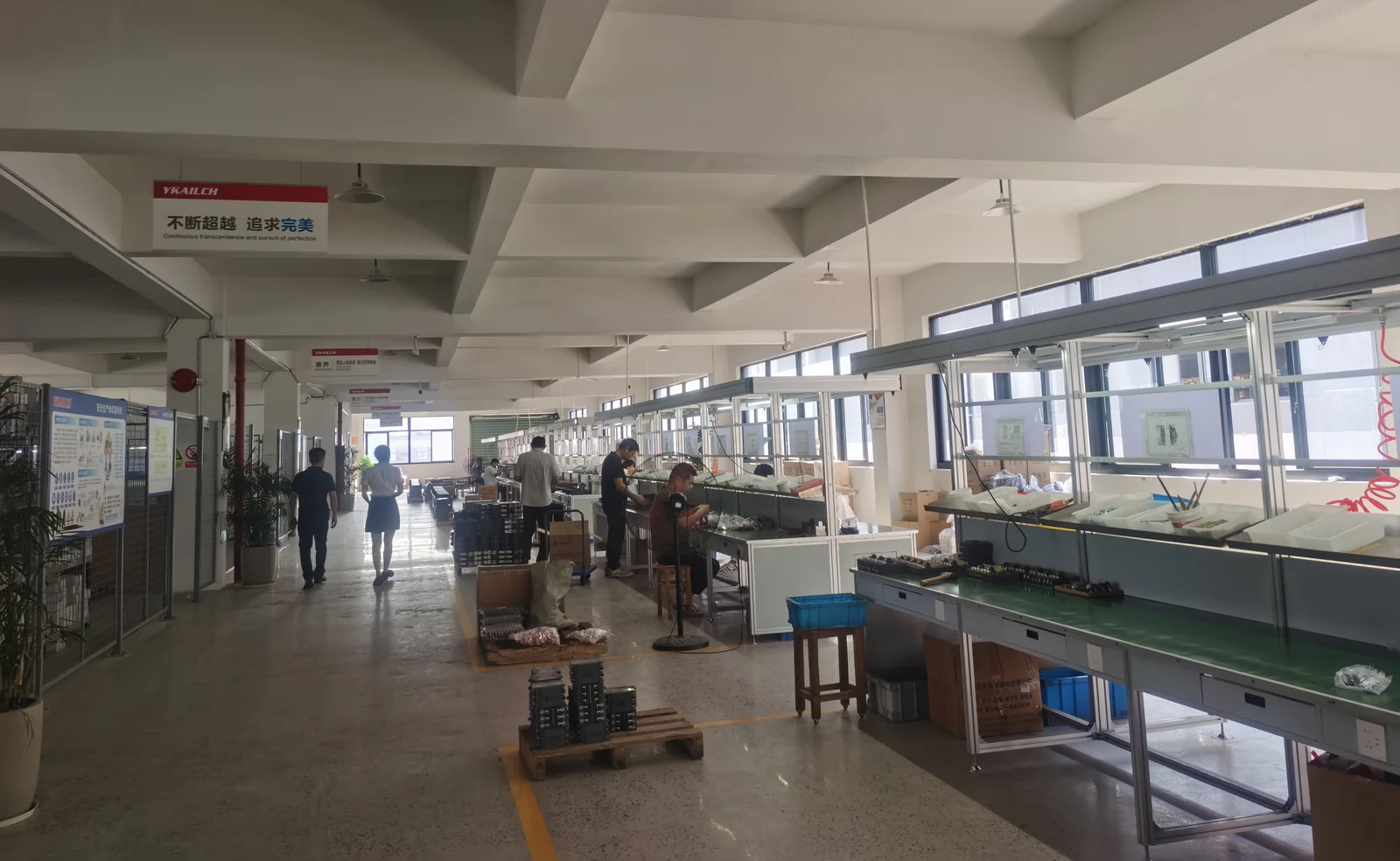
If you want to observe the run, ask about a video walk-round during production. We do those routinely for larger orders and for buyers placing a first order who want to see the workshop rather than take our word for it. It takes ten minutes of our day and it removes a lot of doubt at your end.
Shipping Documents and Clearing at the Destination
When the goods are ready we book the sailing through your forwarder or ours, load the container and hand over the document set. For a standard FOB shipment that means the commercial invoice, the packing list and the bill of lading, plus a certificate of origin where your customs entry calls for it. The packing list should match the invoice line by line, carton by carton, because when a customs officer opens a container the first document he compares is the packing list.
For markets that require it, we also provide a batch test certificate covering the units in the shipment. If your country needs a specific form of origin, a legalised document or a declaration in a particular format, tell us at quotation stage rather than after the container has sailed. Getting a certificate reissued and couriered after dispatch is slow and expensive, and it is always avoidable.
The bill of lading is the document that lets you collect the goods, so the consignee details on it have to be right. Ask your forwarder whether they want a telex release or an original set, because that choice affects how quickly the container moves once it berths. A container that discharges on a Friday and whose documents arrive the following Wednesday sits in port accruing storage that nobody budgeted for.
At your end, clearing is a matter of having the invoices, the packing list and the origin document in the broker’s hands before the vessel berths. Everything we issue is designed to be presented as-is, without amendment. If your broker asks for a change to an invoice we have already issued, tell us early and we will issue a corrected set before the original reaches the bank.
Common Twists: Private Label, Mixed Loading, Forwarder Address
Three requests come up so often that they are worth answering here before you ask.
Private label is routine. We print your own brand on the faceplate and supply the manual under your name, and we hold the artwork so a repeat order carries the same labelling. There is usually a one-off artwork cost on the first order and nothing after that. Send us the logo as a vector file and we will send back a label proof for approval before anything is printed.
Mixed loading is also routine. A single order can carry several models, say a run of ST-1500 alongside a mix of ST-2000 and a couple of STU-3000, as long as the total meets the 10 piece minimum. We will pack each model in its own cartons and mark them clearly, which makes your warehouse put-away far easier than a pallet of identical boxes.
Delivering to a freight forwarder’s warehouse instead of your own address is common and we handle it constantly. Give us the forwarder’s full name, the warehouse address, a contact name and the reference number they have issued you, and put that reference on the invoice and the packing list. If your forwarder consolidates several suppliers into one container, your reference number is the only thing that keeps your cartons from being sorted into the wrong pile.
Where to Read More Before You Enquire
A short background read can save a round of questions. If you are ordering by the container rather than by the piece, our Transformer Wholesale: Buying in Bulk from a China Factory guide covers volume pricing, consolidation and the mistakes that cost buyers money at the pallet stage. If you have not settled on a model yet, the step up & down transformers page explains the difference between stepping down, stepping up and a bidirectional build. And there is a wider set of more transformer buying guides on the site if you want to read around the commercial side before you send anything.
When you are ready, send the five items and skip the rest of the preamble. A complete first message turns a two-week email chain into a quotation in your inbox the same working day, and that is worth ten minutes of your time on the front end.
Questions About the Transformer Quotation Process
These are the ones buyers ask once the price is on the table, answered the way I would on a call rather than in a contract clause.
What do you need from me to prepare a transformer quotation?
Five things: the input voltage at your socket, the output voltage your equipment needs, the total power or a list with nameplate wattages, the quantity, and the destination port. Add a note on any motor or compressor, because that single detail decides the rating we put on the transformer quotation far more often than the running watts do.
How long does it take to get a price back?
Normally the same working day, since we answer during your night in most markets. Mixed orders with private labelling, or a brief that arrives as a photo of a handwritten list, can take a little longer because there is costing or clarification to do first. If you have a deadline, say so and we will work to it.
What is included in your quotation sheet?
The model and full rating, the unit price, the total for the quantity, the packing detail, gross and net weight, the HS code, the Incoterm, and a validity of 30 days. Any artwork or tooling cost for private labelling is shown as its own line rather than folded into the unit price.
What should I check on the proforma invoice before paying?
Check that the specification matches the quotation exactly, including voltage and options such as the RCD. Check the consignee name and address against your customs entry, and the Incoterm. And confirm the bank details match the account on our letterhead, because payment diversion fraud is a real risk in this trade.
What do you send while my order is in production?
A proof of the rating label artwork for approval before printing, photos of the winding and assembly stage, and the batch test record showing input voltage, loaded output and no-load current for your units. We also do video walk-rounds on larger orders so you can see the run rather than take our word for it.
Send the five items in one message and the quotation comes back the same working day. Input voltage, output voltage, the equipment list or total power, the quantity, and your discharge port. We will put the model, the price, the packing and the HS code on one sheet, and tell you plainly whether the date you need is achievable.
Or talk to us directly: WhatsApp +86 197 3022 6757 · Email info@wilmall.com
MOQ 1 pc (stock) / 10 pcs (custom) · Lead time 15-25 days · FOB Ningbo or Shanghai · 12-month warranty