Step Down Transformer for Auto Repair Shops: 220V to 110V
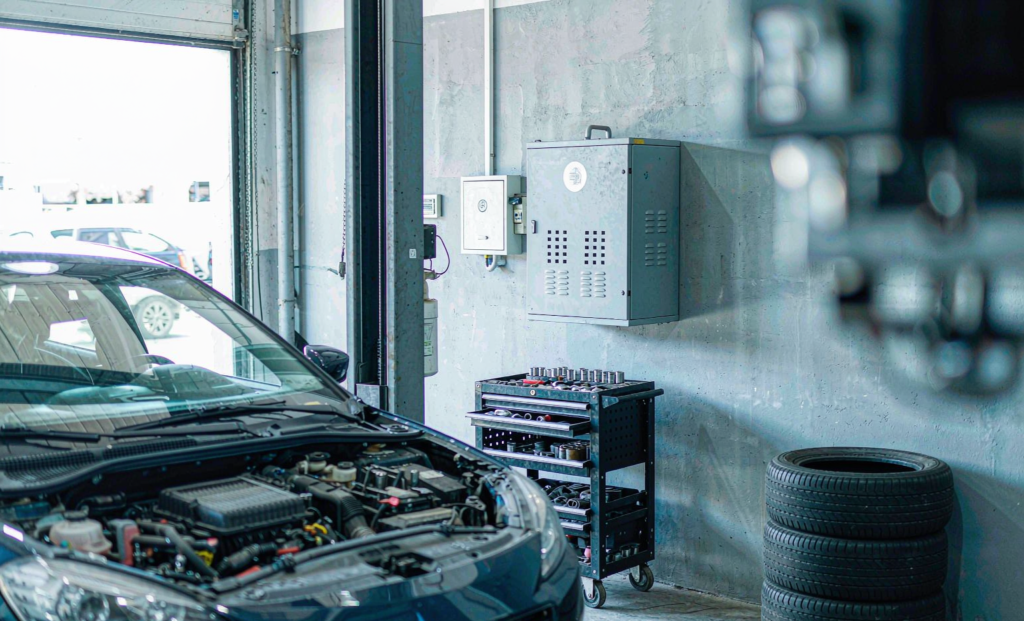
Walk into an independent auto repair shop and count the nameplates. It will not take long to find a 110V MIG welder standing next to a 220V lift, or a plasma cutter from the American market sharing a bench with European diagnostic gear. Nobody planned it that way. Tools get bought at auction, inherited from a closing garage, or brought in by a customer who wanted the same model his old boss had, and one morning the electrician is standing in the bay asking how you want to feed all of it.
So here is the practical answer up front. A 110V welder or plasma cutter on its own wants a step down transformer rated well above its running draw, and I usually start those conversations at 3000VA. Hand tools, chargers and a shop vacuum on a shared bench are happy on a 2000VA box. If a two-post lift, a compressor and a welder can all be live at once, we stop talking about one transformer and start drawing circuits. That is the short version. The rest of this page is how I get there with customers, and I do it from a factory floor rather than a showroom.
Why Repair Shops End Up Running 110V Equipment
The used tool market does most of the damage. Welders, plasma cutters and battery service equipment move around the trade constantly, and a large share of it was built for North America, where the smaller machines run at 110V or 120V. Buy one at an auction, win one in a liquidation, and you inherit the voltage that came with it.
Then there is the imported-tool habit. Impact wrenches, angle grinders, cordless chargers, tyre inflators and inspection lamps bought through the same channels turn up at 110V too. Each one is small. Ten of them on a bench, all wanting the same wall, is no longer small.
Meanwhile the building gives you 220V, 230V or 240V single phase, sometimes three phase for the lift and the compressor. So the shop ends up with a mixed toolbox and one supply, and a transformer is what makes the two coexist without rewinding anything.
The one thing to check before you spend anything is the motor question, and it goes beyond voltage. Our notes on a step down transformer for a welder cover the duty cycle side of this in more depth, because welding is the load that surprises most buyers.
Which Equipment in a Shop Usually Needs One
Send me a shop equipment list and this is the split I make, in the order the questions usually come in:
- MIG and TIG welders, 110V input, 2kW to 4kW while welding, with a duty cycle that decides the real thermal load.
- Plasma cutters, 1.5kW to 4kW, and they pull hard in short bursts with almost no warning.
- Battery chargers and boosters, 1kW to 2.5kW, steady for hours on end, which is the opposite problem.
- Tyre changers and wheel balancers, 750W to 1.5kW, motor start on every cycle.
- Two-post and scissor lifts with 110V power packs, 1.5kW to 2.2kW, short runs with a heavy start.
- Piston compressors, 1.5kW to 3kW, the worst start in the building because they begin against pressure.
- Bench tools and hand tools, 300W to 1.5kW, individually light, collectively awkward.
- Paint booth fans and curing lamps, 750W to 2kW, and they usually sit in a separate room.
What you can leave alone: engine scan tools, laptops, LED work lights with wide range drivers, and anything whose plate reads 100-240V. Half the diagnostic gear sold today is already dual voltage. Check the labels before you build a load list, because the fastest way to waste money in a workshop is to put a transformer in front of something that never needed one.
Welding Load Is Not Like Any Other Load
A welder does not draw a steady current the way a lamp does. It draws hard while the arc is on, drops to almost nothing between passes, and repeats that pattern for the length of the job. Manufacturers express this as a duty cycle, meaning the percentage of a ten minute window the machine can weld at a given output. A 110V MIG set might weld at its rated current for two or three minutes out of ten and idle the rest.
What does that mean for the transformer? Two things. First, the steady rating has to cover the welding current, not the average over the shift. Second, the heat builds during those welding minutes and has to escape between them. A transformer that is only just big enough never gets a chance to cool, and that is where the failures come from.
Here is my rule, and it has served shops well. Take the welder’s maximum input current at 110V, multiply by the voltage to get VA, and then buy at least double that. A machine drawing 25A at 110V is 2750VA nominal, so I would be quoting a 5000VA unit or running it from a dedicated circuit. Ask for the input current from the manual rather than guessing from the output amps, because output ratings flatter the machine.
Sizing the Rest of the Shop
For everything that is not a welder, the arithmetic is easier. Add the loads that can plausibly be live together, add a quarter to a third on top, and stop there. Do not add the whole shop’s nameplate total, because a shop with eight bays does not start every compressor at the same second.
A single bay is a good example. A 110V impact wrench at 700W, an inspection lamp at 100W, a battery charger at 1200W and a tyre inflator at 900W come to under 3000W if they somehow all run together. A 3000VA unit covers that bay, and the two-post lift goes on its own transformer or its own circuit because its start is violent.
Scale it up and the picture changes. Three bays, a compressor and a welder on one box is how shops get into trouble. Split it: one transformer per bay or per pair of bays, a separate unit for the welder, and the compressor on a feed sized for its locked rotor current. It costs more on the first invoice and much less over five years.
| Load in the shop | Typical draw | What I would quote | Reason |
|---|---|---|---|
| 110V MIG welder, light use | 2 – 3 kW | STU-3000 bidirectional | Duty cycle heat needs spare capacity |
| 110V MIG or plasma, hard use | 3 – 5 kW | STU-5000 bidirectional | Doubling the nominal VA keeps it cool |
| Bench tools and chargers | 1 – 2 kW | ST-2000 2000VA | Steady mixed load on one bench |
| Single service bay | 2 – 3 kW | ST-2000 2000VA with RCD | Motor starts need headroom |
| Tyre bay, changer and balancer | 1.5 – 3 kW | STU-3000 bidirectional | Two motors cycling all day |
| Compressor feed | 1.5 – 3 kW | Dedicated STU-5000 | Start against pressure, no sharing |
A Garage Is a Hostile Place for a Transformer
Grinding dust, brake dust, oil mist, water on the floor and a pressure washer in the corner. That is the environment your box will live in, and it is harsher than a home workshop. Put the unit on a wall bracket or a shelf at least knee height, never on the floor where a washdown will reach it.
Earthing is the first thing I ask about on a shop job. The enclosure has to bond properly to the building earth, and the 110V side should feed proper outlets rather than a lead dangling over a bench. On our ST-2000 the RCD sits inside the case, so when a tool goes down wet or a cable gets nicked by a trolley jack, the trip happens at the box and not somewhere across the yard.
Ventilation matters too, and it is the item that gets ignored. A transformer in a closed metal cabinet with no airflow will run hotter than the same unit on an open wall, and heat is what shortens its life. Leave the louvres clear, keep the cabinet door vented, and blow the dust out of the vents at every oil change. It takes two minutes and it is the cheapest maintenance in the building.
One Box Per Bay or One Box for Everything
Most retrofits have this question at the centre. My answer for a working shop is nearly always per bay or per pair of bays, and the reason is downtime. A single large transformer feeding every 110V tool means one fault stops the whole shop, including the bay with a car on the lift and a customer waiting.
Cable length is the second reason. Low voltage feeds lose volts over distance, so a long run from a corner box to the far end of the building means the welder at that end sees less than it should, and a welder that sees less voltage pulls more current. Short runs from a local box are simply kinder to the machine.
Third is spares. A shop with four identical units can hold one spare on the shelf and swap it in twenty minutes. A shop with one giant box waits for a replacement to clear customs. Ask for the same model across the bays and write down what runs on each one.
The Units I Quote for Repair Work
For a bench with grinders, chargers and lamps, the ST-2000 at 2000VA is the first unit on my quote. It takes 220V or 230V in, puts 110V out, and carries the RCD inside the enclosure where a busy shop needs it.
Welding and lift work belongs on the STU line. We build both a 3000VA and a 5000VA version, and both operate in either direction. That reversibility earns its place in a shop that sources tools from several countries and will one day want to drive a 220V machine from a 110V feed, or the opposite.
On a bench where tools come and go, the DT-1000VA automatic bidirectional unit saves the argument about which way round the box should be plugged in. And if you are commissioning imported equipment and want to watch the voltage move, the Variac range runs from 500VA through 1KVA, 2KVA and 3KVA with a dial on the front. Technicians who borrow one tend to keep it.
If most of your 110V load is actually handheld tools rather than a welder, our page on a step down transformer for power tools walks through the lighter sizes, and it is usually the faster read.
From Our Bench to Your Service Bay
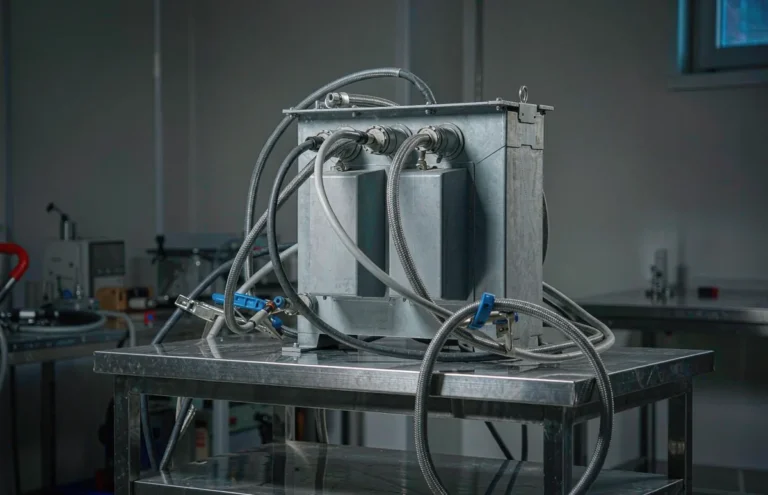
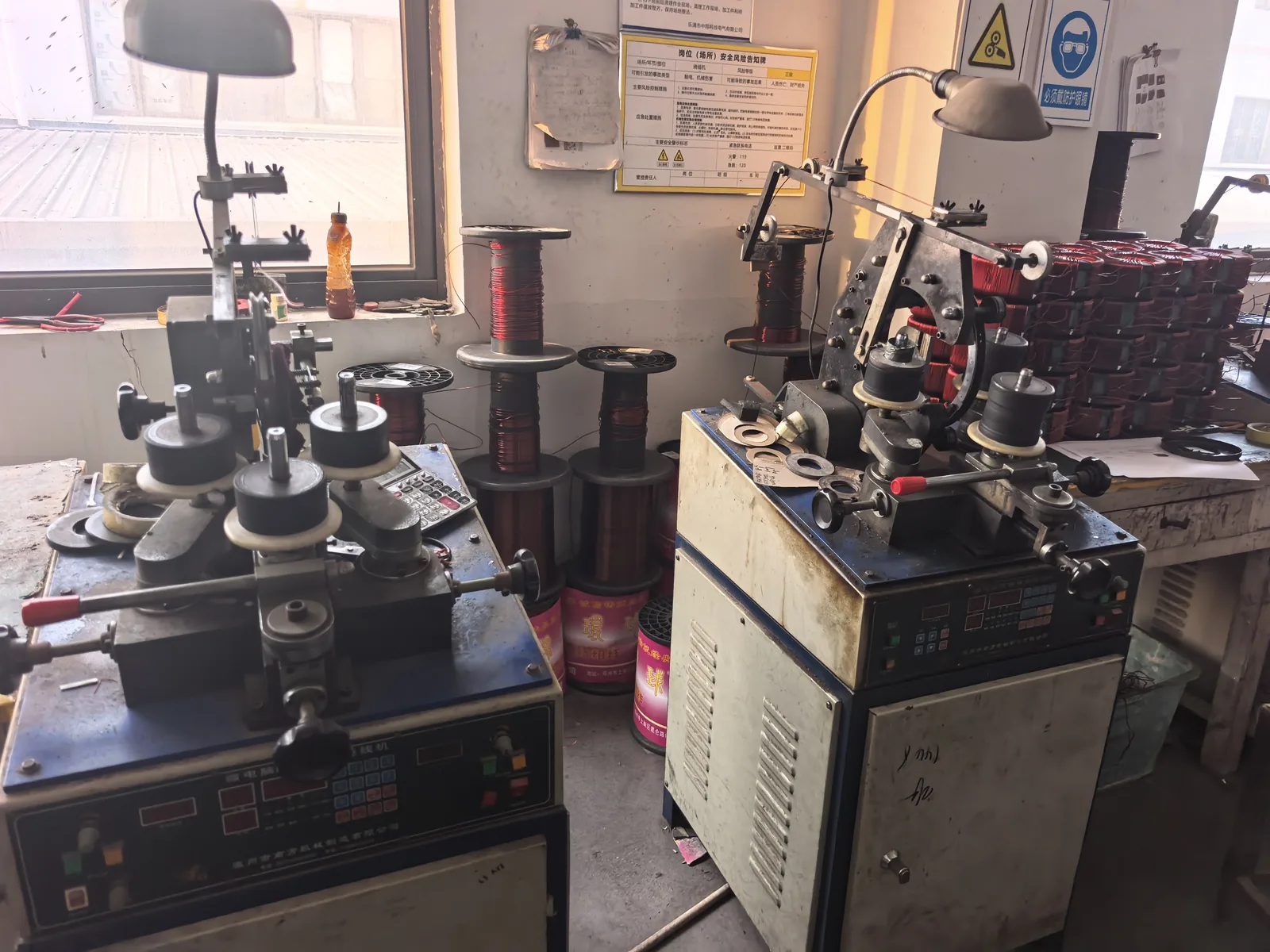
We do not sell boxes out of a warehouse we have never visited. The units on this page are wound, assembled and tested in our own plant in Yueqing, and the photo below is one of the benches where final assembly happens. Nothing leaves the building without a load test first, and the record of that test, showing input voltage, loaded output and standby draw, is folded into the carton with the unit it belongs to.
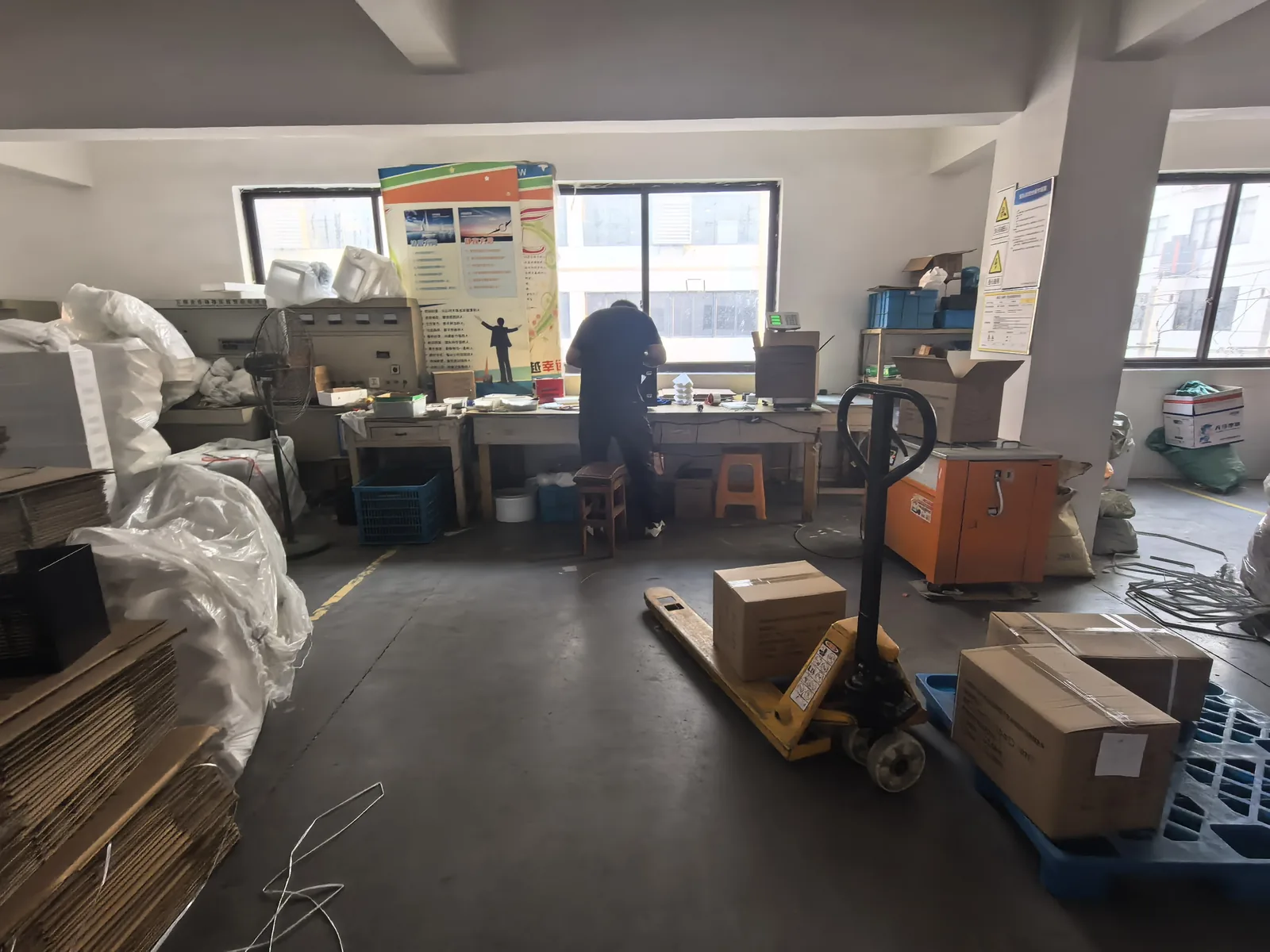
We wind with copper, not aluminium. In a shop where the box runs for eight hours beside a welder, that difference shows up as temperature. An aluminium winding at the same rating gets hotter, and heat is what ages insulation until one day the unit simply does not come back on.
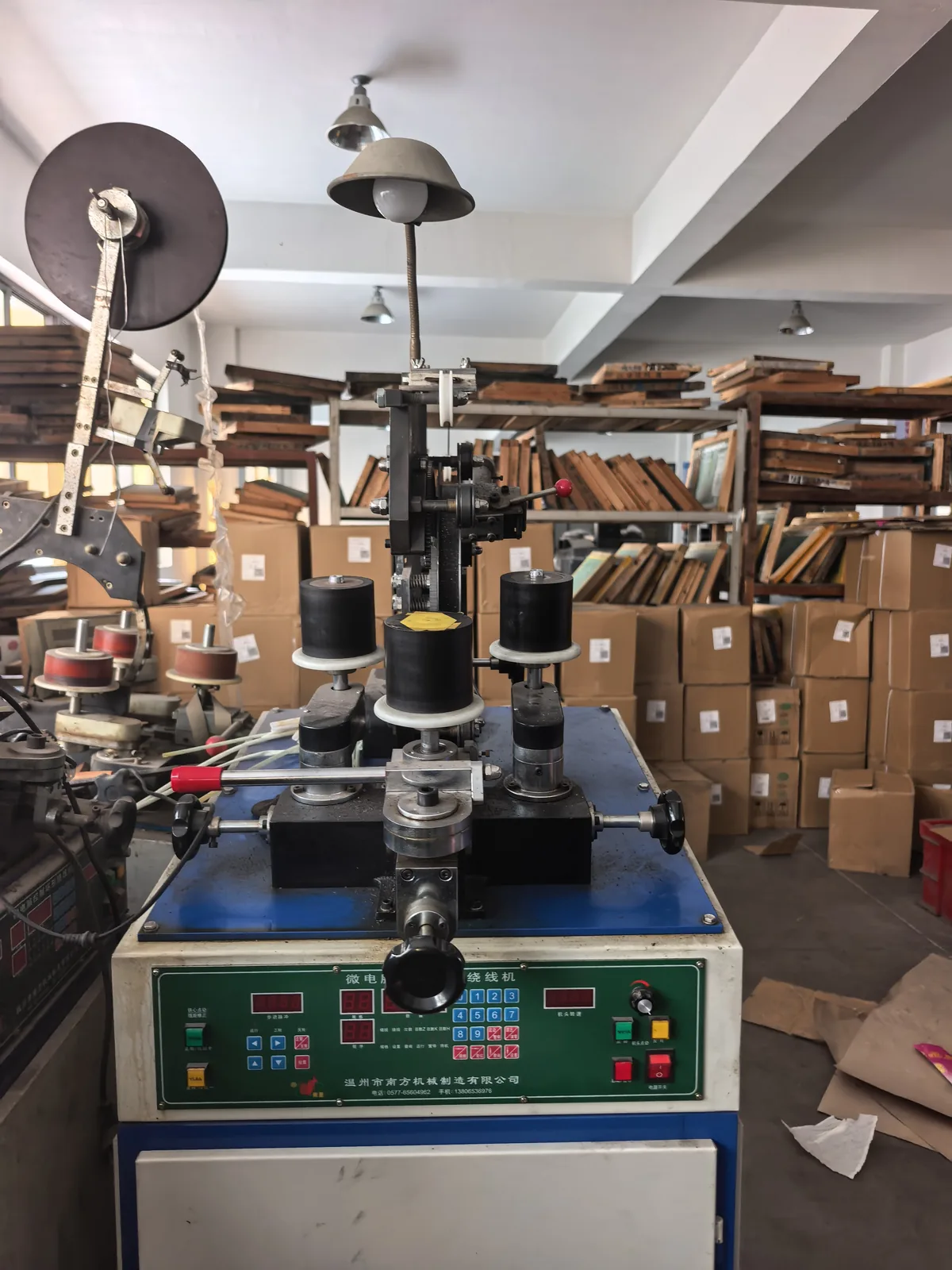
Some of the smaller coils are still wound on a manual machine like the one below, because short runs and sample units do not justify setting up an automatic winder. It is slower and it is how a 1 pc order gets built without a minimum run.
Order Details, Lead Time and Packing
Now the numbers. A trial order can be as small as a single stock DT unit, and the standing minimum sits at 10 pcs. If the output voltage has to be something other than standard the floor is 10 pcs, a bespoke socket layout pushes that to 50 pcs, and printed cartons need 1000 pcs. Work takes 15 to 25 days in the plant, and where you land inside that window depends on your quantity and any special socket. We ship FOB Ningbo or Shanghai.
Money is handled as 30 percent T/T deposit with the balance released against the shipping document copy, or by a sight letter of credit, or through Trade Assurance. Deferred L/C terms, the kind usually described as usance, are not something this factory signs, so if your finance team needs extended credit, that needs settling before the order rather than after it.
Each unit carries a 12-month warranty. You will receive CE and our test record with the goods, and if your market asks for documentation beyond that, tell us at the quoting stage and we will work through it per order. Packing is cartons on a pallet, banded and shrink wrapped, with the test sheet inside the box for the exact unit it belongs to.
Frequently Asked Questions
What size transformer do I need for a 110V welder?
Start from the welder input current at 110V rather than its output rating. A machine drawing 25A needs about 2750VA nominal, and I would quote a step down transformer of 5000VA so the duty cycle heat has somewhere to go. Send us the manual page and we will confirm the figure.
Can a lift and a compressor share one transformer?
I would not do it. Both start against load and draw several times their running current for a moment. If they start together the voltage sags and the transformer heats up. Give each one a dedicated step down transformer or a dedicated circuit, and keep the shared unit for bench tools and chargers.
Do I need an RCD on a transformer in a garage?
Ask for it before anything else. Concrete floors, water and power leads make a garage a genuine shock risk. On our ST-2000 the RCD is built into the enclosure so a damaged tool lead trips at the box rather than at a breaker on the far wall, and that trip is faster and local.
How many 110V bays can one transformer feed?
Two bays per unit is comfortable if the loads are hand tools and chargers. Once a welder is involved, give it its own unit. Shops that put four bays on one box usually come back for a second transformer after the first summer, when the unit starts running hot and the far bay welds poorly.
What is your minimum order and delivery time?
A single stock DT unit can ship as a trial, and the standing minimum for a step down transformer is 10 pcs. An odd output voltage needs 10 pcs, a bespoke socket needs 50 pcs, and printed cartons need 1000 pcs. Delivery takes 15 to 25 days from FOB Ningbo or Shanghai, with 12 months of warranty.
Before you order, send me the model number of the welder or the lift, the input current from its manual, and a photo of the plug. That is enough for me to choose the unit and tell you honestly whether you need one or three. If you want to see how other trades handled the same problem, there are application guides covering workshops, farms and small factories. Getting the size right costs you one message. Getting it wrong costs you a summer of hot boxes and rework.
Send us your tool list and we will pick the unit for you. Tell us the 110V machines in the shop, the input current from each manual if you have it, and how many bays you want to feed separately. Unit, quantity and FOB price normally come back the same working day.
Straight to WhatsApp: +86 197 3022 6757 · Email sales@wilmall.com
Lead time 15-25 days · MOQ 1 pc (stock) / 10 pcs (custom) · FOB Ningbo or Shanghai · 12-month warranty