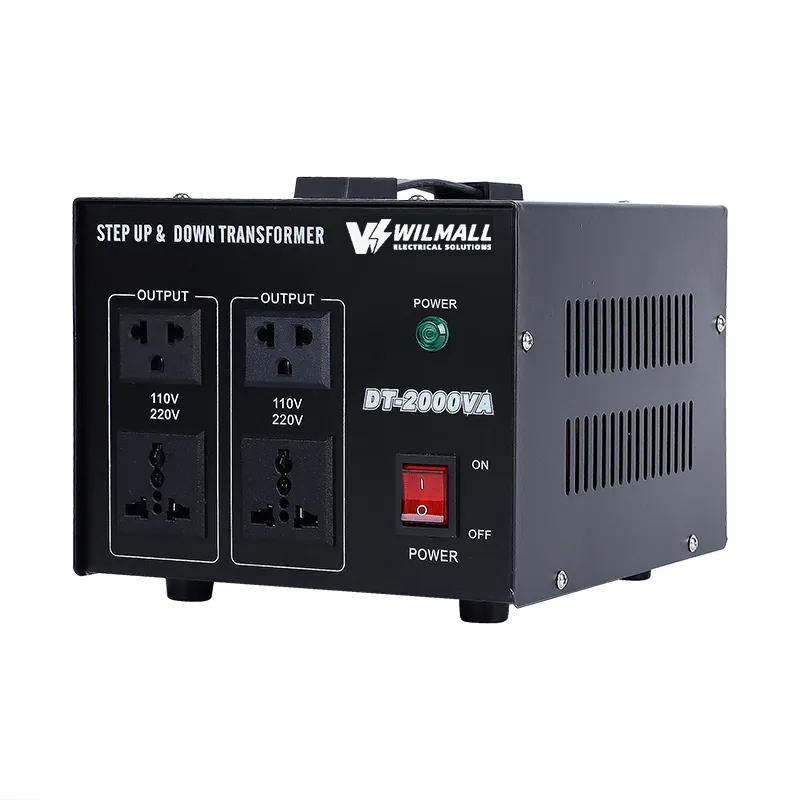
Step Down Transformer for E-Scooter and EV Charger
Electric scooters and e-bikes have taken over city streets, and a huge share of them ship from the US with a 110V charger. If you are charging a US-spec scooter, e-bike, hoverboard or power bank in a 220V country, the step down transformer between the wall and the charger is a small box that protects an expensive machine. This guide covers sizing for e-scooter and EV chargers, the wattage realities, and why the charger label is not the whole story.

Why a charger needs a transformer
Most e-scooter and e-bike chargers are rated for one input voltage, and a 110V-only charger fed 220V burns out its input stage instantly. The transformer converts the supply so the charger sees its design voltage. Without it, the alternative is buying a local 220V charger for every imported scooter — expensive and slow. One transformer serves the whole fleet of US-spec chargers.
Here is the thing: a charger is not a simple load. It is a switched-mode power supply that pulls high peak current while charging, and some chargers surge at start. The transformer must handle the peak, not just the label watts. Sizing for chargers is about the peak draw, and the label usually tells the story if you read the input current, not the output watts.
Step down transformer size for e-scooter and EV charger
| Charger / device | Input wattage | Peak draw | Recommended transformer |
|---|---|---|---|
| Hoverboard / power bank | 50-100W | ~150W | 500VA |
| E-scooter (commuter) | 150-300W | ~450W | 500-1000VA |
| E-bike / e-scooter (large) | 300-600W | ~900W | 1000VA |
| Fast charger (2-4A) | 600-1000W | ~1500W | 1500-2000VA |
| EV Level-1 charger (110V) | 1200-1500W | ~1800W | 2000VA |
A 2A e-scooter charger at about 250W runs comfortably on a 500VA unit. A fast charger pulling 1000W needs the 1500-2000VA size. The ST-1000 covers most commuter scooters and e-bikes, and the ST-2000 handles fast chargers and anything else on the same circuit. Chargers run for hours, so continuous-duty rating matters — these are not quick toaster loads.
Continuous charging duty
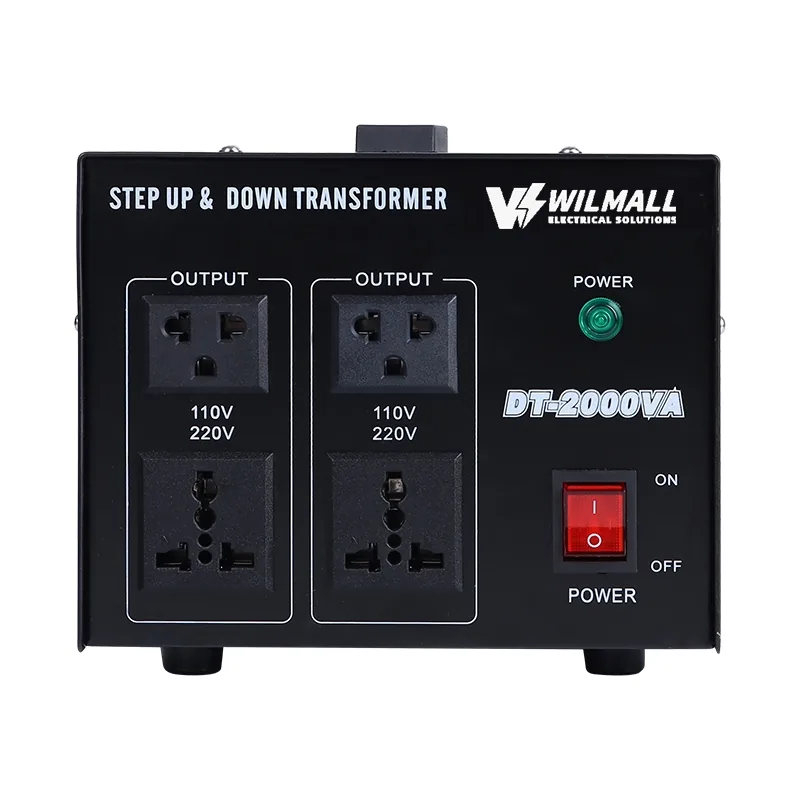
A scooter charges for 4-8 hours, often overnight, and the transformer is energised for the whole session. That is continuous duty, and the transformer must be rated for it. Copper winding and 25-30% margin keep it cool through the night. An undersized unit runs warm at 2am, and warm every night for months is how insulation fails.
Overnight charging also means the transformer runs when nobody is watching. RCD protection on the output is the safety layer — it trips on leakage in milliseconds, protecting the charger and the household while everyone sleeps. The ST series includes RCD as standard.
Multiple chargers on one transformer
Households with several scooters, bikes and power banks can share one transformer, but add the peak draws, not the running watts. Three 250W chargers peak around 450W combined at start, and a 1000VA unit covers them with margin. If fast chargers are involved, step up. The rule is the same as ever: add the peaks, apply margin, buy the next size.
Common mistakes with charger transformers
- Sizing on the output watts. Read the input watts on the charger label — they are different.
- Using a travel converter. Chargers run for hours; converters overheat.
- No RCD for overnight charging. The unit runs while everyone sleeps.
- Wrong primary winding for the grid. Output drift stresses the charger.
- Aluminium winding. Nightly charging needs copper to stay cool.
Why buy from a factory directly
Wilmall supplies step down transformers for the e-mobility market across Asia, the Middle East and Africa. Copper winding, RCD protection, continuous-duty rating and batch test records with every shipment. MOQ 10 pcs per model, 15-25 day lead time, FOB Ningbo or Shanghai with CE / RoHS documents.
Charger labels: input watts vs output watts
Most charger labels show the output first — “Output: 42V 2A” — and the input in smaller print. The input is the number the transformer cares about. A charger that outputs 250W pulls 300-400W from the wall at 110V, and more at start. Read the input watts, add the charger efficiency loss, and size the transformer from that. If the label is unclear, send us a photo and we will read it for you.
The input current is on the label too. A 2A charger at 110V draws about 220W; a 4A fast charger draws 440W plus losses. The table above already does this math for the common charger classes.
Frequency and chargers
Switched-mode chargers convert to DC internally and are frequency-independent — a 60Hz charger runs identically on 50Hz. This is one appliance class where the frequency question never matters. The transformer only changes voltage, and the charger does not care about the grid frequency at all.
That makes chargers one of the cleanest loads a transformer can feed: resistive-like behaviour, no frequency concern, and a predictable duty cycle.
The short version
Size the transformer for the charger input watts, run it overnight with RCD protection and copper winding, and read the label correctly. That is the whole e-mobility charging story, and the ST series covers every charger size in it.
Where to install the charger transformer
Scooters charge in garages, hallways and under stairs — tight spaces where airflow is limited. Mount the transformer on a wall or shelf, off the floor, with clearance on all sides. A charger running for hours generates heat in the transformer, and blocked airflow is how a perfectly sized unit overheats. Ten centimetres of clearance costs nothing and prevents the most common failure.
If the charging spot is damp — a garage floor, an outdoor socket — use an IP54 enclosure or keep the transformer dry on the wall. Water and overnight charging do not mix.
Warranty and support
Every Wilmall transformer carries a 12-month warranty, and we keep common spares for fast resolution. Chargers run for hours every day, so reliability matters. Batch test records ship with every order, and we respond to support enquiries within 24 hours.
The short version
Size the transformer for the charger input watts, read the label correctly, run it overnight with RCD and copper winding, and keep it ventilated. That is the whole e-mobility charging story, and the ST series covers every charger size in it.
Charging stations and fleet charging
Delivery fleets and scooter-sharing companies charge banks of scooters overnight, and they need transformer banks sized for the simultaneous peak, not the average. A fleet of 20 chargers at 250W each peaks around 5-6kW at start — a transformer bank with individual breakers is the professional answer. We supply these setups with private labelling for fleet operators.
For fleet charging, redundancy matters: if one transformer fails, the rest of the bank keeps charging. Individual units with individual protection are the standard design, and we keep the spec on file for reorders.
Talk to the factory
If you are charging a single scooter or running a fleet, send us the charger specs and the count. We will confirm the transformer sizes, the bank layout if needed, and the pricing in one message. Email sales@wilmall.com or WhatsApp +86 197 3022 6757.
Buying for resale: the e-mobility range
E-mobility distributors stock the 500VA size for hoverboards and small chargers, 1000VA for commuter scooters, and 2000VA for fast chargers. Three SKUs cover the market. Private labelling from MOQ 10 pcs, and we can print the compatible charger list on the carton so shop staff answer instantly.
The e-scooter market keeps growing in cities across Asia, the Middle East and Africa, and every imported scooter needs a charger transformer. It is one of the steadiest add-on sales in the mobility trade.
The short version
Size the transformer for the charger input watts, read the label correctly, run it overnight with RCD and copper winding, and keep it ventilated. That is the whole e-mobility charging story, and the ST series covers every charger size in it.
Talk to the factory first
Before you commit to an order, send us one message with your charger specs and country. We will tell you the right sizes, the right winding and the right socket — and what not to buy. That is the kind of advice a factory can give, and it is free. Email sales@wilmall.com or WhatsApp +86 197 3022 6757.
Frequently asked questions
What size transformer do I need for an e-scooter charger?
A commuter e-scooter charger needs 500-1000VA. Fast chargers need 1500-2000VA. Read the input watts on the charger label, not the output watts.
Can a transformer charge a scooter overnight?
Yes, if it is rated for continuous duty with margin. Copper winding and 25-30% margin keep it cool through 4-8 hour charging sessions.
Why does a charger transformer need RCD protection?
Chargers run for hours, often overnight. RCD trips on leakage in milliseconds, protecting the charger and household while everyone sleeps.
Can I charge several scooters on one transformer?
Yes, add the peak draws of the chargers, apply margin, and buy the next size. A 1000VA unit covers three commuter chargers.
Can I order charger transformers with my brand?
Yes, private labelling from MOQ 10 pcs per model, with RCD and continuous-duty rating as standard.
Related reading
- Step Down Transformer 220V to 110V: Sizing and Safety
- Transformer VA vs Watts: What Buyers Need to Know
- Step Up and Down Transformer Products
Get a factory-direct quote
Email sales@wilmall.com or WhatsApp +86 197 3022 6757 with your charger specs and country. We confirm the size within 24 hours. MOQ 10 pcs.