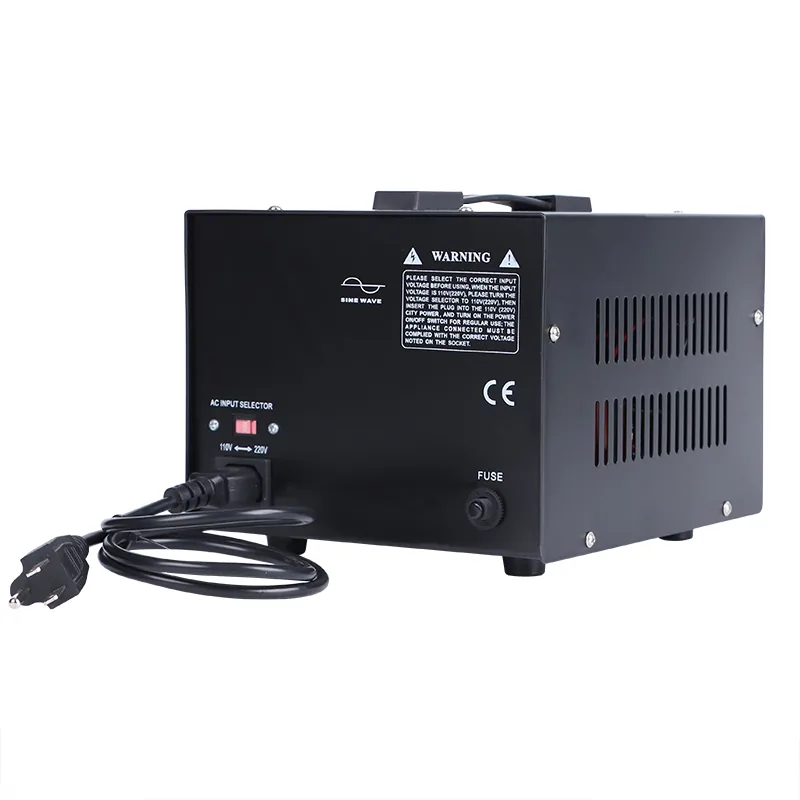
Transformer Shipping and Storage: Keep Units Alive
A transformer survives the factory tests and the trip across the ocean, then dies in storage — it happens more often than manufacturers admit. Moisture, salt air and improper handling are the hidden killers of transformers between the factory and the wall socket. This guide covers how transformers should be shipped, stored and handled so they arrive working and stay working.

How transformers travel
Transformers ship in export-grade cartons with foam or cardboard inserts, packed for sea freight or air freight from Ningbo or Shanghai. Every Wilmall unit is individually boxed, then the boxes go into master cartons with the model, rating and quantity marked. For container loads, cartons are palletised and strapped so the shipment arrives square and dry.
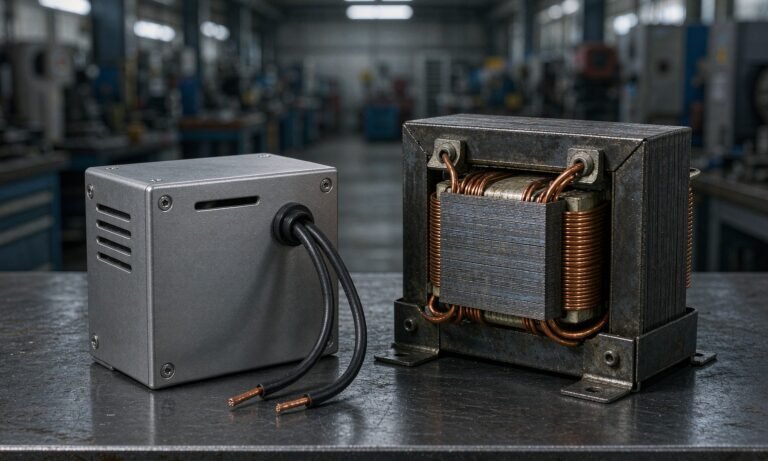
The transformer itself is a solid lump of copper and steel — it does not mind the journey. What it minds is moisture and rough handling at either end. The packaging is designed around those two risks, and the rules below apply from the moment the carton opens.
Storage conditions that keep transformers alive
- Keep them dry. Storage relative humidity under 70% is the target; below 60% is better.
- Keep them off the floor. Pallets or shelves, never directly on concrete or damp ground.
- Keep them warm enough. Condensation forms when a cold unit enters a warm room.
- Keep them covered. Dust and salt air both settle on exposed terminals.
- Rotate stock. Use the oldest units first; transformers are not perishable but terminals corrode over years.

The condensation problem
Here is the thing: the biggest storage killer is condensation. A transformer packed in a cold warehouse or a shipping container arrives in a warm, humid destination, and moisture condenses inside the case. If the unit is switched on immediately, the moisture can cause leakage and short circuits. The fix is simple: let the unit acclimatise for 12-24 hours in the destination room before connecting it, or store it with a desiccant bag inside the carton.
Wilmall packs desiccant with sea-freight shipments by default, and we recommend storing units in their sealed cartons until installation. That one habit prevents most storage failures.
Handling and transport to the site
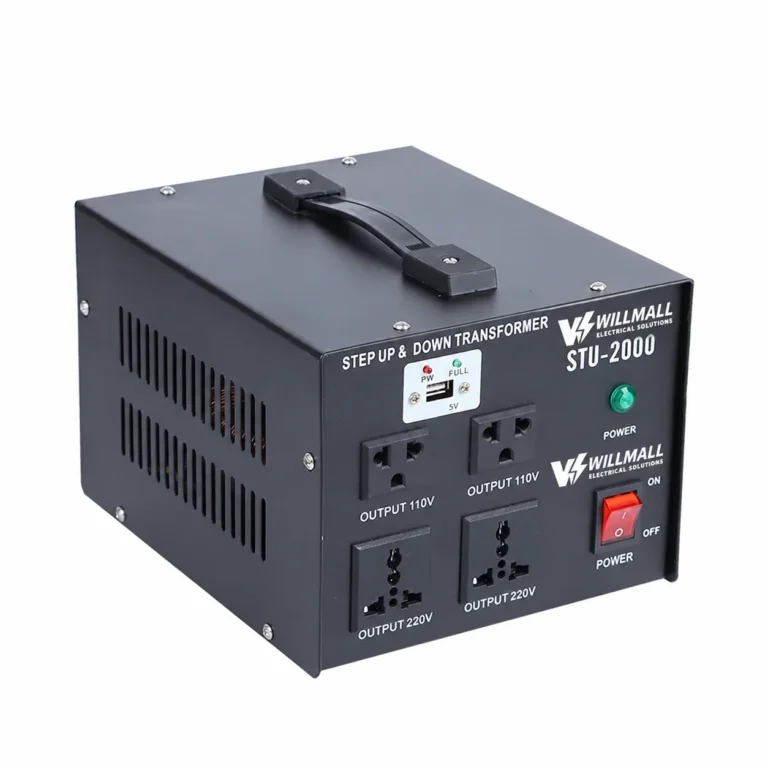
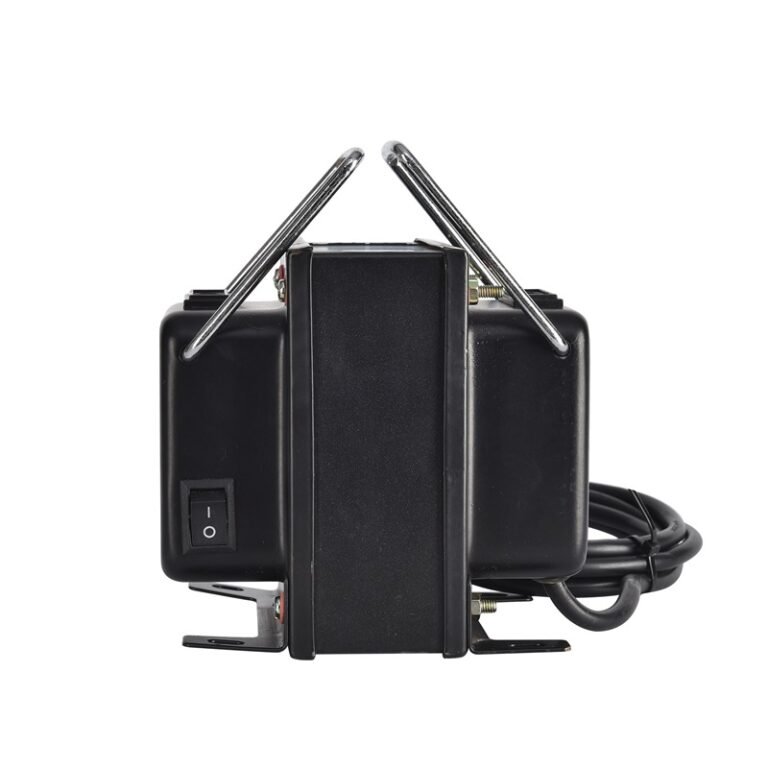
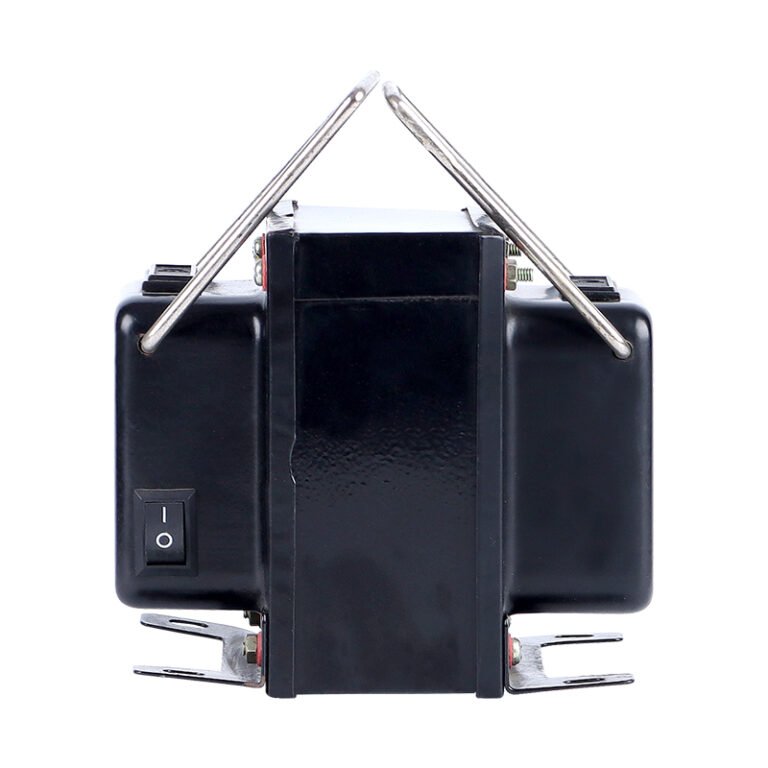
Transformers are heavy — a 2000VA unit weighs 8-12kg, and larger units far more. Lift with the handles or the case, never by the cables or terminals. For site delivery, keep the units in their cartons and transport them upright. A transformer dropped from a tailgate may look fine and fail weeks later. Treat the case as the fragile part even though the internals are solid.
Storage duration and terminal care
Transformers can be stored for years without degradation if the conditions are right. The one thing that does age is the terminals: bare copper or brass corrodes in humid or salt air. For long storage, keep the units sealed in their cartons, or apply a light coat of anti-corrosion grease to the terminals of units stored loose. Before first use after long storage, check the terminals, tighten them, and do a quick resistance check.
Common storage mistakes
- Storing on concrete. Moisture wicks up from the ground into the case.
- Switching on immediately after unpacking in a humid climate. Acclimatise first.
- Removing the desiccant bag. It is doing a job.
- Lifting by the cables. This damages the connections.
- Storing loose in a damp shed. The terminals corrode even if the core is fine.
Why buy from a factory directly
Wilmall packs every unit for export: individual cartons, foam inserts, desiccant for sea freight, and master cartons marked for identification. We have shipped to over 30 countries and the packing is tuned to what survives the journey. MOQ 10 pcs per model, 15-25 day lead time, FOB Ningbo or Shanghai with full documentation.
First-use checks after storage
Before the first switch-on after storage, do three checks: inspect the case for damage or moisture, tighten the terminals, and check the RCD test button. If the unit was stored more than six months, run it at no load for 30 minutes first to dry out any absorbed moisture, then connect the load. This simple routine prevents most post-storage failures.
If the unit was stored in a humid climate, the acclimatisation step matters even more. Let it sit in the destination room for a day before powering on.
Sea freight packing details
For sea freight, Wilmall packs each unit in its own carton with foam inserts, adds desiccant to absorb container moisture, and marks the master cartons with the model and quantity. For mixed containers, the cartons are palletised and shrink-wrapped so nothing shifts. These details are why our shipments arrive in the same condition they left the factory.
If your destination has a humid climate — most of our markets do — the desiccant and the sealed cartons are exactly what keep the units dry through the voyage.
Receiving and inspection checklist
When the shipment arrives, check the cartons for damage before accepting. Note any crushed or wet cartons on the delivery receipt. Open a sample unit and check the case for dents, the terminals for corrosion, and the RCD test button. If anything looks wrong, photograph it and contact us immediately — the batch test record and the packing photos settle claims fast.
Ten minutes of receiving inspection saves weeks of claims later. It is the standard practice of every serious importer.
The short version
Dry, off the floor, sealed with desiccant, and acclimatised before first use — that is the whole storage rule book. Packed right, shipped right and received right, a transformer sits in storage for years and starts first time. Wilmall packs for the journey; you store for the years.
Receiving inspection: the ten-minute habit
When the shipment arrives, check the cartons for damage before accepting. Note any crushed or wet cartons on the delivery receipt. Open a sample unit and check the case for dents, the terminals for corrosion, and the RCD test button. If anything looks wrong, photograph it and contact us immediately — the batch test record and the packing photos settle claims fast.
Ten minutes of receiving inspection saves weeks of claims later. It is the standard practice of every serious importer, and we train our distributors to do it.
Long-term storage of spare stock
Distributors carry spare stock, and the storage rules keep it alive: sealed cartons, desiccant inside, off the floor, under 70% humidity. For units stored more than a year, open one carton annually and check the terminals. The core and windings are effectively immortal in dry storage; the terminals are the only part that ages.
We mark the production date on every carton so you can rotate stock sensibly. Oldest out first keeps the whole warehouse fresh.
The short version
Dry, off the floor, sealed with desiccant, and acclimatised before first use — that is the whole storage rule book. Packed right, shipped right and received right, a transformer sits in storage for years and starts first time. Wilmall packs for the journey; you store for the years.
Long-term storage of spare stock
Distributors carry spare stock, and the storage rules keep it alive: sealed cartons, desiccant inside, off the floor, under 70% humidity. For units stored more than a year, open one carton annually and check the terminals. The core and windings are effectively immortal in dry storage; the terminals are the only part that ages.
We mark the production date on every carton so you can rotate stock sensibly. Oldest out first keeps the whole warehouse fresh.
The short version
Dry, off the floor, sealed with desiccant, and acclimatised before first use — that is the whole storage rule book. Packed right, shipped right and received right, a transformer sits in storage for years and starts first time. Wilmall packs for the journey; you store for the years.
Talk to the factory
If you are planning a shipment or setting up storage, send us your order details and destination. We will advise on the packing, the desiccant and the receiving checks. Email sales@wilmall.com or WhatsApp +86 197 3022 6757 — that is what our export engineers are for.
Frequently asked questions
Why does moisture damage a transformer in storage?
Moisture condenses inside the case when a cold unit enters a warm humid room. If it is switched on immediately, the moisture can cause leakage and shorts. Acclimatise for 12-24 hours first.
How should transformers be stored?
Dry, off the floor, covered, and in sealed cartons with desiccant until installation. Relative humidity under 70% is the target.
How long can a transformer be stored?
Years, if conditions are right. Terminals are the only part that ages — keep units sealed or protect terminals for long storage.
How should I handle a heavy transformer?
Lift by the case or handles, never by cables or terminals. Keep units upright and in their cartons for site delivery.
How does Wilmall pack transformers for export?
Individual cartons with foam inserts, desiccant for sea freight, and marked master cartons for container loads. Tuned for the journey from Ningbo or Shanghai.
Related reading
- How to Import Transformers from China
- Transformer Protection Devices Explained
- Step Up and Down Transformer Products
Get a factory-direct quote
Email sales@wilmall.com or WhatsApp +86 197 3022 6757 with your order details and destination. We pack accordingly and ship FOB Ningbo or Shanghai. MOQ 10 pcs.