Step Down Transformer for Dehumidifier: 220V to 110V Guide
Dehumidifiers are the quiet workhorses of humid climates — they run for days at a time pulling moisture out of the air. A US 110V dehumidifier in a 220V country needs a step down transformer that can handle a compressor motor, run continuously, and live in a damp room. This guide covers sizing, the compressor surge, and the details that keep a dehumidifier running season after season.

Why dehumidifiers need a real transformer
A dehumidifier is a small refrigerator without a box — it has a compressor, a fan and a water tank. The compressor is the sizing challenge: it surges 3-6 times its running current at every start, and it cycles constantly as the unit pulls humidity down. An undersized transformer trips every time the compressor kicks in. And because the unit runs for days, the transformer must be rated for continuous duty.
The fan and the electronics add their own loads. The control board and humidity sensor need stable voltage, and the fan needs clean power to run quietly. The transformer does all of this — sized for the compressor surge, rated for continuous running, and delivering clean output.
Step down transformer size for dehumidifier
| Dehumidifier | Capacity | Running watts | Recommended transformer |
|---|---|---|---|
| Small (30L/day) | 30 pints | 200-350W | 1000-1500VA |
| Medium (50L/day) | 50 pints | 350-550W | 2000VA |
| Large (70L/day) | 70 pints | 550-800W | 2000-3000VA |
| Commercial / industrial | 100L+ | 800-1500W | 3000-5000VA |
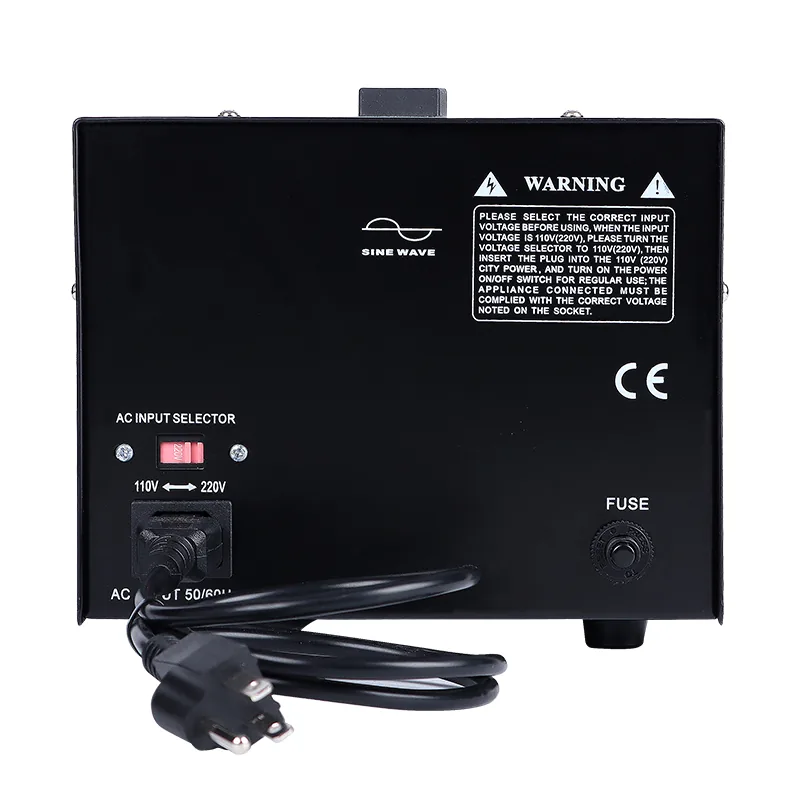
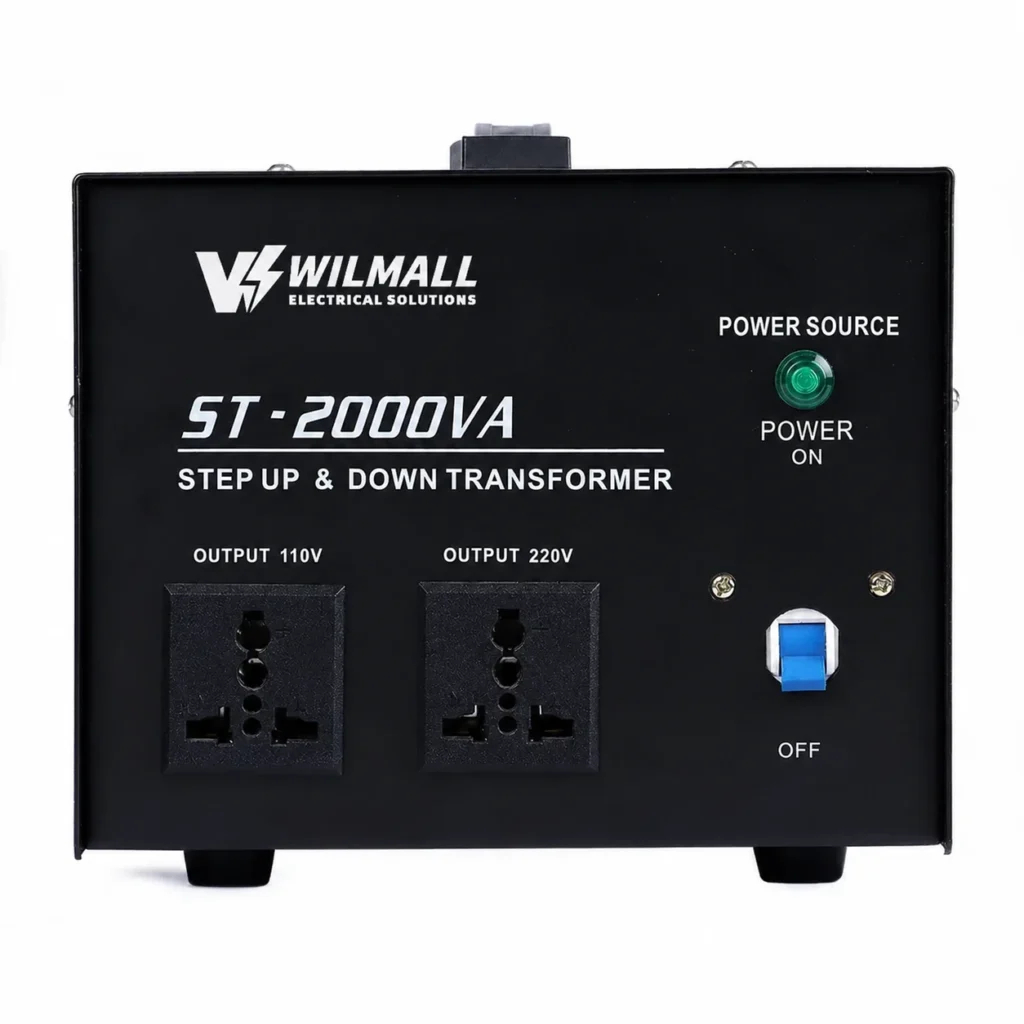
The ST-2000 covers the common household sizes — a 50L/day unit at 550W runs at about 40% load with the compressor surge comfortably absorbed. The STU-3000 handles large units and commercial dehumidifiers. The compressor surge, not the running watts, is the sizing number, and the table above reflects that.
Compressor surge and cycling
A dehumidifier compressor cycles on and off constantly — every time the humidity sensor calls for more drying. Each start is a surge event, and the transformer sees dozens of them a day. Size for the surge with 25-30% margin and the transformer absorbs them without sagging. Under-size it and the compressor labours, the voltage dips, and the sensor confuses itself. The ST series handles the cycling without complaint.
Damp rooms and RCD protection
Dehumidifiers run in basements, laundry rooms and coastal apartments — the dampest places in the building. RCD protection on the transformer trips on leakage in milliseconds, protecting against faults in a wet environment. The ST series includes RCD as standard. In a basement that floods occasionally, this is the layer that keeps the setup safe.
Common mistakes with dehumidifier transformers
- Sizing on running watts. The compressor surge is 3-6x and is the real sizing number.
- Using a converter. Dehumidifiers run for days; converters overheat in hours.
- No RCD in a damp room. Basements and laundry rooms are exactly the risk case.
- Ignoring continuous duty. Days of running need margin and copper.
- Wrong primary winding. Output drift affects compressor behaviour.
Why buy from a factory directly
Wilmall supplies step down transformers for dehumidifiers and compressor appliances across Asia, the Middle East and Africa. Copper winding, RCD protection, continuous-duty rating and batch test records with every shipment. MOQ 1 pc for stock units, 10 pcs per model for custom voltage, 15-25 day lead time, FOB Ningbo or Shanghai.
Humidity sensors and stable power
Dehumidifiers measure humidity with a sensor, and the sensor needs stable voltage to read accurately. If the transformer sags when the compressor starts, the sensor can misread, the unit runs longer than it should, and the energy bill creeps up. A transformer with margin keeps the voltage stiff through every compressor start, so the sensor reads true and the unit cycles efficiently.
This is a subtle benefit that shows up in the monthly electricity bill, not in the first week. Distributors mention it to buyers who run dehumidifiers season-long.
Warranty and support
Every Wilmall transformer carries a 12-month warranty, and we keep common spares for fast resolution. Dehumidifiers run for days at a time, so a failure mid-season is a real disruption. Batch test records ship with every order, and we respond to support enquiries within 24 hours.
Dehumidifier sizing in the real world
A 50L/day dehumidifier label shows the extraction rate, not the power draw. The watts are on the separate power label, usually 400-600W. Read both labels before sizing. The table above uses realistic running watts for the common capacities, and the compressor surge is built into the recommendations.
If your dehumidifier label shows amps instead of watts, multiply by 110V. A 5A unit is 550W running, and with the surge it needs the 2000VA size.
Energy use and the electricity bill
Dehumidifiers run for days, and the transformer adds a small efficiency loss on top. A good transformer is 93-96% efficient, so the loss is a few watts, not a cost driver. What costs real money is an undersized unit that runs the compressor harder and cycles it more. Size correctly and the dehumidifier does its job efficiently — the transformer is not the issue either way.
The honest advice: buy the right size and stop thinking about it. The transformer loss is negligible; the wrong size is not.
Buying for resale: the climate range
Dehumidifiers sell in coastal and rainy climates, and distributors in humid markets stock the 2000VA size as the core unit with 1000VA for small units and 3000VA for commercial. Private labelling from MOQ 1 pc for stock units, 10 pcs for custom voltage, with the compatible capacity list on the carton.
Every dehumidifier sold is a transformer sold, for distributors who stock the range. It is a natural pairing in humid markets, and the demand is steady through the wet season.
Ordering, shipping and lead time
Send us your dehumidifier model, the watts, your country voltage and the quantity. We confirm the transformer size and the RCD configuration in writing, then produce in 15-25 days and ship FOB Ningbo or Shanghai. MOQ 1 pc for stock units, 10 pcs per model for custom voltage, private labelling available.
Why a dehumidifier cycles far more than a refrigerator
A refrigerator compressor starts a handful of times a day and then runs long once it has started. A dehumidifier compressor starts far more often, because the humidistat switches the compressor on and off as the room crosses its set point. On a wet day in a coastal market the compressor may start thirty or forty times. Every one of those starts is an inrush event and the transformer absorbs all of them.
That pattern is why we size dehumidifiers on the locked rotor current rather than the running wattage. A 500W dehumidifier gets a 1500VA transformer in our sizing table and a 700W unit gets 2000VA. The extra copper behaves like a flywheel, holding the output steady while the compressor pulls its starting current, and it is what stops the humidistat electronics from resetting every time the compressor kicks in.
Where to stand the transformer in a damp room
The transformer should not be the thing standing in the puddle. Put it on a shelf or a bracket at least 300 millimetres off the floor, on the drier side of the room, and keep the dehumidifier exhaust pointed away from the case. A transformer in moving damp air will collect condensation on its own surfaces overnight, and one standing in still damp air collects it faster.
If the room is genuinely wet, a basement laundry or a covered plant room for a pool, say so when you order. We fit the drip-proof case and the vacuum-varnished winding for those installations, and the difference in price is much smaller than the price of a replacement unit in the second year.
The other check worth doing monthly is the output socket. Damp rooms corrode the contacts, and a corroded socket runs warm even at light load. Wiping the contacts and looking for discolouration at the first sign of damp weather is a two-minute habit that removes the most common cause of a return.
Metering the circuit so you know what it costs to run
If you want to know what the transformer costs to run, you do not have to guess. A plug-in energy meter between the wall and the transformer gives you the real figure in a day. The reading will be slightly higher than the dehumidifier label suggests, because the transformer has its own losses, and those losses are present whenever the unit is plugged in, whether or not the compressor is running.
That standing loss is the reason a dehumidifier on a transformer should be switched off at the wall when the season ends. In a humid market the wet season can run eight months, so the idle part of the year is long. A switched socket beside the transformer is a cheap addition that pays for itself in the first off season, and it also removes the small no-load hum from the room.
For installations where several units share a circuit, the application guides set out how to add the loads and how to allow for the unit that runs longest rather than the one that draws the most.
The short version
A dehumidifier transformer is sized for the compressor surge, rated for continuous duty, RCD-protected for the damp room, and copper-wound to survive the season. The ST and STU series cover every size, and the batch test record proves each unit. That is the complete answer for dehumidifier buyers.
Frequently asked questions
What size transformer do I need for a dehumidifier?
A 30L/day unit needs 1000-1500VA, a 50L/day unit 2000VA, and larger units 2000-3000VA. The compressor surge is the sizing number, not the running watts.
Can a transformer run a dehumidifier all day?
Yes, if it is rated for continuous duty with margin. Dehumidifiers run for days at a time, so copper winding and margin are essential.
Why does my dehumidifier transformer trip when the compressor starts?
The compressor surge is 3-6x the running watts. If the transformer is sized on watts alone, the surge exceeds its rating. Size on the surge.
Why does a dehumidifier transformer need RCD?
Dehumidifiers run in the dampest rooms of the building. RCD trips on leakage in milliseconds, protecting against faults in a wet environment.
Can I order dehumidifier transformers with my brand?
Yes, private labelling from MOQ 1 pc for stock units, 10 pcs per model for custom voltage, with RCD and continuous-duty rating as standard.
Related reading
- Step Down Transformer 220V to 110V: Sizing and Safety
- Transformer Inrush and Surge Current Explained
- Step Up and Down Transformer Products
Get a factory-direct quote
Email info@wilmall.com or WhatsApp +86 197 3022 6757 with your dehumidifier model and country. We confirm the size within 24 hours. MOQ 1 pc for stock units, 10 pcs for custom voltage.