How to Verify a Transformer Factory Before You Order
Before you send a deposit on a few hundred transformers, you owe it to yourself to know who is actually building them. I say this as someone who runs a factory in Yueqing, not as a broker: the difference between a workshop that winds its own coils and a trading desk that re-sells someone else’s boxes shows up the first time something fails in the field. This guide walks through what to check before you order, and what to do when a check comes back wrong.
The short answer is that verification is not one step, it is three: a look at the plant, a measurement of a sample, and an independent check at the gate. Most buyers do one and skip the other two, then wonder why a batch arrived with the wrong label or a weak winding. Do all three and you remove almost all of the risk that matters.
Video Audit: Six Workshop Areas to Actually Watch
A video call is not a formality. It is the cheapest way to tell a factory from a front office. Ask for a live walk, not a edited clip, and have the person on the other end point the camera at the six areas that prove a unit is made in-house.
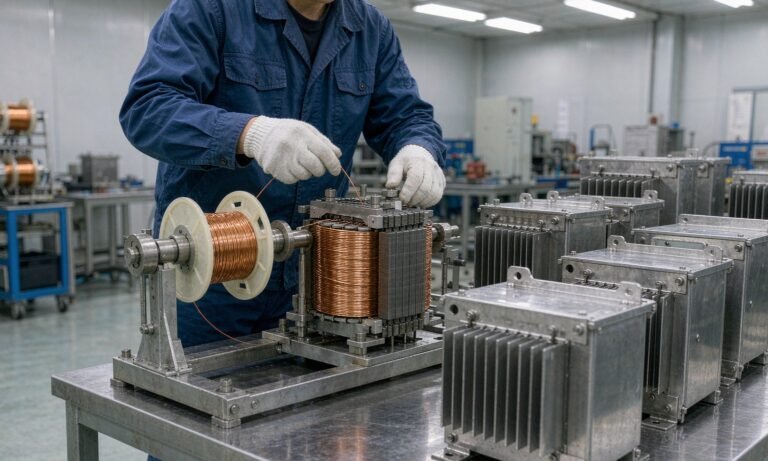
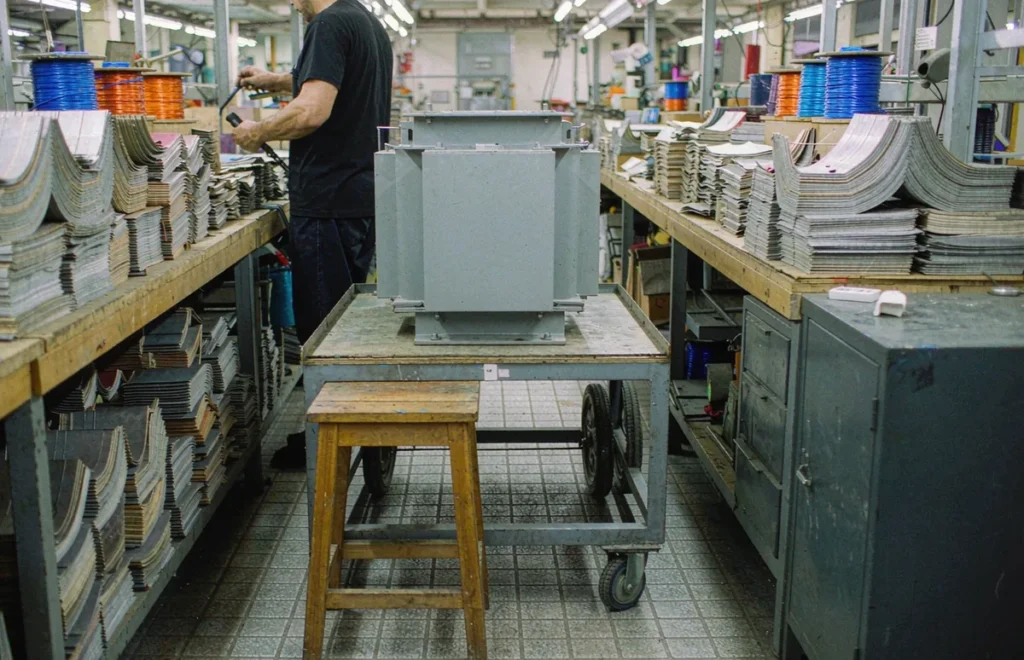
First, the winding area. You should see copper wire on reels, a tensioning winder, and coils being laid onto a bobbin or a core, not finished units being unwrapped from someone else’s carton. The grade of wire matters, so ask to see the spool label. We wind with copper, and the spool marking should say so.
Second, the core stacking or lamination area, where the iron is built up and clamped. This is the part a trading company cannot fake easily, because it is dirty, heavy, and specific to the product. A real plant has a stack of laminations, a press or a hand-clamp bench, and the noise of steel being worked.
Third, vacuum varnish. After winding, the assembly is dipped and vacuum-impregnated so the insulation is sealed against moisture and vibration. If the supplier cannot show you a varnish tank or a vacuum chamber, the units may be air-dried only, which is a shorter-lived build. Ask directly: do you vacuum-impregnate, or just dip?
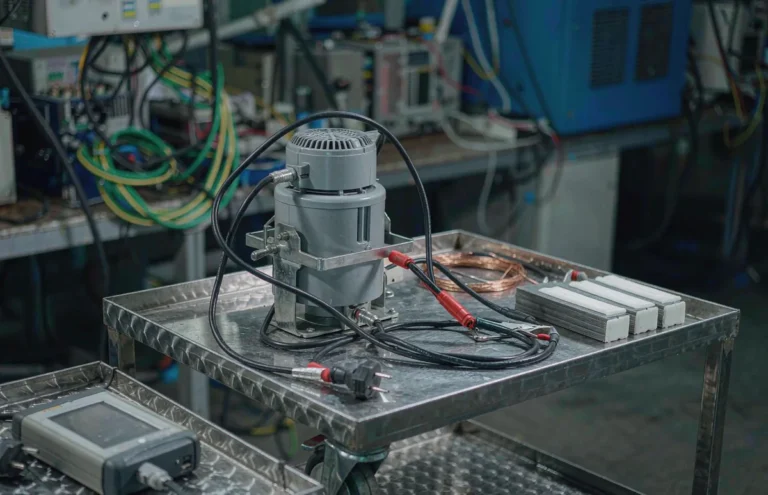
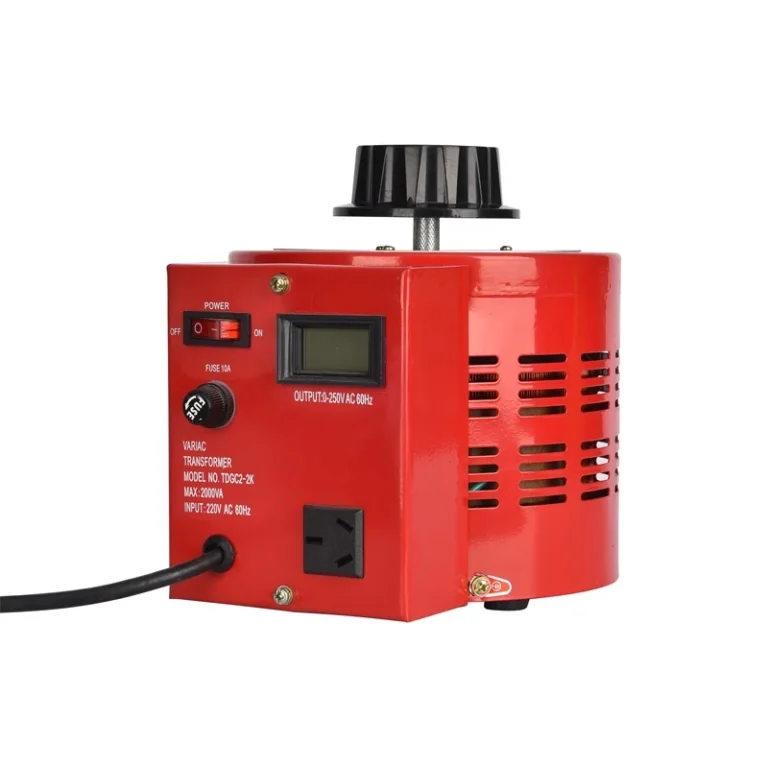
Fourth, final assembly, where the core, the bobbin, the enclosure and the terminals come together. You want to see enclosures being fitted, not just boxes on a shelf. Fifth, the test bench, with a variac, a wattmeter, a hi-pot tester and an insulation tester on the table. A factory without a test bench is a red flag, because it means the units are not checked before they leave. Sixth, packaging, where the rated unit is boxed with its label and its manual. Watch whether the label matches what you specified.
If the camera “has a problem” at any of these six points, that is your answer. A genuine plant is happy to show the whole line because the line is the proof.
Sample Tests You Can Ask a Factory to Run on Video
Once you have a unit in hand, or once the factory offers you a pre-shipment sample, there are five measurements that separate a good transformer from a pretty one. Ask for all five, recorded, with the numbers on screen.
Ratio, first. Apply the rated input and read the output. A 220V to 110V unit should give 110V within a percent or two, and the same holds for a 230V to 110V build. If the output is off by more than a few volts, the tap is wrong or the winding count is wrong, and that is a manufacturing fault, not a tolerance.
No-load loss, second. With the secondary open, measure the watts the primary draws. This is the iron loss, and a copper-wound unit sized correctly should draw only a few watts at no load. A high no-load figure means wasted energy and a warmer box, and it points to a poor core or a sloppy winding.
Hi-pot, third. This is the dielectric test: a high voltage applied between the winding and the frame for a set time to prove the insulation will not break down. We test at the standard proof voltage for the class, and the unit must hold without trip. If a supplier will not hi-pot, do not buy, because that is the test that catches a winding that touches the case.
Temperature rise, fourth. Run the unit at rated load for the specified period and measure how hot the winding gets. The limit is set by the insulation class, and exceeding it shortens life. We record the rise against the class, and a unit that runs hot at nameplate is one you will be replacing early. Insulation resistance, fifth. Measure megohms between winding and earth with a megger. A healthy unit reads in the hundreds of megohms; a low reading means moisture, a bad varnish job, or a damaged winding.
The Test Record You Should Demand With Every Batch
A single video is not enough. What protects you over the life of the order is the paper that travels with the goods. Before you pay the balance, ask for a batch test record covering the lot you are buying, not a generic certificate from a different month.
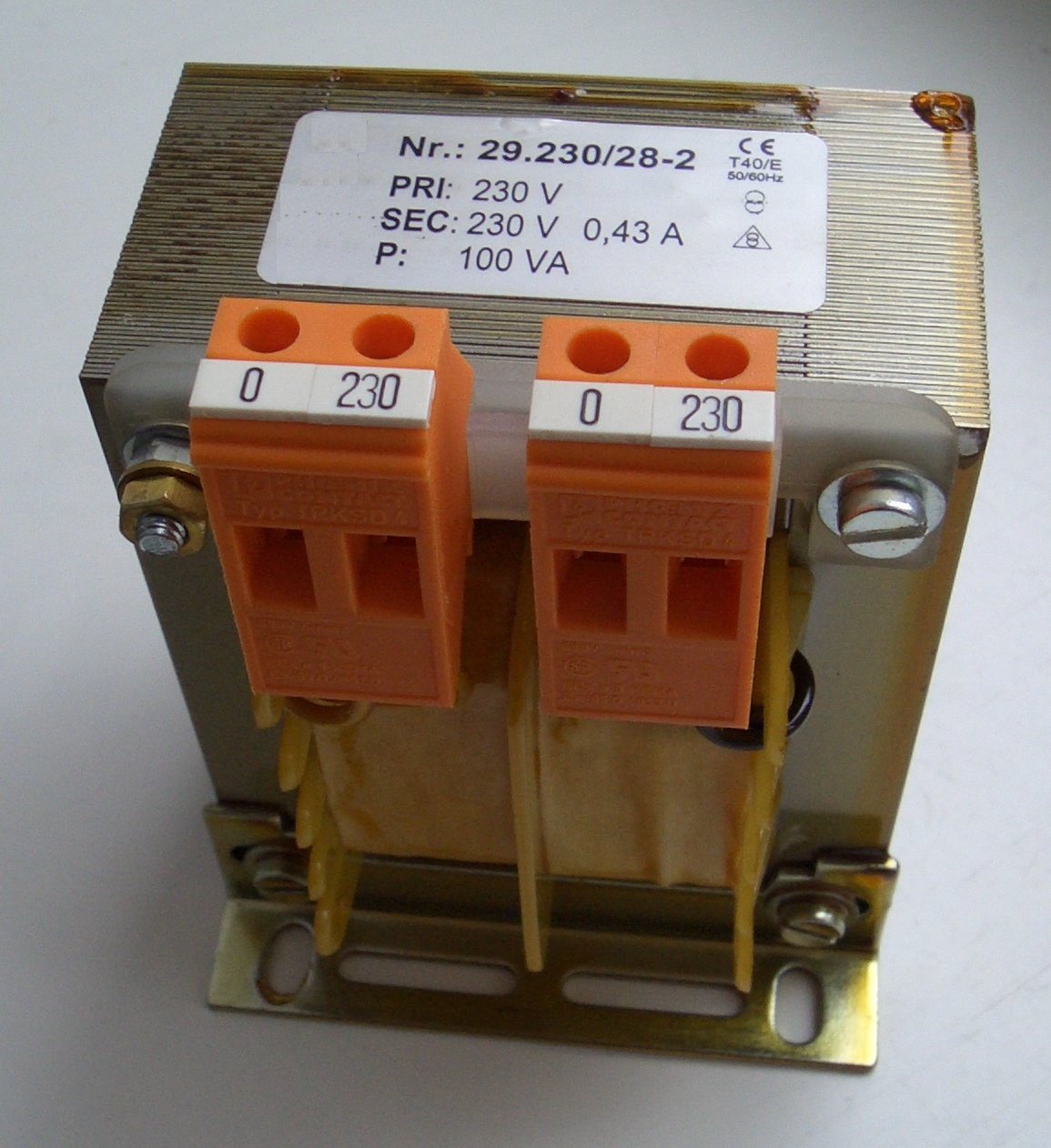
The record should show, per batch or per unit as agreed: input voltage applied, output voltage under load, no-load current, hi-pot result, and insulation resistance. It should carry the batch number that is also on the cartons, so you can tie a failed unit back to the test that supposedly passed it. We issue this with every dispatch from Yueqing, and it is the document we reach for first if there is ever a warranty conversation.
If a supplier offers only a “quality certificate” with no numbers, treat it as decoration. A real test record has measured values, not adjectives. Ask for the raw figures and a signature, and keep them against the purchase order. When something fails six months later, that sheet is what tells you whether it was built wrong or used wrong.
Third-Party Inspection: SGS, BV and AQL Sampling
For an order of any size, bring in an independent inspector. SGS and Bureau Veritas both run pre-shipment inspection in the Yueqing area, and the cost is small against a container of product. You book them, they attend the factory or the warehouse, and they report what they actually see.
The tool they use is AQL, the acceptable quality limit, a sampling plan tied to your order size and the risk you will accept. A common plan is AQL 2.5 for major defects on a general inspection level, tightened if the product is safety-related. Agree the level before the goods are packed, because you cannot sample what has already shipped. The inspector checks quantity, model, label, carton, and a sample of the electrical tests, and issues a report you can act on.
Use the inspection as a gate, not a formality. Write into the contract that the balance is paid only against a passed report, or against a report with defects within the agreed AQL. That single clause moves the risk back onto the builder, where it belongs, and it focuses the factory on getting the batch right the first time.
When Inspection Fails: What to Do Next
A failed inspection is not the end of the order, it is the moment the contract earns its keep. The first move is to stop the balance payment, because once the money leaves your account the upper hand leaves with it. Hold it until the remedy is agreed in writing.
Then sort the defects. Cosmetic issues, a wrong label, a missing manual, these are cheap to fix and the factory should rework or replace at its cost. Electrical failures, a unit that will not hold hi-pot, a ratio that is wrong, a winding that runs hot, these are not cosmetic and the batch should not ship as-is. Push for replacement of the failed units and a re-test of the corrected sample before you release funds.
Keep the inspector’s photos and the test sheet, because they are your evidence if the supplier later disputes the claim. A reasonable factory meets you halfway on a genuine failure, because a returned container costs more than a few replacement units. A supplier that argues every point and offers nothing is telling you something about the next order, and you should listen.
Spotting a Trader Pretending to Be a Factory
The single most common way buyers lose money is by paying a trading company that presents itself as a manufacturer. A few tells are reliable. Ask for the workshop address and then street-view or ask a local agent to drive past; a “factory” that is a seventh-floor office is a trading desk. Ask who owns the winding machines; a factory owns them, a trader rents time on someone else’s.
Ask for a live walk through the six areas above. A trader will offer a “factory tour video” that is someone else’s, or will stall. Ask for the batch test record in the factory’s own format with its own batch numbers; a trader borrows a certificate or buys one. Ask whether custom labelling and custom sockets are done in-house; a real plant does, a trader subcontracts and hopes.
Price is a tell too, but not the way people think. A trader is not always cheaper, often they are more expensive because they add a margin. The real signal is opacity: vague answers about where the copper comes from, reluctance to name the core supplier, no hi-pot on the bench. Press those three and the front falls away quickly.
What We Do Differently, and What It Costs You
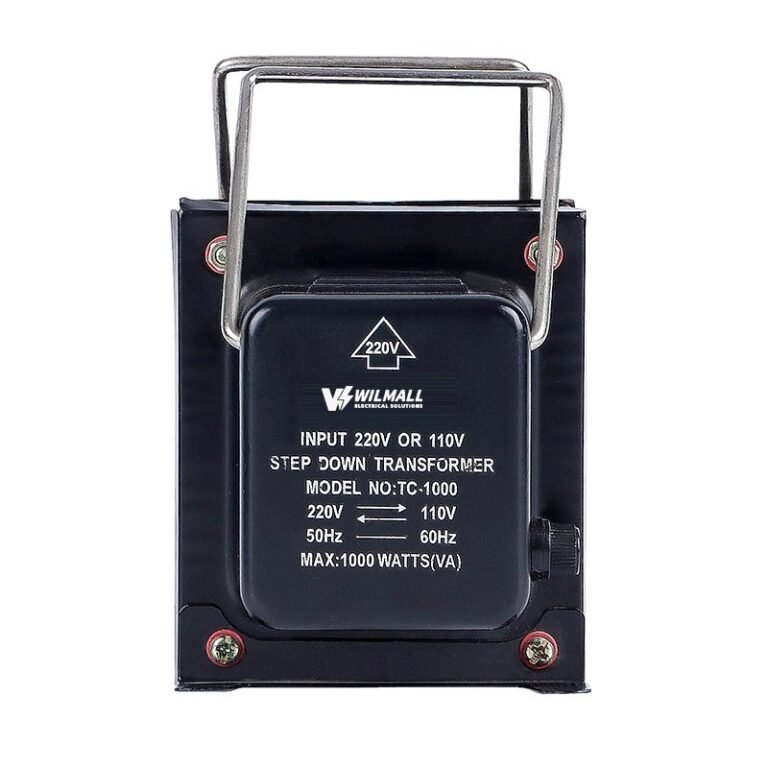
We are the factory, so the six areas above are ours to show, and we do, on a live call, any day. The ST-2000, ST-1500, the STU series and the TC control transformers are wound, varnished, assembled and tested on our own floor in Yueqing, and every dispatch carries the batch test record with the figures, not a slogan.
The commercial terms are short. Minimum order is 10 pieces. Production runs 15 to 25 days with quantity and custom labelling setting the precise date. We ship FOB Ningbo or Shanghai, every unit carries a 12-month warranty, and we wind with copper and test each one fully before it leaves the factory. For payment we take T/T with 30 percent down and 70 percent against the bill of lading copy, or an at-sight letter of credit, or Trade Assurance. We do not take usance letters of credit.
If you want an independent pair of eyes, book SGS or BV and we will host them; we have done it many times and the report is yours to hold the balance against. A factory that welcomes inspection is a factory that expects to pass, and we do.
A Practical Pre-Order Checklist
None of this needs to be heavy. Before you commit, run this short list: a live walk of the six workshop areas, a recorded sample test of all five measurements, a batch test record with real numbers tied to the carton batch, an agreed AQL and a balance held against a passed inspection, and a label and socket plan confirmed in writing. With those five in place, the risk that remains is small and the supplier is the one carrying it.
Two reads that help you plan the wider buy. Our How to Import Transformers from China guide lays out the shipping and customs steps after verification, so the goods actually clear. For the product range itself, the step up & down transformers page shows the ST and STU families and where each fits. There is also a set of more transformer buying guides covering the rest of the purchasing picture.
If you are weighing two suppliers and one will not show the bench, that is your answer before you spend a cent. Send us your shortlist and we will walk you through what each claim should look like in a real plant.
Frequently Asked Questions
These are the questions buyers ask most when they are about to place a first order, with my straight answers underneath.
How can I tell a real transformer factory from a trader?
Ask for a live walk through six areas: winding, core stacking, vacuum varnish, final assembly, the test bench and packaging. A trader stalls or shows someone else’s video. Also ask who owns the winding machines and whether labelling is done in-house. A real plant shows the line because the line is the proof, and we do this any day from Yueqing.
What sample tests prove a transformer is built properly?
Five measurements matter: ratio, no-load loss, hi-pot dielectric strength, temperature rise at rated load, and insulation resistance. Ask for all five on video with the numbers on screen. The ST-2000 and the STU series we build are tested on all five before dispatch, and a supplier that will not hi-pot should not be paid.
What test record should come with my batch?
Demand a batch test record with measured values, not adjectives: input voltage, output under load, no-load current, hi-pot result and insulation resistance, all tied to the carton batch number. We issue this with every dispatch from Yueqing. A generic certificate with no figures is decoration, not proof.
What is AQL sampling and should I use SGS or BV?
AQL is a sampling plan tied to order size and the defect risk you accept, often 2.5 for major defects, agreed before packing. SGS and Bureau Veritas both inspect in Yueqing, and the report lets you hold the balance until the batch passes. Write the passed report into the contract as the payment gate.
What do I do if pre-shipment inspection fails?
Stop the balance payment first, because upper hand leaves with the money. Cosmetic faults get reworked at the factory’s cost; electrical faults mean the batch should not ship as-is, so push for replacement and a re-test. Keep the inspector’s photos and test sheet as your evidence if the claim is disputed later.
Next in the sequence: once the factory checks out, test a unit before you commit — how a transformer sample order works — and when you are ready to stock, buying in bulk from a China factory covers volume, pallets and the reorder maths.
Send us your supplier shortlist or your first order plan, and we will walk you through the six workshop areas on a live call. That is enough for us to show the line, run the five tests on video, and quote the ST-2000 or STU series you need, usually the same working day.
Or talk to us directly: WhatsApp +86 197 3022 6757 · Email sales@wilmall.com
MOQ 10 pcs · Lead time 15-25 days · FOB Ningbo or Shanghai · 12-month warranty