Copper vs Aluminium Winding Transformer: What Is the Difference?
Quick answer: copper windings are the better transformer, aluminium is the cheaper one. Copper conducts better (about 60% better than aluminium), runs cooler, lasts longer, and holds its value. Aluminium transformers are lighter and cheaper to buy, but run hotter at the same rating and degrade faster. For continuous or critical loads, buy copper.
Key Takeaways
- Copper conducts ~60% better and runs cooler.
- Aluminium is cheaper and lighter but degrades faster.
- Continuous duty and critical loads = copper.
- Heavier unit of same VA usually means more copper.
Which Winding
| Use | Winding |
| 24/7 appliances | Copper |
| Critical / audio / medical | Copper |
| Budget light use | Aluminium acceptable |
Copper Winding: The Standard
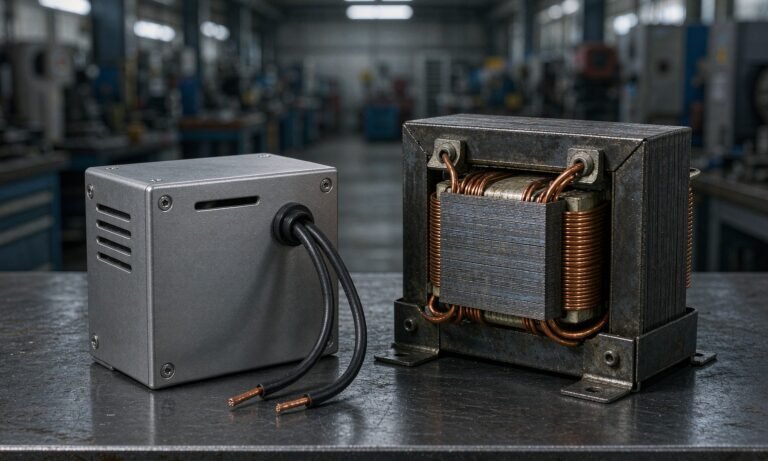
Copper has been the transformer winding material for over a century for good reasons: lower electrical resistance (less heat per amp), better thermal conductivity (heat escapes faster), and higher mechanical strength. A copper-wound transformer of the same VA runs cooler, which means less insulation stress, longer life, and steadier output voltage under load.
Aluminium Winding: The Budget Option
Aluminium is cheaper per kilo and lighter, so budget transformers use it. To reach the same VA as a copper unit, an aluminium winding needs a thicker conductor — which eats into the price advantage and makes the unit bigger. The real trade-offs appear under stress: aluminium connections (especially at terminals) oxidise and loosen over time, and hot spots develop sooner at the same load.
Copper vs Aluminium: Side by Side
| Factor | Copper | Aluminium |
|---|---|---|
| Conductivity | ~100% reference | ~62% of copper |
| Heat at same load | Lower | Higher |
| Lifespan | Longer | Shorter under stress |
| Weight | Heavier | Lighter |
| Price | Higher | Lower |
| Terminal reliability | Excellent | Oxidises; needs proper lugs |
| Best for | Continuous duty, critical loads, OEM | Light duty, budget, short-life projects |
Which One Should You Buy?
- Continuous duty (24/7 appliances, panels, pumps): copper. The lower heat directly extends life.
- Critical equipment (medical, lab, audio): copper, always.
- Occasional light use (travellers, spare units): aluminium is acceptable if the price difference is big.
- Reseller / OEM branding: copper is the easier sell — “pure copper windings” is a trust statement your customers recognise.
Ask “copper or aluminium?” before you ask the price. The first question decides whether the second one is worth paying.
How to Tell Them Apart
You cannot always see the winding, but the weight tells: a copper unit of the same VA is noticeably heavier. The terminal lugs also differ — copper is warm-toned, aluminium is silvery. When in doubt, ask the factory for a winding photo and the spec sheet; an honest manufacturer will show you.
Questions Customers Ask Us
Do all your transformers use copper?
Yes — every Wilmall transformer uses pure copper windings. It is a factory standard, not an upsell.
Is aluminium illegal or unsafe?
Not illegal and not inherently unsafe when correctly engineered. It is a cost decision with real performance trade-offs.
Why is the copper unit heavier?
Copper is denser and needs a smaller conductor for the same current. Heavier is a feature here — it usually means more copper.
Can I get copper windings at a custom VA?
Yes — tell us the VA, voltages and application, and we will quote the copper-wound build.
Still not sure which model fits?
Tell us your appliance, wattage and country — we reply within 24 hours with a straight recommendation.
The copper and aluminum trade-off
Copper windings carry more current for the same cross-section, run cooler, and last longer. Aluminum windings are cheaper but have higher resistance, so they run hotter for the same load, and the heat shortens the insulation life. The price difference at the factory level is about 20 to 30%, which is why aluminum units are common in the budget tier of the market.
The practical result is that a copper-wound transformer at 1000VA runs like an aluminum unit rated higher, and it lasts longer. For a transformer that runs daily, the copper premium pays back in lifespan and reliability. For a transformer that runs occasionally, aluminum is a defensible budget choice.
How to tell which you are buying
The weight test is the fastest check: copper is denser, so a copper-wound transformer weighs noticeably more than an aluminum unit of the same VA. The label test comes second, a supplier that hides the winding material on the spec sheet is usually selling aluminum. The price test is third, a transformer priced far below the market rate is almost certainly aluminum.
For a definitive answer, the resistance test with a multimeter compares the winding resistance to the spec, copper windings show lower resistance than aluminum for the same size. If you are buying in bulk, ask for the winding material in writing on the PO, and confirm the spec sheet states it.
Which to choose for your application
For continuous-duty applications, a fridge, a vending machine, a workshop, choose copper, the reliability matters more than the price. For occasional-use applications, a travel transformer, a seasonal appliance, aluminum is acceptable if the price is right and the duty is light. The decision is duty cycle first, budget second.
We wind the ST series with copper as standard, because our buyers run them daily and the warranty math favors copper. If you are comparing quotes, compare the winding material and the warranty together, not just the price per unit.
The longevity difference in real numbers
The copper versus aluminum difference shows up in lifespan. A copper-wound transformer running at 80% of rating in normal conditions lasts 10 to 15 years. An aluminum-wound unit at the same load lasts 3 to 6 years, because the higher resistance produces more heat, which ages the insulation faster. The copper unit costs about 20% more and lasts more than twice as long.
The math favors copper for anything that runs daily. Over a decade, the copper unit costs less in total, because the aluminum unit is replaced at least once and the downtime and shipping cost money. For occasional use, aluminum is defensible, but the copper premium pays back fast on daily duty.
The inspection checklist for used units
If you are buying a used transformer, inspect it before you commit. Check the weight against the spec, a heavy unit for its size suggests copper. Check the case for heat discoloration, which indicates past overload. Sniff the unit, a burnt smell means insulation damage. Check the terminals for corrosion and the plug for heat marks.
Run the three-check test with a multimeter, continuity, insulation, and live voltage, before you buy. A used unit that passes all three is a bargain. One that fails any check is a problem you are inheriting, and the price should reflect the replacement value, not the used price.
The buying decision for your application
For a fridge, a vending machine, or any continuous duty, choose copper, the reliability decides. For a travel unit or a seasonal appliance, aluminum is acceptable if the price is right and the duty is light. For anything where a failure is expensive, a medical device, a workshop, a commercial counter, copper is the only defensible choice.
We wind the ST series with copper as standard, and the spec sheet states the winding material and the test procedure. If a supplier cannot state the winding material in writing, treat the omission as the answer.
The longevity difference in real numbers
The copper versus aluminum difference shows up in lifespan. A copper-wound transformer running at 80% of rating in normal conditions lasts 10 to 15 years. An aluminum-wound unit at the same load lasts 3 to 6 years, because the higher resistance produces more heat, which ages the insulation faster. The copper unit costs about 20% more and lasts more than twice as long.
The math favors copper for anything that runs daily. Over a decade, the copper unit costs less in total, because the aluminum unit is replaced at least once and the downtime and shipping cost money. For occasional use, aluminum is defensible, but the copper premium pays back fast on daily duty.
The inspection checklist for used units
If you are buying a used transformer, inspect it before you commit. Check the weight against the spec, a heavy unit for its size suggests copper. Check the case for heat discoloration, which indicates past overload. Sniff the unit, a burnt smell means insulation damage. Check the terminals for corrosion and the plug for heat marks.
Run the three-check test with a multimeter, continuity, insulation, and live voltage, before you buy. A used unit that passes all three is a bargain. One that fails any check is a problem you are inheriting, and the price should reflect the replacement value, not the used price.
The buying decision for your application
For a fridge, a vending machine, or any continuous duty, choose copper, the reliability decides. For a travel unit or a seasonal appliance, aluminum is acceptable if the price is right and the duty is light. For anything where a failure is expensive, a medical device, a workshop, a commercial counter, copper is the only defensible choice.
We wind the ST series with copper as standard, and the spec sheet states the winding material and the test procedure. If a supplier cannot state the winding material in writing, treat the omission as the answer.