DT/ST Series Transformers Explained
Quick answer: DT and ST series are our workhorse families of low-voltage dry-type transformers — copper windings, silicon steel core, single or dual winding. DT units are typically used for step up and step down voltage conversion between 110V and 220V; ST units cover the same job at different capacities. Which one fits your project depends on capacity, voltage combination and mounting.
Key Takeaways
- DT and ST are dry-type copper-wound transformers; they overlap more than they differ.
- Choose by capacity with 20-30% headroom, not by name.
- Custom voltages, enclosures and OEM branding are available.
- Dry-type construction is safe for homes and control cabinets.
Series at a Glance
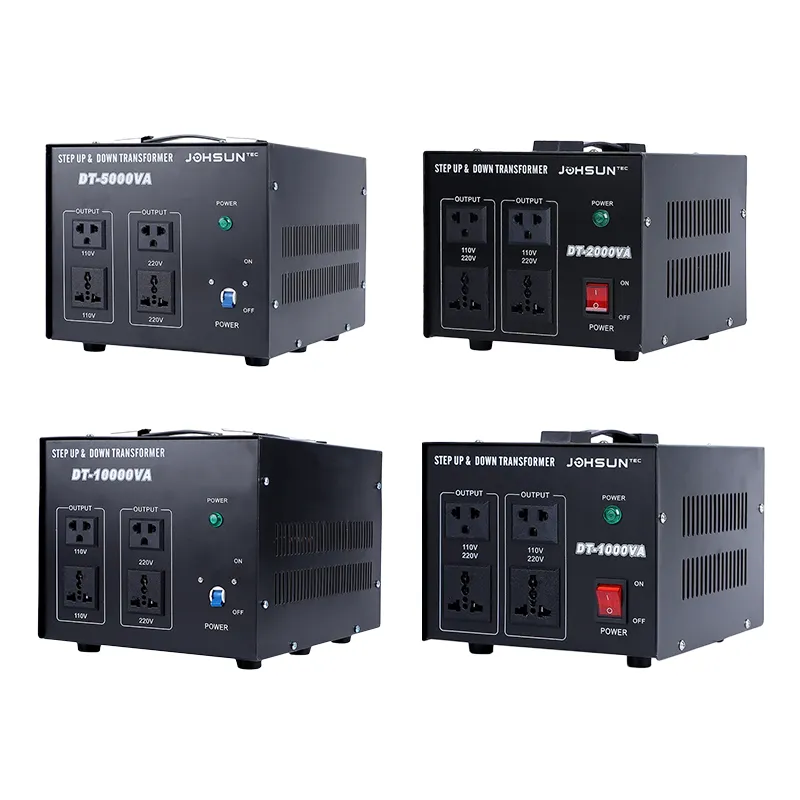
| Model | Capacity |
| DT-1000VA | 1000VA |
| ST-2000VA | 2000VA |
| STU-5000VA | 5000VA |
What Are DT and ST Series Transformers?
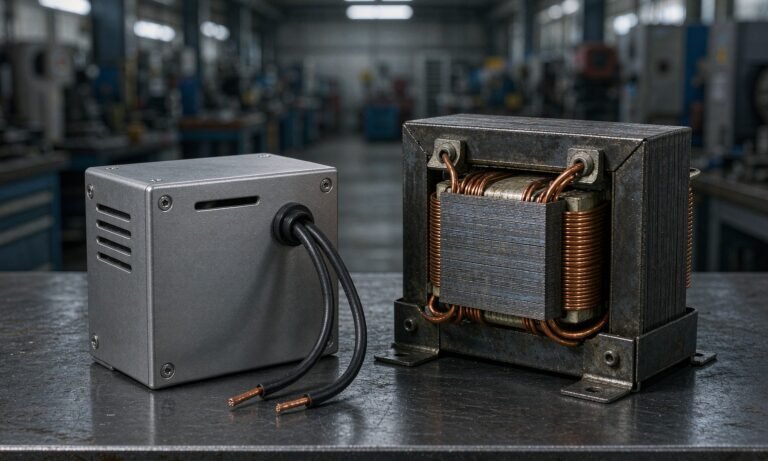
Both series are low-voltage dry-type transformers: no oil, no maintenance, designed for indoor panels and appliances. The “dry type” part matters — unlike oil-filled distribution transformers, these are safe for homes, workshops and control cabinets, and they are built to EN/IEC construction standards.
DT vs ST: What’s the Difference?
| Feature | DT Series | ST Series |
| Typical use | Step up / step down voltage conversion (110V ↔ 220V) | Voltage conversion at higher capacities, step down focus |
| Capacity range | 500VA – 3000VA | 1000VA – 5000VA and above |
| Winding | Copper, dual winding | Copper, dual winding |
| Typical buyers | Home, small appliances, expats | Workshops, distributors, heavier loads |
Honestly, the two series overlap more than they differ. For most buyers the deciding factor is simply capacity: pick the model whose VA rating matches your load with 20–30% headroom, and you are covered either way.
Capacity Range: From 100W to 10KVA
We build the series from small units for chargers up to large transformers for workshops:
| Model | Capacity | Handles up to |
| DT-500VA | 500VA | 400W appliances |
| DT-1000VA | 1000VA | 700W appliances and tools |
| ST-1500VA | 1500VA | 1100W loads |
| ST-2000VA | 2000VA | 1600W loads (fridge, microwave) |
| STU-3000VA | 3000VA | 2600W heavy loads |
| STU-5000VA | 5000VA | 4500W workshops, ACs |
Typical Applications
- Voltage conversion at home: run US 110V appliances on 220V mains (or the reverse).
- Control and machinery: dry-type construction makes them safe inside control cabinets.
- OEM integration: we build to your voltage, capacity, enclosure and branding.
- Distribution: stock one series that covers most customer needs.
Custom Options
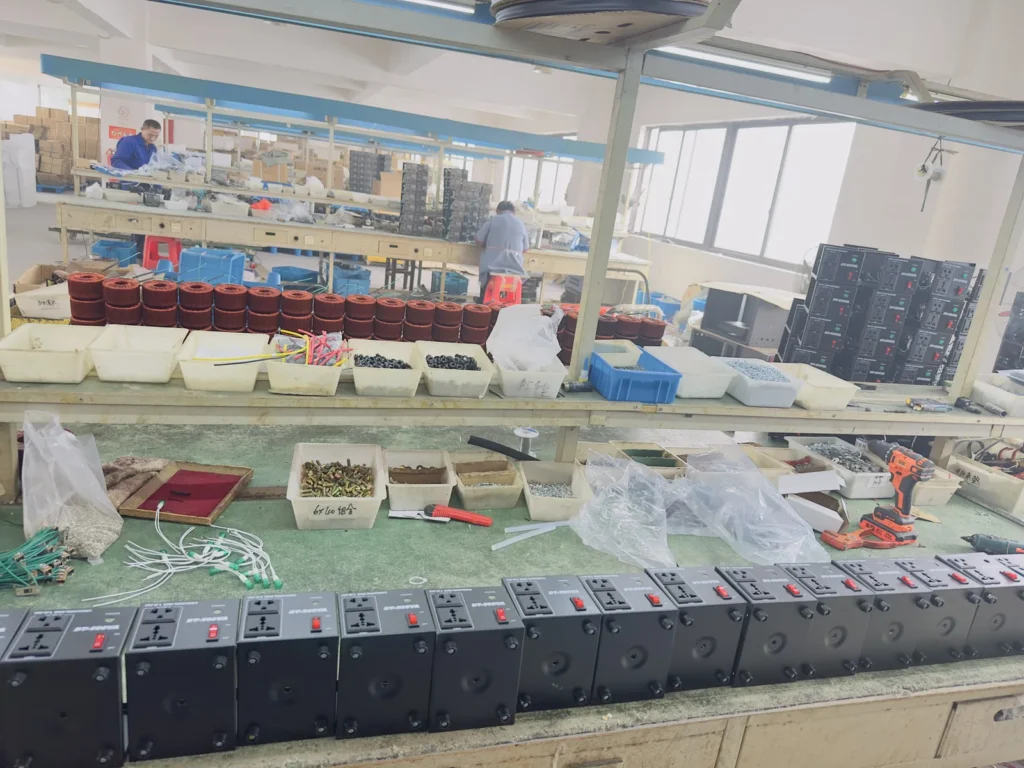
Because we are the factory, nearly everything is customisable:
- Voltage combinations: 110V / 220V / 380V, single or dual winding
- Enclosure: open, enclosed, terminal box, with or without sockets
- Branding: your logo on the unit and carton (OEM from 10 pcs)
- Protection: fuse, MCB, or built-in RCD
The Terminal Block Difference: Why DT Suits OEM Work
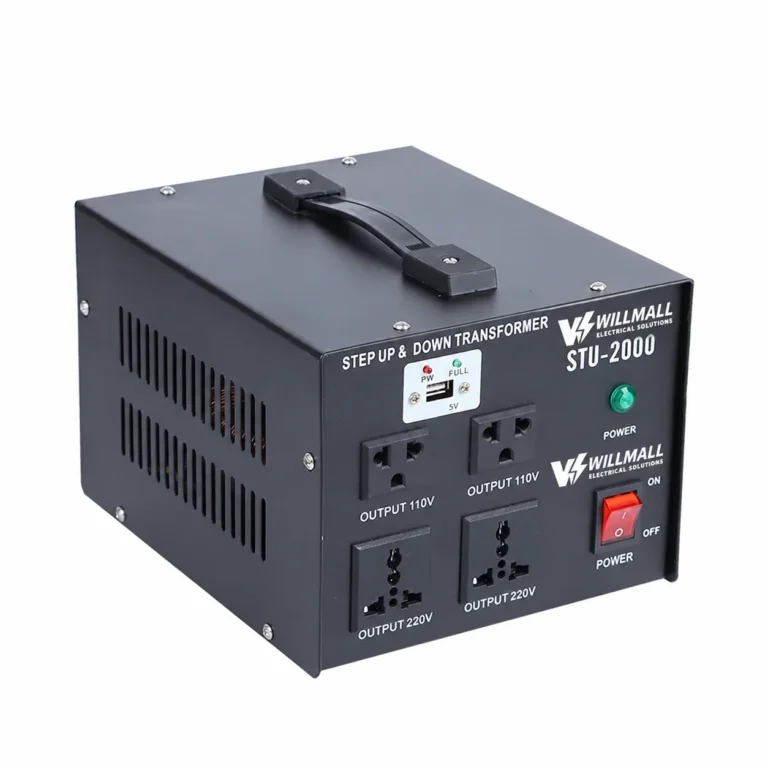
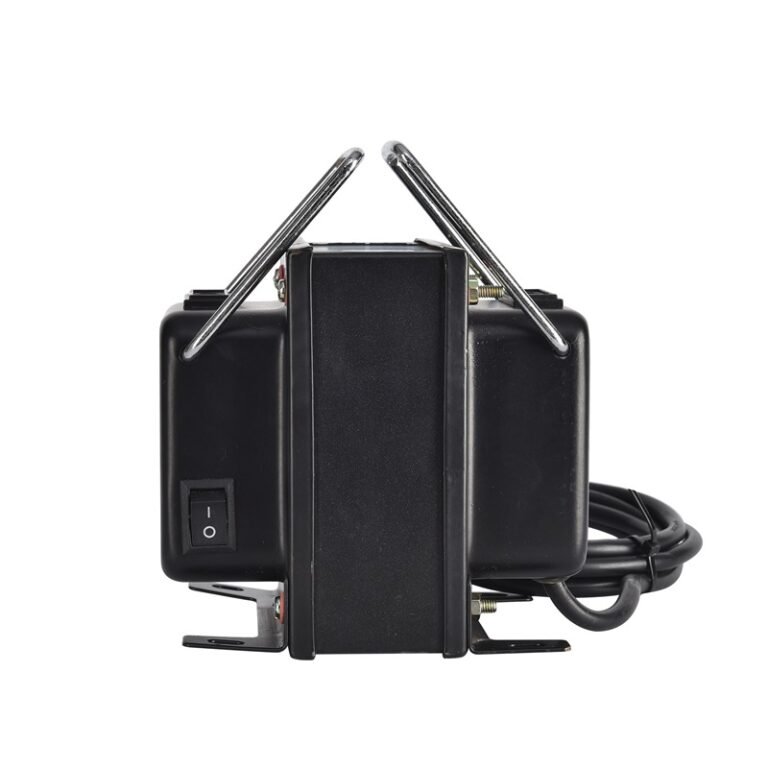
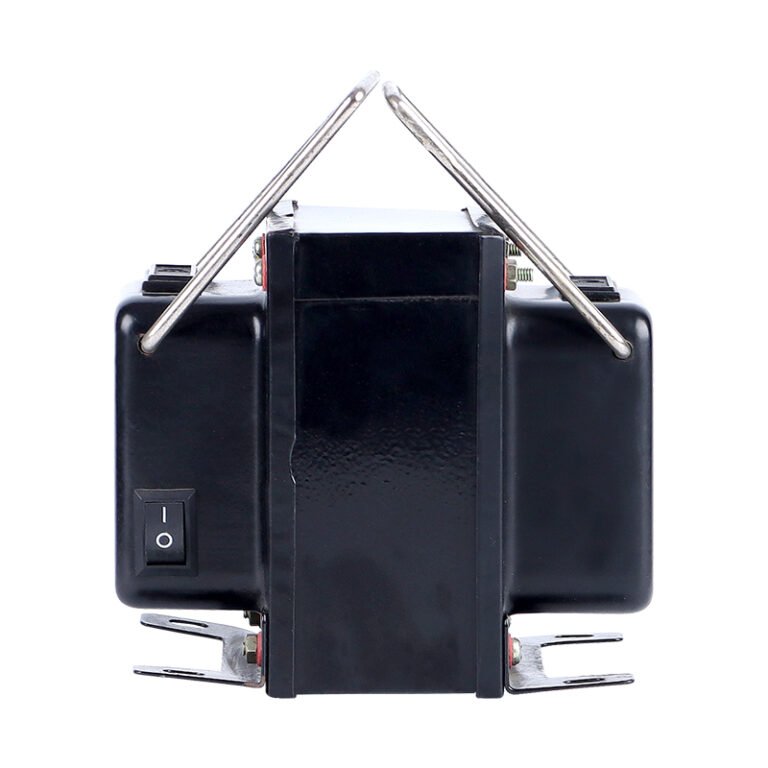
The DT series differs from the ST series in one important way: instead of sockets, the DT units come with terminal blocks for the input and output. That makes them the right choice for OEM builds, panel wiring, and any installation where the transformer is wired into an enclosure rather than plugged in. With terminal blocks you choose your own cable size, your own connectors, and you can wire the output to a distribution board or a custom socket arrangement. The trade-off is that a DT unit needs proper wiring by someone who understands the connections, which is why we include a clear wiring diagram with each unit and mark the terminals clearly. If you are a distributor selling to electricians or machine builders, the DT series fits that market. If you are selling to households and travelers who want plug-and-play, the ST series with sockets and carrying handles is the one.
Enclosure and Mounting Options for DT Units
Because DT transformers are built to be mounted, we offer a few practical options. The standard unit has a base with mounting holes so you can bolt it into a cabinet or onto a wall plate. For wet or dusty environments, we can supply the same unit inside a steel enclosure with ventilation, a small door, and gland plates for the cables. For OEM customers, we can fit DIN-rail mounting if your panel uses that system, or a custom footprint to match your existing design. The terminal arrangement can be laid out to match your wiring habits, input on one side and output on the other, or all on one end for simpler cable routing. These details do not change the electrical rating, but they save real time on the production line, which is why we ask OEM customers for their panel layout before quoting. Tell us the mounting, the enclosure, and the terminal style you need.
Voltage Combinations Beyond the Standard List
The standard DT and ST range covers the common combinations: 220V to 110V, 110V to 220V, 220V to 380V, 380V to 220V, 240V to 120V, and 120V to 240V. But your project may need something else, a 230V to 100V unit for a Japanese appliance, a 415V to 110V unit for a UK-built machine, or a multi-tap transformer with several output voltages. Because we wind transformers in our own factory, custom voltage combinations are routine. Just send us the input voltage, the output voltage, and the VA rating, and we will build to match, with the appropriate taps and terminal arrangement. Custom builds typically run from 500VA up to 30KVA, and the lead time is only slightly longer than standard. For a single prototype we can usually accommodate you, and for production quantities the custom spec becomes part of your standard order.
Testing Every Unit Before It Ships
Every transformer that leaves our factory goes through the same test sequence before packing. We do a turns-ratio check to confirm the output voltage matches the label, a no-load run to check for abnormal hum or heating, a full-load test on a sample from each batch to verify the unit delivers rated current without overheating, and a hi-pot test to confirm the insulation between primary and secondary holds off the rated test voltage. Each unit gets a label with the model, rating, and a batch number, and we keep the test records on file. For OEM customers and distributors, we include the batch test report with the shipment. This is the difference between a transformer that works on paper and one that works in your panel, and it is why we stand behind the 12-month warranty. If you are comparing suppliers, ask for the test procedure, not just the spec sheet.
Wiring a DT Transformer: A Safe Step-by-Step Approach
When you wire a DT transformer with terminal blocks, the sequence is simple but worth following in order. First, confirm the input and output voltage markings on the label and check the wiring diagram, because the terminal arrangement differs between models. Second, use cable of the right gauge for the current, and fit ring terminals or ferrules so the screws clamp cleanly. Third, connect the input side first, with the power off, and double-check that the line and neutral go to the marked input terminals. Fourth, connect the output side to your load, keeping the output wiring separated from the input where possible to avoid coupling. Fifth, connect the earth terminal to the panel ground, which is mandatory for safety. Finally, before energizing, verify with a multimeter that there is no short between input and output and that the earth is continuous. This five-minute check prevents the wiring mistakes that cause most field failures.
When to Choose the STU Auto-Selecting Series
If your buyers move equipment between countries, or your market has mixed mains voltages, the STU series solves a real problem. The STU units detect the input voltage automatically, whether it is 110V or 220V, and switch the internal connections to produce the correct output. That means a single model works in both the US-style 110V world and the 220V world, which is ideal for travel resellers, military and embassy buyers, and anyone who relocates frequently. The trade-off is that the auto-selecting mechanism adds a little cost and complexity compared with a fixed DT unit. If your application always sees one voltage, a fixed unit is simpler and slightly cheaper. If you need flexibility, the STU is worth it. We stock STU models from 1KVA to 10KVA, and the auto-selection is fully automatic with a clear indicator showing which input voltage was detected.
FAQ
Is DT or ST better?
They overlap; choose by capacity and voltage need, not by name. Tell us your load and we will pick the model.
Are these transformers safe for continuous use?
Yes — dry-type construction with copper windings, sized with headroom, they run cool for years.
Do you make custom voltage combinations?
Yes — 110V to 220V, 220V to 110V, 380V to 220V and others are built to order.
What is the MOQ?
From 10 pcs for standard models, with OEM branding available at that volume.
How long is delivery?
Production 15–25 days depending on quantity and customisation, then shipping.
Ready to pick a model? Browse the DT/ST series range or send us your load details for a same-day recommendation.
Still not sure which model fits?
Tell us your appliance, wattage and country — we reply within 24 hours with a straight recommendation.