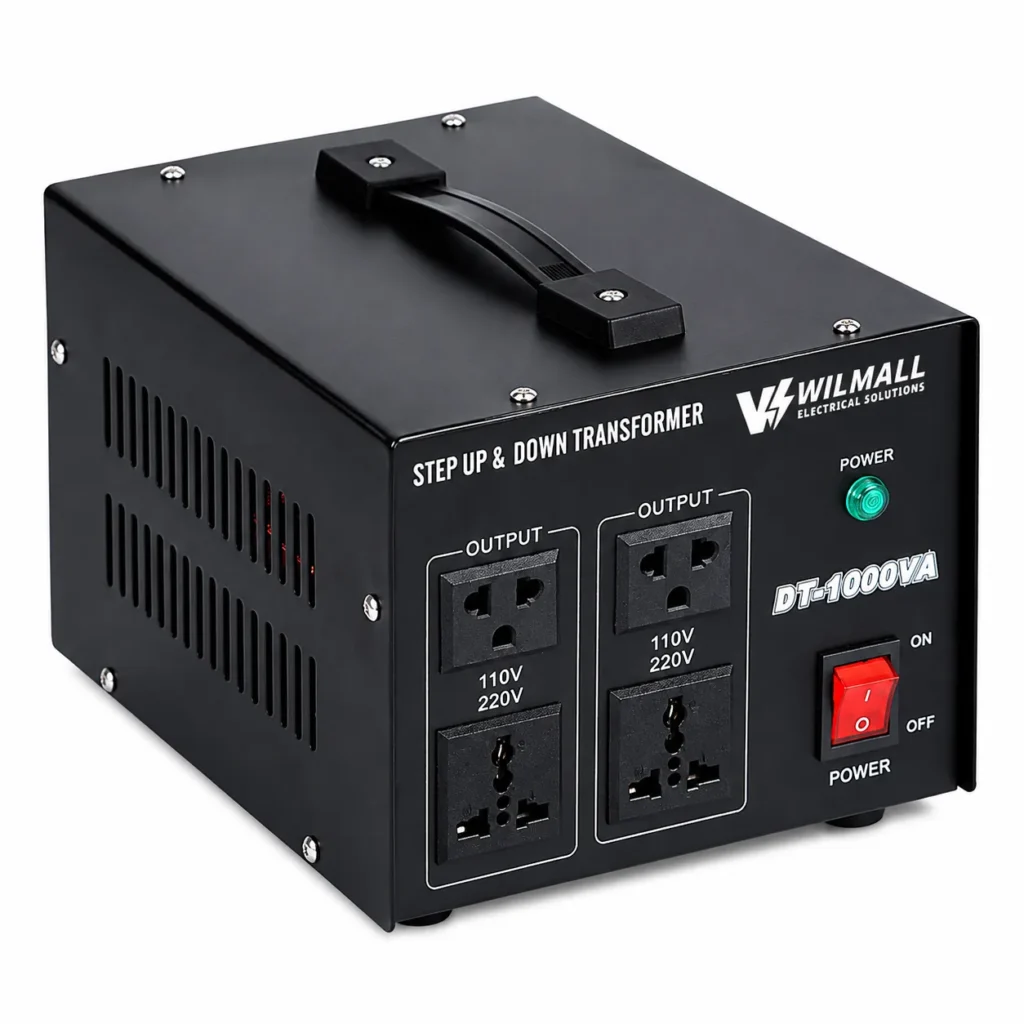
Step Down Transformer for Ice Maker and Commercial Use
Ice makers and commercial refrigerators are the appliances that absolutely cannot afford to stop. A freezer full of stock that thaws overnight is a bad day for any business. If your ice machine or fridge is a 110V model running in a 220V country, the step down transformer between the wall and the plug is not an accessory — it is part of the refrigeration system. Here is how to size it so it never lets you down.

Why refrigeration loads are different
Refrigerators, freezers and ice makers all have compressors, and a compressor is the hardest load a transformer can face. At start-up, a compressor draws four to six times its running current for a second or two while the motor builds speed. An ice maker cycles on and off dozens of times a day, so the transformer sees that surge constantly.
This is why the transformer for a fridge is not the same size as for a heater of equal watts. A 500W freezer label can need a 2000VA transformer, because the surge, not the running watts, is what matters. Buyers who size on watts alone are the ones who come back asking why their transformer trips every time the compressor starts.
Step down transformer size for ice maker and commercial fridge
| Equipment | Running watts | Compressor surge | Recommended transformer |
|---|---|---|---|
| Portable / countertop ice maker | 200-350W | ~800W | 1000VA |
| Commercial ice maker (small) | 400-800W | ~2000W | 2000VA |
| Commercial ice maker (large) | 1000-1800W | ~4500W | 3000-5000VA |
| Display fridge / reach-in cooler | 300-700W | ~1800W | 2000VA |
| Walk-in freezer unit | 1500-3500W | ~8000W | 5000VA+ or 3-phase |
The rule of thumb we give every buyer: take the compressor watts, multiply by three for the surge, add 30% margin, and round up to the nearest standard size. A 600W ice maker gives 600 x 3 x 1.3 = 2340VA, so a 3000VA STU-3000 is the right call. If the label lists amps instead of watts, multiply amps by 110V to get watts first.
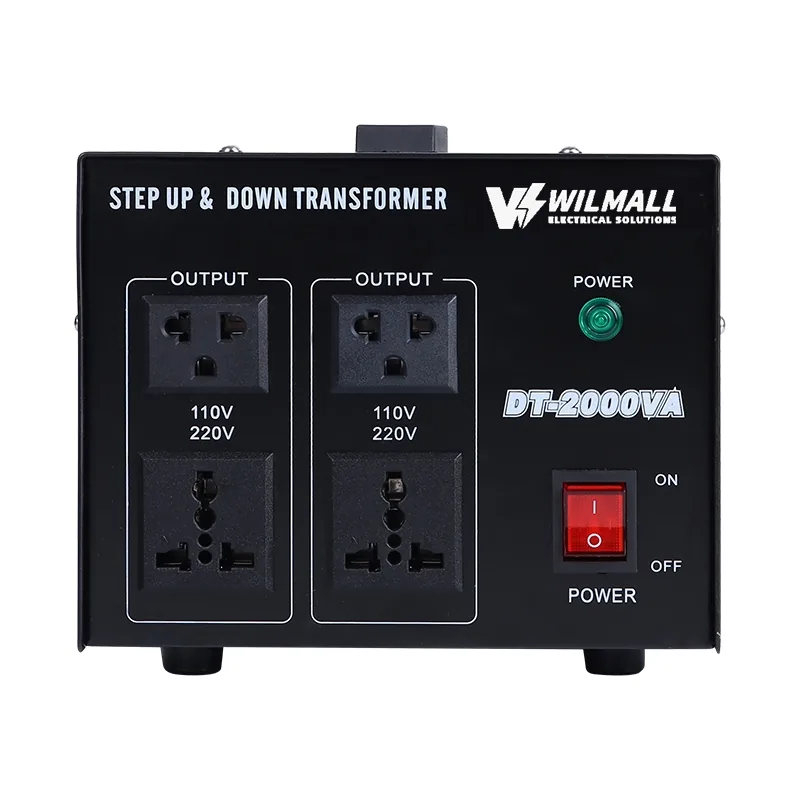
Continuous duty: the transformer never switches off
The difference between an ice maker and a hair dryer is that the ice maker keeps cycling all day and all night. The transformer is energised 24/7, even when the compressor is off. That means it needs a real continuous-duty rating, copper winding, and proper ventilation. An aluminium-wound unit that runs warm under a counter will fail within a year in a hot kitchen.
Heat and ventilation in commercial kitchens
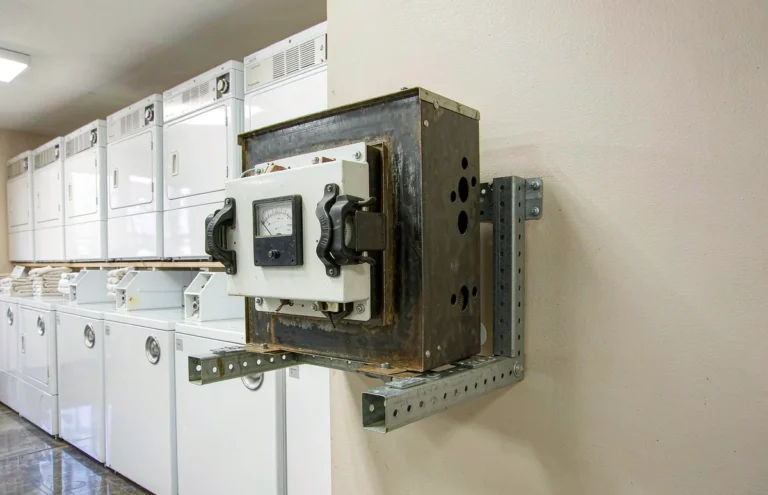
Commercial kitchens are hot, and the transformer adds its own heat on top. Mount it where air can move: on a wall bracket, above the compressor cabinet, never on the floor behind the machine where dust and moisture collect. If the kitchen runs over 40°C, derate the transformer by 10-15%, which is another reason to buy one size up.
RCD protection is non-negotiable near water
Ice makers and fridges sit near water lines and drain trays. A compressor that develops a winding fault can leak current into the frame, and in a wet environment that is a real shock risk. The RCD in the ST and STU series trips on that leakage in milliseconds, before anyone touches the machine. Do not buy a transformer without RCD for refrigeration duty. It is the cheapest insurance you will ever buy.
Why the surge matters so much for ice makers
Ice makers cycle more often than any other fridge-type appliance — every batch of ice means a compressor start. Some commercial units cycle 30-60 times a day. Every start is a surge event. If the transformer is undersized, the voltage sags during the start, the compressor labours, draws even more current, and the thermal overload eventually gives up. That is how ice machines “mysteriously” die next to an undersized transformer.
Common mistakes with fridge and ice maker transformers
- Sizing on watts instead of surge. The compressor surge is 3-6x the running watts.
- Sharing one transformer between fridge and other appliances. The combined surge trips it.
- Skipping RCD near water. This is how shocks happen.
- Hiding the transformer in a sealed cabinet. It needs airflow to survive 24/7 duty.
- Buying a 220V-primary unit for a 240V grid. Output rises; order the right primary.
Why buy from a factory directly
Wilmall builds the ST and STU series specifically for continuous refrigeration duty: copper winding, RCD protection, thermal overload, and full load testing before packing. We ship FOB Ningbo or Shanghai with CE / RoHS documents and batch test records. MOQ 10 pcs, 15-25 day lead time. Distributors stocking for restaurants and cold stores are our bread and butter.
Energy cost of running through a transformer
A transformer is not a magic device — it takes a small amount of power itself. A good unit is 93-96% efficient, so a 2000VA transformer running a typical freezer load wastes maybe 30-60W as heat. On a commercial ice maker that runs all day, that is a few dollars a month, not a reason to buy a cheaper transformer. The efficiency loss of a cheap aluminium-wound unit is double that, and it runs hot enough to shorten its own life in a warm kitchen.
What actually costs money is an undersized transformer tripping in the middle of the night and thawing the stock. One lost load of frozen product costs more than the transformer. Buy the right size, buy copper, and stop thinking about it.
Installation checklist for cold stores and kitchens
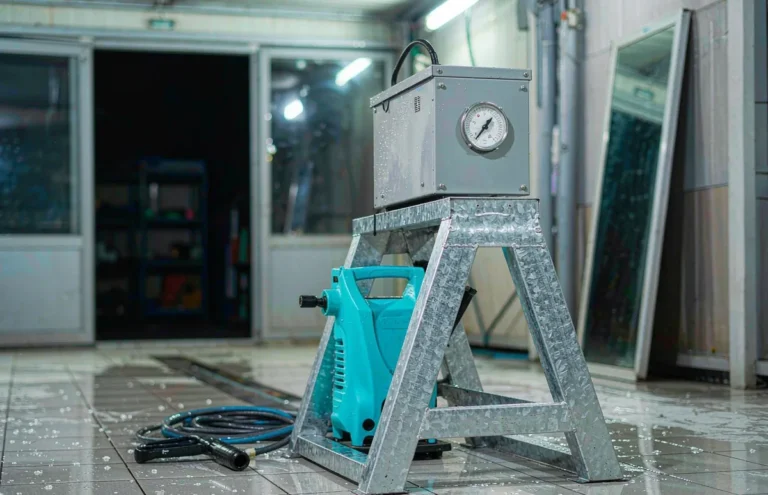
Cold stores and kitchens are hostile environments for electrical gear. Follow this checklist: mount the transformer on a wall bracket at least 1.5m above the floor, keep it out of the blast of the evaporator fan, give it 10cm of clearance on every side, and never install it inside the cold room itself. If the area is washed down with a hose, use an IP54 enclosure or a weatherproof cabinet.
Check the RCD test button monthly — it takes ten seconds. And once a year, blow the dust out of the vents and re-tighten the terminals. That is the entire maintenance schedule for a good transformer.
Dual-voltage machines: check before you buy
Many modern ice makers and commercial fridges are dual-voltage 110-240V with a switching power supply or a selector on the compressor. If yours is one of those, you do not need a transformer at all — just set the selector and fit the right plug. Check the nameplate for “110-240V” before ordering anything. The transformer is only needed for machines marked 110V or 115V only.
This one check saves distributors a lot of returns. If the label says 115V only, it needs the transformer. If it says 110-240V, it does not. When in doubt, send us a photo of the label and we will tell you in minutes.
What to tell us when you order
For a cold store or kitchen order, we need four numbers: the compressor watts or amps, the number of units, the grid voltage in your country, and whether the machine cycles often (ice makers) or runs steady (freezers). With those, we size the transformer, the enclosure and the RCD rating, and confirm everything in writing before production. MOQ 10 pcs per model, 15-25 day lead time.
Warranty, spares and support for cold storage
Every Wilmall transformer for refrigeration duty carries a 12-month warranty, and we keep common spares in stock for fast resolution. A failed unit is replaced quickly once the batch test record confirms it left the factory sound. For a business that runs on cold storage, that kind of support is worth more than a few dollars saved on a no-name unit.
Ready to order
Send us the ice maker or fridge model, the compressor watts, your country voltage and the unit count. We confirm the size, the enclosure and the RCD rating in writing, then produce in 15-25 days. MOQ 10 pcs per model, shipped FOB Ningbo or Shanghai with full documentation.
Frequently asked questions
Ice Maker Sizing: Compressor and Water Pump Together
An ice maker combines a compressor and a water pump, and both cycle through the ice-making process. The compressor is the big draw, spiking at start like any refrigeration motor, and the pump adds a smaller load. A commercial ice maker can draw 800W to 1500W during the freeze cycle. The practical sizing is 2000VA for a commercial unit, which covers the compressor surge and the pump with margin. The unit runs for long cycles and cycles repeatedly, so the transformer must handle continuous duty and the repeated surges. Our ST series is built for this kind of refrigeration duty. If the ice maker runs at the same time as other equipment in a shop or restaurant, add their wattages before sizing. Send us the ice maker’s nameplate rating and we will confirm the exact transformer for your setup.
What size transformer do I need for a commercial ice maker?
A small ice maker needs 2000VA, and a large commercial unit needs 3000-5000VA. Multiply the compressor watts by three for the surge, add 30% margin, and round up.
Can a transformer run a refrigerator 24 hours a day?
Yes, if it is sized with margin and has copper winding. Wilmall ST and STU series are rated for continuous duty. Mount it in a ventilated spot.
Why does an ice maker transformer need RCD protection?
Ice makers sit near water lines. RCD trips on leakage current in milliseconds, protecting staff from shock if the compressor develops a fault.
Why does my fridge transformer trip when the compressor starts?
The compressor surge is 3-6x the running watts. If the transformer is sized on watts alone, the surge exceeds its rating and trips the protection. Size on surge.
Can you supply transformers for a restaurant group?
Yes, we supply mixed orders across the ST and STU range with private labelling from MOQ 10 pcs per model.
Related reading
- Step Down Transformer 220V to 110V: Sizing and Safety
- What Size Transformer Do I Need for an Air Conditioner?
- Step Up and Down Transformer Products
Get a factory-direct quote
Send us the ice maker or fridge model, the compressor watts, and your country voltage. We will confirm the transformer size and price it factory direct. Email sales@wilmall.com or WhatsApp +86 197 3022 6757.