Isolation vs Step Down Transformer: What Is the Difference?
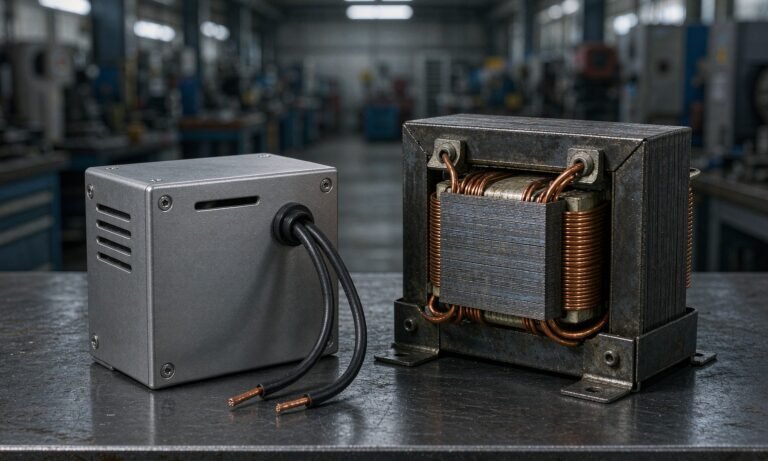
Quick answer: an isolation transformer protects equipment and people (same voltage in and out, no direct electrical connection between sides); a step down transformer changes voltage (e.g. 220V to 110V). Different jobs — and sometimes you need a unit that does both.
Key Takeaways
- Isolation: same voltage in and out, breaks ground loops.
- Step down: changes voltage, e.g. 220V to 110V.
- Sensitive gear on wrong voltage = unit that does both.
- Audio hum is usually a ground loop isolation fixes.
Which Unit You Need
| Need | Unit |
| Voltage conversion only | Step down |
| Protection only | Isolation |
| US audio on 220V mains | Step down isolation |
What an Isolation Transformer Does
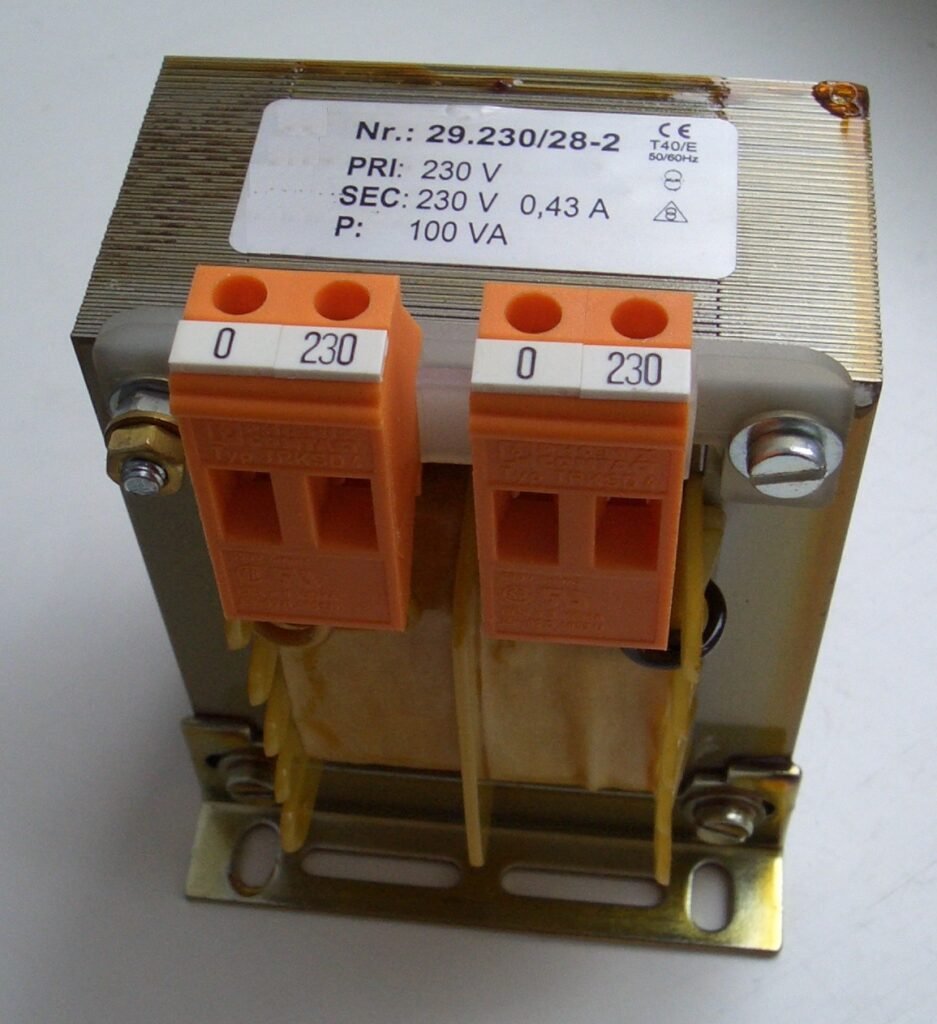
An isolation transformer has the same voltage on both sides — 220V in, 220V out — but the input and output windings are not physically connected. This “galvanic isolation” blocks ground loops, filters noise and spikes, and means neither output terminal is referenced to earth. It is the standard tool for sensitive electronics, medical devices, audio systems, and workshop bench supplies where clean, safe power matters more than voltage.
What a Step Down Transformer Does
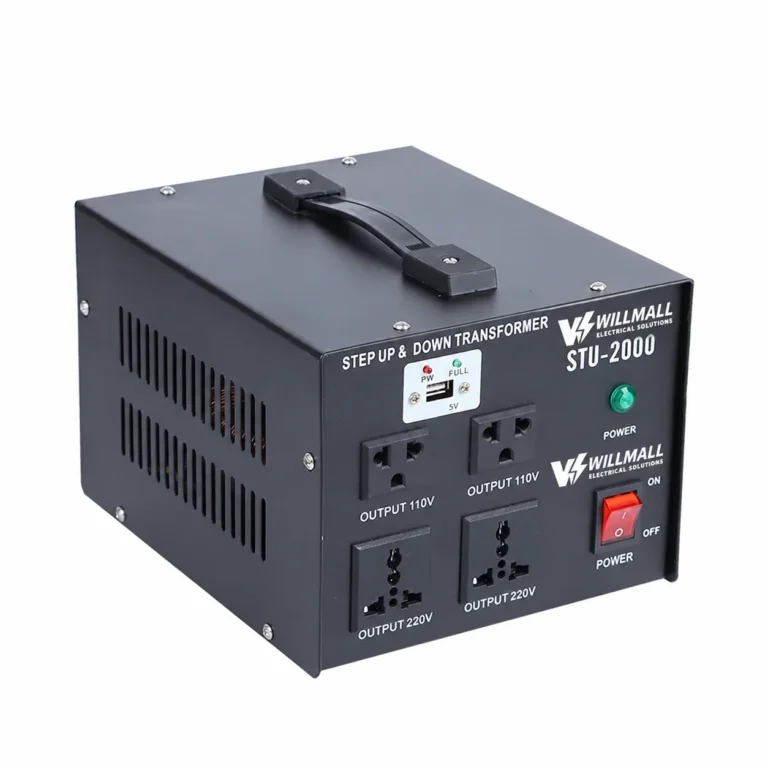
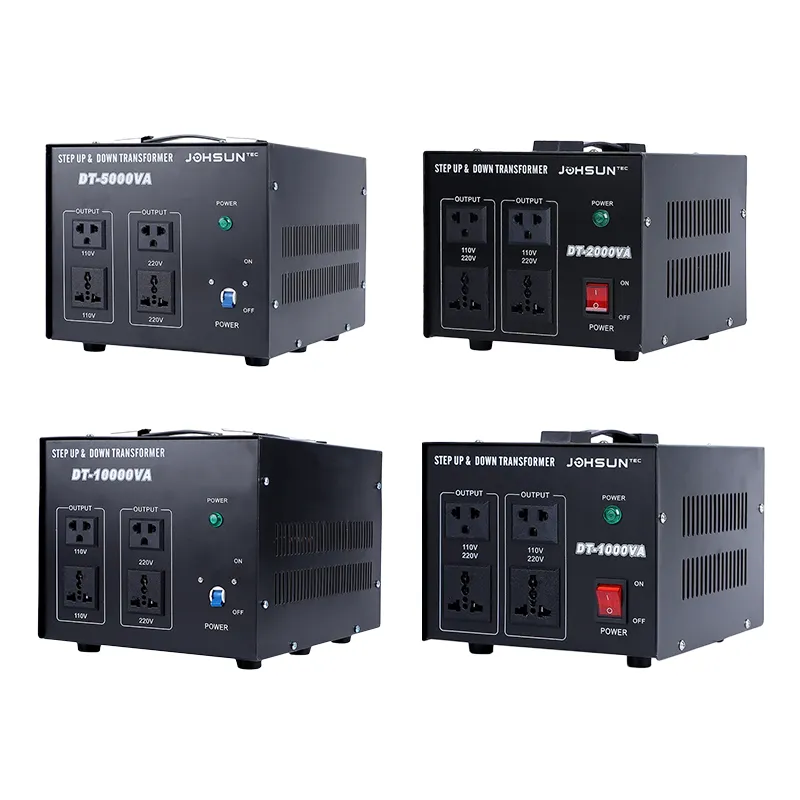
A step down transformer changes the voltage: 220V in, 110V out (or 380V to 220V). This is the appliance-saving workhorse for US/Japanese 110V devices on 220V mains. It usually has no isolation requirement and no output terminal floating — it simply scales the voltage down by the turns ratio.
Isolation vs Step Down: Side by Side
| Factor | Isolation Transformer | Step Down Transformer |
|---|---|---|
| Input vs output voltage | Same (e.g. 220V → 220V) | Different (e.g. 220V → 110V) |
| Primary purpose | Safety, noise filtering, ground isolation | Voltage conversion |
| Who needs it | Audio, medical, lab, sensitive gear | Anyone running 110V appliances on 220V mains |
| Floating output | Yes (both terminals isolated) | Usually referenced to input |
| Typical price | Higher (shielding, better insulation) | Lower |
Do You Need Both?
- Just voltage conversion (fridge, blender, TV on the wrong voltage): a standard step down transformer.
- Just protection (audio hum, medical safety, workshop isolation): a pure isolation transformer at the same voltage.
- US audio equipment on 220V mains (both problems at once): a step down isolation transformer — 220V in, isolated 110V out. This is the premium choice for Hi-Fi and studio gear.
If your device is expensive, sensitive, and running on the wrong voltage, do not choose between isolation and step down. Get the unit that does both.
Questions Customers Ask Us
Does every step down transformer isolate?
No. Basic step down units share a common connection. Isolation is a separate feature you must ask for.
My audio system hums through the speakers. Will isolation fix it?
Very likely — that hum is usually a ground loop. An isolation transformer breaks it. We have customers who solved exactly this on 220V mains with 110V US gear.
Is an isolation transformer safer for a hospital or clinic?
Yes — that is why medical equipment rooms use them. For single devices, an isolated unit plus a proper RCD is the standard combination.
Can you build a step down isolation unit with custom VA?
Yes — tell us the VA, the input/output voltages, and whether you need shielding. We quote within 24 hours.
Still not sure which model fits?
Tell us your appliance, wattage and country — we reply within 24 hours with a straight recommendation.
The safety difference in practice
The difference between an isolation transformer and a standard step down is a safety and noise difference, not a size difference. In a standard autotransformer, the 110V output shares a winding with the 220V input, so the output ground is electrically connected to the mains. In an isolation transformer, the two windings are separate, and the output is floating, with no direct electrical path back to the mains.
That floating output matters in three situations: equipment that touches a person or water, audio gear with ground loop hum, and sensitive instruments that reference their measurements to the ground. In all three, the isolation transformer removes the fault path or the noise path that the standard step down cannot.
Where each type is the right call
The standard step down is the right call for most household appliances: kettles, fridges, tools, TVs, and heating elements, none of which care about the shared ground. The isolation transformer is the right call for medical gear, lab instruments, audio systems with hum, and any equipment where the floating output protects the user or the signal.
The cost difference is about 25% more for isolation at the same VA, plus extra weight from the second winding and the shield. If your application does not need isolation, that cost buys nothing. If it does need isolation, nothing else works. The selection is application first, price second.
Testing and verifying the type
You can verify which type you have with a multimeter. With the transformer unplugged, measure between the input terminal and the output terminal. An autotransformer shows continuity, a low resistance, because the windings share. An isolation transformer shows an open circuit, because the windings are separate. The test takes ten seconds and removes all doubt.
If you are buying a used transformer and the seller cannot tell you the type, run this test before you buy, or ask us and we will walk you through it. The same test confirms whether a new unit is actually the isolation version you paid for.
The medical and lab application
In medical and lab settings, isolation is a requirement, not an option. Equipment that touches a patient, monitors, infusion pumps, dental chairs, must not have a direct path from the output back to the mains. An isolation transformer with a floating secondary removes that path, and it is the standard for hospital-grade power systems.
Lab instruments, oscilloscopes, spectrum analyzers and reference sources, reference their measurements to the ground at their connectors. Mains noise on that ground from an autotransformer shifts the measurements. The isolation transformer cleans the ground reference for the whole bench, and it protects the instrument inputs from ground transients when other gear switches.
The reseller’s stock mix
For a reseller, the stock mix between the two types follows the market split. The standard step down covers 80% of demand, household appliances and tools. The isolation variant covers the profitable 20%, audio, medical, and lab buyers who pay a premium and return. The stock mix that balances cash flow is roughly 70% standard and 30% isolation.
The isolation units turn over slower but carry a 25 to 35% higher margin. For a distributor, the isolation line builds the reputation and the standard line builds the volume, and the two together cover the whole market with one brand.
Verifying the type before you buy
Before you buy, verify the type with the resistance test, and ask the seller for the spec sheet stating the winding configuration. A unit listed as isolation should have a separate secondary winding and a shield, and the spec sheet should say so. If the spec sheet is vague, treat it as an autotransformer and price it accordingly.
We state the winding configuration on every ST spec sheet, standard and isolation, and the isolation units carry a test certificate confirming the shield and the winding separation. If you are buying for a regulated application, the certificate is the document the auditor will ask for.
The medical and lab application
In medical and lab settings, isolation is a requirement, not an option. Equipment that touches a patient, monitors, infusion pumps, dental chairs, must not have a direct path from the output back to the mains. An isolation transformer with a floating secondary removes that path, and it is the standard for hospital-grade power systems.
Lab instruments, oscilloscopes, spectrum analyzers and reference sources, reference their measurements to the ground at their connectors. Mains noise on that ground from an autotransformer shifts the measurements. The isolation transformer cleans the ground reference for the whole bench, and it protects the instrument inputs from ground transients when other gear switches.
The reseller’s stock mix
For a reseller, the stock mix between the two types follows the market split. The standard step down covers 80% of demand, household appliances and tools. The isolation variant covers the profitable 20%, audio, medical, and lab buyers who pay a premium and return. The stock mix that balances cash flow is roughly 70% standard and 30% isolation.
The isolation units turn over slower but carry a 25 to 35% higher margin. For a distributor, the isolation line builds the reputation and the standard line builds the volume, and the two together cover the whole market with one brand.
Verifying the type before you buy
Before you buy, verify the type with the resistance test, and ask the seller for the spec sheet stating the winding configuration. A unit listed as isolation should have a separate secondary winding and a shield, and the spec sheet should say so. If the spec sheet is vague, treat it as an autotransformer and price it accordingly.
We state the winding configuration on every ST spec sheet, standard and isolation, and the isolation units carry a test certificate confirming the shield and the winding separation. If you are buying for a regulated application, the certificate is the document the auditor will ask for.