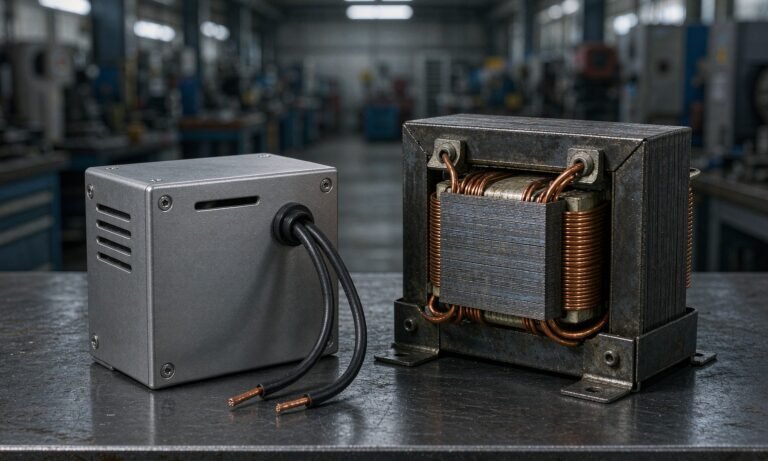
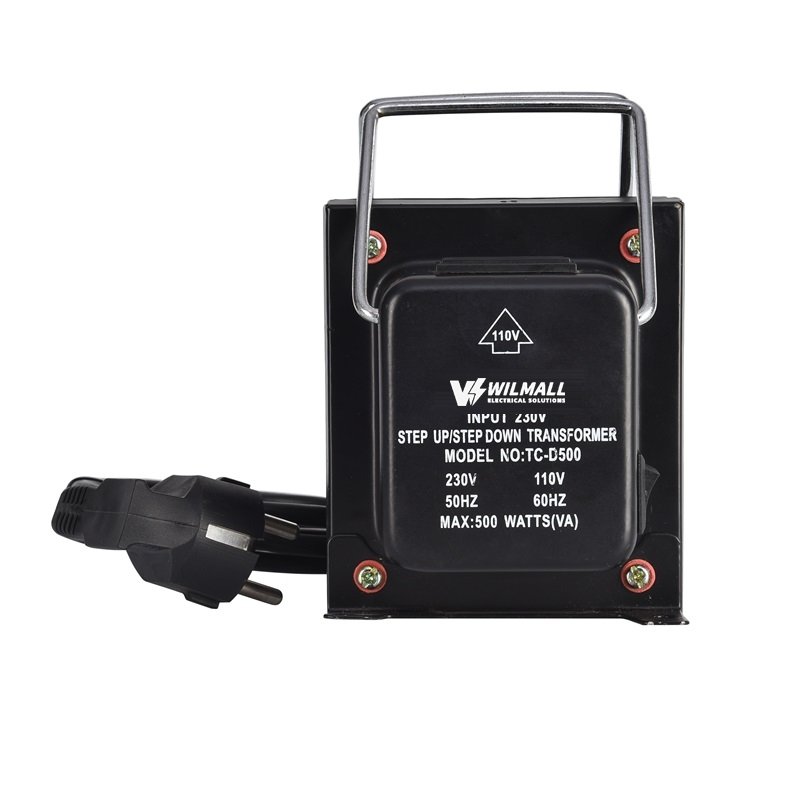
Control Transformer vs Isolation Transformer: Key Differences
Two transformers, same metal box, very different jobs. A control transformer and an isolation transformer both have a primary and a secondary winding, and to a buyer who is not deep in the trade they look interchangeable. They are not – and picking the wrong one for your cabinet can mean voltage problems, noise problems, or a machine that misbehaves in ways you cannot explain. Here is the honest breakdown of what each one does and which one your panel needs.
What a control transformer does
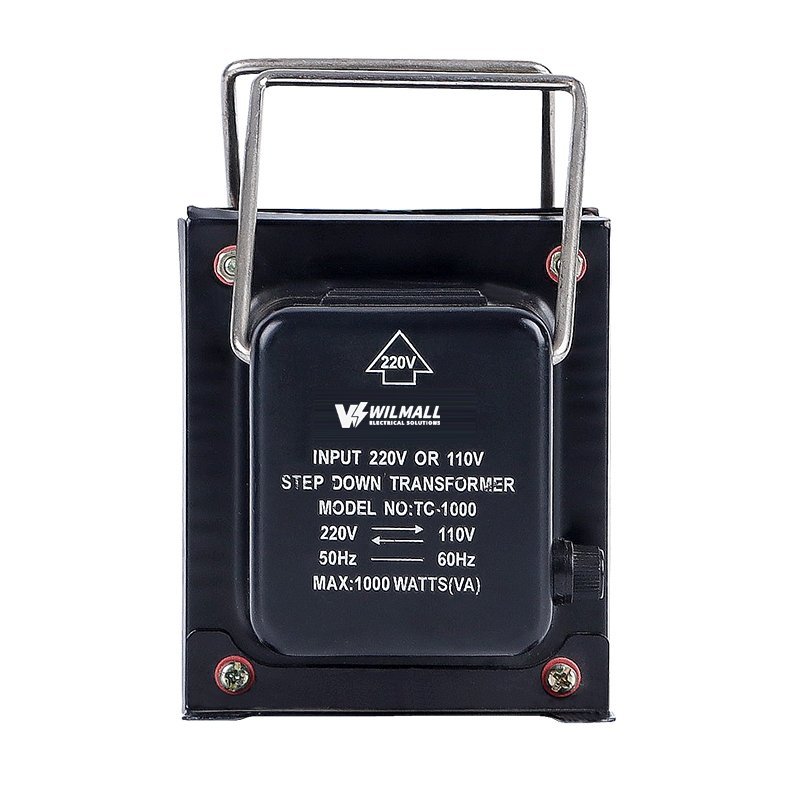
A control transformer steps the incoming line voltage – 220V, 380V, 415V – down to the control voltage your panel actually runs on: 24V, 36V or 110V for PLCs, relays, contactors and indicator lamps. Its job is voltage conversion, and it is sized for the control load with a bit of margin for contactor inrush.
The key point is that a control transformer is primarily about getting the right voltage. It provides some isolation as a side effect – the secondary is separate from the primary – but that is not its main purpose, and its construction is optimised for the voltage step-down job at hand.
What an isolation transformer does
An isolation transformer is built for a different reason: to separate the load electrically from the mains, breaking the physical connection between the supply and whatever it feeds. The primary and secondary are not connected to each other except through the magnetic core. That separation blocks ground loops, filters out some noise, and protects sensitive equipment from faults on the supply side.
Here is the thing that confuses people: an isolation transformer can be 1:1 – 220V in, 220V out – because the point is not changing the voltage, it is breaking the electrical path. You often see them in audio studios, medical rooms, laboratories and anywhere sensitive electronics are at risk from mains noise or ground problems.
The comparison
| Factor | Control transformer | Isolation transformer |
|---|---|---|
| Main job | Step voltage down for controls | Break electrical connection |
| Typical output | 24V, 36V, 110V | Same as input (1:1) or custom |
| Voltage change | Yes, that is the point | Often none |
| Isolation | Side effect | The whole point |
| Typical loads | PLCs, relays, contactors | Audio, medical, lab gear |
| Common range | 25VA – 10KVA | 100VA – 30KVA+ |
The overlap is where buyers get caught. A control transformer does provide isolation, so for many simple panels it is enough. But if your reason for buying is the isolation itself – because your equipment is sensitive, or you have a ground loop, or you need to protect against a nasty supply – then you want a transformer built and rated for that job, not one where it is incidental.
Which one for your panel?
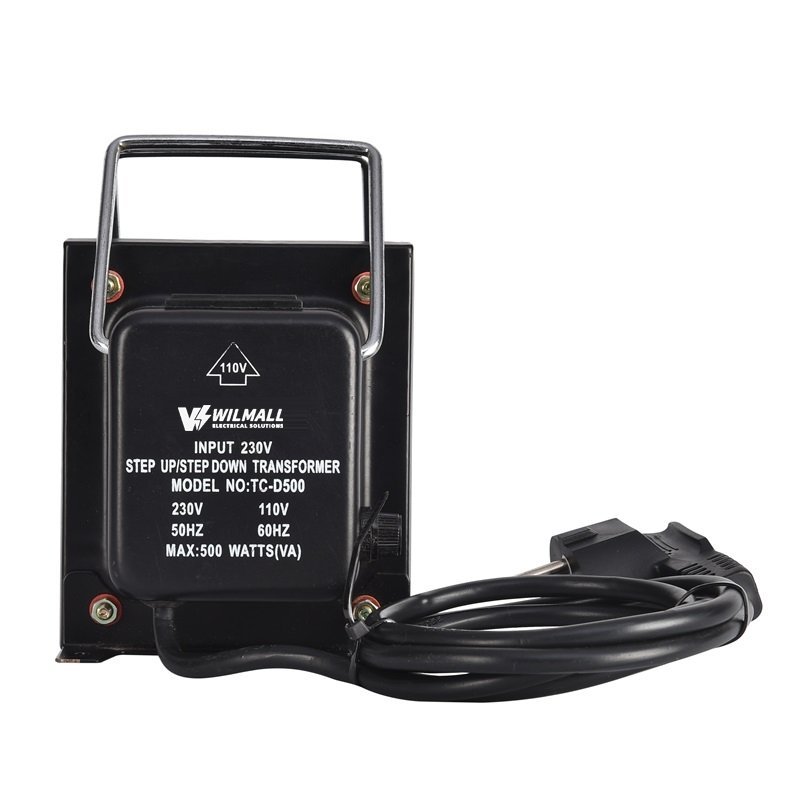
Ask yourself why you are buying. If the answer is “my PLC and relays need 24V”, that is a control transformer. If the answer is “my audio system hums from a ground loop” or “my lab equipment needs clean, separated power”, that is an isolation transformer. If you genuinely need both – control voltage and clean isolation – there are units that do both well, and we build them.
There is also the medical and safety angle. In equipment where a fault must never reach the patient or the user, the isolation transformer is the protective barrier. That is a different design brief from a control transformer – better insulation, stricter testing, often a shield between windings. If your application is safety-critical, tell us, because we will spec the unit differently.
Common mistakes
- Using a control transformer where you need real isolation. The isolation is incidental, not guaranteed.
- Buying 1:1 when you need 220V to 24V. Read the output rating.
- Ignoring the screen/shield between windings. Shielding matters for sensitive loads.
- Sizing for running load only. Contactors and inrush still need margin.
- Assuming all isolation transformers are the same. Medical and audio grades differ.
Why buy from a factory directly
Wilmall manufactures both control transformers and isolation transformers, from 25VA to 30KVA, with copper winding, proper insulation class and batch test records. We build custom voltage combinations and shielded designs for sensitive loads. MOQ 10 pcs, 15-25 day lead time, FOB Ningbo or Shanghai. Tell us what the transformer feeds and why, and we spec it honestly.
Shielding and screen layers
The serious isolation transformers have a screen – a grounded copper shield between the primary and secondary windings. That screen does two jobs: it blocks capacitive coupling between the two sides, which stops high-frequency noise from riding across, and it gives fault current a safe path to ground instead of through the load. This is the difference between an isolation transformer that simply separates and one that actually cleans the supply.
For audio equipment, medical devices and precision instruments, the screen is not a luxury – it is the reason the transformer exists. A control transformer generally does not have a screen, because its job is voltage conversion, not noise rejection. If your application is sensitive, ask for a screened isolation transformer and do not accept a general-purpose unit as a substitute.
When you need both
Some panels genuinely need both functions: a control voltage for the PLC and clean isolated power for a sensitive instrument on the same machine. The clean answer is two transformers – a control transformer for the logic side and a screened isolation transformer for the sensitive load. Combining them into one unit is possible, but it adds cost and complexity, and separating the two jobs keeps each one simple and reliable.
Our honest advice when a customer asks for a single box to do both: tell us the loads on each side and we will quote both options. For most machines, two well-chosen transformers are cheaper and easier to maintain than one exotic unit, and each one is doing a job it is built for. When in doubt, separate the functions.
Buying for OEM
If you build equipment that ships with a transformer inside, the choice between control and isolation is part of your design, and the spec matters at volume. We supply both types to OEMs with B, F or H insulation class, custom voltage combinations, screening where the design needs it, and your brand on the label, from MOQ 10 pcs per model.
The batch test records we keep matter for you too – if a unit comes back from the field, we can pull the test data for its batch and see whether it was a unit fault or an application problem. That traceability is something a trading company cannot give you, and for a component inside your product it is worth having.
The short version for buyers
Control transformers give you the right voltage; isolation transformers give you the clean separation. If you need both, buy two. We build both from 25VA to 30KVA with screening where the job needs it, and we spec honestly from your application.
Reading the nameplate
The nameplate tells you which type you actually have: a control transformer lists a step-down ratio like 220V to 24V, while an isolation transformer often lists the same voltage on both sides, like 220V to 220V, or a range. It may also note the insulation class and whether it is screened. When you are comparing units or ordering, the nameplate is the ground truth – photograph it and send it to us, and we will confirm what you have and what you need.
And the final word on safety: if your application is medical, laboratory or any setting where a fault must never reach the user, do not improvise. Tell us the application and we will spec a properly screened isolation transformer with the right insulation class and testing – the few extra dollars buy the barrier that makes the difference.
Frequently asked questions
What is the difference between a control transformer and an isolation transformer?
A control transformer steps voltage down for control circuits (220V to 24V, for example). An isolation transformer separates the load from mains electrically – often 1:1 – to block ground loops and noise. Control transformers isolate as a side effect; isolation transformers are built for it.
Why would I want a 1:1 isolation transformer?
A 1:1 isolation transformer does not change voltage – it breaks the electrical connection between supply and load. That stops ground loops, filters noise and protects sensitive equipment, which is why audio and lab gear use them.
Can I use an isolation transformer as a control transformer?
Yes, if the voltage ratio and VA rating match. But an isolation transformer is usually more expensive than a control transformer for the same job, so it only makes sense when you need the isolation too.
Is there a special isolation transformer for medical equipment?
Yes. Medical isolation transformers have stricter insulation, leakage and testing requirements. If your application is safety-critical, spec it explicitly – it is a different design from a general-purpose unit.
Can I order control or isolation transformers with my brand?
Yes, OEM branding from MOQ 10 pcs per model, with custom voltages, shielding and terminals on request.
Related reading
- Isolation vs Step Down Transformer: What Is the Difference?
- Control Transformer Sizing: How to Calculate VA
- Control Transformer Range
Get a factory-direct quote
Email sales@wilmall.com or WhatsApp +86 197 3022 6757 with your application and load. We spec the right unit within 24 hours. MOQ 10 pcs.