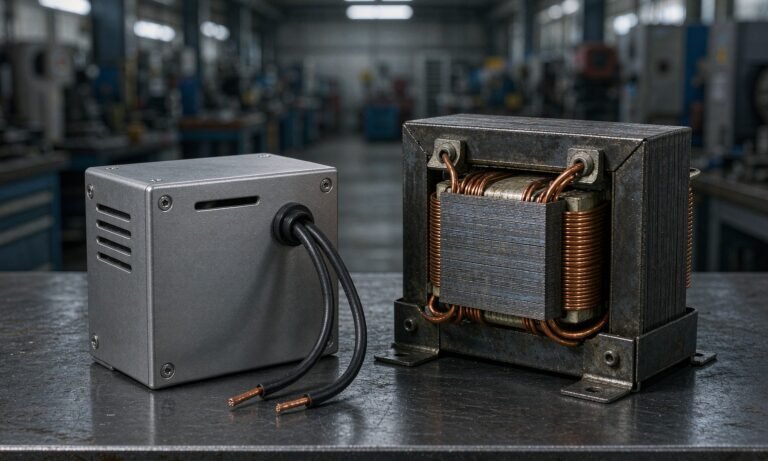
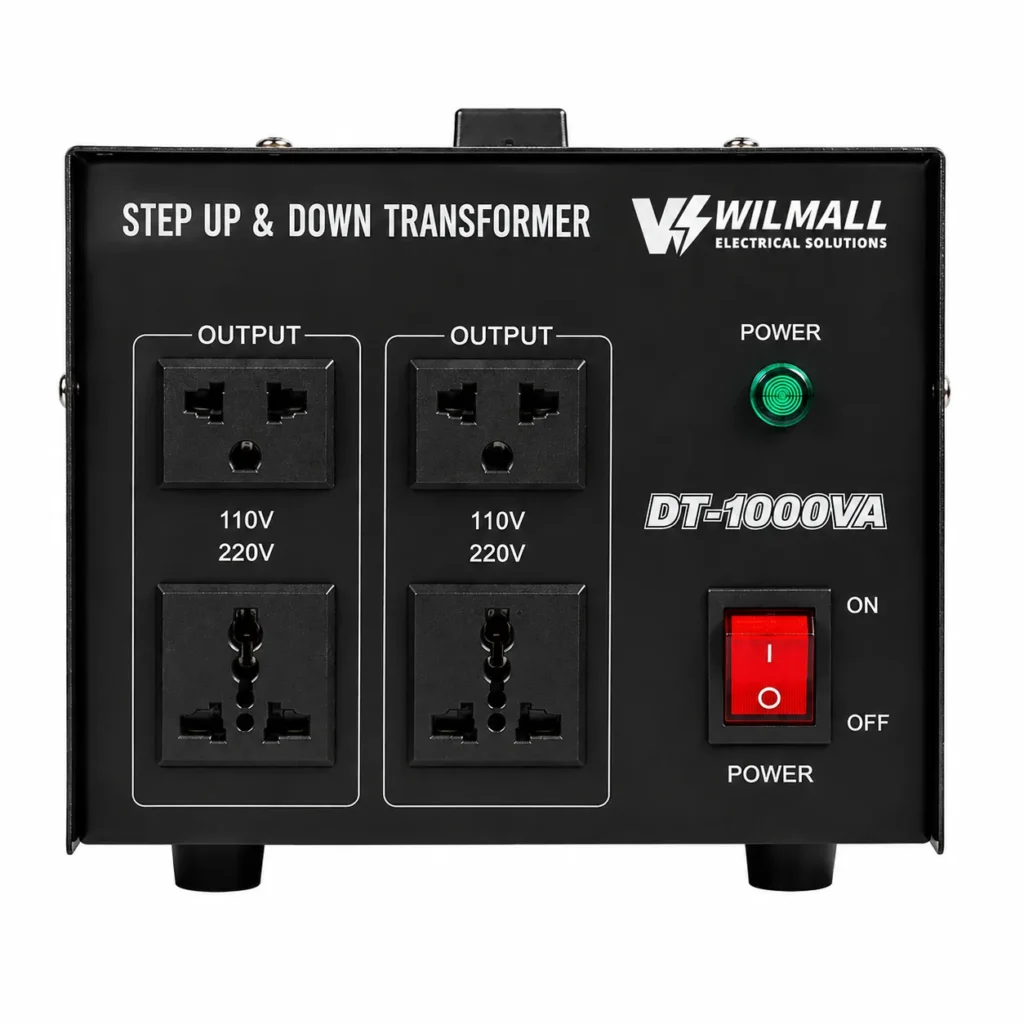
Distribution vs Isolation Transformer: Key Differences
Both are transformers, but they are built for different jobs. A distribution transformer moves power efficiently across a network; an isolation transformer separates circuits for safety and clean power. Here is how to tell them apart and which one your project needs.
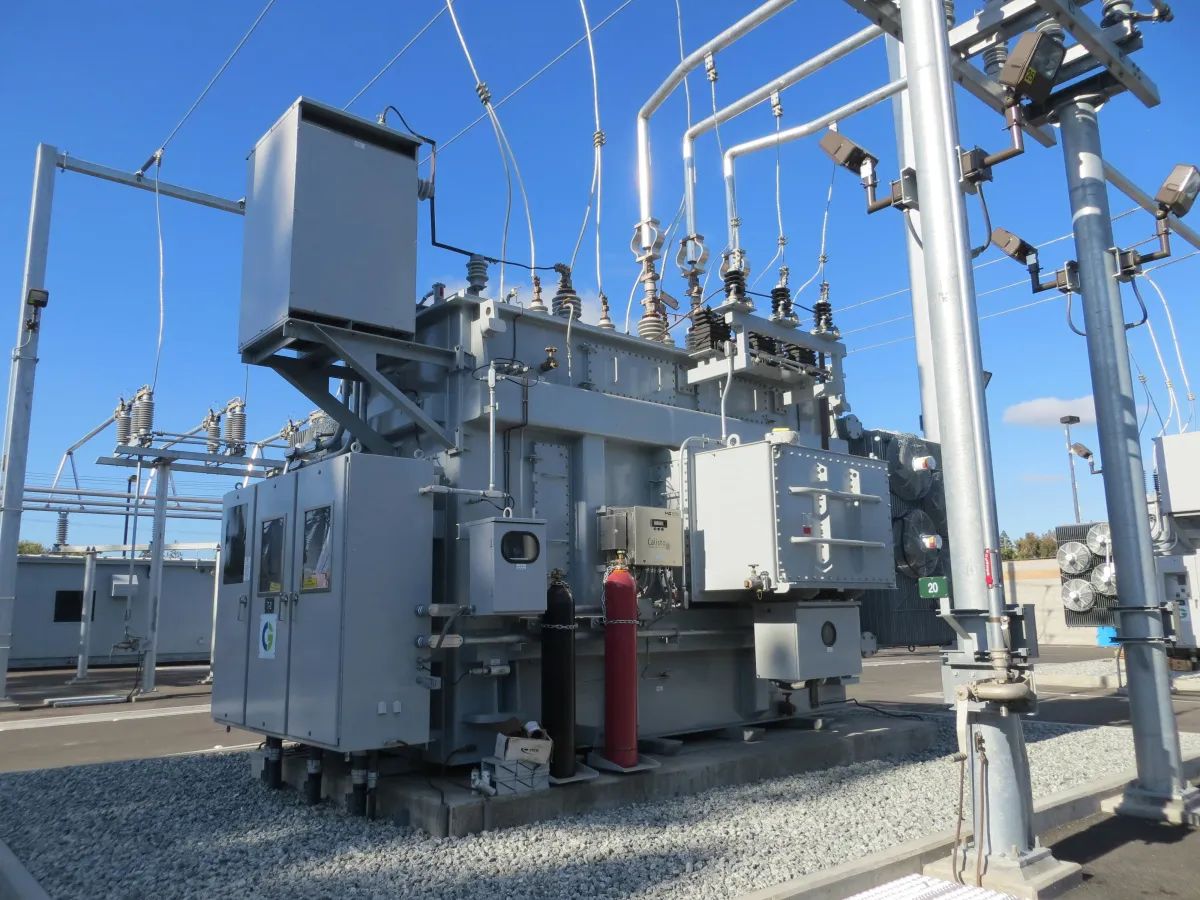
What a distribution transformer does
Distribution transformers step voltage up or down for power distribution — for example 11KV to 400V — to move electricity efficiently and deliver it at usable levels. They are optimised for throughput and efficiency, run continuously, and are typically mounted on poles or in substation enclosures. Their job is moving large amounts of power with minimal loss.
What an isolation transformer does
An isolation transformer has a 1:1 ratio (or close) — input and output voltage are the same — but the primary and secondary windings are electrically separate. That separation breaks the galvanic connection to the mains, which does three things: it blocks ground loops, filters some noise and transients, and removes the shock hazard of a direct mains connection. Medical equipment, audio gear, test benches and sensitive electronics all use them.
Distribution vs isolation: side by side
| Factor | Distribution | Isolation |
|---|---|---|
| Voltage ratio | Steps up or down | 1:1 (or close) |
| Primary job | Move power efficiently | Separate and protect |
| Galvanic isolation | May have it or not | Always |
| Typical size | KVA to MVA | 100VA to 100KVA |
| Typical use | Grid and buildings | Equipment and circuits |
| Noise filtering | Limited | Good |
When you need an isolation transformer
- Medical devices — where patient safety demands separation from the mains.
- Audio and studio gear — to eliminate ground-loop hum between connected devices.
- Test benches and labs — to protect instruments from grid noise.
- Industrial controls — isolating PLCs and sensors from motor transients.
Can one unit do both jobs?
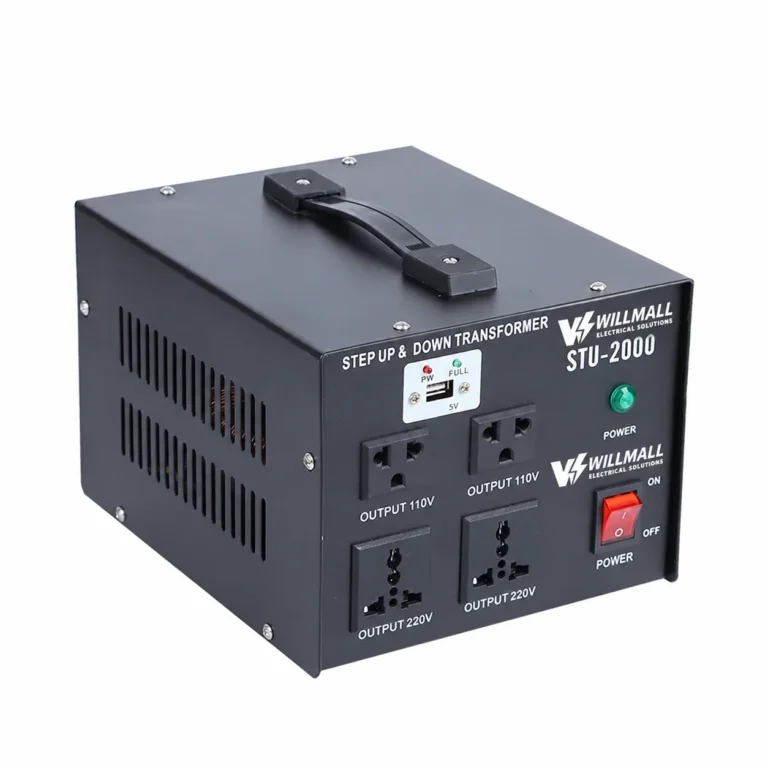
Yes — a step-down transformer with a separated secondary provides both voltage conversion and isolation. That is exactly what the ST series step-down transformers do: 220V to 110V conversion with full isolation between windings, protecting the appliance and the user. If you need both conversion and isolation, choose a unit with isolated windings rather than an autotransformer, which shares a single winding and provides no isolation.
Isolation in the real world
Consider a medical clinic running a US-made blood pressure monitor on 220V mains. A 220V to 110V isolation transformer both converts the voltage and isolates the device from the mains — if the neutral is lost or a fault occurs upstream, the patient-connected device stays safe. The same logic applies to audio racks: isolation between the mixer, amplifier and recorder kills the ground-loop hum that plagues multi-device setups.
For industrial controls, an isolation transformer between the grid and the PLC cabinet blocks the transients from motor contactors that otherwise find their way into the logic supply. Many PLC failures are actually power-quality failures, and isolation is the cheapest insurance against them.
How to choose between them
Ask two questions. First: do I need to move large power over distance? Then a distribution transformer. Second: do I need to protect equipment or people from the mains? Then an isolation transformer — or an isolating step-down if you also need voltage conversion. Most buyers on this site fall into the second category.
Efficiency and loss
Distribution transformers are engineered for efficiency at full load because they run 24/7 and every percentage point of loss is real money on the network. Isolation transformers, by contrast, are chosen for performance characteristics — isolation, noise rejection, safety — and their efficiency is usually a secondary consideration at the sizes used for equipment.
For equipment isolation, the standard product is the encapsulated or open-frame transformer with separate windings. Our ST series is exactly this: a 220V to 110V step-down with isolated primary and secondary, tested at full load before packing.
Grounding and neutral
One practical difference: with an isolation transformer, the secondary can be left floating or grounded to suit the application. Floating secondaries are used in medical and audio contexts to avoid ground loops; grounded secondaries are used where a defined reference is needed. This flexibility is one reason isolation transformers appear in so many professional installations.
Sizing an isolation transformer
Sizing follows the same rules as any transformer: add the connected load, apply a 20-30% margin, and account for inrush on motor loads. For audio racks, sum the consumption of every device. For industrial controls, add the VA of the PLC, relays and sensors with margin. Standard sizes in our range cover most needs from 100VA up to project ratings.
If you also need voltage conversion — for example 220V input to 110V output for US equipment — an isolating step-down transformer does both jobs in one unit. That is the ST series design: separate windings, full isolation, and the correct output voltage.
Buying isolation transformers from the factory
We build isolation and isolating step-down transformers from 100VA to 10KVA, wound in-house with copper, and tested at full load before packing. Custom input / output voltages, enclosures, terminals and labels are available from MOQ 10 pcs. CE / RoHS documents and batch test reports ship with every order, making market entry and resale straightforward.
Frequently asked questions
Isolation Transformers and Earth Leakage Protection
The key reason a buyer chooses an isolation transformer over a distribution transformer is safety in wet or sensitive applications. A distribution transformer passes the earth reference through, which means a fault on the output side can energize the case and create a shock risk in a bathroom, kitchen, or outdoor installation. An isolation transformer separates the primary and secondary electrically, so the output floats relative to earth, and a single fault does not create a live-to-earth path. That is why isolation transformers are the standard choice for aquarium pumps, medical equipment, audio systems, and tools used in damp environments. The trade-off is cost and size, an isolation transformer is larger and heavier for the same VA rating because it needs separate windings and more insulation. If your application involves water, sensitive electronics, or human contact with the load, the isolation type is the responsible choice.
When a Distribution Transformer Is the Right Choice
For most household and commercial voltage conversion, a distribution transformer is the right and economical choice. It steps voltage up or down while passing the earth reference through, which is perfectly safe in dry, well-installed environments. The main use is converting mains voltage for appliances, such as 220V to 110V for a US-spec device, where the appliance itself is double-insulated or connected to a properly earthed socket. A distribution transformer is lighter, cheaper, and more compact than an isolation unit for the same rating, which is why it dominates the market for step-down and step-up converters. The rule we give buyers is simple: for normal appliance conversion in a dry location, a distribution transformer is fine. For wet locations, medical gear, audio, or any load where earth leakage would be dangerous, step up to the isolation type.
How to Tell Which Type You Are Buying
You can usually tell a distribution transformer from an isolation transformer by the label and the terminals. A distribution transformer, also called an autotransformer in some configurations, is often labelled with a single winding ratio and may have fewer terminals, because the input and output share a common winding. An isolation transformer has fully separate primary and secondary windings, so it is heavier and the label usually states the isolation and the earth shield if fitted. When you measure continuity, an isolation unit shows no continuity between input and output windings, while a distribution unit shares a common point. If you are buying online and the listing does not state the type, ask the seller directly. Our listings always state whether a unit is distribution or isolation type, and our engineers will confirm which you need for your application before you order.
Isolation for Audio and Medical Equipment
Two applications justify the extra cost of an isolation transformer even when a distribution unit would work: audio and medical. Audio equipment, especially amplifiers and studio gear, can pick up hum and noise from the mains through the shared earth reference, and an isolation transformer with a screened primary removes most of that noise floor. Medical and dental equipment, even in a clinic, benefits from the separation between the patient and the mains. In both cases, the isolation transformer is not just a voltage converter, it is a cleanliness and safety device. If your application falls into either category, tell us, and we will recommend the isolation type with the right screening and rating. The extra cost is small relative to the value of the equipment it protects, and it is the difference between a system that hums and one that is silent.
Earth Leakage and the Shock Risk in Wet Areas
In wet or damp locations, the earth leakage question is the one that decides between a distribution and an isolation transformer. A distribution transformer passes the earth reference through, so a fault in the appliance can energize the transformer case and create a shock risk if the user is touching a wet surface. An isolation transformer breaks that path, so a single fault does not create a live-to-earth circuit. That is why isolation transformers are standard for aquarium equipment, outdoor tools, and bathroom-adjacent installations. If your application involves water, the isolation type is not a luxury, it is the responsible choice. We build isolation transformers from 100VA to 10KVA with varnish-dipped windings and a screened primary on request. Tell us where the unit will be used, and we will confirm whether the isolation type is required for your installation.
What is the difference between a distribution and isolation transformer?
A distribution transformer moves power efficiently across a network, stepping voltage up or down. An isolation transformer keeps input and output separate for safety and clean power.
When do I need an isolation transformer?
Use one for medical devices, audio equipment, test benches and sensitive electronics, where separation from the mains protects equipment and users.
Is an isolation transformer always 1:1?
Usually yes, but isolation can be combined with a step-up or step-down ratio. A step-down transformer with separated windings also provides isolation.
Does an autotransformer provide isolation?
No. An autotransformer shares a single winding, so input and output are not galvanically separate. For isolation you need separate primary and secondary windings.
Do your ST series transformers provide isolation?
Yes, the ST series step-down transformers use separate primary and secondary windings, so they convert voltage and isolate in one unit.
Related reading
- Distribution vs Isolation Transformer
- Isolation vs Step Down Transformer
- Step Up and Down Transformer Products
Get a factory-direct quote
Email sales@wilmall.com or WhatsApp +86 197 3022 6757 with your application and voltage requirements.