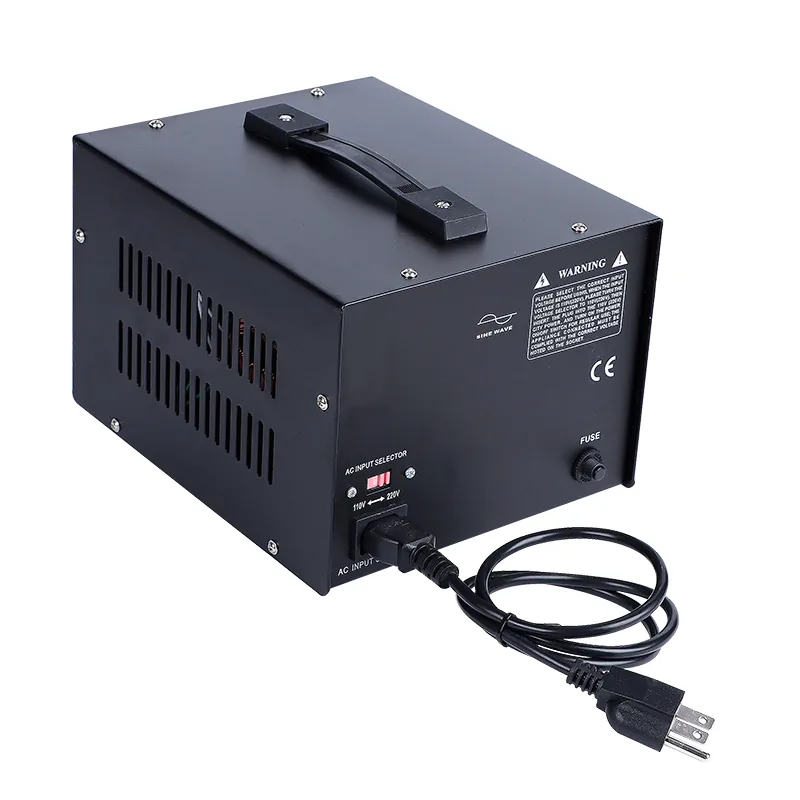
Why Do US Appliances Need a Step Down Transformer in Europe?
American expats, exchange students and business travellers face the same wall in every European hotel and apartment: the sockets deliver 220-240V, but the hairdryer, blender, game console or CPAP machine from home expects 110-120V. The answer is not an adapter plug. The answer is a step down transformer 220V to 110V rated for the appliance, or a US appliance that already accepts both voltages. This guide explains why the voltage mismatch exists, which appliances need protection, and how to choose the right converter for Europe.
Europe standardised on a nominal 230V supply decades ago, with most countries running between 220V and 240V depending on the local grid. The United States uses 120V. Plugging a 120V appliance into a 230V socket delivers nearly double the voltage, and because power rises with the square of voltage, a motor or heater rated for 120V receives about four times its design power. Smoke, a dead appliance, or a tripped building breaker is the usual result.
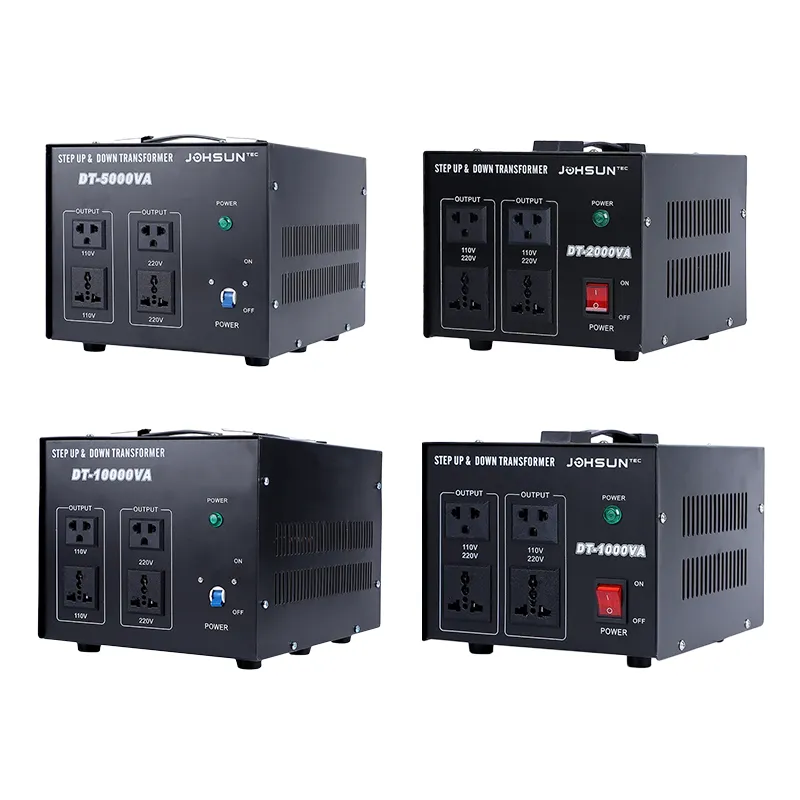
Europe Runs 230V: The Voltage Mismatch Explained
The 230V standard is a modern European compromise: the old UK 240V and the continental 220V grids were harmonised to 230V +10%/-6%, which means in practice you may measure anything from 207V to 253V at a European socket. US appliances built for 120V have no tolerance for that range. Only devices explicitly labelled 100-240V, such as most laptop adapters and phone chargers, can be used in Europe with a simple plug adapter.
Everything else – blenders, mixers, irons, hair dryers, curling irons, fans, power tools, projectors, printers, some TVs – needs a step down transformer that converts the 230V mains down to 110-120V. The transformer takes the European input and outputs a clean 120V for your US appliance, protecting both the device and the house wiring. The voltage by country tool lists exact voltages and plug types across Europe so you can check your destination before you travel.
Which US Appliances Need a 220V to 110V Step Down Transformer
Group your appliances by how they handle electricity. Resistive loads – hair dryers, irons, kettles, toasters – are the most dangerous: they will overheat and burn out within seconds at 230V. Universal-motor appliances, such as vacuum cleaners and power tools, also over-speed and overheat. Inductive loads with motors and compressors, like refrigerators, freezers and dehumidifiers, suffer slower damage but still fail prematurely. Only dual-voltage electronics are safe without a transformer.
Frequency Matters: 50Hz vs 60Hz and What It Means for You
Voltage is only half the story. Europe runs at 50Hz, while US mains run at 60Hz. A step down transformer 220V to 110V converts the voltage but passes the frequency through unchanged, so your US appliance still sees 50Hz. For most devices this is harmless: resistive heaters do not care, universal motors run slightly slower, and switch-mode power supplies are frequency-tolerant. But synchronous motors – in some wall clocks, turntables and recorders – will run 17% slow on 50Hz. Check the label for 50/60Hz markings if time accuracy matters.
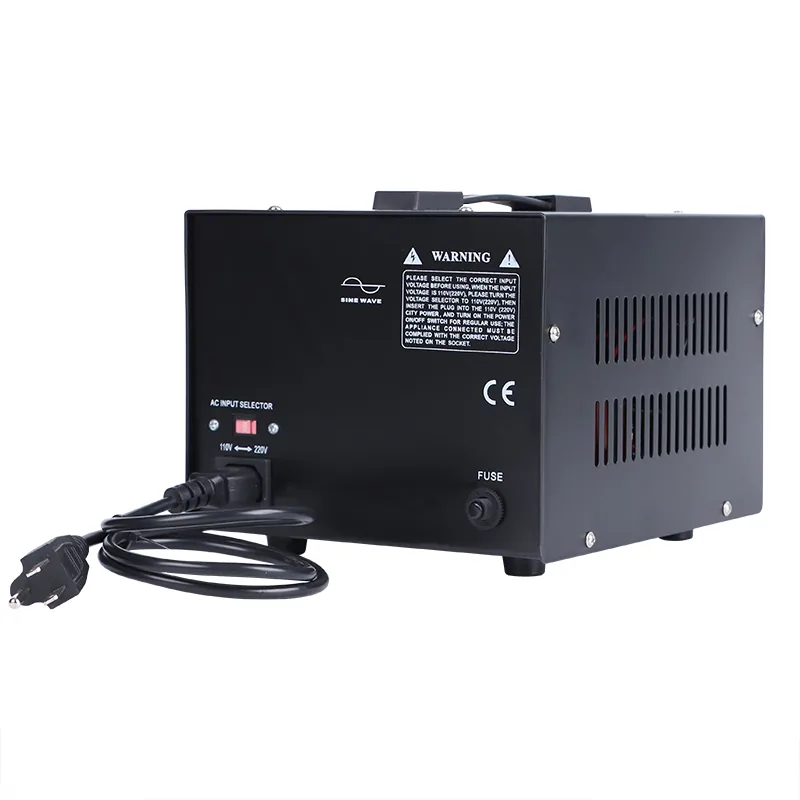
Choosing the Right Size for Your US Appliances
Size the transformer from the appliance nameplate, not from the size of the device. Read the watts (W) or amps (A) printed on the label; if only amps are shown, multiply by 120V. Then add 20-30% headroom for motor start-up. A 1500W US hairdryer, for example, needs at least a 2000VA transformer, while a 350W blender can run on 500VA. The table below covers common travel and relocation items.
| US Appliance | Typical Watts | Recommended Transformer |
|---|---|---|
| Phone / laptop charger (dual voltage) | 30-90W | None – use adapter |
| Electric toothbrush / shaver | 5-15W | None – usually dual voltage |
| Blender / mixer | 300-800W | 1000VA |
| Hair dryer / flat iron | 1000-1800W | 2000VA |
| CPAP machine | 60-120W | 500VA |
| Power tool (drill, saw) | 500-1500W | 2000VA |
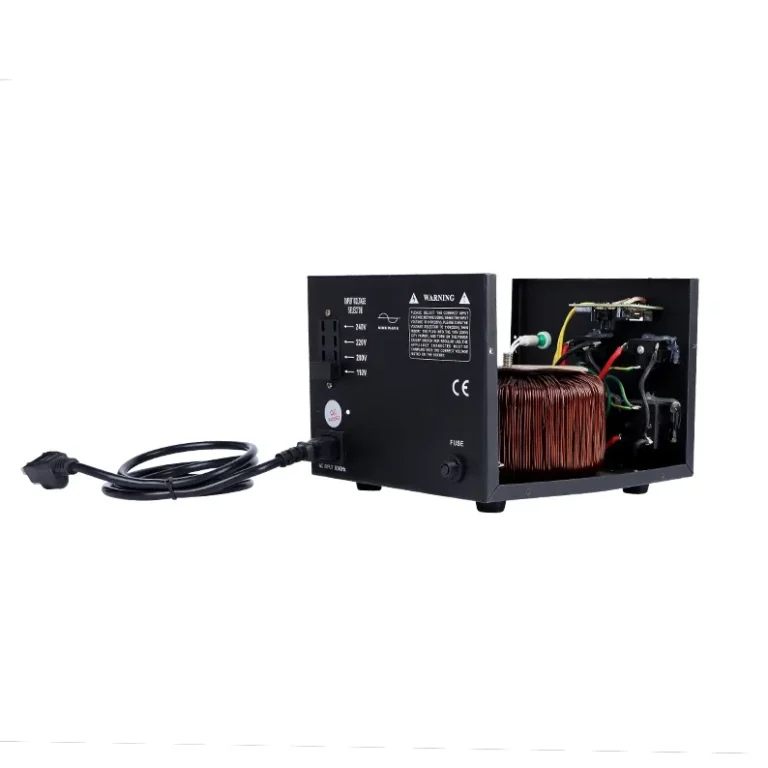
The Wilmall ST-2000 step down transformer handles high-draw items like hairdryers and power tools with its 2000VA capacity and RCD protection. For heavier simultaneous loads – a refrigerator plus a dehumidifier, or a whole small apartment of US appliances – the STU-3000 step up down transformer provides 3000VA and automatic voltage selection, which also makes it useful if you later move to a 110V country.
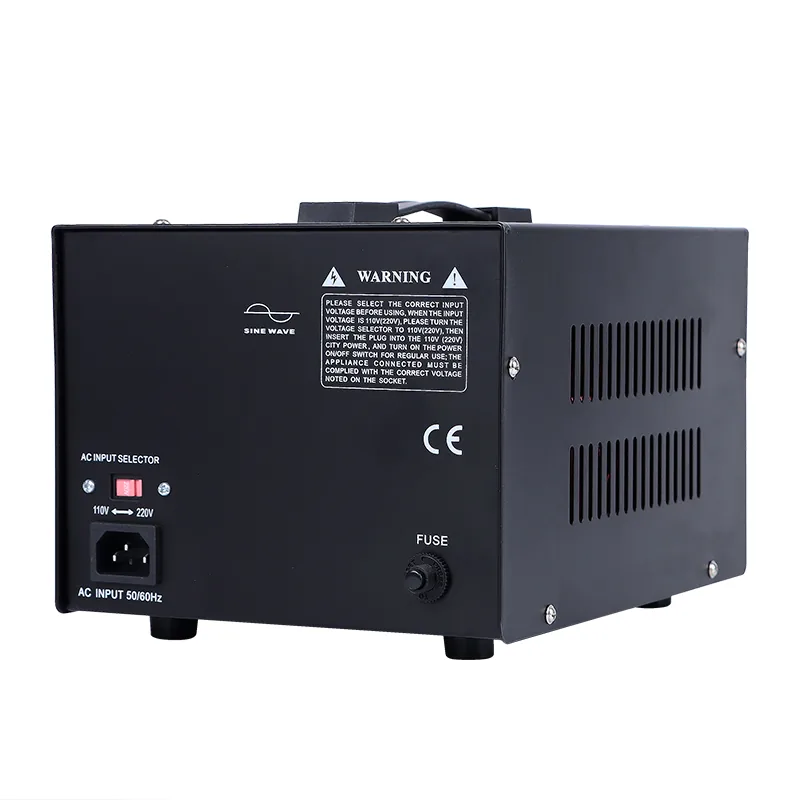
Safety and Compliance in European Homes
European sockets are earthed and the supply is protected by building breakers, but your transformer is the final line of defence. Buy a unit with a recognised certification mark and an internal thermal cut-out; avoid unmarked converters sold purely as travel trinkets. Connect the transformer to the wall first, wait a few seconds, then plug in the appliance. If the transformer hums loudly, smells hot or trips repeatedly, you are overloaded: step down to a larger VA rating. If you also need to run European 230V equipment in the US, the reverse situation is covered in our 120V to 240V step up transformer guide, and the general principle in step up transformer 110V to 220V.
Frequently Asked Questions
US Appliance Voltage: 110V, 120V, and the Tolerance Question
US appliances are rated 110V or 120V, and the difference matters less than most buyers think, because both run within the same practical range. A US appliance rated 110V runs fine on 115V output, and one rated 120V is designed for the slightly higher US nominal. The important number is the transformer output: a 220V to 110V unit typically delivers 105 to 115V at no load, which is within tolerance for both 110V and 120V-rated appliances. What matters more is that the output is not too high, because feeding 130V into a 110V appliance shortens its life. Our step-down transformers are wound to deliver the correct output within a few percent, and the batch test report confirms the measured voltage. If you are buying for a mix of 110V and 120V appliances, a standard 110V output unit covers both.
The Frequency Question for US Appliances
US appliances are designed for 60Hz, and most of the world, including Asia, Europe, the Middle East, and Africa, runs on 50Hz. A transformer converts voltage but does not change frequency, so a US appliance that relies on 60Hz for motor speed, such as a turntable, a clock, or some fans, will run slower or differently on 50Hz. Modern electronics with switched-mode power supplies accept both frequencies, and most motor appliances tolerate the difference. All our transformers are rated for both 50Hz and 60Hz, so the voltage conversion is always correct. If you are importing US appliances for resale in a 50Hz country, check which models are frequency-sensitive, because a blender or a power tool that runs slightly differently may still be acceptable, while a clock that loses time is not.
Where US-Spec Appliances Come From and Why They Fail
US-spec appliances end up in 220V countries through expats, military families, online purchases, and hand-carry luggage, and most failures happen the same way: the appliance is plugged directly into a 220V socket without a transformer. The result is usually a blown power supply, a damaged motor, or a fried circuit board, and it happens in seconds. The fix is simple and cheap: a step-down transformer sized for the appliance. The second most common failure is an undersized transformer that trips under load, which is why sizing matters. The third is using an electronic converter instead of a transformer for a motor load, which cannot handle the surge. If you know someone with a US appliance in a 220V country, the transformer is the difference between years of service and an expensive repair. Our engineers will confirm the right size for your appliance list.
The Step Down Transformer: What It Does and Does Not Do
A step down transformer is a simple, reliable device, and knowing its limits prevents disappointment. It lowers the voltage from your wall socket to the level your appliance expects, so a 220V country can run a 110V US appliance safely. It does not change the frequency, so a 60Hz appliance in a 50Hz country relies on the appliance’s own tolerance. It does not regulate the voltage, so an unstable supply still passes through with a reduced output. It does not protect against surges, so a surge protector is still needed for sensitive electronics. It does, however, handle continuous loads and motor surges that electronic converters cannot, which is the core reason buyers choose a transformer. Understanding these limits is what lets you use the transformer correctly, and it is the advice we give every buyer before they order.
Transformer vs Electronic Converter: When Each Makes Sense
The choice between a transformer and an electronic converter comes down to the load. An electronic converter is light, cheap, and fine for laptops, phone chargers, and other light electronics that draw a steady current. It struggles with motors, compressors, and anything with a start-up surge, and it can fail or shut down when the load is inductive. A transformer is heavier and costs more, but it handles continuous loads, motors, and surges without complaint, and it lasts for years. For a US appliance in a 220V country, the decision is simple: light electronics can run on either, motor and heating loads need the transformer. Our step-down transformers are copper-wound and rated for continuous duty, so they cover the loads that electronic converters cannot. If you are buying for a mix, the transformer covers everything, and the few extra dollars buy reliability.
Can I use a US appliance in Europe with just a plug adapter?
Only if the appliance label says 100-240V. If it says 110-120V only, an adapter does not change the voltage and the appliance will be damaged on the 230V supply. Use a step down transformer 220V to 110V instead.
What size step down transformer do I need for Europe?
Size it from the appliance nameplate: watts or amps times 120V, plus 20-30% headroom. A 1500W hairdryer needs 2000VA; a 350W blender needs 500VA. The Wilmall ST-2000 covers most single high-draw appliances.
Will 50Hz in Europe damage my 60Hz US appliance?
Usually not. A step down transformer 220V to 110V passes the 50Hz frequency through unchanged; resistive heaters and switch-mode electronics are fine, and motors just run slightly slower. Only synchronous clocks and some turntables will run slow.
Can I run a US refrigerator in Europe on a transformer?
Yes, but it is a heavy load. A US refrigerator running at 150-600W can surge above 2000W at compressor start-up, so choose a 2000VA transformer with RCD protection like the ST-2000, or the 3000VA STU-3000 for extra margin.
Living in Europe with US appliances is easy once you understand the 230V vs 120V difference and fit each device with the correct step down transformer 220V to 110V. Not sure which VA rating your appliance needs? Email sales@wilmall.com or WhatsApp +86 19730226757 with the nameplate photo and we will reply with the right size and a factory-direct price.