What Size Transformer Do I Need for a Refrigerator?
You bought an American 110V refrigerator for your home in a 220V country, or you are relocating and want to take a fridge with you. Before you plug it in, you need to answer one question: what size step down transformer for a refrigerator is actually required? Refrigerators are not like phone chargers. They have compressors that draw a large surge current every time they start, so undersizing a step down transformer 220V to 110V is the most common cause of failure. This guide shows you how to size it correctly.
A typical household refrigerator rated 120V draws anywhere from 150W to 600W while running, but its starting surge can be three to five times that for a few seconds. If your transformer is barely big enough for the running load, the compressor will stall on start-up, the fuse will blow, or the transformer will overheat. The fix is a simple calculation that takes about two minutes.
How Refrigerator Power Draw Works: Running vs Surge
Every refrigerator has two power figures that matter. The running wattage is what the compressor consumes after start-up, typically 100W to 400W for a standard 300-500 litre model, plus a small draw for the interior light and defrost heater. The starting surge is much higher: a sealed compressor can draw 3 to 5 times its running current for 0.1 to 1 second while it builds up pressure. Older and larger units are worse; some chest freezers surge above 2000W.
This is why the VA rating of the transformer, not the running watts of the fridge, sets the minimum size. A transformer rated 1000VA can supply about 1000W of continuous load, but it also has a short-term overload capability of roughly 150% for a few seconds – just enough to cover a normal compressor start. The rule used by electricians is: transformer VA should be at least 1.5 to 2 times the refrigerator running wattage.
Step Down Transformer Size for a Refrigerator: 220V to 110V
To size a step down transformer 220V to 110V for a refrigerator, find the nameplate inside the fridge door or on the rear panel. It lists the voltage (usually 110-120V), the current in amps (A) or the power in watts (W). If you only have amps, multiply by 110V to get watts. For a fridge rated 5A at 120V, running watts are about 600W, and the recommended transformer size jumps to 1000VA or 1500VA once surge is included.
| Refrigerator Type | Running Watts | Recommended Transformer |
|---|---|---|
| Mini fridge (50-90L) | 60-120W | 500VA |
| Single door (150-250L) | 150-300W | 1000VA |
| Double door (300-450L) | 250-450W | 1500VA |
| Side-by-side / French door | 400-700W | 2000VA |
| Chest freezer | 200-500W | 2000VA |
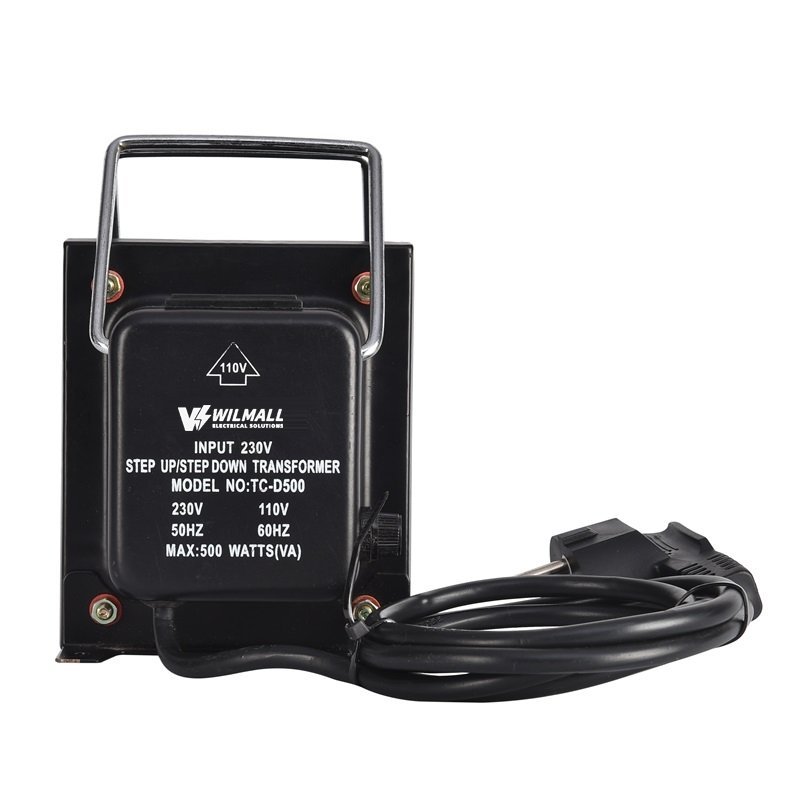
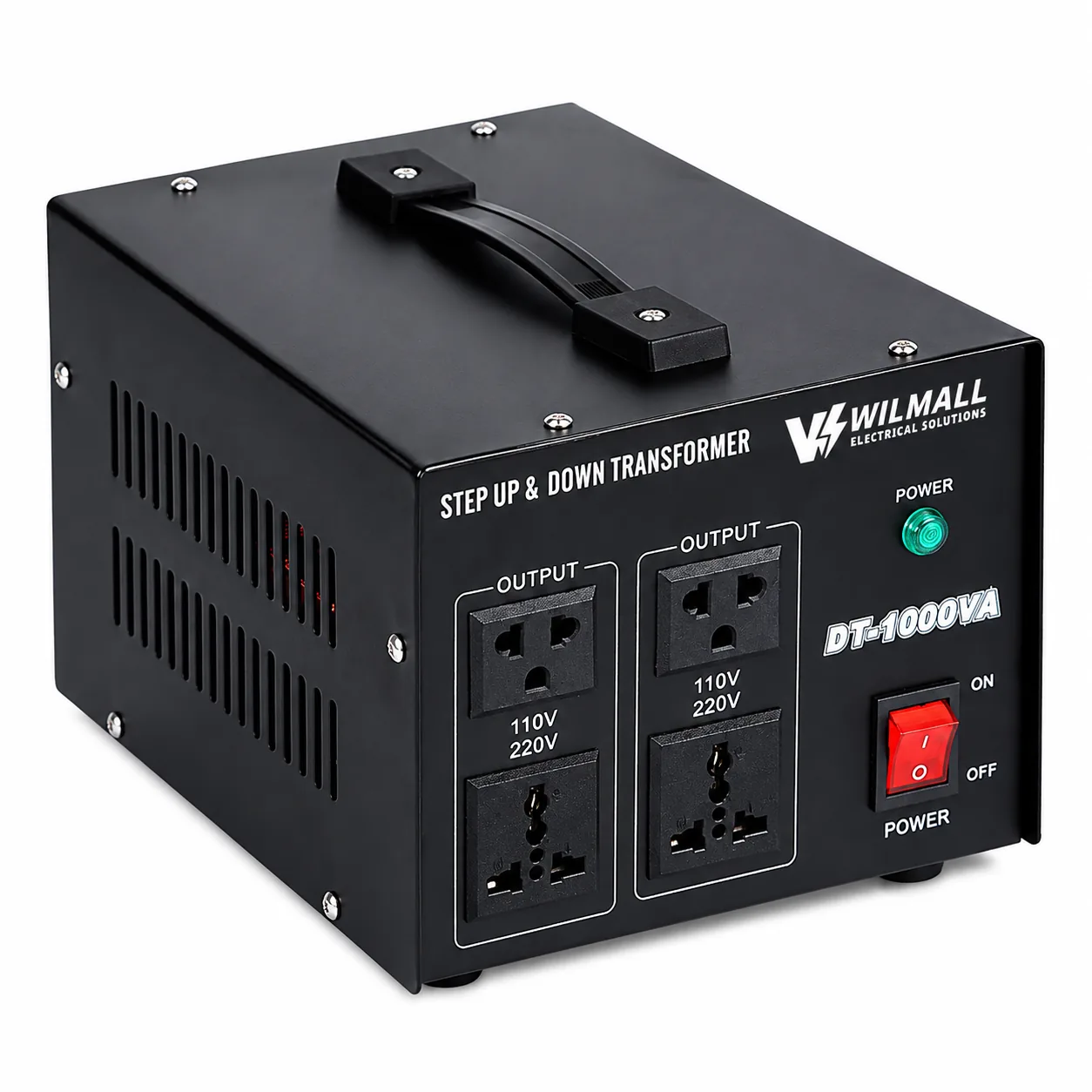
The Wilmall ST-2000 step down transformer covers most household refrigerators and freezers with its 2000VA capacity and built-in RCD. For smaller units, the 1000VA class works, but always confirm the nameplate figure before ordering. You can double-check your number with the transformer sizing calculator.
Compressor Type, Frequency and RCD Protection
Three extra factors decide whether your step down transformer will run a refrigerator reliably for years. First, compressor type: inverter compressors ramp up smoothly and have a low surge, so a smaller transformer margin works; fixed-speed compressors need the full 1.5-2x rule. Second, frequency: a 60Hz refrigerator run on a 50Hz supply runs slightly slower and its compressor current rises; most modern sealed units tolerate this, but a transformer with a fuse protects you if not.
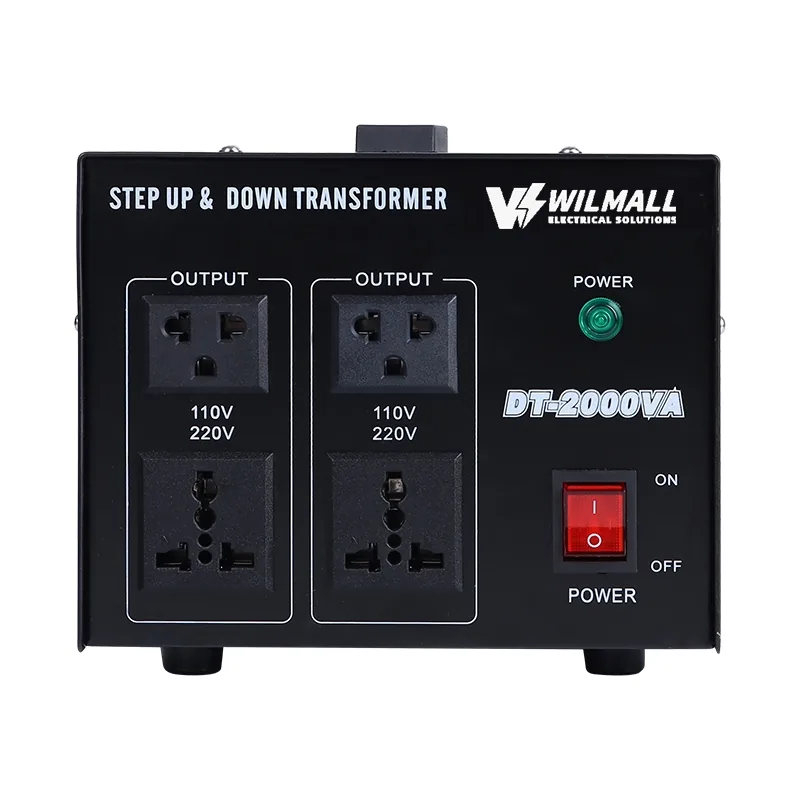
Third, protection: a transformer with a residual current device (RCD) or circuit breaker built into the output is strongly recommended for a 24/7 load like a refrigerator. The ST-2000 includes RCD protection, so if a winding fault develops while you sleep, the unit trips instead of letting the compressor overheat.
Step-by-Step Installation and Safety
Installing a step down transformer for a refrigerator is straightforward. Place the transformer in a ventilated spot at least 10cm from walls; plug the transformer into a grounded wall socket, not an extension lead; wait 3-5 seconds for it to energise; then connect the refrigerator and switch it on. During the first hour, check that the transformer case stays below about 60 degrees Celsius. A transformer that runs hot all day will degrade its insulation and shorten its lifespan.
Never connect a refrigerator through a voltage stabiliser intended for air conditioners unless it is clearly marked as a transformer; stabilisers do not convert 220V to 110V. If you are also powering an air conditioner, see our what size transformer for an air conditioner guide, which follows the same surge-based logic.
Frequently Asked Questions
Refrigerator Sizing: The Compressor Surge Explained
Refrigerators are the appliance that most often reveals an undersized transformer, because of the compressor surge. A typical US-spec fridge draws 150W to 200W running, but the compressor can spike to 500W to 800W for a few seconds at start-up, and a freezer can spike higher. If the transformer is sized on the running watts alone, it trips or sags the moment the compressor starts, and repeated trips can damage both the transformer and the fridge. The practical rule is to size a fridge at three times its running watts, which puts a standard fridge on a 2000VA transformer and a fridge-freezer on 3000VA. The compressor also starts and stops throughout the day, so the transformer must handle the cycling without overheating. If you send us the fridge model or its nameplate rating, we will confirm the exact size.
Fridges, Freezers, and Dual-Voltage Reality
Before sizing a transformer for a fridge, check whether the fridge needs one at all. Many modern refrigerators sold in Asia, Europe, and the Middle East are dual-voltage or 220V-only, and a US-spec 110V fridge brought over is the one that needs the step-down transformer. The nameplate will tell you: 110-120V means it needs a transformer in a 220V country, 100-240V means it does not. For the US-spec fridge that does need one, the transformer must also handle the compressor’s locked-rotor current, which is why we size refrigerators more conservatively than other appliances. For resellers, this distinction matters, because advising a customer that their fridge needs no transformer saves them money, and advising the opposite prevents a damaged compressor. When in doubt, the nameplate and the advice of our engineers settle it.
RCD Protection for Refrigerators and Kitchen Circuits
A refrigerator runs 24 hours a day, so the transformer feeding it runs continuously, and continuous duty raises the importance of protection. A thermal cut-out protects the transformer from overheating, and a fuse protects the wiring. For the circuit itself, an RCD protects against earth leakage, which matters in humid kitchens and older wiring. Our ST series includes a fuse and thermal protection, and the STU adds RCD protection. The placement of the transformer matters too: keep it off the floor, away from the fridge’s heat exchanger, and in a ventilated spot. A fridge compressor that cycles on and off stresses the transformer most at the moment of start, so the margin in the sizing is what keeps the unit cool and long-lived. If you are running a fridge through a transformer, size it right and protect it, and it will run for years.
Voltage Dips, Brownouts, and the Refrigerator
Refrigerators are also the appliance most exposed to unstable power, because they run 24 hours a day. In areas with brownouts or voltage dips, the compressor struggles to start, the current spikes higher, and the transformer takes the strain. If your supply is unstable, add more margin, and consider whether the transformer alone is enough. A transformer converts voltage but does not regulate it, so a supply that sags to 180V still passes a reduced output to the appliance. For genuinely unstable power, a stabilizer or AVR between the mains and the transformer, or a transformer with a wider input tolerance, is the honest solution. Our STU series handles a wider input range, and we can build units with extended tolerance for difficult sites. If you run a fridge in an area with frequent brownouts, tell us your typical voltage range, and we will confirm the right setup.
Refrigerator Placement and Transformer Ventilation
Where you place the transformer matters as much as the size when it feeds a fridge. The transformer runs continuously, so it needs ventilation on all sides, and it should not sit next to the fridge’s heat exchanger, which pushes hot air out. Keep it off the floor, away from water sources, and out of direct sunlight. In a small kitchen, a wall shelf above the fridge line is a practical spot. The transformer should feel warm, not hot, after an hour of running the fridge. If it feels hot, either the sizing is too tight or the ventilation is inadequate, and both should be fixed rather than ignored. A fridge-fed transformer that runs cool will last many years, and the placement is free. Our engineers can advise on the best position for your layout when you order.
What size step down transformer do I need for a refrigerator?
A standard 150-450 litre refrigerator needs a 1000VA to 2000VA step down transformer 220V to 110V, because the compressor surge is 3-5 times the running watts. Check the nameplate, multiply amps by 110V to get watts, then choose 1.5-2 times that value.
Can I run a 110V refrigerator on a 220V outlet?
Only through a step down transformer 220V to 110V. Plugging the fridge straight into 220V doubles the voltage and will burn out the compressor and the sealed unit within seconds or minutes. A correctly sized transformer such as the Wilmall ST-2000 makes it safe.
Is a 1000VA transformer enough for a refrigerator?
For a small single-door fridge up to about 250L, yes. For larger double-door or side-by-side units, choose 1500VA or 2000VA. The transformer must handle the compressor starting surge, not just the running watts, otherwise it will trip or overheat.
Do refrigerators need a transformer with RCD protection?
It is strongly recommended because a refrigerator runs 24 hours a day. A transformer with an RCD, like the ST-2000, disconnects the load if leakage current appears, preventing overheating and fire risk while the fridge is unattended.
Choosing the right step down transformer for your refrigerator is a two-minute calculation that protects a major appliance for a decade. If you are not sure which VA rating fits your model, send the nameplate photo to sales@wilmall.com or WhatsApp +86 19730226757 and we will confirm the size the same day. For a wider overview, read our how to choose a 220V to 110V step down transformer guide.