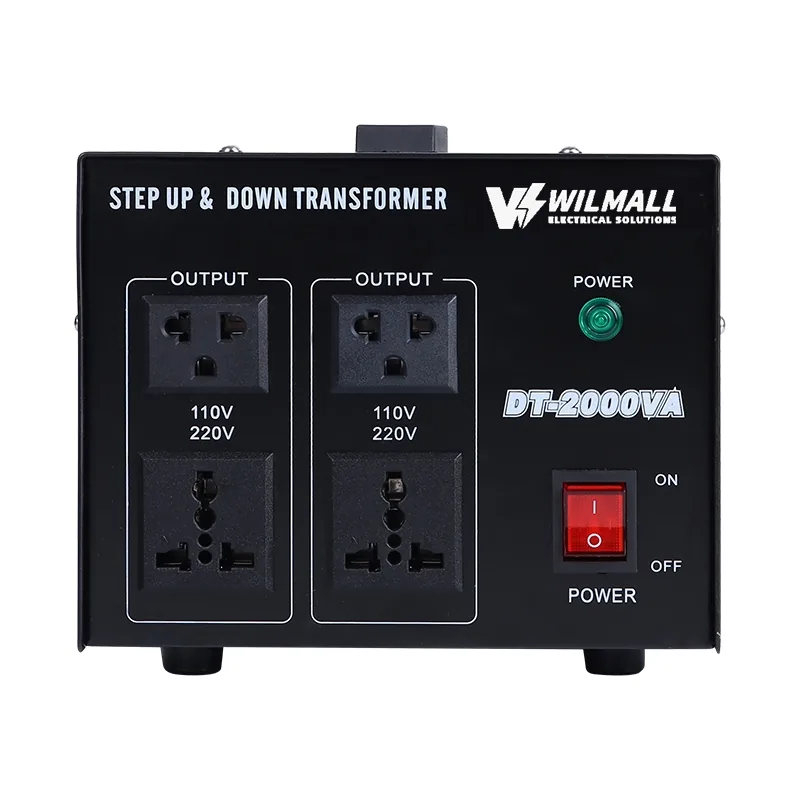
How to Choose a 220V to 110V Step Down Transformer
Buying a 220V to 110V step down transformer starts with one simple question: what does the mains voltage in your country actually deliver? Roughly 70 percent of the world runs on 220V to 240V power, while the United States, Canada, Japan and parts of Latin America use 110V to 120V. If you import a 110V appliance into a 220V country, or travel with American equipment, a step down transformer converts the wall voltage so your device runs safely and lasts for years. This guide walks through the five decisions that matter, with real wattage examples, a sizing table and safety rules you can apply today.
What a 220V to 110V Step Down Transformer Does
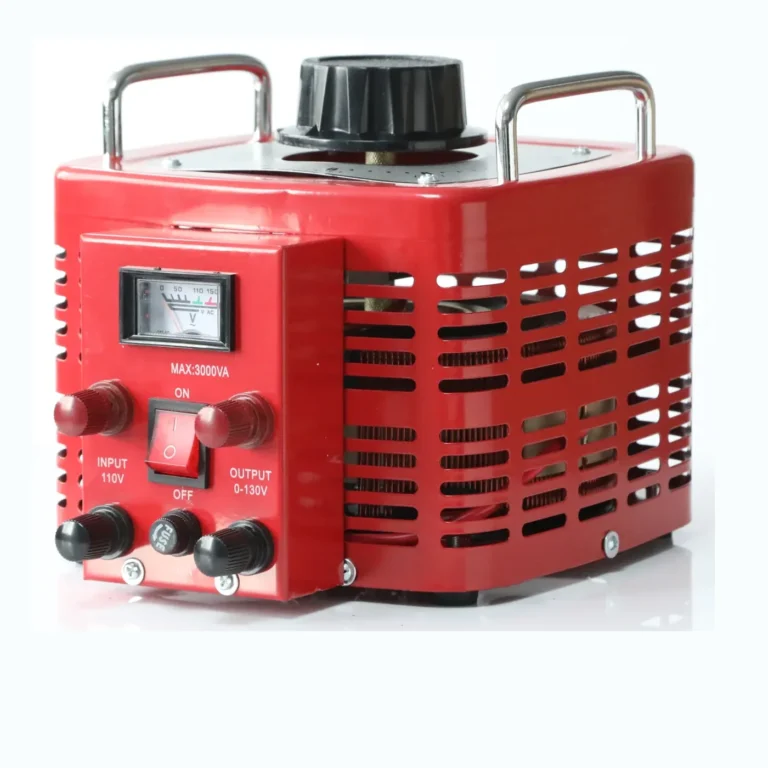
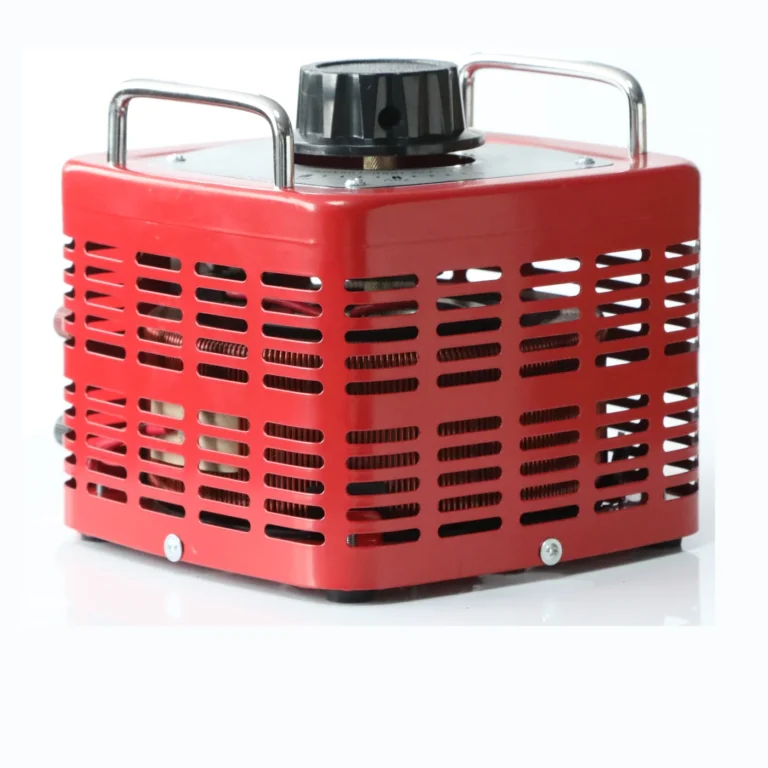
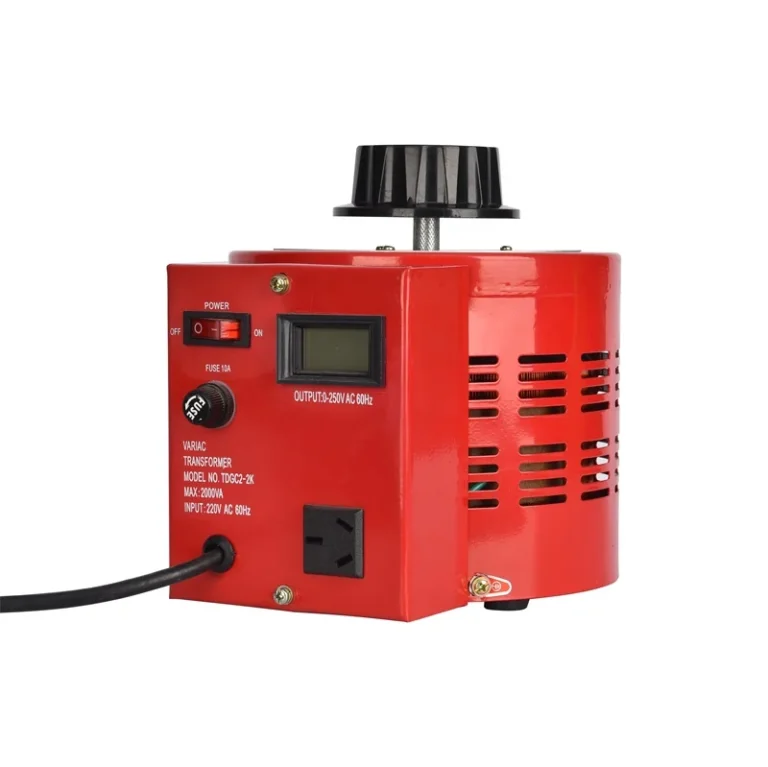
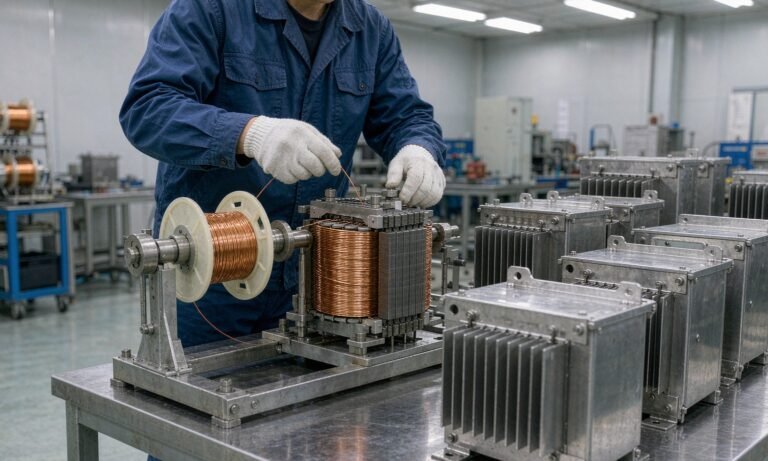
A step down transformer lowers the incoming voltage from 220V to 110V. Inside, copper or aluminium windings on a laminated steel core reduce the voltage through electromagnetic induction. Because it is a genuine transformer rather than a lightweight converter box, it handles continuous loads such as motors and compressors without overheating. That is why kitchen appliances, power tools, medical devices and audio equipment all depend on them in mixed-voltage regions.
Wilmall’s ST-2000 step down transformer, for example, delivers 2000VA from a 220V input to a 110V output and includes an RCD safety switch. The VA rating tells you how much continuous power the unit can supply, and choosing the correct one is the single most important step in this whole guide.
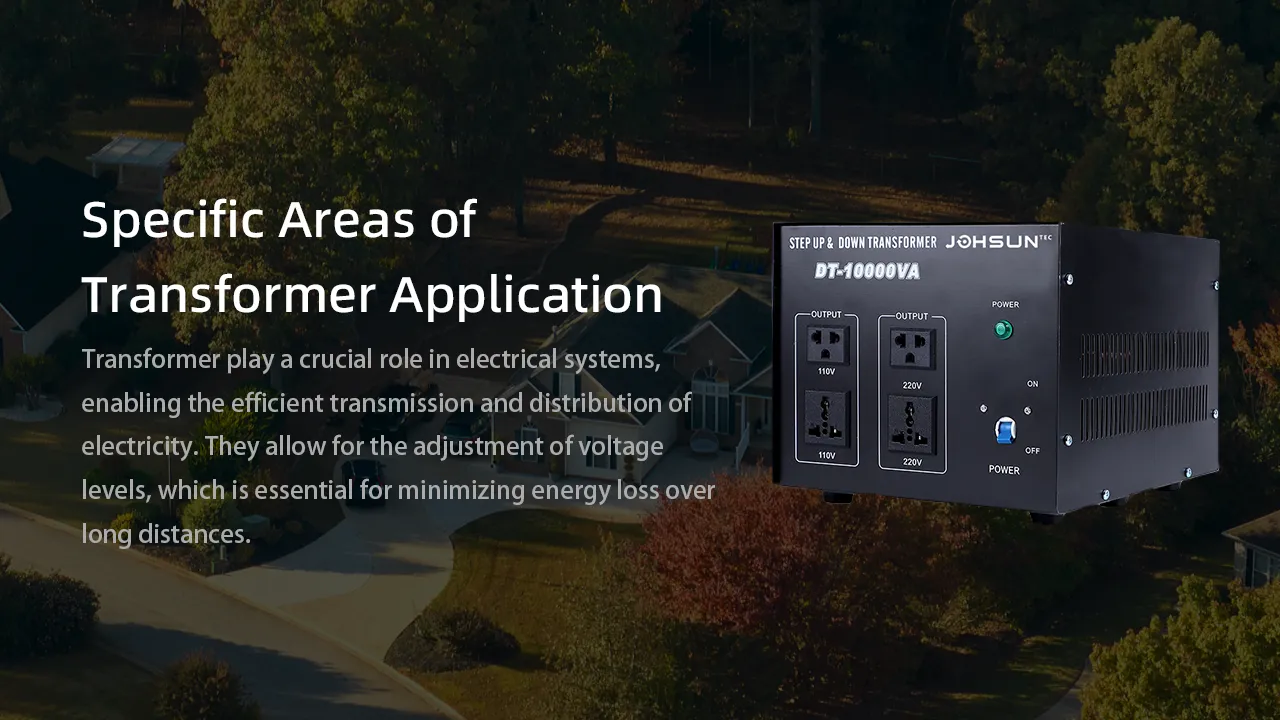
Step 1: Confirm Your Country’s Mains Voltage and Frequency
Before anything else, confirm the wall voltage where the transformer will run. Most of Asia, Africa, the Middle East and Europe use 220V to 240V at 50Hz. North America and Japan use 110V to 120V at 60Hz. A standard 220V to 110V step down transformer is designed for 50Hz input, which matches the grid in the vast majority of emerging markets. Check the exact figures for your market in our voltage by country guide before you buy.
Frequency matters less for resistive loads such as heaters, but motor-driven appliances can run slightly slower or warmer on the wrong frequency. If your appliance label says 110V 60Hz only, a quality 220V to 110V transformer at 50Hz input will still run it, though you should size the unit with extra headroom for motor start-up current.
Step 2: Add Up the Wattage of Everything You Will Plug In
The transformer rating must cover the total wattage of every appliance connected at the same time. Find the wattage on the appliance nameplate or the power adapter label. Typical values for common devices are:
- LED TV and soundbar: 120 to 250W
- Laptop and phone chargers: 60 to 90W
- Air conditioner (1 ton): 900 to 1200W
- Refrigerator: 150 to 300W while running, up to 900W at compressor start
- Microwave oven: 800 to 1500W
- Electric kettle: 1000 to 1500W
Write down the wattage of every device you plan to run, then add the numbers together. If you ever plug in two heavy appliances at once, add both. This total is your working load, and it must sit comfortably below the transformer rating.
Step 3: Size the Transformer with a 20 to 30 Percent Safety Margin
Never buy a transformer rated exactly at your load. Motors and compressors draw two to five times their running current for a second or two on start-up, so an undersized unit will sag, hum loudly, trip its breaker or overheat. The rule is simple: take your total load and multiply by 1.2 to 1.3, then round up to the nearest standard rating.
| Total appliance load | Recommended transformer VA | Example unit |
| 300W | 500VA | Wilmall 500VA |
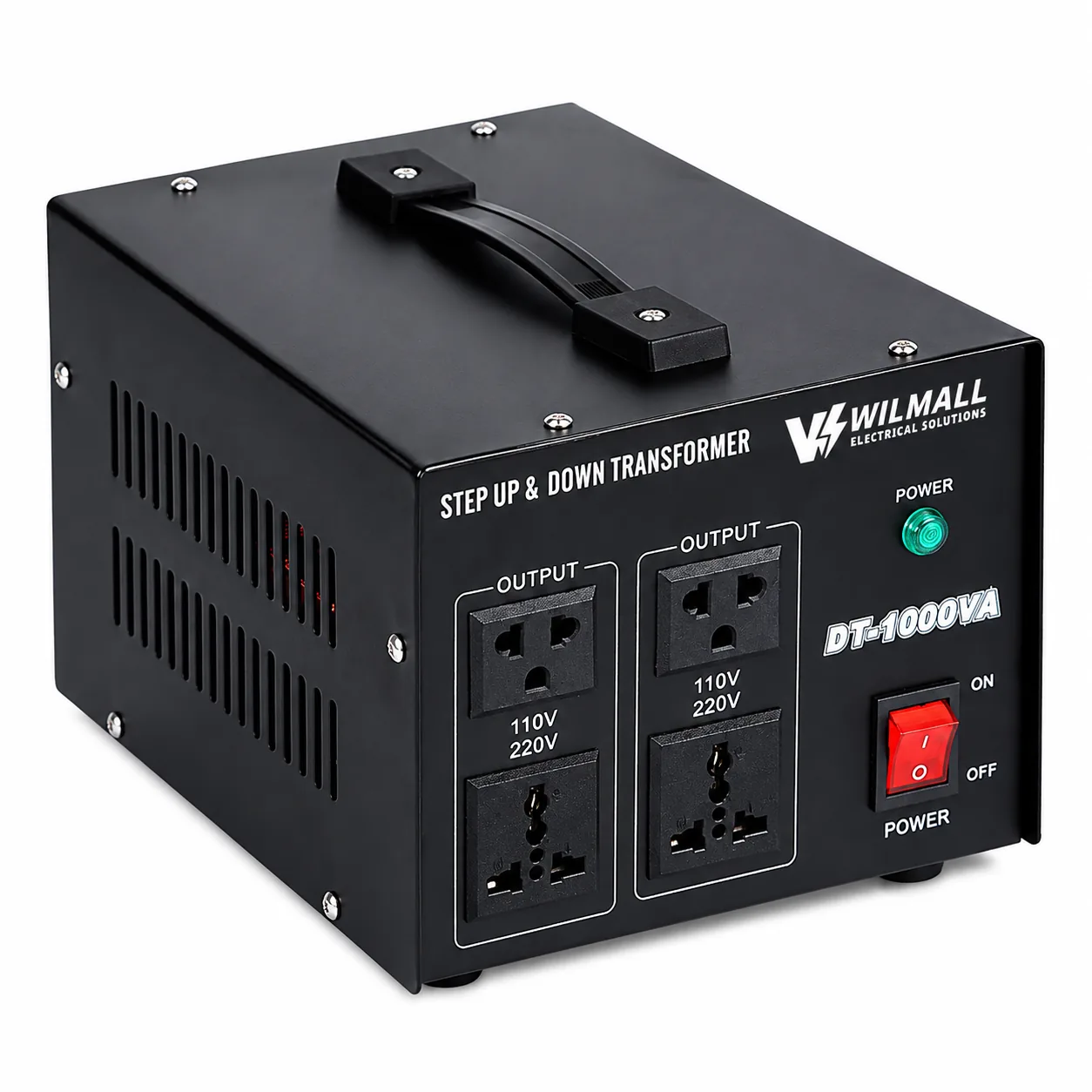
| 600W | 1000VA | Wilmall DT-1000VA |
| 1000W | 1500 to 2000VA | Wilmall ST-2000 (2000VA, with RCD) |
| 2000W or more | 3000 to 5000VA | Wilmall STU-3000 / STU-5000 |
For a home setup with a refrigerator, TV and a few chargers, a 2000VA unit such as the ST-2000 covers everything with room to spare. For heavy single appliances, check our transformer sizing calculator to compute the exact VA in seconds.
Step 4: Choose Between Auto Transformer and Isolation Transformer
Two internal designs exist, and the choice changes cost, weight and safety. An autotransformer shares a single winding between input and output, making it lighter, cheaper and more efficient; it is the common choice for 220V to 110V conversion at home. An isolation transformer uses two separate windings, providing complete electrical separation between grid and appliance. Buy isolation if you run sensitive medical or lab equipment, or if you want maximum protection against surges and earth faults.
For daily household use with TVs, kitchen appliances and tools, a quality autotransformer is perfectly safe when it includes thermal protection and an RCD. If you need both directions, a bidirectional unit like the DT-1000VA converts 220V to 110V and 110V to 220V automatically, which suits traders and travellers who ship appliances both ways.
Step 5: Check Safety Features, Casing and Certifications
Look for a metal or flame-retardant enclosure, a thermal cut-off that shuts the unit down before it overheats, and a resettable circuit breaker or RCD on the output side. The ST-2000 includes an RCD, so it cuts power instantly if leakage current appears. Check the input cable and socket quality too; a factory-built unit with properly rated wiring is far safer than a cheap unbranded box. Wilmall products are built in our own factory in Yueqing, China, with 100 percent inspection before shipment.
Regional Setup Notes
Middle East
Gulf countries run 220V at 50Hz, and many homes import US appliances. A 2000VA step down transformer handles a refrigerator, TV and chargers, while a 3000VA unit supports an air conditioner as well.
Southeast Asia
Indonesia, Vietnam, the Philippines and Thailand all use 220V to 230V. Check each appliance individually, because some US-brand electronics in this region already accept 100V to 240V and need no transformer at all.
Africa
Nigeria, Kenya, Ghana and South Africa run 220V to 240V. Voltage fluctuation is common, so choose a unit with thermal protection and avoid running the transformer at more than 80 percent of its rating during hot weather.
The 30% Rule and Motor Surge in Kitchen Appliances
Kitchen appliances sit at the heart of the sizing question, because they combine heavy loads with frequent use and some have motors. A kettle at 1500W, a toaster at 900W, and a microwave at 1200W are resistive or semi-resistive loads, and they size at running watts plus 30 percent. A blender, a mixer, or a food processor has a motor, so its start-up surge can be two to three times the running watts. A fridge or freezer in the kitchen has a compressor that spikes hardest of all. The practical approach for a kitchen running US-spec appliances through a 220V to 110V transformer is to list everything that runs at the same time, add the 30 percent margin, and for motor loads use the surge figure. Most kitchens need 2000VA to 3000VA, and 5000VA covers a kitchen with a fridge and multiple countertop appliances.
Which Kitchen Appliances Actually Need a Transformer?
Not every kitchen appliance needs a transformer. Many modern appliances sold internationally are dual-voltage, marked 100-240V, and they run on 220V with just a plug adapter. The appliances that genuinely need a step-down transformer are the US-spec units, rated 110V or 120V only, which include many blenders, mixers, coffee makers, and some small kitchen tools. The reliable way to know is to read the nameplate: if it says 110-120V only, it needs a transformer in a 220V country; if it says 100-240V, it does not. For resellers, this distinction matters, because it changes the advice you give customers and the stock you carry. When you buy a transformer for kitchen appliances, check the nameplate of each appliance first, and size the transformer for the ones that actually need it, not the whole countertop.
Copper Windings and Thermal Protection in Kitchen Use
Kitchen appliances run intermittently but draw high current, which stresses a transformer more than a steady light load. That is why the winding material and the protection features matter. Copper windings run cooler than aluminium for the same load, which matters when a kettle and a toaster run together. A thermal cut-out protects the transformer if it overheats, and a fuse protects the wiring if something shorts. Our step-down transformers for kitchen use are copper-wound with a fuse and thermal protection as standard, and the STU series adds RCD protection for extra safety in a kitchen environment. The placement also matters: keep the transformer off the countertop, away from water and steam, and in a ventilated spot. A kitchen transformer that is correctly sized and protected will run for years without a complaint.
What is the difference between a 220V to 110V and a 110V to 220V step down transformer?
The direction of conversion. A 220V to 110V step down transformer powers US appliances in 220V countries, while a 110V to 220V unit does the reverse. If you ship appliances both ways, a bidirectional model like the Wilmall DT-1000VA detects the input voltage and switches automatically between 220V to 110V and 110V to 220V.
How do I know if my appliance needs a step down transformer?
Check the nameplate or power adapter label. If it says 100-240V, the device accepts any mains voltage and needs no transformer. If it says 110V or 120V only, you need a 220V to 110V step down transformer to run it safely in a 220-240V country, especially for motor-driven appliances.
Autotransformer or isolation transformer: which should I choose?
For everyday home use with TVs, kitchen appliances and tools, a quality autotransformer is lighter, cheaper and more efficient, and it is safe when it includes thermal protection and an RCD. Choose an isolation transformer for sensitive medical or laboratory equipment, where complete electrical separation between grid and appliance matters.
What size transformer do I need for a refrigerator?
A US refrigerator draws 150W to 300W while running but can surge to 900W when the compressor starts. A 1000VA transformer runs it technically, but 1500VA to 2000VA is the safer long-term choice because the fridge cycles on and off all day. Match the transformer to the fridge plus any other appliance you will plug in nearby.
Get a Factory Quote
You now know your voltage, your load and the right VA rating. The next step is simple: contact Wilmall Transformers for a factory-direct quote. Send your appliance list and country to sales@wilmall.com or WhatsApp +86 19730226757, and our engineers will confirm the right 220V to 110V step down transformer for your market, with MOQ from 10 pieces and lead time of 15 to 25 days. You can also browse the full step down transformer range and request a free quote directly.