Step Down Transformer for Hotels: 220V to 110V Guide
A hotel sitting on 220V mains with 110V guest room appliances has a very specific problem on its hands. The hairdryers, the irons, sometimes the TVs and the coffee makers were all bought on a 110V specification, and the wall socket in Dubai or Abu Dhabi is going to hand you 220V at 50Hz. Plug one of those appliances in directly and you will hear a pop, followed by a smell you will not forget in a hurry. So somebody in procurement ends up hunting for a step down transformer for hotel use, working out how many units are needed, and getting them on site before the next group checks in.
I work at a transformer factory in Yueqing, China, and hotel orders land on my desk every month. Some are thirty units for a new boutique property. Some are four hundred for a chain rolling out across the Gulf. The questions that come with them are almost always the same five or six, so let me answer them here the way I would answer over WhatsApp, without the sales brochure voice.
Why a Hotel on 220V Mains Still Ends Up Needing 110V
The short answer is that voltage at the wall and voltage at the plug are two different decisions. A hotel can be wired to 220V and still be full of 110V hardware, and there are three ways that happens in practice.
The most common one is a brand standard. A chain signs off on one hairdryer model for every property worldwide, and that model is built for the North American market at 120V. The property in the UAE gets the same unit as the property in Texas, because procurement wants one part number and one spare parts shelf. Second is imported commercial kit. Spa tables, gym equipment, some laundry and kitchen machines get bought from US suppliers, and they arrive with 110V plugs on them. Third is the guest side. Travellers from Canada or the States bring laptops, shavers, cameras and CPAP machines, and a good front desk will keep a couple of small converters behind reception for exactly that reason.
One thing I want to be straight with you about, because it catches people out. A transformer changes voltage. It does not change frequency. If your property runs 220V at 50Hz and your appliance was built for 120V at 60Hz, a step down transformer will still deliver a clean 110V, but the appliance will see 50 cycles instead of 60. Hairdryers, irons, kettles and most heating elements genuinely do not care. Anything with a cheap synchronous motor inside, like a plug-in alarm clock or some older turntables, will run slow. That is a physics conversation, not a transformer defect, and it is worth knowing before you buy three hundred units.
Which Guest Room Appliances Actually Need One
When a hotel buyer sends me a room list, I go through it line by line and sort the appliances into “needs a transformer” and “does not”. Here is what usually falls on the yes side.
- Wall-mounted hairdryers rated 1200W to 1800W. This is the biggest single draw in most guest rooms and the one that decides your VA size.
- Clothes irons at roughly 1000W to 1800W. Resistive, so they behave well on a transformer, but they pull hard while heating.
- Kettles and coffee makers, typically 900W to 1500W. Same story, purely resistive.
- Televisions, set top boxes and streaming sticks at 50W to 200W. Small load, but these are the units that get plugged in and left on for hours.
- Air purifiers, tower fans and small humidifiers, usually 40W to 120W.
- Bedside clocks, charging docks and shaver sockets, well under 100W in most cases.
- Suite extras like a kitchenette microwave or a mini bar, which is where a bigger unit starts to make sense.
What does not need one, and I say this often enough that I should put it in writing: laptops, phone chargers, camera chargers and most modern TVs with a wide input range. Look at the label. If it reads 100-240V, 50/60Hz, that device is already happy on your 220V supply and a transformer will only add a box on the floor. Checking that label first saves hotels a surprising amount of money on a large order.
How to Size a Step Down Transformer for Hotel Rooms
Here is the method I use, and you can run it on the back of an envelope. Add up the wattage of the appliances that could plausibly be running at the same moment in one room, then add 25 to 30 percent headroom. Do not add up every appliance in the room, because nobody irons a shirt while drying their hair and boiling a kettle. Simultaneity is what matters, not the total inventory.
Take a standard room. Hairdryer at 1600W, iron at 1400W, TV at 120W, clock at 15W. The realistic worst case is the hairdryer running while the TV is on, which is about 1720W. Add 25 percent and you are asking for roughly 2150VA. That pushes you just past a 2000VA unit, so for those rooms we would normally suggest the next size up or a pair of rooms sharing a slightly larger unit. If the room only has a 1400W hairdryer and a TV, a 2000VA unit sits comfortably, and that is exactly the job our ST-2000 was built for.
| Guest room appliance | Typical running watts | Behaviour on a transformer | Sizing note |
|---|---|---|---|
| Hairdryer | 1200 – 1800 W | Resistive, short bursts | Usually the deciding load for the room |
| Clothes iron | 1000 – 1800 W | Resistive, cycles on and off | Count it only if it can run with the hairdryer |
| Kettle or coffee maker | 900 – 1500 W | Resistive, heavy while heating | Add headroom if two heating loads overlap |
| Television or set top box | 50 – 200 W | Steady, long hours | Small, but it is always on |
| Air purifier or fan | 40 – 120 W | Inductive motor, small inrush | Minor, factor it in for suites |
| Laptop or phone charger | 20 – 100 W | Switched mode supply | Usually does not need a transformer at all |
Now scale it to the property. If you have 120 rooms and every room has a hairdryer, the arithmetic says 120 times 1600W equals 192kW, which sounds terrifying and is completely unrealistic. Hotels do not peak that way. Evening demand clusters around maybe 20 to 35 percent of rooms drawing a heating load at the same minute, which for 120 rooms works out nearer 38kW. That is still far too much for one box on a trolley, and it is the point where the conversation moves from plug-in units to distributed or panel-mounted arrangements. Ask us for a load sheet template and we will help you build the number properly rather than guessing.
| Property size | Evening peak, using 30% diversity | Layout we usually suggest |
|---|---|---|
| Up to 20 rooms | Around 10 kW | One unit per room, plus a spare at reception |
| 20 to 60 rooms | 10 – 29 kW | Unit per room for standard rooms, larger units in suites |
| 60 to 150 rooms | 29 – 72 kW | Split by floor or wing, with a central cabinet room |
| 150 rooms and up | 72 kW plus | Panel-mounted distribution, engineered per property |
Per Room Units or One Central Unit?
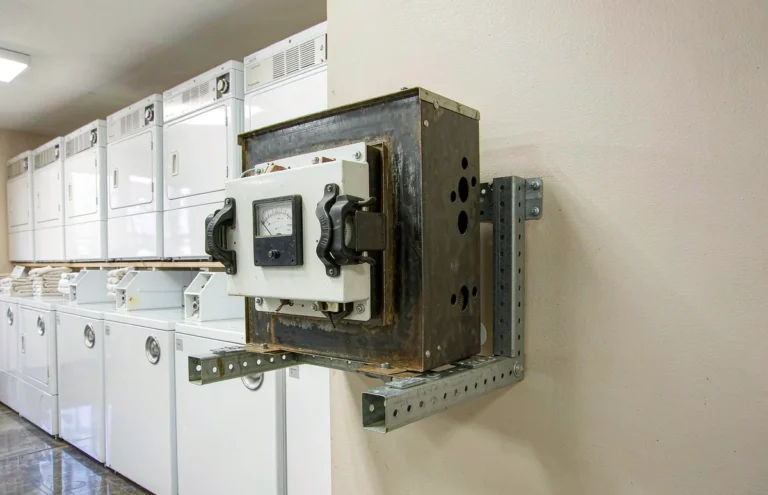
Both layouts work, and the choice usually comes down to your wiring and your maintenance team rather than to price. A per-room arrangement means a small transformer mounted inside the wardrobe or on the wall near the desk, feeding one or two dedicated 110V sockets. Guests plug in, it works, and if a unit ever fails you swap it in ten minutes with a spare from the store room. That is the layout I would pick for a property with more than fifty rooms, because the failure of one box never takes out a whole floor.
A central unit in the electrical room is tidier and cheaper on hardware, but it means running 110V cabling to every room, which is a real construction cost if the building is already finished. It also means a single point of failure. If that unit goes down at nine in the evening, you have a hundred guests with dead hairdryers and a very long night. For retrofit projects, which is what most of our hotel customers are doing, the per-room approach wins almost every time.
There is a middle path worth mentioning. Cluster four to eight rooms onto one larger unit placed in a service corridor. You cut the unit count, you keep the redundancy, and you can still isolate a wing for maintenance without disturbing the rest of the property.
The Units We Actually Build for Hotel Projects
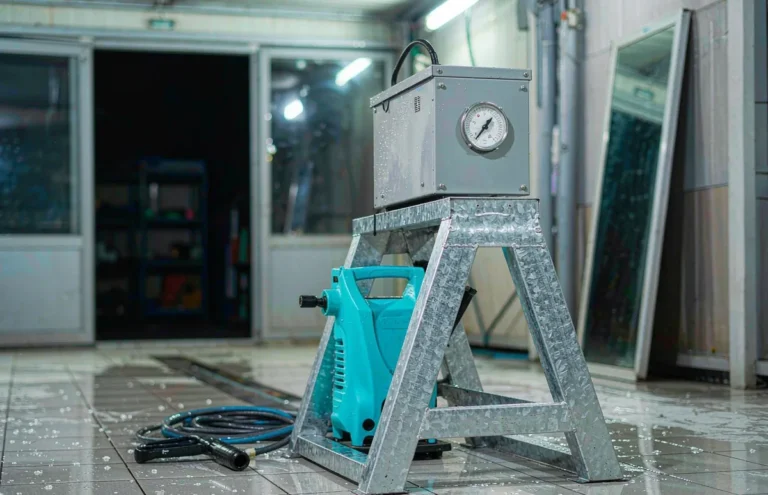
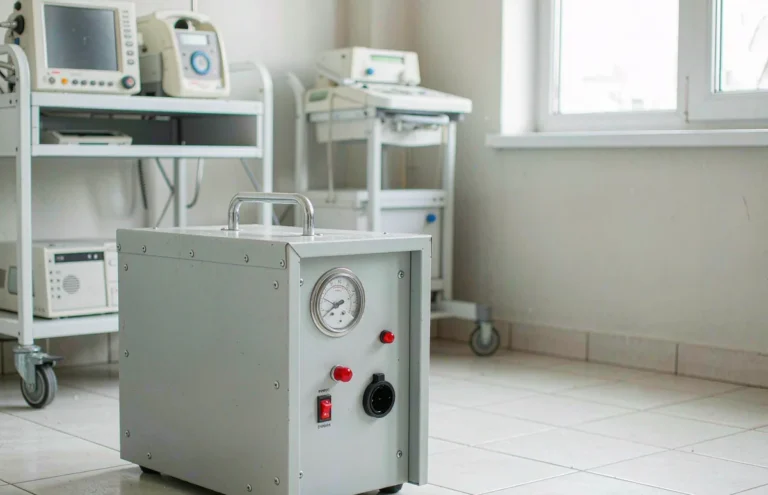
We are not a trading company, so I can tell you exactly what comes off our line. The ST-2000 is a 2000VA step down transformer that takes 220V in and gives you 110V out, and it ships with RCD protection built in. For a standard guest room with a hairdryer, an iron and a TV, that is the unit I put on the quotation nine times out of ten, and the RCD is the reason. A guest with wet hands in a bathroom is not a theoretical risk in this business.
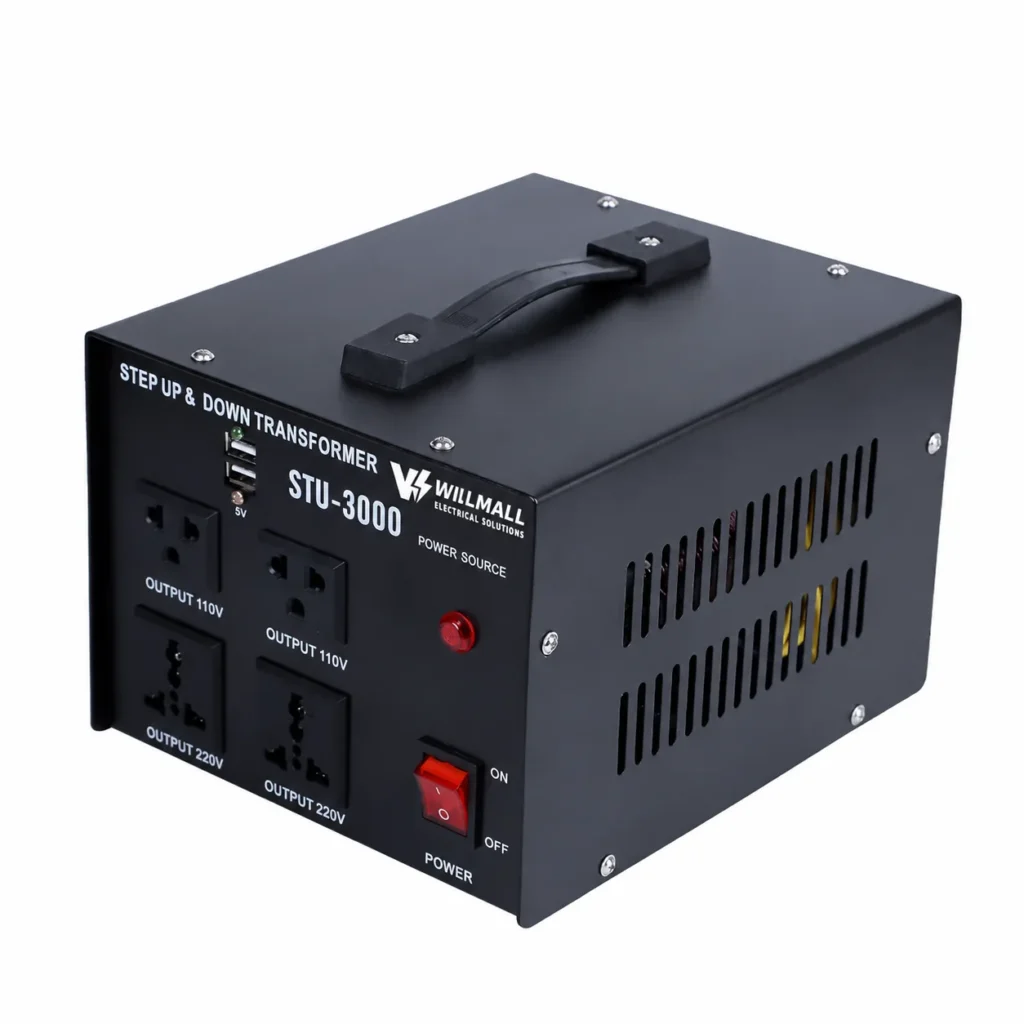
When the load climbs, we move to the STU series. The STU-3000 and STU-5000 are bidirectional, meaning they step up as well as step down, and they are built for the heavier side of hotel work: suites, gym equipment, spa rooms, service kitchens, and those cluster arrangements I mentioned. Bidirectional matters more than people expect, because a property that imports both 110V and 220V equipment will eventually need to go the other way.
The DT-1000VA is our bidirectional automatic unit, and it earns its place in lobbies, offices and IT cupboards where a small load needs to work in either direction without anyone thinking about it. And then there is the Variac range at 500VA, 1KVA, 2KVA and 3KVA. Adjustable voltage does not sound exciting until you are commissioning a building and need to check how a batch of imported appliances behaves at 105V or 115V. Maintenance teams ask for these after the first project, once they realise how useful one is to have on the shelf.
The Safety Details Hotel Engineers Ask About
RCD protection comes up first, and it should. On the ST-2000 it is part of the build, which means a fault on the 110V side trips locally instead of waiting for the building breaker to notice. If you are buying for a property where the socket sits within reach of a basin, do not compromise on this point to save a few dollars a unit.
Ventilation is the one people get wrong. A transformer is a magnetic device and it will get warm under load, so it needs air around it. Mounting one inside a closed timber nightstand or behind a sealed panel is how you turn a good unit into a short-lived one. Give it a ventilated position, keep the vents clear, and it will run for years. Earthing matters too. The enclosure must be bonded to the building earth, and the 110V output should be wired as a proper circuit, not left dangling on an adapter.
One last habit I would push hard on: do not daisy-chain extension leads off a transformer so three rooms can share one unit. It is tempting when the budget is tight, and it is how overloads happen. Size the unit honestly for what will be plugged into it.
MOQ, Lead Time and What a Hotel Order Looks Like
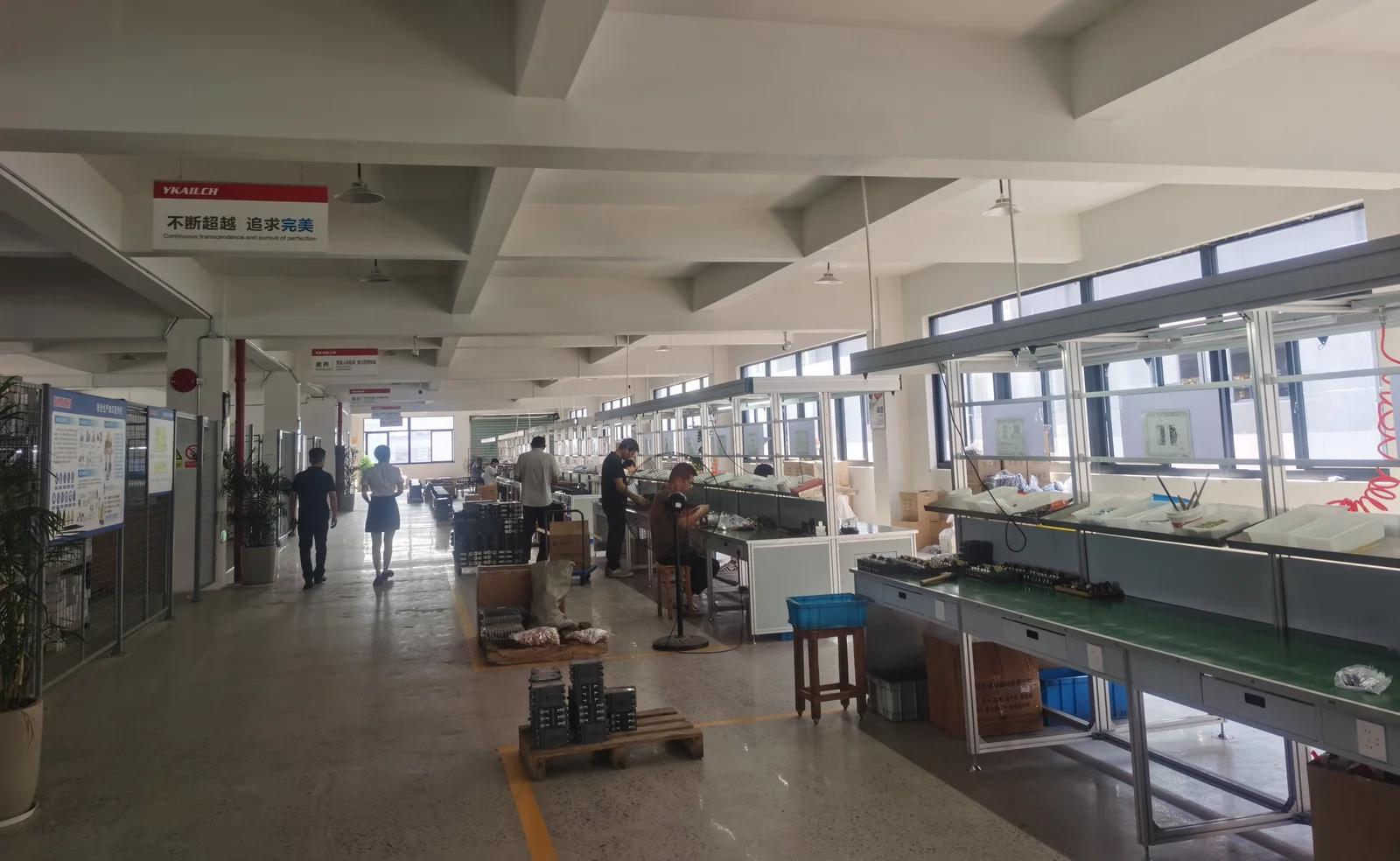
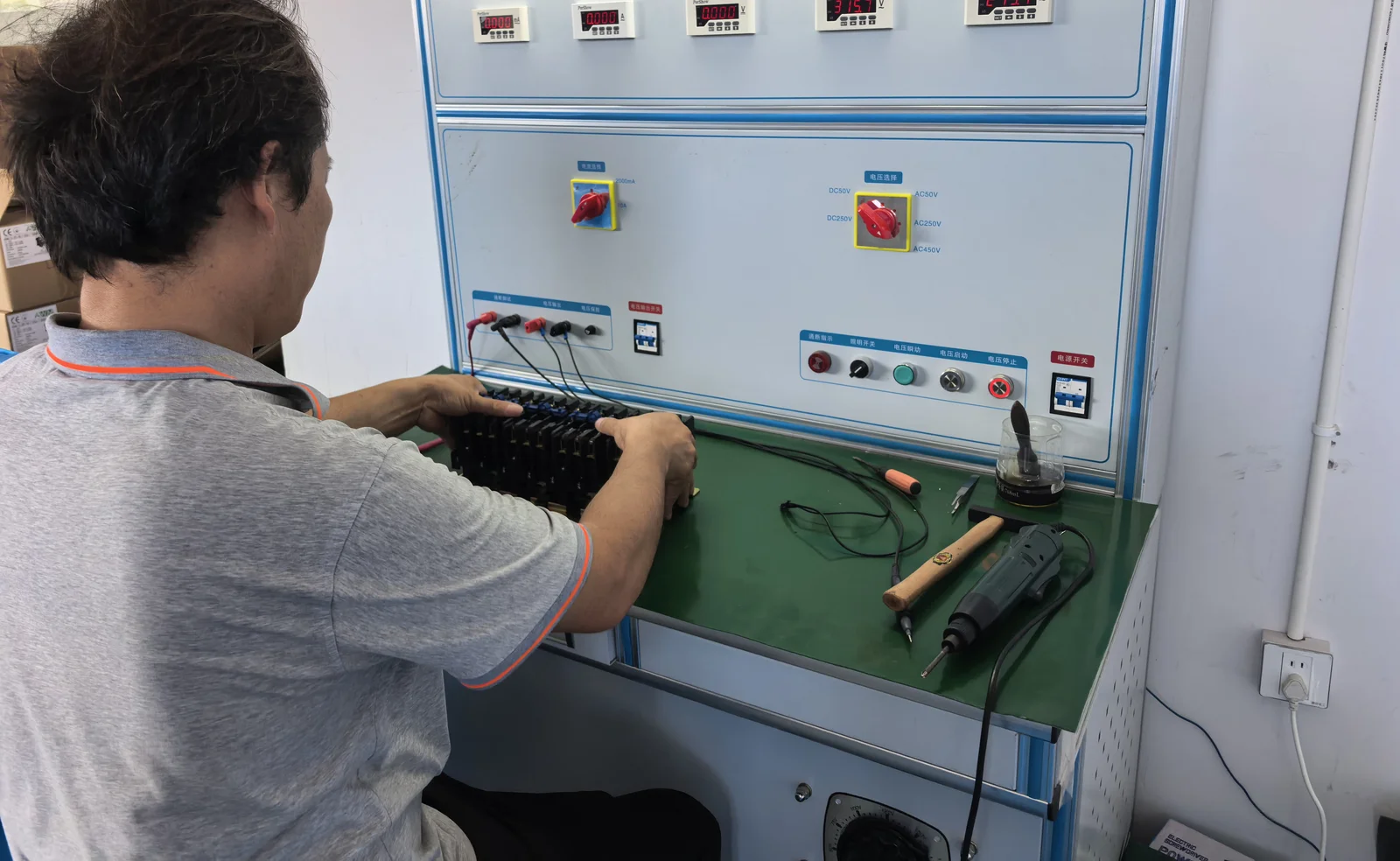
Numbers, since buyers ask these before anything else. Our minimum order is 10 pieces, whether you are kitting out one property or sampling for a chain. Production runs 15 to 25 days depending on quantity and whether you want custom labelling. We ship FOB Ningbo or Shanghai, and every unit carries a 12-month warranty. Inside the box you get a test record from the batch your unit came from, showing input voltage, output voltage under load and no-load current, because we test 100 percent of what we build in our own factory here in Yueqing.
Customisation is where hotel orders get interesting. We can supply units with the socket type your property uses, print your chain’s voltage label on the faceplate, set the output to 110V or 120V depending on what your appliance labels say, and pack units individually so they can be handed straight to housekeeping. If you are rolling out across several properties, tell us the rollout schedule and we will stage the deliveries so you are not warehousing four hundred units in a lobby.
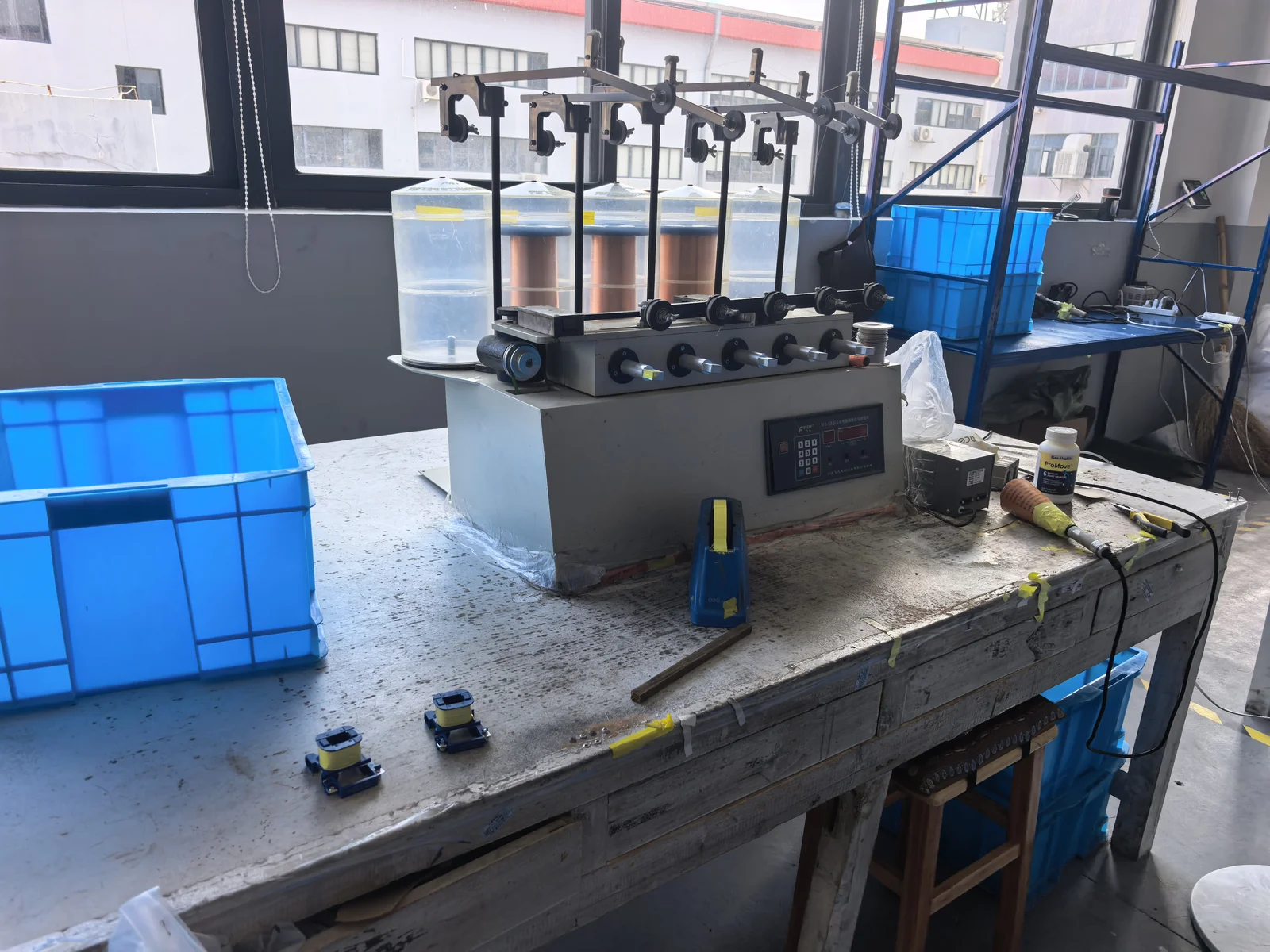
We wind with copper here, not aluminium, and that is not a marketing line. Aluminium windings run hotter at the same rating, and hot insulation is what kills a transformer early. Under hotel duty, where a unit is switched on and off dozens of times a day, that difference shows up inside two or three years.
What to Send Us for a Quote the Same Day
You do not need a finished specification to talk to us. Send what you have. Room count, the list of 110V appliances with the wattage from each nameplate, a photo of one nameplate if you can manage it, your mains voltage and frequency, the socket type your property uses, and your target date. From that we can size the unit, quote the quantity and give you a delivery window, usually within the same working day.
Two things worth reading while you put that list together. If your property also runs booster pumps or well pumps on 110V equipment, our guide to a Step Down Transformer for Water Pump: Sizing & Wiring covers the sizing side of that job. And if you are still working out whether you need a step down unit, a step up unit, or something that does both, our page on step up & down transformers explains the difference in plain terms. There is a full set of more buying guides on the site as well, covering everything from air conditioners to kitchen equipment.
If you are not sure about any of it, just send us a message with the room list. Sizing a step down transformer for a hotel is genuinely routine work for us, and we would much rather spend ten minutes on WhatsApp than have you order the wrong box four hundred times.
Hotel Transformer Questions Buyers Ask Most
These are the messages that fill my inbox every week, answered the way I would answer them on a call.
What size step down transformer do I need for a hotel guest room?
Add up the appliances that can realistically run at the same time, then add 25 to 30 percent. A room with a 1600W hairdryer, a TV and a clock usually lands around 2000VA, which is what our ST-2000 covers. If the room also has an iron that might run with the hairdryer, go one size up.
Can I use a step down transformer for the whole hotel instead of one per room?
You can, but you then have to run 110V cabling to every room and you accept a single point of failure. For retrofit projects we normally suggest one unit per room or one unit per cluster of four to eight rooms in a service corridor. That keeps redundancy and makes maintenance easy.
Does a step down transformer change 50Hz to 60Hz?
No. A transformer changes voltage only, never frequency. Your 110V output will still be 50Hz if that is what your building supplies. Resistive appliances like hairdryers, irons and kettles do not mind. Devices with synchronous motors, such as some plug-in clocks, may run at the wrong speed.
Do hotel laptops and phone chargers need a step down transformer?
Usually not. Most laptops, phone chargers and modern TVs are rated 100-240V, 50/60Hz, so they run straight off your 220V socket with a plug adapter. Check the label before you include them in your load calculation, because counting them can push you into a larger and more expensive unit than you need.
What is the minimum order and lead time for hotel transformer orders?
Our MOQ is 10 pieces, so a single property or a trial order is fine. Production takes 15 to 25 days depending on quantity and custom labelling, and we ship FOB Ningbo or Shanghai. Every unit is 100 percent tested in our Yueqing factory and carries a 12-month warranty.
Sending us your room list costs nothing and usually saves a sizing mistake. Tell us how many rooms you have, what 110V appliances sit in each one, and which country the property is in. We will come back with a recommended unit, a quantity and a price, normally the same working day.
Or talk to us directly: WhatsApp +86 197 3022 6757 · Email sales@wilmall.com
MOQ 10 pcs · Lead time 15-25 days · FOB Ningbo or Shanghai · 12-month warranty