Step Down Transformer for 3D Printer: 220V to 110V Guide
Bringing a US 3D printer to a 220V country does not need a huge transformer, but it does need the right one. A 3D printer runs for 12 to 48 hours at a time, which is a continuous duty cycle that a cheap transformer was never designed for. The heated bed is the biggest load, and it switches on and off constantly as it holds temperature. Here is the sizing math.
How much power a 3D printer really draws
A typical FDM printer breaks down like this: the hotend runs at 40 to 70W while printing, the controller and fans add 10 to 20W, and the heated bed is the big one, anywhere from 120W on a small 200mm bed to 350W on a 350mm bed with an enclosure. Total draw is usually 200 to 450W depending on the bed temperature and print speed.
A resin printer is lighter, typically 100 to 200W, because there is no heated bed. The UV screen and the lift motor are the main loads.
Why continuous duty matters
Here is the part most sizing guides skip. A 3D printer does not run for 5 minutes like a toaster. It runs for 24 hours, sometimes 48. A transformer rated for intermittent duty will overheat on an overnight print, trip its thermal fuse, and leave your print half-finished at hour 6.
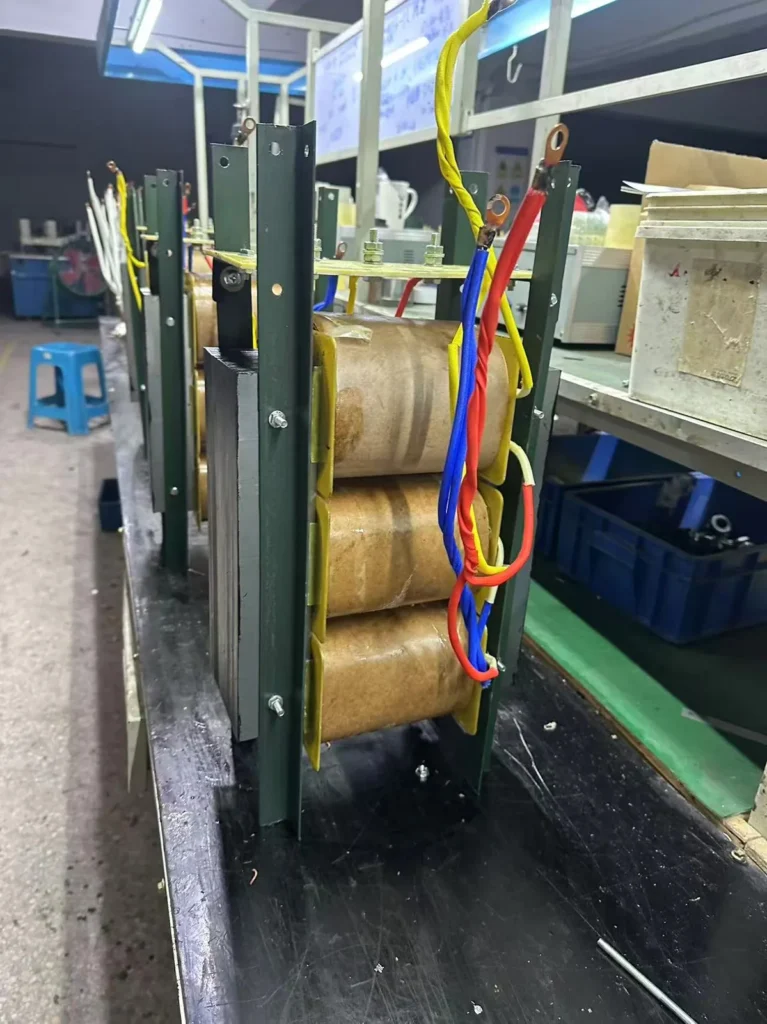
Our ST series is rated for continuous duty at full load, which is why we recommend it for printers. The copper windings and Class B insulation hold the temperature rise within spec for long runs.
Sizing for your printer
- Resin printer (100 to 200W): ST-500 (500VA).
- FDM printer with 220mm bed (250 to 300W): ST-1000 (1000VA).
- FDM printer with 300mm+ bed, enclosure (400 to 500W): ST-1000 is enough, but ST-1500 gives you room for an enclosure heater.
- Multiple printers in a farm: size the transformer for the sum of all running printers, typically ST-2000 for two to three consumer machines.
The 80% rule applies: a 450W printer on a 1000VA transformer is running at 45% of rating, which is ideal for a 24-hour job. Do not put a 450W printer on a 500VA unit, that is 90% and it will run hot.
Print quality and voltage stability
Print quality issues like layer shifts and thermal runaway warnings are often blamed on the printer, but an unstable 110V supply is frequently the real cause. When the heated bed cycles on, a weak transformer sags the voltage, the printer’s PSU compensates, and the hotend temperature wavers. A transformer with good regulation under step loads keeps the voltage steady and the prints clean.
Our ST series holds output voltage within 5% at full load, which is well inside what printer PSUs accept.
For other electronics on the same conversion, see our gaming PC guide and the 1000W vs 2000W sizing guide.
OctoPrint and smart plugs
Many 3D printer owners run OctoPrint on a Raspberry Pi or a similar controller, which controls the printer over the network and monitors it remotely. If your Pi and your printer run off the same 110V transformer, you need enough VA for both. A Pi 4 draws 5 to 8W, which is nothing, but the printer at 400W plus the Pi is still under the 1000VA rating comfortably.
Smart plugs are a different story. If you use a smart plug between the transformer and the printer to cut power at the end of a print, make sure the plug is rated for 110V at the printer’s amperage. A plug rated for US 15A is fine on the 110V side. Never put the smart plug on the 220V input side of the transformer unless it is rated for that, the contact resistance of an undersized plug on 220V is a fire risk over long prints.
Printer farms and multiple units
If you are running a printer farm with five or ten machines, the transformer sizing changes. Do not put ten printers on one 5000VA unit. The combined draw with all beds heating at once can spike past the rating, and one failing printer can pull the whole farm down. We recommend one 2000VA unit per two to three printers, so a fault is contained to one zone.
Farms also run 24/7, so choose the continuous-duty rating, and give the transformers their own shelf with ventilation rather than stacking them. If you are a farm operator buying in bulk, we can supply the ST series with fan-ventilated cases and your brand label, with a 10 pcs minimum and stock held for your reorders.
Send us your printer count and the wattage of your machines, and we will give you a per-zone layout with the exact transformer sizes within one working day.
Choosing between single and dual voltage printers
One way to skip the transformer entirely is to buy a dual-voltage 3D printer in the first place. Many modern printers ship with power supplies marked 100V to 240V, which run on any mains with just a plug adapter. Check the label on your PSU before you order a transformer. If it says 100V to 240V, you only need an adapter, not a step down.
For printers that are single-voltage 110V, which is the case for most US-market machines, the transformer is required. The good news is that even the largest single-voltage printers fit comfortably on our 1000VA ST-1000, so the transformer cost stays small next to the printer’s price.
Heated chamber printers
Enclosed printers with heated chambers, the ones used for ABS and nylon, add a chamber heater that draws 150 to 300W on top of the bed and hotend. The total system load for a large enclosed printer can reach 600W, which still fits the 1000VA ST-1000, but the duty is different, the chamber heater runs for the whole print, so the transformer carries a steady high load for days at a time.
For a heated chamber printer running 48-hour jobs, we recommend the ST-1500 rather than the ST-1000, purely for the continuous-load margin. The 1500VA unit runs at 40% of rating on a 600W load, which keeps the windings cool through the long print and doubles the expected transformer life.
Firmware thermal protection
Modern printer firmware has thermal protection that shuts the printer down if the hotend or bed temperature reads wrong, and an unstable 110V supply is a classic trigger for false thermal runaway errors. When the voltage sags, the heater duty cycle changes, the temperature sensor reads a wider swing, and the firmware misreads it as a failure.
If your printer is throwing thermal runaway warnings through a transformer, measure the 110V output during a print. If it sags more than 5%, the transformer is undersized, and the fix is the next size up. If the voltage is steady and the errors continue, the issue is in the printer, not the power.
Wiring the transformer safely
Use a grounded outlet for the transformer and a grounded extension if you need reach. Never use a two-prong adapter on the 110V side, a 3D printer’s frame is grounded for a reason, and a floating ground turns static discharge and a fault into a shock risk.
Keep the transformer on a stable surface above the floor and away from the print area’s dust and fumes. The printer’s own PSU runs warm, the transformer runs warm, and the two of them on a shelf with good airflow is the right layout. We ship the ST series with a grounded three-prong US output as standard, so the printer’s ground connection is preserved.
Print farms and power budgeting
For a print farm with multiple machines, the power budget is the sum of the machine peaks, not the average. A farm of ten 400W printers peaks near 4000W when all beds heat at once, and the start of a print job is when they all heat together. If the farm runs on one transformer, the sizing is the sum plus 20%, which is a 5000VA unit, and even then the beds may stagger naturally.
The cleaner design is one transformer per rack of two to three machines, which keeps a single failure contained and lets each transformer run at a comfortable load. Farms that standardize on the ST-2000 per three machines report the lowest downtime, because a failed unit takes out three printers, not ten.
Resin printer specifics
Resin printers are lighter on power than FDM machines, but they have their own quirks. The UV screen draws 30 to 60W, the lift motor surges at each layer, and the fan runs continuously. Total draw is 100 to 200W, which fits a 500VA unit, but the surge pattern of the lift motor at every layer is a repetitive stress that the transformer must handle.
For resin printers, the 500VA ST-500 is the practical size, and the 1000VA gives you room for a wash and cure station on the same supply. The wash and cure station with its UV lamps and rotation motor adds 50 to 100W, which still fits the 1000VA comfortably.
What size step down transformer do I need for a 3D printer?
A typical FDM 3D printer draws 150 to 400W total (hotend, heated bed, controller and fans). A 1000VA step down transformer handles even the largest consumer printers. The heated bed is the biggest load, so add 30% headroom if you print with an insulated enclosure.
Can a 3D printer run on a step down transformer continuously?
Yes. Print jobs run 12 to 48 hours, so the transformer runs at continuous load. Our ST series is rated for continuous duty, which is why it is the right pick. A transformer rated for intermittent use would overheat on an overnight print.
Do resin printers need a different transformer than FDM printers?
Resin printers draw less power, usually 100 to 200W, because there is no heated bed. A 500VA ST-500 is enough for any resin printer. FDM printers with large heated beds (300mm+ build volume) should use 1000VA.
Will the transformer affect print quality or layer shifts?
No, as long as the transformer keeps the output voltage stable under load. Our ST series regulates to within 5% at full load, which is well inside what 3D printer PSUs accept. Loose voltage from a cheap transformer is what causes layer shifts and thermal runaway warnings.