Transformer vs Inverter: Which One Do You Actually Need?
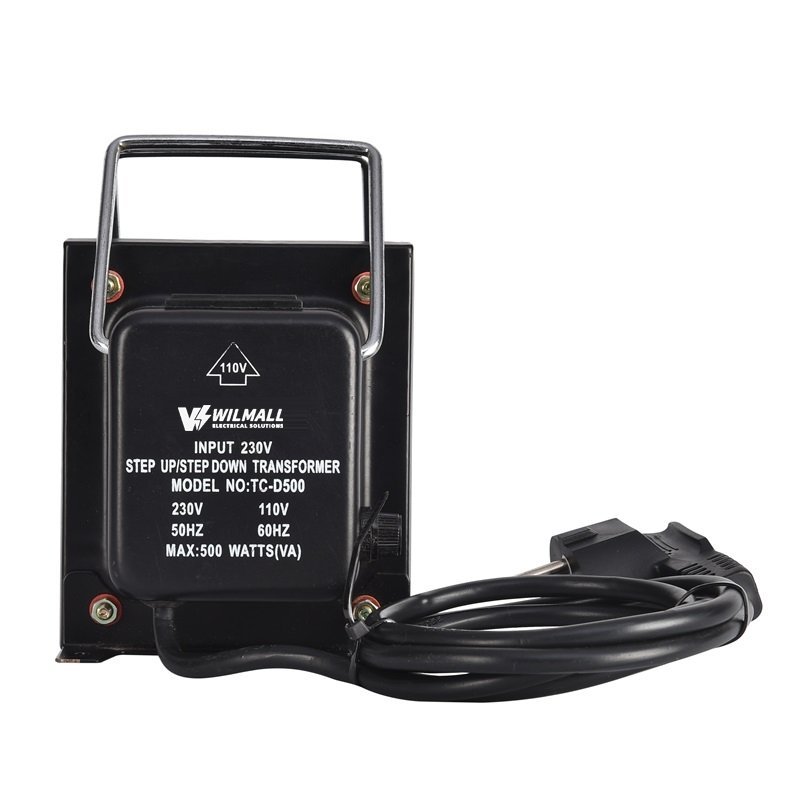
Quick answer: a transformer changes voltage with copper and steel — simple, robust, works on pure AC. An inverter changes DC to AC (or AC to DC to AC) with electronics — it can change frequency and shape, but it costs more, wears out, and cannot survive the loads a transformer shrugs off. If your job is just voltage conversion, buy a transformer.
Key Takeaways
- Transformer: voltage conversion, 20-30 year life, handles surges.
- Inverter: DC-AC conversion, frequency control, 5-10 year life.
- Wrong voltage, right frequency = transformer problem.
- Solar and battery = inverter problem.
Which Tool for Which Job
| Job | Tool |
| 220V to 110V conversion | Transformer |
| Solar / battery AC | Inverter |
| Frequency change | Inverter |
What Each Device Actually Does
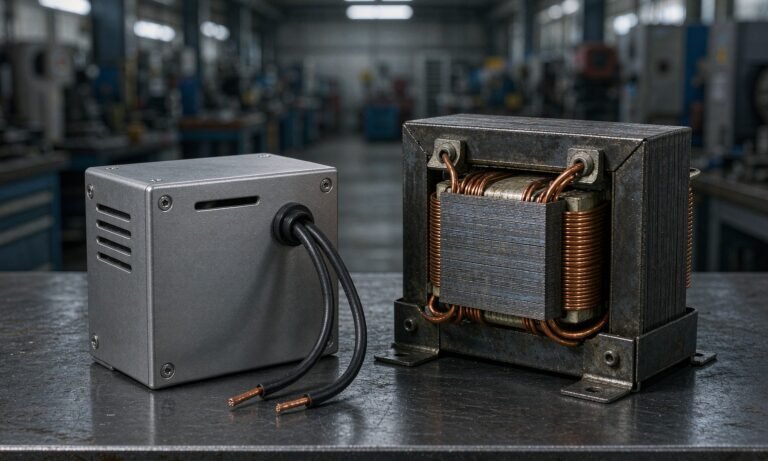
A transformer has two copper windings on a steel core. AC current in the primary creates a magnetic field that induces voltage in the secondary, scaled by the turns ratio. That is it — no moving parts, no software, nothing to fail except the copper and insulation, which is why a good transformer runs for 20-30 years.
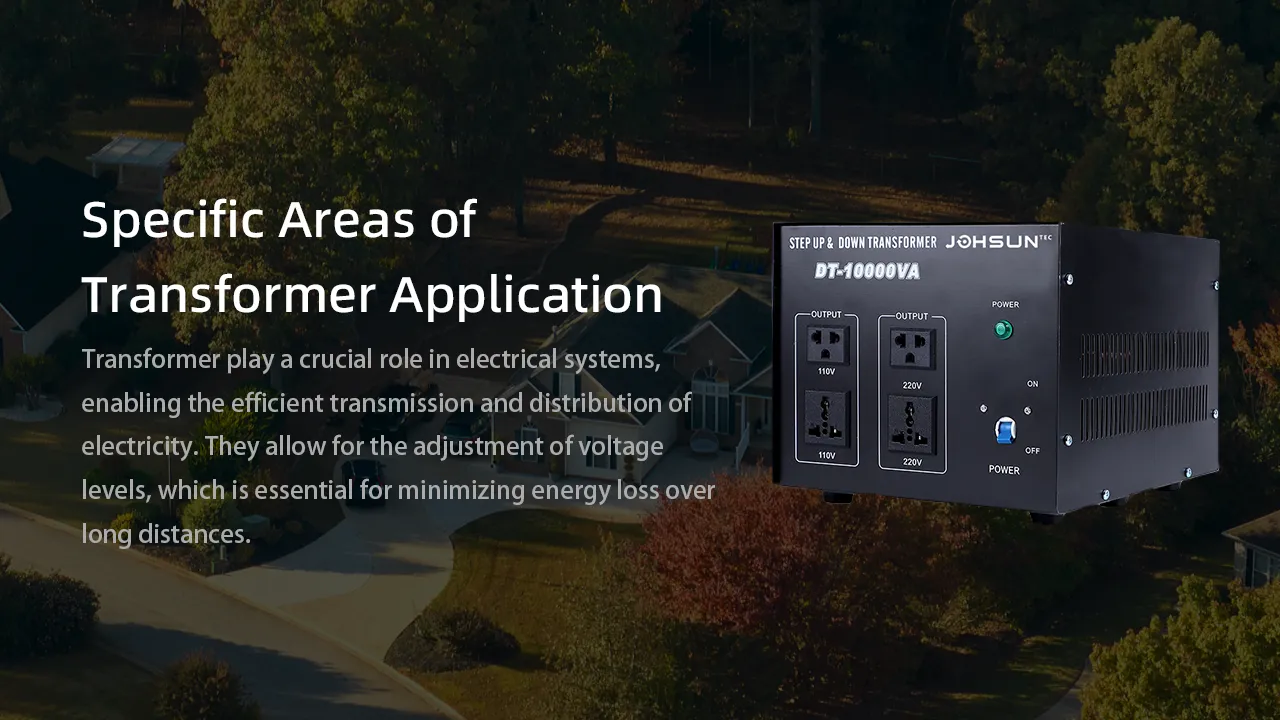
An inverter uses semiconductor switches (IGBTs/MOSFETs) to convert DC to AC, or rectify AC to DC and back to AC (AC-DC-AC). This lets it control frequency (50/60Hz) and waveform, which a transformer cannot do. But electronics age, capacitors dry out, and an inverter on a surge-heavy load can trip or fry itself.
Transformer vs Inverter: Side by Side
| Factor | Transformer | Inverter |
|---|---|---|
| Core job | Change voltage (AC → AC) | Change DC ↔ AC, change frequency |
| Efficiency | 95-98% | 90-95% (idle loss higher) |
| Surge handling | Excellent (5x overload for seconds) | Poor (limited to rated peak) |
| Lifespan | 20-30 years | 5-10 years typical |
| Price | Low | Higher |
| Maintenance | None | Capacitors/fans need replacing |
| Output quality | Pure sine (same as input) | Depends on model (modified vs pure sine) |
| Best for | Running 110V/220V appliances on the other voltage | Solar, battery backup, running devices on DC sources |
When an Inverter Is the Right Tool
- Solar panel systems — solar makes DC, the inverter makes it usable as AC.
- Battery backup / UPS — converting stored DC to AC during outages.
- Frequency conversion — running 60Hz equipment on 50Hz mains and vice versa.
- Variable motor speed (VFDs) — though those are dedicated drives.
Notice what is missing: pure voltage conversion on grid AC. For “I have 220V and need 110V” (or the reverse), an inverter is the expensive, fragile answer to a problem a transformer solves for a fraction of the price.
When a Transformer Is the Right Tool
- 220V to 110V step down for US/Japanese appliances in the Middle East, Africa, Asia.
- 110V to 220V step up for European/Australian appliances in North America.
- Control circuit isolation and low-voltage supplies in panels.
- Any continuous-duty, high-surge load (fridges, ACs, pumps).
If your power problem is “wrong voltage, right frequency”, it is a transformer problem. Buy a transformer. If your problem is “no grid / solar / battery”, it is an inverter problem.
Questions Customers Ask Us
My friend uses a “converter” and it works. Is that a transformer?
Maybe — the word is used for both. Check what is inside: copper coil = transformer; circuit board = electronic converter. For motors and compressors the electronic one will fail first.
Can a transformer fix frequency (50 vs 60Hz)?
No. Frequency needs an inverter or a rotary converter. Check whether your appliance actually cares about frequency — many modern ones do not.
Which is better for a solar system?
You need an inverter for solar. Many systems use a transformer inside for isolation, but the device you buy is an inverter.
Do you sell inverters?
No — we make transformers, and we prefer to tell you honestly when a transformer is not the right answer.
Still not sure which model fits?
Tell us your appliance, wattage and country — we reply within 24 hours with a straight recommendation.
What each device actually does
A transformer changes the voltage of an AC supply, 220V to 110V or the reverse, while keeping the same frequency and the same waveform. An inverter changes DC to AC, or converts between voltage levels using electronics, and it can change the frequency as well. They are different tools for different jobs, and the confusion comes from the word converter, which is used for both.
If your appliance needs a different AC voltage, you need a transformer. If you are running appliances from a battery or a solar panel, you need an inverter to create the AC supply first, and then possibly a transformer to adjust the voltage. The two devices work together in an off-grid system, not as alternatives.
When you need one, the other, or both
In a 220V country with a 110V appliance, you need a transformer, full stop. In an off-grid system with a 12V battery and 220V appliances, you need an inverter to make 220V AC, and the transformer is not needed if the inverter outputs 220V. If the inverter outputs 110V and your appliances are 220V, you need both, an inverter and a step up transformer.
The efficiency chain matters: an inverter is 85 to 95% efficient, and a transformer is 93 to 97%, so running both means the battery sees about 80 to 90% of the appliance power as draw. For off-grid buyers, the design goal is to match the inverter output to the appliance voltage and avoid the extra stage.
Choosing the right one for your setup
For a household voltage conversion, buy the transformer and skip the inverter. For an off-grid or backup system, buy the inverter first, and only add the transformer if the inverter output does not match your appliances. The mistake buyers make is buying a transformer when the problem is DC, or buying an inverter when the problem is just voltage.
Send us a one-line description of your setup, your supply voltage, and your appliance voltage, and we will tell you which device you actually need within one message.
Transformers in the appliance chain
In a household, the transformer sits between the mains and the appliance, changing the voltage and nothing else. In a workshop, the transformer sits between the supply and a distribution board, feeding several 110V tools from one unit. In both cases, the transformer is the passive bridge, and its efficiency, 93 to 97%, is the price of the voltage change.
The inverter, by contrast, is an active device with electronics, switching DC into AC and regulating the output. It can change the frequency, which a transformer cannot, and it adds its own noise and waveform characteristics. The two are not interchangeable, and the device that fits your problem is the one that matches the supply and the load.
Inverter plus transformer off-grid systems
In an off-grid system, the chain is battery, inverter, transformer, appliance, when the inverter output does not match the appliance voltage. The chain has two efficiency stages, so about 85 to 92% of the battery power reaches the appliance. The design goal is to pick an inverter whose output matches the appliance voltage and remove the transformer stage.
When the transformer is needed, the sizing follows the appliance load with the 80% rule, and the inverter must handle the transformer’s input draw as well as the load. A 2000VA transformer at 220V input draws about 9 amps, which a 3000W inverter delivers easily.
The buying decision in one sentence
If your problem is AC voltage, buy a transformer. If your problem is DC to AC, buy an inverter. If your problem is both, buy the inverter first, then the transformer only if the inverter output does not match. If you are still unsure, send us your supply, your load, and your appliance voltage, and the answer is one message away.
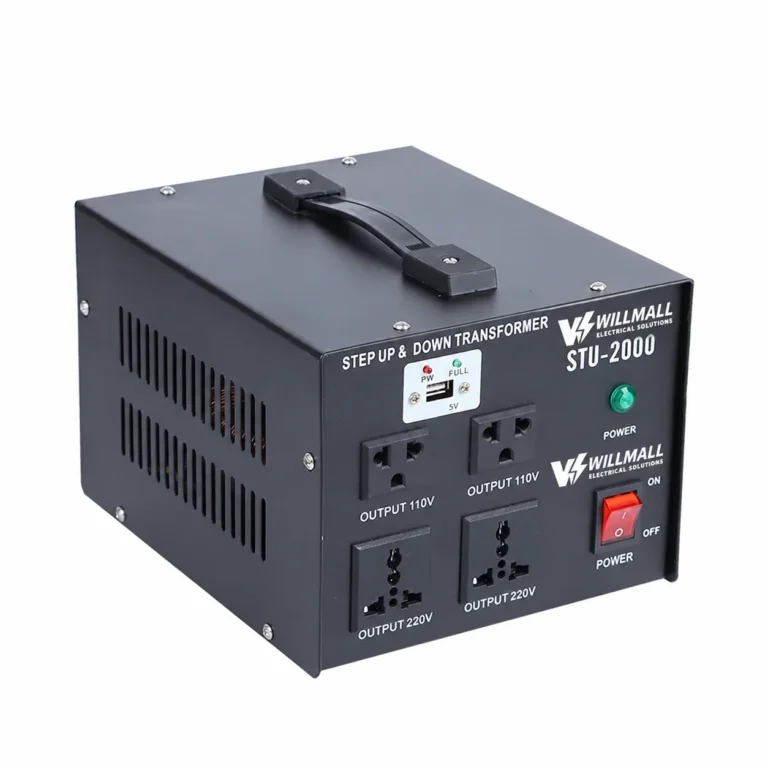
We build the ST transformer series and the STU two-way series in Yueqing, and we can quote the transformer part of any off-grid or household setup within a working day.
Transformers in the appliance chain
In a household, the transformer sits between the mains and the appliance, changing the voltage and nothing else. In a workshop, the transformer sits between the supply and a distribution board, feeding several 110V tools from one unit. In both cases, the transformer is the passive bridge, and its efficiency, 93 to 97%, is the price of the voltage change.
The inverter, by contrast, is an active device with electronics, switching DC into AC and regulating the output. It can change the frequency, which a transformer cannot, and it adds its own noise and waveform characteristics. The two are not interchangeable, and the device that fits your problem is the one that matches the supply and the load.
Inverter plus transformer off-grid systems
In an off-grid system, the chain is battery, inverter, transformer, appliance, when the inverter output does not match the appliance voltage. The chain has two efficiency stages, so about 85 to 92% of the battery power reaches the appliance. The design goal is to pick an inverter whose output matches the appliance voltage and remove the transformer stage.
When the transformer is needed, the sizing follows the appliance load with the 80% rule, and the inverter must handle the transformer’s input draw as well as the load. A 2000VA transformer at 220V input draws about 9 amps, which a 3000W inverter delivers easily.
The buying decision in one sentence
If your problem is AC voltage, buy a transformer. If your problem is DC to AC, buy an inverter. If your problem is both, buy the inverter first, then the transformer only if the inverter output does not match. If you are still unsure, send us your supply, your load, and your appliance voltage, and the answer is one message away.
We build the ST transformer series and the STU two-way series in Yueqing, and we can quote the transformer part of any off-grid or household setup within a working day.