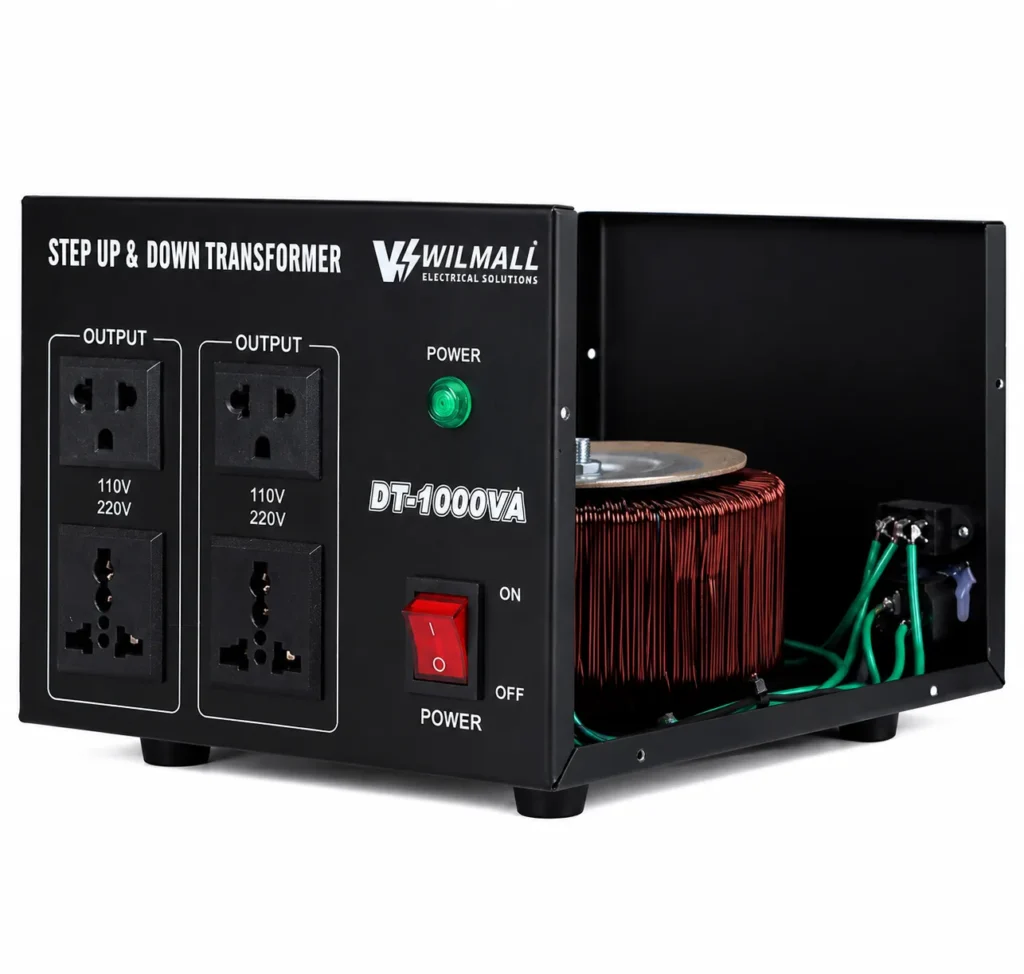
Step Down Transformer for Photo Studio Lighting
Photo studio lighting is the one application where voltage stability shows up directly in your images. A 110V flash head or LED panel running on sagging voltage produces inconsistent colour and output shot after shot. If you imported US studio lighting into a 220V country, a quality step down transformer is not a convenience — it is what makes your lighting repeatable. Here is the sizing and setup guide for studio gear.
Why studio lighting hates voltage variation
Studio flash heads charge their capacitors to a set voltage, and the flash output depends on that charge. If the input voltage sags between shots, the capacitor charges slower and the flash output changes — so your modelling light and your flash power drift between frames. For a photographer shooting a product range or a portrait series, that inconsistency means hours of colour correction in post.
LED panels are the same story in a different way. A constant-current LED driver regulates its output, but if the input sags below its minimum, the driver shuts down or the panel flickers at high frame rates. Both problems come back to one thing: the transformer must hold a stable output under load.
Step down transformer size for studio lighting
| Equipment | Power draw | Surge/charge | Recommended transformer |
|---|---|---|---|
| Speedlight / small flash kit | 200-400W | ~700W | 1000VA |
| Monolight kit (2-3 heads) | 800-1500W | ~2500W | 2000-3000VA |
| Large studio flash (4+ heads) | 1500-3000W | ~5000W | 5000VA |
| LED panel rig | 300-1000W | low surge | 1500-2000VA |
| Full studio setup (lights + backdrops + props) | 2000-4000W | varies | 5000VA |
Flash heads have an interesting load profile: they draw their full power in short charging bursts, so the average load is low but the peak is sharp. That means a 1000VA transformer can often serve a kit that peaks at 700W. The safest plan is to count the peak, add 30%, and buy the next size up. A 3000VA unit covers most one-to-three-head kits with room for a laptop and a fan.
Isolation matters for studio electronics
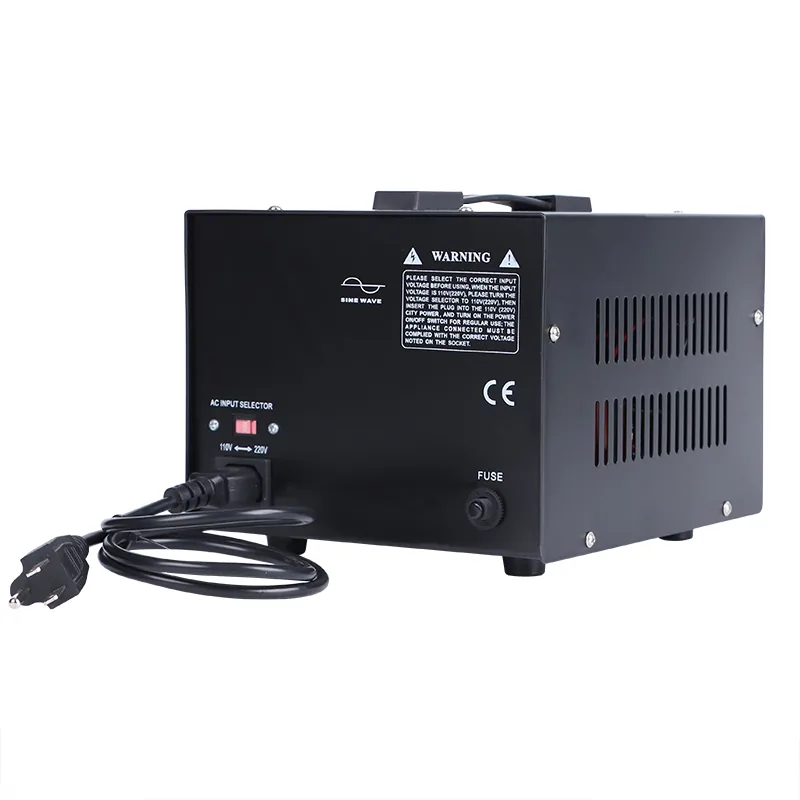
Studio gear is sensitive electronics, and the mains in many 220V countries carries noise from motors, switching supplies and the grid itself. An isolation transformer separates the studio equipment from that noise with a galvanic barrier between windings. The ST series provides isolation as standard in every step-down unit — the flashes see clean, stable power, and the images stay consistent frame after frame.
Colour temperature and consistency
Here is the thing photographers care about: a flash head that charges to a slightly different voltage produces a slightly different colour temperature. Shoot a white background with two flashes on an unstable supply and one side of the frame will read warm while the other reads cool. A transformer with accurate, stable output keeps every head charging to the same voltage, so the white balance matches across the set. That is the whole job of the transformer in a studio.

Studio setup: one transformer or several
A small studio can run everything off one 5000VA transformer — flashes, LEDs, a laptop and the fans. A larger studio is usually better with two transformers: one for the flash system, one for everything else. That isolates a fault to one system and lets you keep shooting on the other while it is fixed. We quote this two-unit setup for most professional studios.
Common mistakes with studio transformers
- Using a cheap converter. Flash charging bursts are too sharp for converters.
- Ignoring the charge peak. Size on the charging peak, not the average watts.
- Buying without isolation. Mains noise shows up in your images.
- Sharing one transformer with a hair dryer or kettle. The load spike changes your flash output mid-shoot.
- Wrong primary winding for the grid. Output drift changes colour temperature.
Why buy from a factory directly
Wilmall supplies isolating step down transformers to photographers, studios and AV installers across the Middle East, Africa and Asia. Copper winding, RCD protection, stable output and full load testing before packing. MOQ 10 pcs per model, 15-25 day lead time, FOB Ningbo or Shanghai with CE / RoHS documents.
Charging time and recycle speed
Flash recycle time depends on how fast the capacitor charges, and that depends on the supply. A sagging supply means slow recycling — you wait longer between shots and miss the moment. A transformer with stiff output charges the capacitors at full speed, so the flash recycles as fast as it did in the US. Wedding and event photographers notice this immediately.
If your flash kit feels slow through a transformer, check the transformer size first. A 1000VA unit on a kit that peaks at 900W is working at the edge; the 2000VA version charges noticeably faster.
Modelling lights and continuous output
Modelling lights are small halogen or LED lamps that stay on while you compose. They are a continuous load on top of the flash charging bursts. Count them in the sizing: three 250W modelling lights are 750W continuous, and the flash charging adds its peak on top. The 3000VA unit covers a typical kit with the modelling lights on; the 1000VA unit does not.
This is the most common under-sizing mistake in studios — people size for the flashes and forget the modelling lights.
Long cable runs in the studio
Studios spread equipment across the room, and long cable runs drop voltage under load. A flash head at the end of a 20-metre extension charges slower than one at the transformer. Use short, thick cables — 2.5mm2 for runs over 5 metres — or move the transformer to the middle of the set. The voltage measured at the head is what counts.
For permanent studios, we recommend wiring the transformer into the set with a proper distribution board rather than a chain of extension leads.
Warranty and support
Every Wilmall transformer carries a 12-month warranty, and we keep common spares for fast resolution. Studio equipment is expensive, and a transformer that fails mid-shoot is a bad day. Batch test records ship with the unit, so claims are quick and fair. We respond to support enquiries within 24 hours.
The bottom line
Studio lighting runs on stable, isolated power. Size for the charging peak plus the modelling lights, wind for your grid, and keep the cables short and thick. Do that and the colour stays consistent from the first shot to the last. Send us your equipment list and we will size it in one message.
RCD and safety in the studio
Studios are full of light stands, cable runs and people moving around in the dark. RCD protection on the transformer trips on any leakage current in milliseconds — and in a dark studio, a fault you cannot see is exactly the danger RCD is built for. The ST series includes RCD as standard.
Also worth doing: label every cable run and use proper cable management. A clean studio is a safe studio, and it looks more professional for clients too.
Frequency and strobe consistency
Modern flash systems convert to DC internally, so the 50Hz grid does not affect flash duration or colour. Older strobes with AC-driven modelling lights may flicker slightly on 50Hz — visible on high-frame-rate video but not in stills. If you shoot video with strobes, mention it when ordering and we will advise on the right configuration.
The transformer only changes voltage, so any frequency consideration belongs to the equipment itself.
Ordering, shipping and lead time
Send us your equipment list — flashes, panels, modelling lights, accessories — and your country voltage. We size the transformer, confirm the winding and isolation, and produce in 15-25 days. Shipped FOB Ningbo or Shanghai with CE / RoHS documents and batch test records. MOQ 10 pcs per model, private labelling for studio brands.
The bottom line for studios
Studio lighting runs on stable, isolated power. Size for the charging peak plus the modelling lights, wind for your grid, and keep the cables short and thick. Do that and the colour stays consistent from the first shot to the last. Send us your equipment list and we will size it in one message.
Frequently asked questions
Photo Studio Lighting: The Flash and Continuous Light Mix
Photo studio lighting has two different power profiles that need different handling. Continuous lights, such as LED panels and hot lights, draw a steady wattage that sizes like any other load, typically 500W to 2000W total for a small studio. Flash units are different: they draw a high current briefly to charge the capacitors, then idle, and several flashes in sequence can push the transformer. The practical sizing is 2000VA to 3000VA for a small studio running continuous lights and a couple of flash heads, and larger for a studio with many lights. The transformer must handle the flash charging spikes without sagging, because a sag means longer recycle times and missed shots. Our ST series handles the cycling of studio lighting without overheating. Send us your light list and the flash units’ wattages, and we will confirm the right transformer for your studio.
What size transformer do I need for studio lighting?
A one-to-three-head flash kit needs 2000-3000VA. A full studio setup with flashes, LEDs and accessories needs 5000VA. Size on the charging peak, not the average watts.
Why do studio flashes need an isolation transformer?
Isolation blocks mains noise and keeps the output stable, so every flash charges to the same voltage and the colour temperature stays consistent across the set.
Why does my flash colour temperature change between shots?
The flash charges to the input voltage. If the supply sags, the charge voltage changes and the colour temperature drifts. A stable transformer output fixes it.
Can I run my whole studio on one transformer?
For a small studio, yes. Larger studios are better with two transformers — one for flashes, one for the rest — so a fault on one system does not stop the shoot.
Can you supply transformers for a studio equipment brand?
Yes, private labelling for studio and AV brands is available from MOQ 10 pcs per model.
Related reading
- Transformer for Audio and Hi-Fi Equipment
- Isolation vs Step Down Transformer
- Step Up and Down Transformer Products
Get a factory-direct quote
Email sales@wilmall.com or WhatsApp +86 197 3022 6757 with your equipment list and country. We confirm the transformer size and winding, and ship within 15-25 days. MOQ 10 pcs.