Step Down Transformer for Aquarium and Pond Equipment
Aquarium pumps, heaters, UV sterilisers and pond equipment must run 24 hours a day in humid conditions. The right step-down transformer delivers accurate 110V with RCD protection, runs cool, and survives the wet environment. This guide covers sizing for home aquariums, fish rooms, koi ponds and aquaculture setups.
Why aquarium equipment needs a special transformer
Aquarium equipment runs continuously in one of the most humid environments in a home. Pumps, and the transformer must be rated for continuous duty, located away from water splashes, and protected by RCD.
What size transformer do you need?
| Equipment | Wattage |
|---|---|
| Small air pump | 5-20W |
| Submersible pump (small) | 10-50W |
| Submersible pump (large) | 100-500W |
| Heater (small tank) | 50-200W |
| Heater (large tank) | 300-1000W |
| UV steriliser | 9-55W |
| LED aquarium light | 30-200W |
| Koi pond pump | 200-1500W |
Sizing the complete aquarium system
Add up the running wattage of all equipment that may run simultaneously. For a typical home aquarium with a 300W heater, 50W pump and 50W light, total is 400W. Choose a 1000VA transformer with comfortable margin.
Why RCD protection is critical
Aquarium equipment sits above and inside water. A fault on the pump or heater that energises the water with mains voltage is deadly to fish and dangerous to anyone touching the water. RCD protection on the transformer cuts the output before such a fault becomes a hazard.
Location and ventilation
Mount the transformer in a dry, ventilated area. Allow at least 10 cm clearance around the case for airflow.
Why continuous-duty rating matters
Pumps and heaters cycle continuously. A transformer rated for 80% continuous duty is the safe choice. Running a transformer at 100% rating continuously shortens its life.
Voltage accuracy and heater performance
Aquarium heaters are thermostat-controlled. A 110V heater on a 100V supply underperforms; a 110V heater on a 120V supply trips the thermostat early. An accurate 110V output from the transformer keeps the heater in spec.
Saltwater and reef tanks
Saltwater and reef aquariums use additional equipment that draws more continuous power than a freshwater setup. A 300-litre reef tank can easily total 600-1000W of equipment running simultaneously.
Common mistakes
- Sizing too close to the running wattage. Continuous duty needs 25-30% margin.
- Skipping RCD protection. Aquarium safety is non-negotiable.
- Mounting near water. Even with RCD, keep the transformer dry.
- Using an autotransformer. No isolation, wide output swing.
Recommended Wilmall transformers
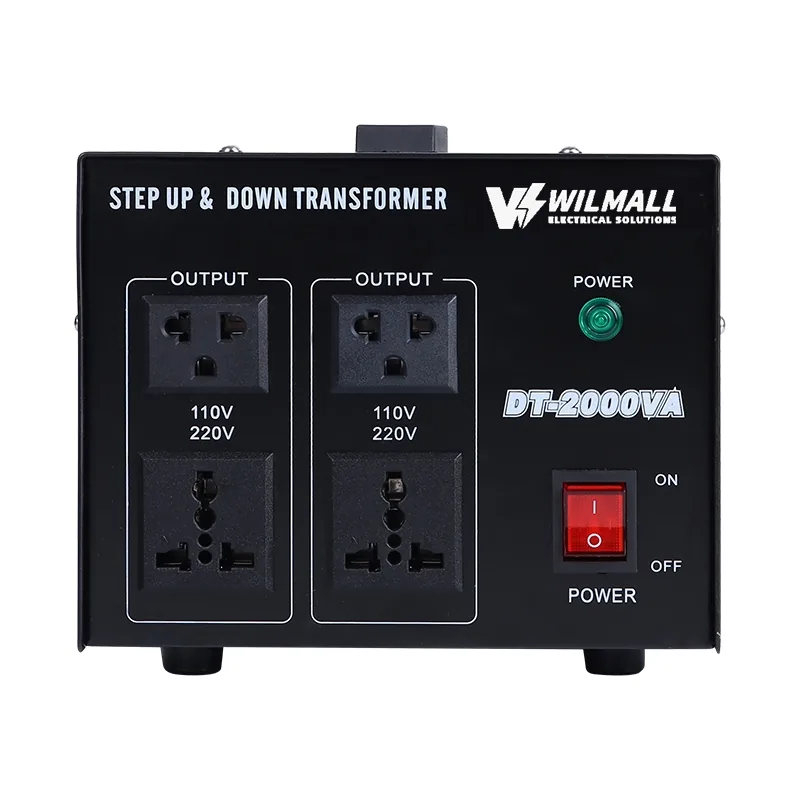
For home aquariums, the ST-1000 (1000VA) or ST-2000 (2000VA). For koi ponds, the STU-3000 (3000VA) or STU-5000 (5000VA).
Why aquariums are special for transformers
Aquarium equipment is unique because it runs 24 hours a day in a high-humidity environment, often on a circuit shared with lights and a sump. The transformer must be rated for continuous duty, protected against moisture, and mounted where it stays dry. Many home aquarium disasters trace back to an undersized or poorly mounted transformer.
What draws power in a modern aquarium
A modern reef or planted tank may include: return pumps (30-150W), wave makers (10-60W), a protein skimmer pump (20-60W), heater (100-500W), LED lighting (30-200W), auto top-off (5-15W) and dosing pumps (5-20W). Summing these shows why even a medium tank can need 600-1000W continuously.
Heater behaviour and inrush
Aquarium heaters are purely resistive and draw no surge beyond their wattage. But they cycle on and off frequently, so the average load is high during winter months. Sizing the transformer for the heater plus all pumps running simultaneously, with 25% margin, keeps the transformer cool and reliable.
RCD protection is not optional for water
When electricity meets water, the margin for error is zero. RCD protection on the transformer trips on any leakage current in milliseconds, before a fish, a child or a hobbyist can be harmed. Wilmall ST series step-down transformers include RCD protection as standard — a non-negotiable feature for any aquarium installation.
Pond pumps and outdoor installations
Outdoor koi ponds and water gardens add weather exposure. The transformer should live in a weatherproof enclosure or sheltered location, never directly under the pump or in the rain path. Use a rubber-booted or IP-rated connection between the transformer and the pond pump. For a typical 10000-litre koi pond with a 300W pump, a 1000VA transformer is sufficient, and 2000VA gives headroom for a UV clarifier.
The Wilmall advantage for aquaculture
Wilmall builds ST and STU series step-down transformers rated for continuous duty, with copper winding, RCD protection and class F insulation. For fish rooms, aquaculture farms and commercial hatcheries, we supply in bulk from MOQ 10 pcs with full documentation. Tell us your pump inventory and we will recommend the transformer range.
Fish room and hatchery installations
A fish room with multiple tanks concentrates the power demand. For a hobby fish room of 10 tanks with 3 heaters and 6 pumps running simultaneously, the load can reach 2-3kW. A 5000VA transformer or two 3000VA units, each feeding a separate circuit, gives clean power and easy fault isolation. Wilmall supplies both configurations.
Why isolation transformers protect aquarium fish
Isolation transformers also protect the fish. A ground fault in the water that is not interrupted will slowly electrocute sensitive fish and invertebrates long before a person notices. RCD protection plus galvanic isolation means a fault is detected and cleared quickly, keeping the aquarium population safe.
Sizing example for a planted 200-litre tank
A planted 200-litre tank may run: 30W CO2 regulator, 25W filter pump, 15W wavemaker, 200W heater, 60W LED light and 10W dosing pump — about 340W total. With 25% margin, a 500VA transformer covers it; a 1000VA ST-1000 gives headroom for future additions. This is the typical recommendation for medium planted tanks.
Ordering aquarium transformers from Wilmall
Wilmall builds ST and STU series step-down transformers rated for continuous duty, with RCD protection, copper winding and class F insulation. Tell us your equipment list and we will size the transformer and recommend the right model. MOQ 10 pcs, factory direct from Yueqing, 15-25 day lead time.
Choosing between one large or two small transformers
For a fish room, two smaller transformers beat one large unit for reliability. A fault on one unit does not take down the whole room, and each unit runs at a healthier load. Wilmall ST series is available from 500VA to 5000VA, so you can right-size each zone.
How to test your aquarium transformer setup
Before connecting valuable fish, run the transformer at load for 2 hours with a test heater and pump. Check the case temperature — it should stay below 65°C — and verify the output voltage with a multimeter. A stable 110V output confirms the transformer is properly sized.
Where to buy aquarium transformers
Wilmall supplies aquarium and pond step-down transformers to distributors and fish shops across the Middle East, Southeast Asia and Africa. RCD protection, copper winding and class F insulation are standard. Contact sales@wilmall.com with your equipment list for sizing and pricing.
Freshwater versus marine installations
Freshwater tanks typically draw less power than marine tanks because there is no skimmer and no live-rock circulation requirement. A freshwater planted tank often runs under 400W. A marine reef tank with similar dimensions can exceed 1000W. Size the transformer to the actual equipment list, not to the tank size alone.
Transformer placement inside aquarium cabinets
An aquarium cabinet is a common place for the transformer, but it can be warm and humid near the sump. Mount the transformer high inside the cabinet, on the wall, away from the water line and the overflow plumbing. Add a small vent fan if the cabinet runs warm. Keep the RCD accessible for testing.
Compatibility with digital controllers
Modern aquarium controllers and dosing pumps use switched-mode supplies that accept 100-240V. They do not need the transformer. Only the pumps, heaters and lights that are 110V-only need conversion. Check each device label before connecting anything to the transformer output.
Maintenance checklist for aquarium transformers
Check the RCD test button monthly. Wipe the case with a dry cloth to remove dust and salt residue. Inspect the cable and connections for corrosion every six months, especially near the tank. Verify the output voltage with a multimeter once a year. These checks keep the installation safe and reliable for years.
What to do when the transformer trips
When the transformer trips, disconnect all loads first. Press the RCD reset. Reconnect loads one at a time. If the trip returns when a specific device is connected, that device has a fault — repair or replace it. If the trip returns immediately with no load, the transformer itself is faulty and needs warranty service.
The right way to buy
For aquarium and pond transformers, buy from a factory that understands continuous duty. Wilmall ST series is rated for 24-hour operation, with copper winding, RCD protection and class F insulation. MOQ 10 pcs per model, factory direct from Yueqing, 15-25 day lead time, CE / RoHS documents included.
Frequently asked questions
Aquarium Equipment: Why Isolation Matters
Aquarium equipment is the one application where an isolation transformer is the responsible choice, because water and electricity are a dangerous combination. A standard distribution transformer passes the earth reference through, so a fault in a submerged pump or heater can energize the water, creating a shock risk for anyone reaching into the tank. An isolation transformer breaks the path between the mains and the equipment, so a single fault does not create a live-to-water circuit. Aquarium pumps, heaters, and filters also run continuously, so the transformer must be sized for 24-hour duty with margin. We supply isolation transformers for aquarium use and can confirm the right rating for your tank setup. If you keep fish or keep equipment near water, the isolation type is not a luxury, it is the difference between a hobby and a hazard.
What size transformer do I need for an aquarium?
For a typical home aquarium, 1000-2000VA covers pumps, heaters, lights and UV.
Why does an aquarium transformer need RCD protection?
Aquarium equipment sits above and inside water. RCD trips on leakage current.
Can a transformer run an aquarium 24 hours a day?
Yes, with at least 25-30% margin.
What size transformer for a koi pond?
A koi pond pump draws 200-1500W continuously. A 3000-5000VA transformer is the typical size.
Related reading
Get a factory-direct quote
Email sales@wilmall.com or WhatsApp +86 197 3022 6757.