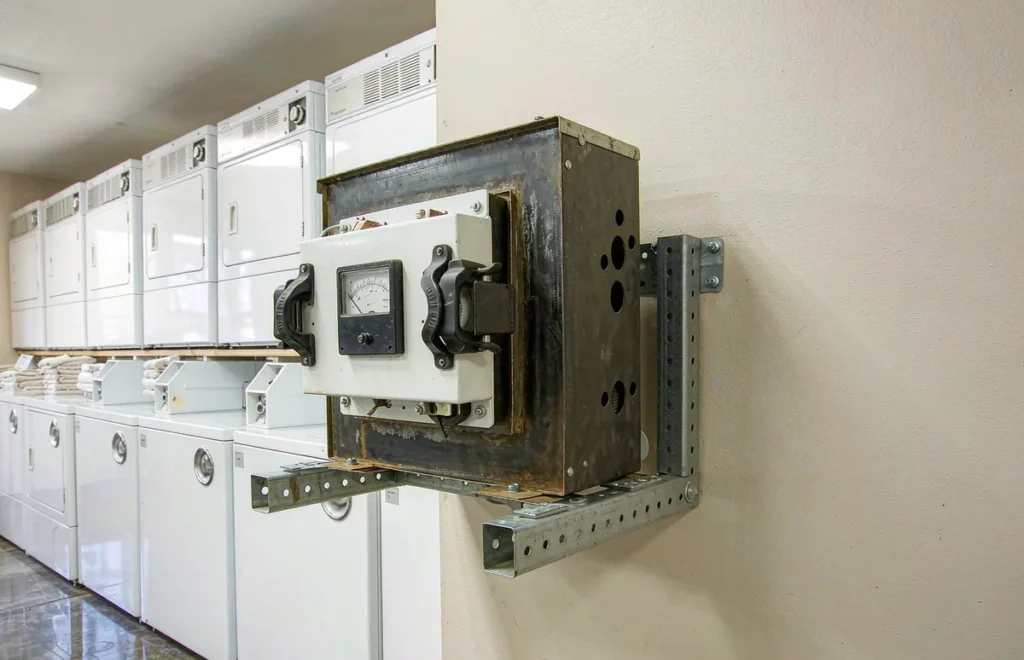
Step Down Transformer for Laundromats and Laundries
A laundromat is the closest thing to a continuous-duty test rig that you will find in a commercial building. Twelve washers running from seven in the morning until ten at night, each one cycling through fill, wash, drain and spin four or five times an hour. Motors starting and stopping constantly. Heat, humidity and water on the floor. If you are running imported 110V machines on 220V mains and the step down transformer was chosen by adding up nameplate watts, this is the building where that shortcut shows up fastest.
I work at a transformer factory in Yueqing, China, and laundry projects come through my inbox regularly. Coin laundries, hotel and hospital laundries, on-premise laundries attached to a restaurant or a guesthouse, and dealers who supply the machines and need a transformer to go with the package. The questions are consistent, so let me answer them here the way I would answer over WhatsApp, without the brochure voice.

What Makes a Laundry Different From a Normal Shop
Two things, and both of them push the transformer harder than a buyer expects. The first is duty cycle. A washer does not draw power steadily. It fills, it agitates, it drains, it spins, and the spin is the part that hurts. The motor accelerates a drum full of wet fabric from a standstill several times an hour, which is exactly the moment when current spikes to two and a half or three times the running figure. Multiply that by twelve machines and you have hundreds of motor starts every single day.
The second thing is heat. A laundry room at closing time is not a comfortable place. Warm machines, warm air, humidity, and a transformer sitting in the middle of it with nowhere for its own heat to go. A unit that would run at a comfortable temperature in an air-conditioned workshop can run noticeably hotter in a laundry room, and hot insulation ages fast. That is why I care more about where the unit is mounted in a laundry than in almost any other building we quote for.
One honest point before we go further, because it saves people money. Most electric-heated tumble dryers sold in North America run on 240V, not 110V. A step down transformer is not the right answer for those, and I will tell you that rather than sell you a box that cannot do the job. What does belong on a 110V feed is the washer side, gas-heated dryers where only the drum motor and the controls are 110V, folding tables, utility pumps and the smaller support equipment. Check your dryer nameplate before you build a load sheet.
Which Laundry Equipment Usually Runs on 110V
When a laundry sends me an equipment list, I mark each line as 110V, 220V or “check the nameplate”. Here is how the list normally falls out.
- Coin-operated top-load washers, typically 700W to 1000W each while the motor runs, and they start and stop all day.
- Front-load commercial washers with 110V controls, often 500W to 1500W depending on whether there is an internal heater.
- Gas-heated tumble dryers, where the 110V side covers the drum motor, the igniter and the control board, usually 300W to 600W per pocket.
- Stack dryers with two pockets on one frame, so one unit can mean two 110V loads.
- Folding tables, steam tables and finishing stations, 200W to 800W each, mostly small and steady.
- Utility and drain pumps, 300W to 900W, short bursts with a real motor surge on every start.
- Spotting boards and small extractors, 150W to 600W, hand operated so the duty is light.
- Coin and card payment units, lighting and exhaust fans, small individually but always on during trading hours.
What does not need us: laptops, phones, LED lighting with a wide-range driver, and anything carrying a 100-240V, 50/60Hz label. Those are already happy on your 220V supply.
How to Work Out the Total Load for a Laundry
The method is short. Count the machines, take the watts off each nameplate, apply a simultaneity factor, then add headroom. The tricky part is picking the factor, and the answer depends on your business model rather than on the equipment.
A coin laundry runs unattended. Machines start whenever a customer walks in, so at peak times you might have half the bank spinning at once, but rarely all of them. A factor of 0.5 works well there, and 0.6 if the shop is busy enough to have people waiting. An on-premise laundry with staff loading machines on a schedule is the opposite case, because staff tend to run everything at once so they can finish the shift. Use 0.7, and if the laundry serves a hotel with a morning turnaround deadline, treat it as 0.8.
The formula I give buyers is simple enough to run on a phone: take the number of machines, multiply by the watts on one nameplate, multiply by your simultaneity factor, then add 30 percent and treat that figure as VA. The 30 percent is doing two jobs at once. It covers the fact that motors draw current slightly out of phase with voltage, which means watts and VA are not the same number, and it leaves you headroom for motor inrush and for the day one machine gets replaced with a bigger one.
A Worked Example: Twelve Coin-Operated Washers
Twelve top-load washers at 850W each gives 10,200W of connected load. That number is meaningless on its own, and it is the number most buyers start with. Apply a simultaneity factor of 0.5 for a coin laundry and the realistic peak is around 5100W. Fold in the gas dryers at 500W each for two pockets, the exhaust fans, the lighting and the payment terminals, call it another 1500W of simultaneous load, and the peak lands near 6600W. Add 30 percent and you are at roughly 8600VA.
That is past what a single unit in our range should carry, and I would not quote it as one box anyway. We would split the washer bank into two rows, put a 5000VA bidirectional unit on each row, and keep the dryers and lighting on their own circuit. Two units cost a little more than one, and they buy you two things. If a unit ever needs service you are still trading at half capacity instead of closing, and no single winding ends up carrying the whole bank’s motor current.
| Laundry setup | Connected watts | Factor | Peak watts | Suggested rating |
|---|---|---|---|---|
| 4 washers, small shop | 3400 W | 0.5 | 1700 W | ST-2000 with RCD |
| 6 washers plus fans and lighting | 6500 W | 0.5 | 3250 W | STU-5000 bidirectional |
| 8 washers, gas dryers, on-premise | 8600 W | 0.7 | 6000 W | STU-5000, or split across two units |
| 12 washers and dryers, coin laundry | 11700 W | 0.5 | 5850 W | Two STU-5000 units, one per row |
| Hotel laundry with turnaround deadline | Low thousands of watts per machine | 0.8 | Send us the list | Sized to the schedule, not the nameplate |
| Folding bench and spotting station | 1200 W | 0.6 | 720 W | DT-1000VA bidirectional automatic |
Why Long Full-Load Duty Changes the Answer
Here is where laundries differ from a workshop that runs a machine for twenty minutes and then stops. A laundromat trades for fourteen or fifteen hours. The transformer is energised for every one of those hours and sits at a good percentage of its rating for most of them. It never gets a proper cooling break, and the room it sits in is warm.
That is why we wind laundry units with copper and why I will not quote a unit that runs above roughly seventy percent of its rating for hour after hour. You could buy a smaller box and it would work for a while. Then one summer the exhaust fan fails, the room temperature climbs, and the unit starts tripping or the insulation starts cooking. Buying one step up on the rating is the cheapest insurance in this business.
Installation: Ventilation, Cable Size, RCD and Earthing
The transformer is only part of the job, and the wiring around it is where laundries get caught out.
Airflow Around the Unit
Give it a clear path on every vented face, at least 100mm, and more if you can manage it. Do not mount it inside a closed cupboard, do not put a shelf above it, and do not stack detergent drums beside it. If the laundry already runs hot, consider mounting the unit on an outside wall in a ventilated enclosure with a short cable run back inside, or keep the room’s exhaust running during trading hours. Room temperature matters more than most people believe. A transformer rated for continuous duty at 40 degrees Celsius ambient is not the same product as one cooking at 55 degrees in the corner behind a dryer.
Cable Size Matters More at 110V Than You Think
This is the point I bring up on almost every laundry call. For the same power, a 110V circuit carries twice the current of a 220V circuit. Twice the current over the same length of copper means roughly four times the voltage drop. On a long run down a laundry hall, a cable that looks generous on paper can eat several volts before it reaches the last machine, and those volts come off the top of the washer’s supply margin.
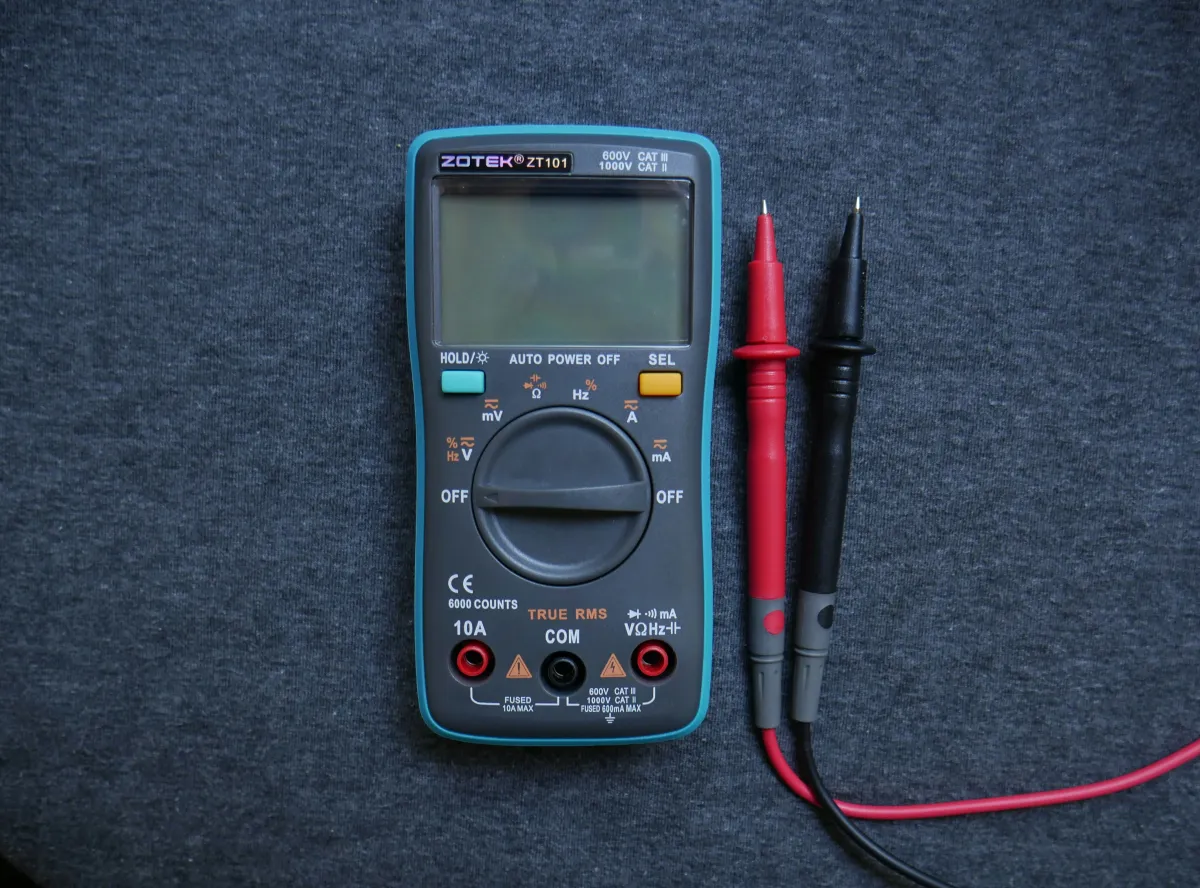
Two rules of thumb I give installers. Keep the 110V runs as short as you reasonably can, and if a run has to be long, go up a size on the conductor rather than assuming the standard size will do. The second rule: check the voltage at the far end of the run with the machines running, not with them idle. An idle reading tells you almost nothing. If the voltage at the last washer sags badly when three of them spin at once, the transformer may be perfectly fine and the cable is the problem.
RCD, Earthing and Wet Floors
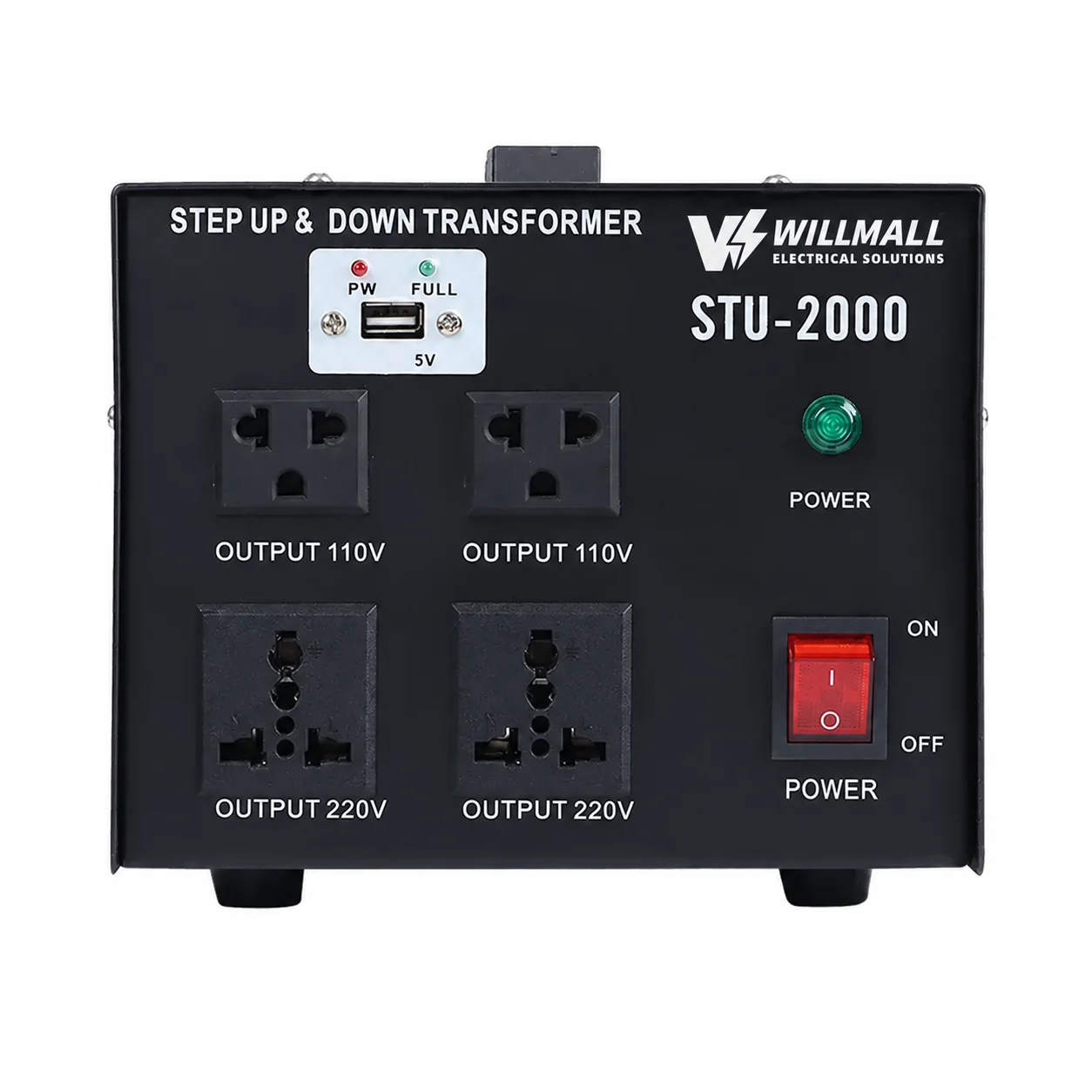
A laundry is a wet room with a wet floor and staff standing on it, so RCD protection is not optional in my view. On our ST-2000 the RCD is part of the build, so a fault on the 110V side trips the unit locally instead of waiting for a breaker at the far end of the building. If you are feeding a bank of machines from a larger unit, make sure every 110V circuit downstream is protected properly, not just the incoming supply.
Earthing is the other half of it. The enclosure has to be bonded to the building earth, the 110V output should feed proper sockets, and the sockets themselves should be mounted above the wash-down line rather than at skirting height. I have seen laundries where the sockets sit six inches off a floor that gets hosed nightly, and that is a problem waiting to happen regardless of how good the transformer is.
The Units We Build for Laundry Work
We are a factory, not a trading company, so I can tell you exactly what comes off our line. The ST-2000 is a 2000VA step down transformer taking 220V in and giving 110V out, with RCD protection built in. It suits a small laundry, a folding station or a single row of machines in a guesthouse.
When the load climbs we move to the STU series. STU-3000 and STU-5000 are bidirectional, stepping up as well as down, and they carry the heavier side of laundry work: washer banks, on-premise laundries, extractor rooms and the split-bank arrangements I described above. Bidirectional matters in a laundry more than in most buildings, because equipment arrives from both sides of the world and you will eventually need to go the other way.
The DT-1000VA is our bidirectional automatic unit, and it fits folding benches, offices and small equipment carts where a modest load needs to work in either direction without anyone thinking about it. Then there is the Variac range at 500VA, 1KVA, 2KVA and 3KVA. Adjustable voltage sounds dull until a technician is commissioning a rebuilt machine and wants to watch how it behaves at 105V and 115V before committing it to a full day of linen.
MOQ, Lead Time and Batch Test Records
Numbers, because buyers ask these before anything else. Our minimum order is 10 pieces, whether you are fitting out one laundry or stocking a dealership. Production runs 15 to 25 days depending on quantity and whether you want custom labelling. We ship FOB Ningbo or Shanghai, and every unit carries a 12-month warranty. Inside the carton you get a test record from the batch your unit came from, showing input voltage, output voltage under load and no-load current, because we test 100 percent of what we build in our own factory here in Yueqing.
Customisation is where laundry orders get interesting. We can fit the socket type your machines use, set the output to 110V or 120V depending on what your nameplates say, print your laundry or distributor label on the faceplate, and pack units individually so they can go to separate sites. If you are a dealer supplying a packaged laundry, tell us and we will keep the branding on your side of the transaction.
We wind with copper here, not aluminium. In a laundry, running fourteen hours a day in a hot room, that difference is not academic. Aluminium windings run hotter at the same rating, and a laundry already has no cooling margin to spare.
What to Send Us for a Sized Quote
You do not need a finished specification to talk to us. Send what you have. The machine list with the wattage from each nameplate, a photo of one nameplate if that is easier, how many machines you plan to run, your mains voltage and frequency, the socket type your machines use, and roughly how long the cable run to the furthest machine will be. From that we can size the unit, quote the quantity and give you a delivery window, usually the same working day.
Two things worth reading while you put that list together. If you are starting from a single machine rather than a full bank, our guide to a Washing Machine Step Down Transformer: 220V to 110V Guide walks through the small end of this work. And if you are still working out whether you need a step down unit, a step up unit or something that does both, our page on step up & down transformers explains the difference in plain terms. There is a full set of more application guides on the site as well.
If anything is unclear, send the machine list and a photo of the nameplate on one washer. Sizing a step down transformer for a laundromat is routine work for us, and we would much rather spend ten minutes on WhatsApp than have you order a unit that trips the first busy Saturday.
Laundry Transformer Questions I Get Asked Most Weeks
These are the messages that fill my inbox, answered the way I would answer them on a call.
How do I calculate the total load for a laundromat transformer?
Multiply the number of machines by the watts on one nameplate, apply a simultaneity factor, then add 30 percent and treat the result as VA. A coin laundry sits around 0.5, an on-premise laundry around 0.7, and a hotel laundry with a turnaround deadline closer to 0.8. Never size off the total connected watts.
Can one transformer run twelve washing machines?
Not comfortably, and I would not quote it that way. Twelve top-load washers at 850W each works out near 8600VA once you apply a realistic factor and add headroom, which is past what one unit in our range should carry continuously. We usually split the bank into two rows with a 5000VA unit on each.
Why does cable size matter more on a 110V laundry circuit?
Because at 110V the current is double what the same load would draw at 220V, and voltage drop rises with the square of the current for a given length. Long 110V runs down a laundry hall can lose several volts. Keep runs short, go up a conductor size on long runs, and measure voltage at the last machine while the machines are running.
How much ventilation does a laundromat transformer need?
At least 100mm clear on every vented face, and more is better. Do not box it into a closed cupboard or stack detergent drums beside it. A laundry room is warm and humid, so mount the unit where air can move past it and keep the room exhaust running during trading hours.
Do I need RCD protection on a 110V laundry supply?
Yes. A laundry is a wet room with a wet floor and staff standing on it. On our ST-2000 the RCD is built into the unit, so a fault on the 110V side trips locally instead of waiting for a breaker at the far end of the building. Keep sockets mounted above the wash-down line as well.
Sending us your equipment list costs nothing and usually prevents a sizing mistake. Tell us how many machines you run, how long the cable runs are, and which country you are in. We will come back with a recommended unit, a quantity and a price, normally the same working day.
Or talk to us directly: WhatsApp +86 197 3022 6757 · Email sales@wilmall.com
MOQ 10 pcs · Lead time 15-25 days · FOB Ningbo or Shanghai · 12-month warranty