Step Up vs Step Down Transformer: What Is the Difference?
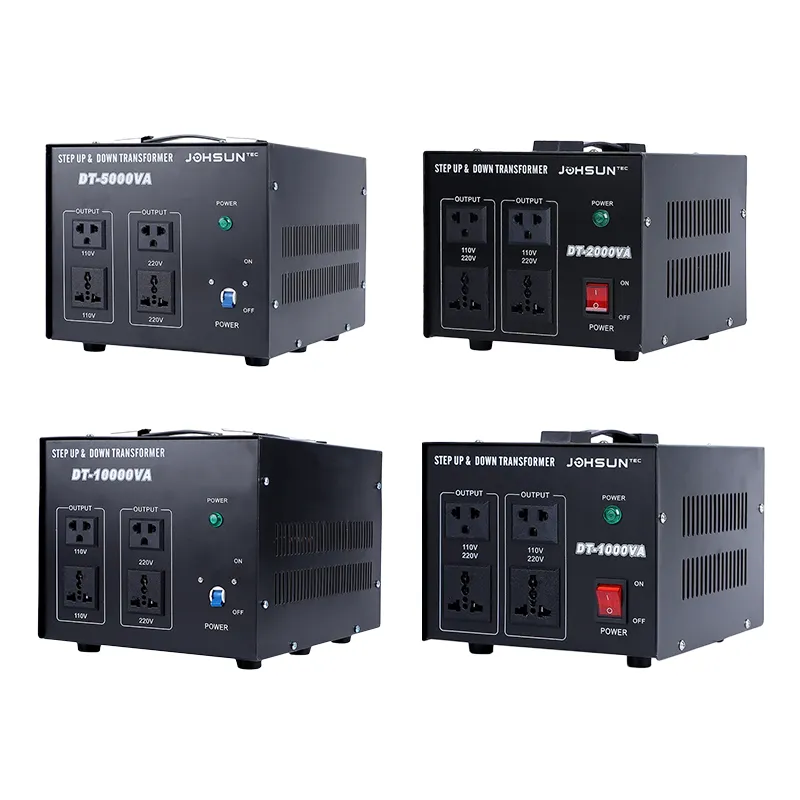
Quick answer: a step up transformer raises voltage (e.g. 110V to 220V) and a step down transformer lowers it (e.g. 220V to 110V). They are the same physical machine — a transformer is reversible — what changes is which side you call input. Many of our models are wired for both directions on one unit.
Key Takeaways
- Step up and step down are the same machine, different direction.
- 110V country + 220V appliance = step up.
- 220V country + 110V appliance = step down.
- Size on VA with headroom, not on the label name.
Direction at a Glance
| Situation | Direction |
| 110V country, 220V appliance | Step up |
| 220V country, 110V appliance | Step down |
| Moving between both | Two-way unit |
The Simple Rule: It Is the Same Transformer
A transformer has two windings. If you feed the low-voltage side, it steps the voltage up. Feed the high-voltage side, it steps it down. There is no such thing as a “step up only” or “step down only” transformer at the component level — manufacturers just label the intended direction. This matters because a two-way transformer (often called step up/down) gives you both directions in one box, useful for travellers and resellers stocking one SKU.
Step Up: 110V to 220V
You need a step up when you live in a 110-120V country (US, Canada, Japan, Taiwan) but bought a 220-240V appliance (European, Australian, most Asian). Common cases:
- A European espresso machine or induction cooker in the US.
- Australian power tools imported to North America.
- 220V air conditioners or water heaters used in 110V homes.
Wattage rule: size 20-30% above the appliance load, more for motors and compressors.
Step Down: 220V to 110V
This is the direction the Middle East, Africa and Southeast Asia need most — US or Japanese 110V appliances (blenders, CPAP, small kitchen gear, US-spec TVs and consoles) on 220V mains. The sizing rule is identical, and RCD protection on the output side is a smart addition for safety.
Step Up vs Step Down: Which Direction Do You Need?
| Your situation | Direction | Example size |
|---|---|---|
| 110V country, 220V appliance | Step up (110 to 220) | 2000W appliance → 2500VA |
| 220V country, 110V appliance | Step down (220 to 110) | 1500W appliance → 2000VA |
| Moving between both / reseller | Two-way step up/down | Pick the higher load direction |
Do Not Buy Based on the Name on the Box
Check the VA rating and the actual input/output labels, not just whether it says “step up” or “step down”. A cheap unit rated for continuous 110V use may overheat when you push 220V through it in the reverse direction. If you need both directions reliably, buy a genuine two-way model with the VA printed for both sides.
Voltage direction is a label. VA rating is the truth. Buy on VA with headroom, and the direction will take care of itself.
Questions Customers Ask Us
Can I use one transformer for step up AND step down?
Yes — our step up/down models switch direction at the terminals. Tell us both voltages when ordering and we will confirm the wiring.
Does direction affect efficiency?
Barely. Efficiency stays 95%+ in either direction on a properly sized unit.
I bought a 110V appliance for a 220V country. Which do I need?
A step down transformer from 220V to 110V. Check the appliance wattage and add 20-30%.
Do you sell two-way units in bulk?
Yes, and they are a popular SKU with distributors — one model covers both customer types. Ask us for the distributor price list.
Still not sure which model fits?
Tell us your appliance, wattage and country — we reply within 24 hours with a straight recommendation.
Related Posts
- Step Up Down Transformer: Two-Way Voltage Conversion Explained
- How to Calculate Transformer VA Rating: A Simple Formula
For the full lineup of both types under one roof, see our step up and step down transformer range.
Step up and step down in real applications
A step down transformer takes a higher voltage down to a lower one, 220V to 110V, which is the direction most US appliances need in a 220V country. A step up takes a lower voltage up to a higher one, 110V to 220V, which is the direction a buyer needs when running European or Asian 220V appliances from a 110V supply. The direction is decided entirely by the appliance label, it tells you the input voltage the appliance expects.
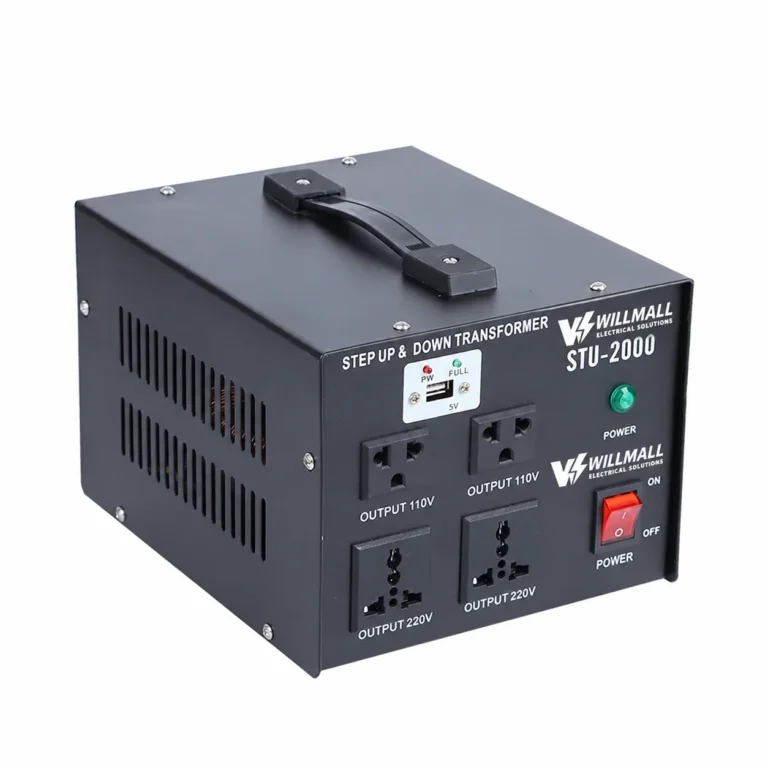
The internal difference is the same transformer can often be reconnected as either direction, but a purpose-built unit is wound and tapped for one direction and its ratings hold at the rated current. A two-way unit, like our STU series, has taps for both directions and handles both, which is convenient for buyers who move between markets.
Sizing for both directions
The sizing rules are identical in both directions: take the appliance’s peak running watts, add margin for surge and power factor, and keep the result under 80% of the transformer VA. A 1000W step down load wants a 1500VA unit, and a 1000W step up load wants the same. The current on the low-voltage side is higher, which is why the cable gauge matters more on the 110V side.
For a step up transformer, the input side draws more current than the output, a 2000VA step up draws about 18 amps at 110V input, which needs a 20A circuit. Check the circuit before you plug it in, an overloaded circuit is a fire risk, not just a trip risk.
Common mistakes in both directions
The first mistake is buying the wrong direction and only discovering it when the appliance is damaged. The second is using a plug adapter instead of a transformer, which never changes the voltage. The third is undersizing, running a 1500W load on a 1000VA transformer and watching it overheat.
All three are avoidable with the same check: read the appliance label, match the direction, and size with the 80% rule. If you are not sure, send us the appliance label photo and we will confirm the direction and the size within one message.
The transformer as a voltage translator
Think of the transformer as a translator between two voltage worlds. The 110V world covers the US, Japan, Taiwan and parts of South America. The 220V to 240V world covers Europe, Asia, Africa and the Middle East. A household that crosses between these worlds, an expat, an importer, a hotel serving American guests, needs a translator, and the transformer is it.
The translator works both ways, but the direction must match the appliance. A US blender on 220V mains is a step down job. A European kettle on 110V mains is a step up job. The same transformer cannot do both unless it is a two-way unit, and the two-way unit needs the tap set correctly every time.
Reading the label to choose the direction
The appliance label is the whole answer. It shows the input voltage the appliance was built for, 110V, 120V, 220V, 230V or 240V. If your mains voltage is higher than the label, you need a step down. If your mains is lower, you need a step up. If the label shows a range like 100V to 240V, you need neither, just a plug adapter.
The frequency is a separate line on the label. Most modern electronics accept 50Hz and 60Hz, but appliances with synchronous motors, clocks, turntables, run at the wrong speed on the wrong frequency. The transformer does not change the frequency, so check both lines on the label, not just the voltage.
A quick selection table
For a 110V appliance on 220V mains, buy a step down transformer sized with the 80% rule. For a 220V appliance on 110V mains, buy a step up transformer, same sizing rule. For a household with both directions, buy a two-way unit and label the taps. For small electronics marked 100V to 240V, buy nothing but a plug adapter.
If the appliance list is long, send it to us and we will build the selection table for you, transformer size and direction for every appliance, within one working day. It is the same table we give to our distributors, and it saves the guesswork that damages appliances.
The transformer as a voltage translator
Think of the transformer as a translator between two voltage worlds. The 110V world covers the US, Japan, Taiwan and parts of South America. The 220V to 240V world covers Europe, Asia, Africa and the Middle East. A household that crosses between these worlds, an expat, an importer, a hotel serving American guests, needs a translator, and the transformer is it.
The translator works both ways, but the direction must match the appliance. A US blender on 220V mains is a step down job. A European kettle on 110V mains is a step up job. The same transformer cannot do both unless it is a two-way unit, and the two-way unit needs the tap set correctly every time.
Reading the label to choose the direction
The appliance label is the whole answer. It shows the input voltage the appliance was built for, 110V, 120V, 220V, 230V or 240V. If your mains voltage is higher than the label, you need a step down. If your mains is lower, you need a step up. If the label shows a range like 100V to 240V, you need neither, just a plug adapter.
The frequency is a separate line on the label. Most modern electronics accept 50Hz and 60Hz, but appliances with synchronous motors, clocks, turntables, run at the wrong speed on the wrong frequency. The transformer does not change the frequency, so check both lines on the label, not just the voltage.
A quick selection table
For a 110V appliance on 220V mains, buy a step down transformer sized with the 80% rule. For a 220V appliance on 110V mains, buy a step up transformer, same sizing rule. For a household with both directions, buy a two-way unit and label the taps. For small electronics marked 100V to 240V, buy nothing but a plug adapter.
If the appliance list is long, send it to us and we will build the selection table for you, transformer size and direction for every appliance, within one working day. It is the same table we give to our distributors, and it saves the guesswork that damages appliances.