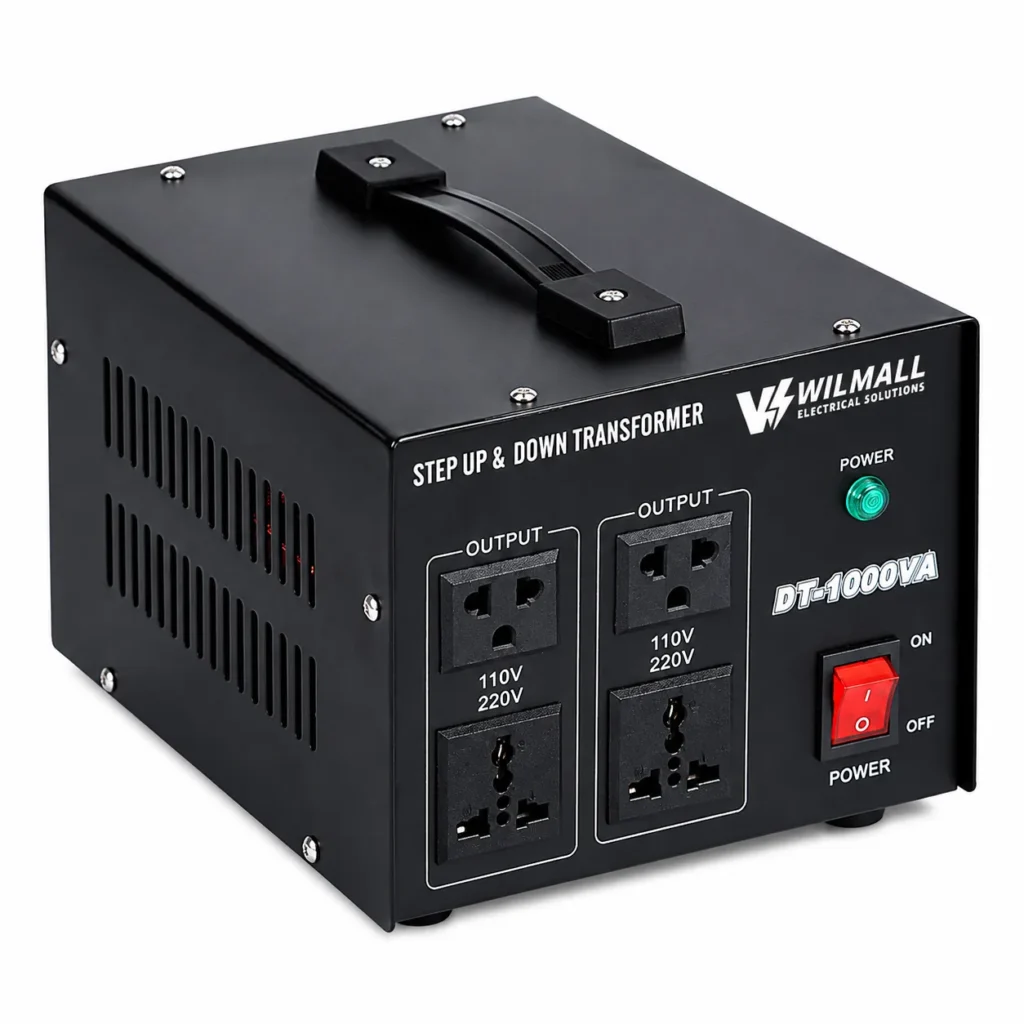
3 Phase Step Down Transformer: 380V to 220V Guide
Industrial plants in many countries run 3-phase 380V mains, while much machinery and auxiliary equipment needs 220V. A 3-phase step-down transformer converts between them safely. Here is what industrial buyers need to know.
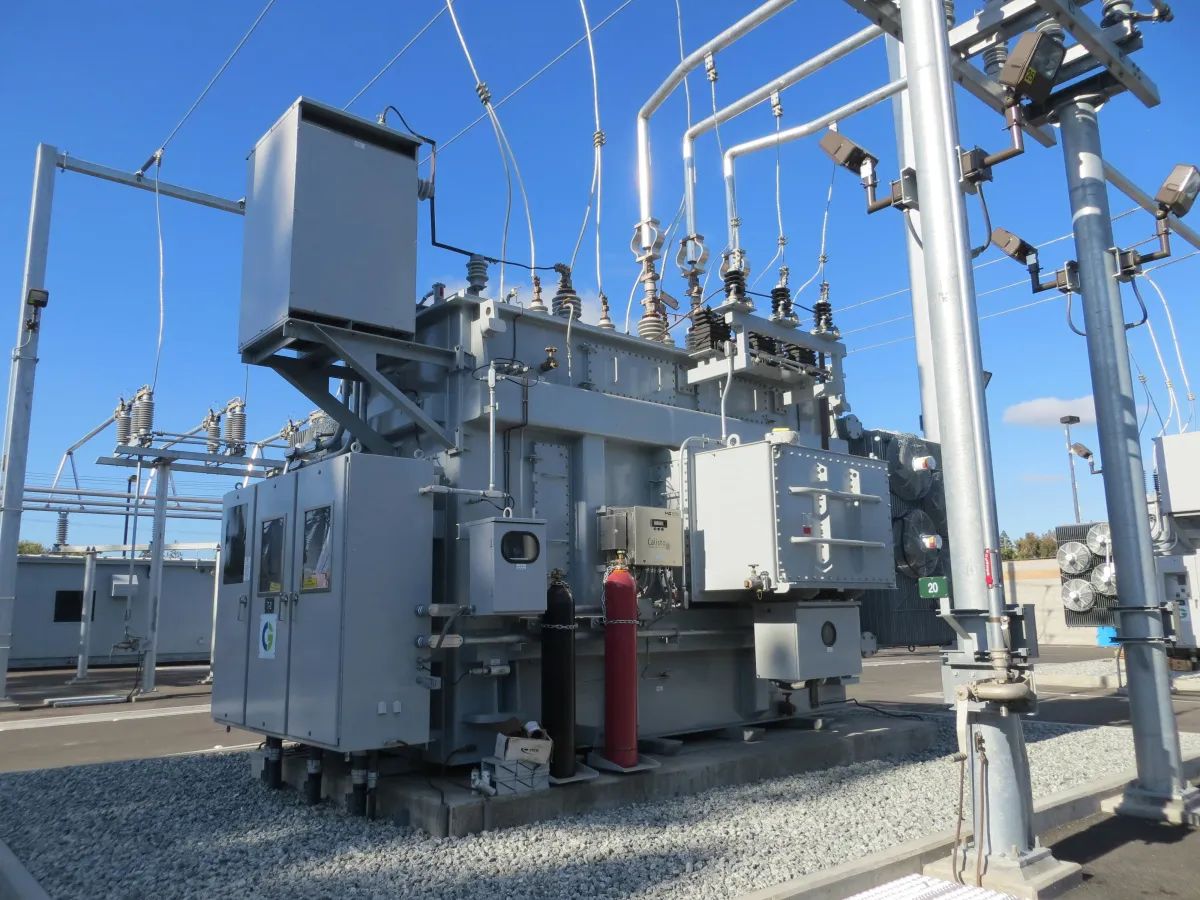
What a 3-phase step-down transformer does
It takes three-phase input at 380V and delivers three-phase output at 220V, at the same frequency. This lets you run 220V three-phase equipment from a 380V supply without rewiring the machine. The transformer can also provide isolation, protecting sensitive equipment from grid noise and transients.
When you need one
- 380V mains with 220V three-phase machines — the most common configuration.
- Converting imported machinery to the local supply voltage.
- Isolating equipment from an unstable or noisy grid.
- Matching machine nameplates — many Chinese and European machines are built for 380V but installed in 220V three-phase countries.
Sizing a 3-phase transformer
Calculate VA = line voltage × line current × 1.732 (the square root of 3). Add at least 20-30% margin for motor start-up. Example: a 220V, 10A machine needs roughly 220 × 10 × 1.732 = 3810VA, so a 5KVA unit is a safe choice. For motor loads, consider the start-up surge — motors can draw 3-6 times running current at start.
| Machine load | Rated current at 220V | Recommended transformer |
|---|---|---|
| 5KVA | ~13A | 5KVA |
| 10KVA | ~26A | 10-15KVA |
| 20KVA | ~52A | 20-25KVA |
| 30KVA | ~79A | 30KVA+ |
Delta vs star connections
Output can be delta or star (with neutral). Tell us what your machine expects — we build to match, including 380V to 220V delta-star configurations. A star output with neutral gives you both 220V phase-to-phase and 127V phase-to-neutral, useful for mixed loads. Specify the connection type on the machine nameplate and we will match it exactly.
Single-phase loads from a three-phase transformer
Many plants run a mix: three-phase motors plus single-phase control circuits and lighting. A 380V to 220V three-phase transformer with a star (wye) secondary provides 220V phase-to-phase and 127V phase-to-neutral, covering three-phase machines and single-phase auxiliary loads from one unit. If your single-phase load is large, we can add a separate single-phase transformer or design the secondary taps accordingly — tell us the load breakdown and we will engineer the right solution.
Protection and installation
Every three-phase transformer ships with its connection diagram and terminal markings, and we recommend an upstream breaker sized to the transformer’s primary current. For machines with sensitive controls, add a proper earth connection and keep the transformer away from heat sources. Our units are tested at full load before packing, with test reports provided.
When a 380V to 220V transformer is not enough
Some installations also need voltage regulation or isolation. If the incoming grid is unstable, add a stabiliser or AVR on the primary side. If the machine has sensitive electronics, an isolation transformer upstream blocks noise and transients. Our engineers can help you design the full power chain — transformer, protection and regulation — so the machine sees clean, stable 220V three-phase.
Sizing check for motor-driven plants
For plants with several machines, add the VA of all machines that can run simultaneously — not the sum of every nameplate in the building. Add 25-30% margin, then round up. A plant with five 5KVA machines running four at a time needs roughly 4 × 5000 × 1.3 = 26KVA, so a 30KVA unit is the right size. Oversizing a little costs less than an undersized unit that trips under load.
Documentation and export support
Every three-phase transformer order ships with a specification sheet, connection diagram, CE / RoHS certificates and batch test reports. For project buyers, we also provide the technical file structure needed for market registration. Clear documentation is often the difference between a smooth installation and weeks of customs or acceptance delays.
Common mistakes when ordering three-phase units
- Mixing up line and phase voltage. A 220V three-phase machine draws more current than a 380V machine at the same VA — size the transformer and cables for the actual line voltage.
- Forgetting the frequency. The transformer passes frequency through unchanged; if the machine is 60Hz-only and the grid is 50Hz, a transformer alone will not fix it.
- Not specifying the connection. Delta vs star must match the machine — confirm before production.
- Skipping margin. Always add 20-30% for motor start-up and future loads.
Getting these four right at the quotation stage prevents the most expensive field failures. That is why we confirm the full spec sheet — input, output, connection, frequency, margin — in writing before any production begins.
Who buys 3-phase transformers
Our three-phase units go to machine importers, factory upgrade projects, water-pump stations, textile and food processing plants, and building contractors. Many orders start with a single machine that needs converting; satisfied customers return when they expand. Because we keep the specification on file, repeat orders are fast and identical.
Buying a 3-phase transformer from China
We build 3-phase units in project sizes with a specification sheet confirmed before production. Lead time for custom builds is typically 20-30 days after specification approval. CE / RoHS documentation and test reports are provided. Tell us the machine data — input, output, connection, and full-load current — and we will quote within 24 hours.
Frequently asked questions
How Three-Phase Transformers Are Built and Tested
A three-phase step-down transformer, such as 380V to 220V, is built around three identical core and winding assemblies, one per phase, connected in either star or delta. The testing is more involved than a single-phase unit, because each phase must be balanced. We run a turns-ratio test on all three phases, a no-load test that checks the balance of the three legs, a full-load test on a sample from each batch, and a hi-pot test on each unit. The batch test report records all of these, so you can see that all three phases delivered the rated voltage within tolerance. This matters for three-phase buyers because an unbalanced transformer causes motors to run hot and can damage three-phase equipment. When you compare suppliers, ask how they test the three phases, because a unit that passes a single-phase test but is unbalanced on the other two phases will still fail in your plant.
Delta vs Star: Which Connection Do You Need?
The delta and star connection choice affects the voltage you get out of a three-phase transformer. A star connection provides a neutral point and gives both a phase voltage and a line voltage, which is useful when your equipment needs 220V between phase and neutral. A delta connection has no neutral and provides the line-to-line voltage only. For a 380V to 220V step-down, the most common arrangement is a delta primary and a star secondary, giving 220V line-to-neutral for single-phase loads drawn from the three-phase supply. When you order, we confirm the connection arrangement against your equipment’s requirements, because getting it wrong means the wrong voltage at the terminals. If you are unsure, send us the machine nameplate and your supply details, and we will confirm the connection and the transformer rating before we build.
Single-Phase Loads from a Three-Phase Transformer
Many three-phase transformers feed a mix of three-phase motors and single-phase loads drawn between one phase and neutral. That works, but it needs care in balancing the load across the three phases. If you draw a heavy single-phase load from one phase only, that phase runs hotter and the transformer becomes unbalanced, which reduces its effective capacity and stresses the winding. The practical rules are: distribute single-phase loads across all three phases, and size the transformer for the largest phase load, not just the total. For a workshop running three-phase motors plus single-phase lighting and tools, the balance matters more than the raw total. When you order, tell us the single-phase loads and how they are distributed, and we will size the transformer so no single phase is overloaded.
When a 380V to 220V Transformer Is Not Enough
A 380V to 220V step-down transformer is the right tool for a defined job, but there are cases where it is not the complete answer. If your supply voltage is not 380V, for example a 415V line in some regions, the transformer must be wound for the actual input. If your equipment needs both 220V and 380V, you may need a multi-tap unit rather than a fixed ratio. If your load is highly dynamic, with frequent motor starts, the transformer must be sized for the peak inrush, not the running load. And if your site has unstable power, a transformer alone does not regulate voltage, you may need a stabilizer or an AVR as well. When you describe your full situation, the supply voltage, the equipment list, and the load profile, we will tell you honestly whether a standard 380V to 220V unit fits or whether you need a custom build.
Documentation and Export Support for Three-Phase Units
Three-phase transformers ship with the same core documents as single-phase units, plus a few specifics that matter for industrial buyers. The commercial invoice, packing list, and bill of lading are essential, and the batch test certificate is particularly important for three-phase units because it records the turns-ratio and balance tests on all three phases. For markets that require a certificate of origin, we arrange it with the order. For buyers who need to satisfy their own quality departments, the batch test report provides the documented evidence that the unit was tested before packing. We ship three-phase transformers to industrial buyers across Asia, the Middle East, Africa, and Latin America, so the documentation questions are familiar. If your buyer or customs broker needs a specific document, tell us at the quotation stage and we will plan it into the production schedule rather than chasing it at the port.
Can a single-phase transformer do 380V to 220V?
Only for single-phase loads. Three-phase machines need a three-phase transformer to keep all three phases balanced.
What is the standard size range?
We build 3-phase units in project sizes from 5KVA upward. Share your load and we confirm the VA.
Does the frequency change?
No — a transformer changes voltage, not frequency. The output frequency equals the input frequency.
Can you match a delta or star output?
Yes. Tell us your machine’s connection type and we build the output to match, including star with neutral.
What is the lead time for a 3-phase transformer?
Custom builds typically take 20-30 days after specification and sample approval.
Related reading
- 3 Phase Step Down Transformer: 380V to 220V Guide
- Control Transformer Sizing Guide
- Step Up and Down Transformer Products
Get a factory-direct quote
Tell us your machine’s voltage, current and connection type. Email sales@wilmall.com or WhatsApp +86 197 3022 6757 — we reply within 24 hours.