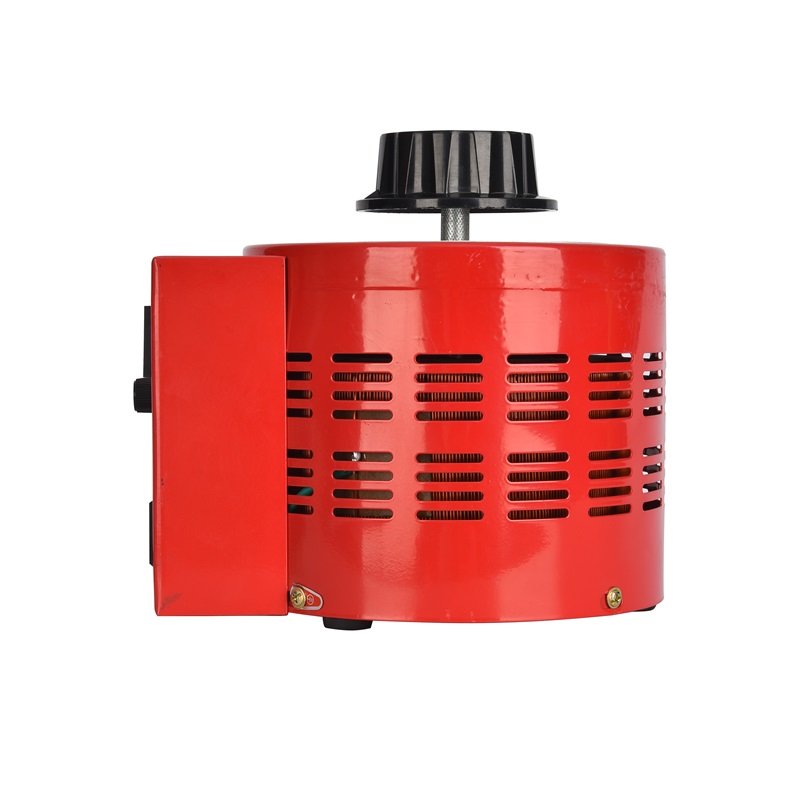
Variac vs Dimmer: Which One Do You Actually Need?
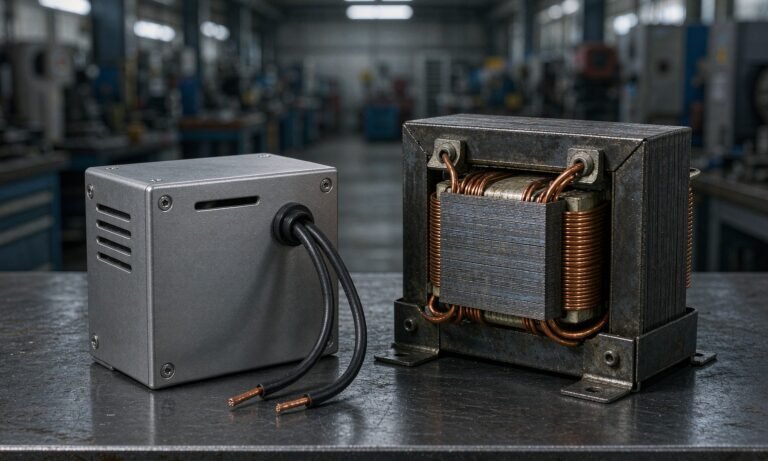
Walk into any electronics shop and you will see both on the shelf: a little rotary dimmer for a few dollars, and a boxy variable transformer that costs ten times as much. Both turn a knob and change the voltage going to your load. So why would anyone pay for the expensive one? The answer comes down to what your load is, how clean the output needs to be, and how much current you are actually switching. Here is the plain-language comparison.
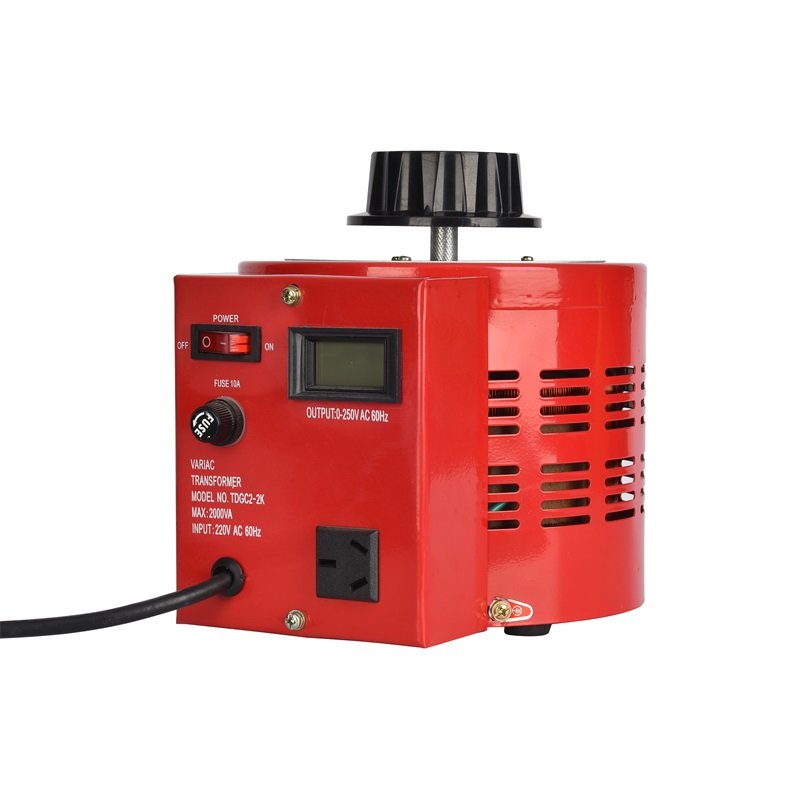
How a dimmer works
A dimmer is a triac-based switch that chops the sine wave. It turns the power on and off many times per second, and by adjusting the point in each half-cycle where it switches on, it changes the average voltage the load sees. That works brilliantly for incandescent lamps – they are slow to respond, so the chopped wave averages out and the light just dims.
The catch is in the waveform. A dimmer output is not a clean sine wave – it is a series of sharp-edged chunks. That is fine for a lamp filament, but electronic loads, motors and anything with a transformer inside see that chopped wave as noise and stress. A motor on a triac dimmer hums, heats up and loses torque. Some switch-mode supplies refuse to run on it at all.
How a Variac works
A Variac is a real transformer with a brush that taps the winding at different points. The output is a full, clean sine wave at whatever voltage you dial in. There is no chopping, no noise, no waveform distortion – just a lower or higher sine wave. That is why labs, test benches and workshops use Variacs for anything where the shape of the wave matters.
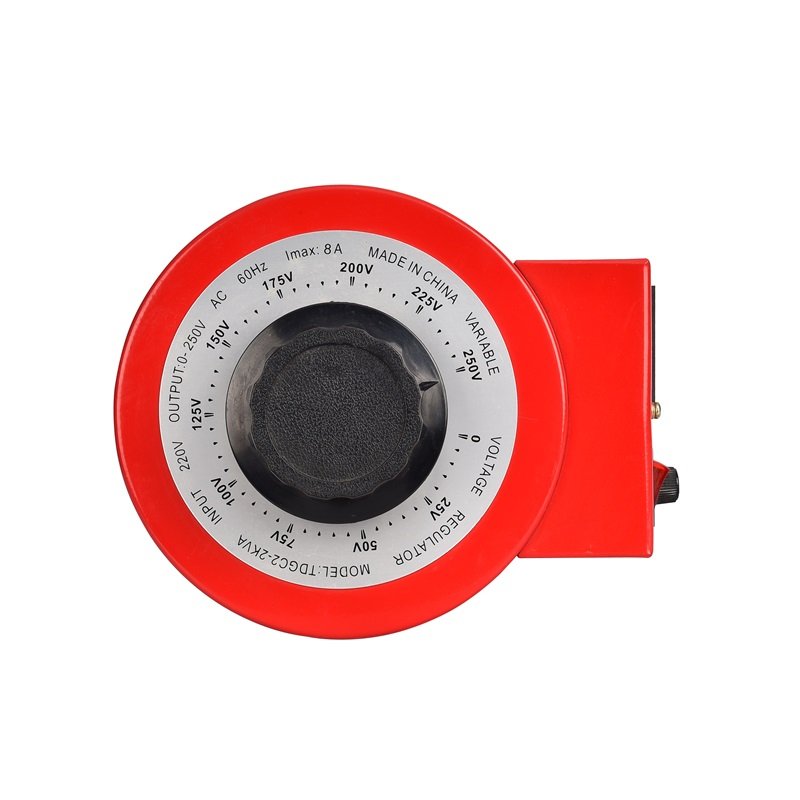
The comparison
| Factor | Dimmer (triac) | Variac (transformer) |
|---|---|---|
| Output waveform | Chopped, noisy | Clean sine wave |
| Incandescent lamps | Excellent | Excellent |
| LED / electronic loads | Can flicker, refuse | Clean supply |
| Motors | Hum, overheat | Smooth control |
| Current capacity | Small (amps) | Large (500VA-30KVA) |
| Price | Very cheap | More, built to last |
The rule of thumb: if your load is a lamp filament, a dimmer is the right tool and nothing more is needed. If your load is electronic, has a motor, or needs a precise voltage for testing, you want the clean output of a Variac. The premium you pay is for the sine wave – and for the fact that a Variac is a transformer that will outlive a dozen dimmers.
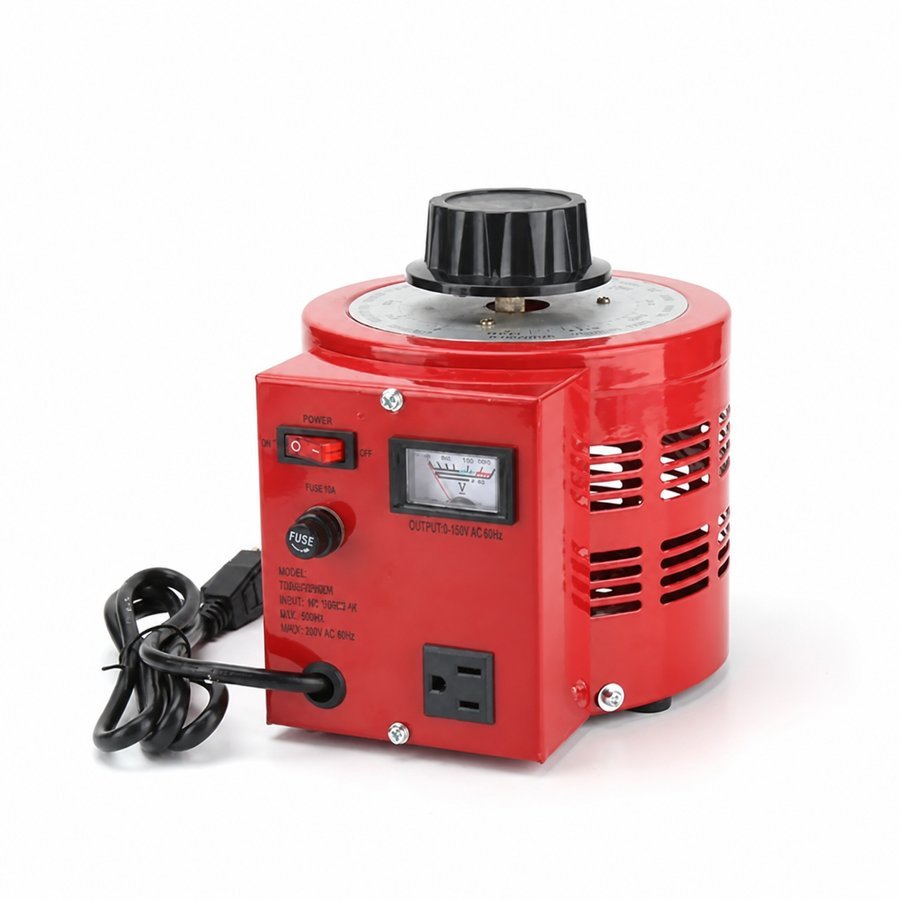
Why the waveform matters
Here is a real example from our customers: a workshop dimming a bench grinder with a triac dimmer. The grinder hummed, the brushes sparkled, and the motor ran hot enough to smell. The same grinder on a Variac ran smooth and cool, with full torque down to low speeds. The difference is exactly the difference between a chopped wave and a clean one.
The same applies to testing. If you are checking how a power supply behaves at low voltage, a dimmer tells you nothing – the supply sees a chopped wave and misbehaves. A Variac gives you a genuine 90V, 120V, 200V sine wave to test against. That is why every proper test bench has one.
Common mistakes
- Using a dimmer for motors. Chopped wave = hum, heat and lost torque.
- Using a dimmer for test benches. You need a real sine wave to test against.
- Overloading a Variac. Size on current, not watts.
- Buying a dimmer for LED circuits. Many LEDs flicker or refuse on triac dimmers.
- Forgetting the duty. Test and workshop use is continuous; buy for it.
Why buy from a factory directly
Wilmall manufactures TDGC2 and TSGC2 variable transformers from 500VA to 30KVA with copper winding, factory-aligned brushes and load tests on every unit. MOQ 10 pcs, 15-25 day lead time, FOB Ningbo or Shanghai. Tell us your load and we confirm the rating within 24 hours.
When a dimmer is the right tool
Let us be fair to the dimmer: for incandescent lamps it is the right and cheap answer, and nobody needs a Variac to dim a bedroom light. The dimmer is small, cheap, and efficient because it switches rather than dissipating. If your load is purely resistive lamps and the waveform does not matter, buy the dimmer and spend the savings elsewhere. The argument for the Variac only starts when the load is not a simple lamp.
The distinction is about the load, not the price. A dimmer is a switch that happens to look like a controller. A Variac is a transformer that happens to be adjustable. When your load cares about the shape of the wave – electronics, motors, anything sensitive – you need the transformer, and the extra cost is insurance against fried gear.
Lamp dimming with a Variac
A Variac dims lamps beautifully, and it does something a dimmer cannot: it dims them down to a genuine zero volts with a clean sine wave, which some very old or very sensitive lamp installations prefer. Stage lighting rigs, photography studios and display lighting use Variacs exactly for this – the dim is smooth, silent and free of the hum that some triac dimmers inject into audio environments.
The catch is simply cost and size. A Variac is a transformer, so it is bigger and dearer than a dimmer, and for a single lamp circuit it is overkill. But for a professional setup where the lighting is part of the product, the clean dim is worth it. We supply Variacs to studios and display builders who need the sine wave, not just the dim.
Buying for resellers
The reseller question is usually about range: who buys Variacs, and in what sizes? The answer is laboratories, universities, workshops, maintenance teams and testing companies – and they buy in the 500VA to 5KVA single-phase range, plus three-phase units for motor testing. A shelf of TDGC2 units from 500VA to 3KVA covers most of the market, with the digital display models selling well to newer workshops.
We private-label Variacs for resellers from MOQ 10 pcs, with custom sockets, analog or digital display, and your branding. If you are building a catalogue around test and workshop equipment, the Variac is a staple line that sells steadily all year. Send us your market and we will map the range.
The short version for buyers
Lamps and simple resistive loads: a dimmer is fine. Electronics, motors, test benches or anything that cares about the waveform: use a Variac. The TDGC2 range delivers a clean sine wave from 500VA to 30KVA, and we confirm the rating from your load in one message.
Reading the output rating
The Variac nameplate tells you the VA and the output range, and the number that matters for your load is the output current. Divide the VA by the output voltage to get the amps available – a 1KVA unit at 250V gives about 4A. Keep your load within that current and the Variac stays cool and the brush stays clean. When you send us your load details, the current is the number we size from.
And the practical last word: whatever you choose, match it to the load honestly. A dimmer on a lamp circuit is good value. A Variac on a test bench is an investment that pays for itself in saved gear. When the load is worth protecting, buy the transformer – and we will confirm the rating from your load in one message.
Frequently asked questions
What is the difference between a Variac and a dimmer?
A dimmer chops the sine wave with a triac to reduce average voltage; a Variac is a transformer that outputs a clean, full sine wave at the dialed voltage. For lamps a dimmer is fine; for electronics and motors you need the Variac.
Can I use a dimmer with LED lights?
Many LEDs flicker or refuse to dim properly on triac dimmers because the chopped wave confuses their drivers. A Variac gives clean output but is usually oversized for LED loads – check the driver compatibility first.
Will a Variac control a motor better than a dimmer?
Yes. A dimmer’s chopped wave makes motors hum and overheat. A Variac feeds a clean sine wave, so brushed motors run smooth with full torque.
Why do test benches use Variacs instead of dimmers?
Testing needs a genuine sine wave at each voltage. A dimmer output is chopped, so the device under test misbehaves. A Variac delivers a real 90V, 120V or 200V sine wave.
Can I order Variacs with my brand?
Yes, OEM branding from MOQ 10 pcs per model, with custom sockets and analog or digital display on request.
Related reading
- How to Choose a Variable Transformer
- Variable Transformer (Variac) Manufacturer
- Variable Transformer (Variac) Range
Get a factory-direct quote
Email sales@wilmall.com or WhatsApp +86 197 3022 6757 with your load type and watts. We confirm the rating within 24 hours. MOQ 10 pcs.