Variable Transformer (Variac) Manufacturer | Wilmall
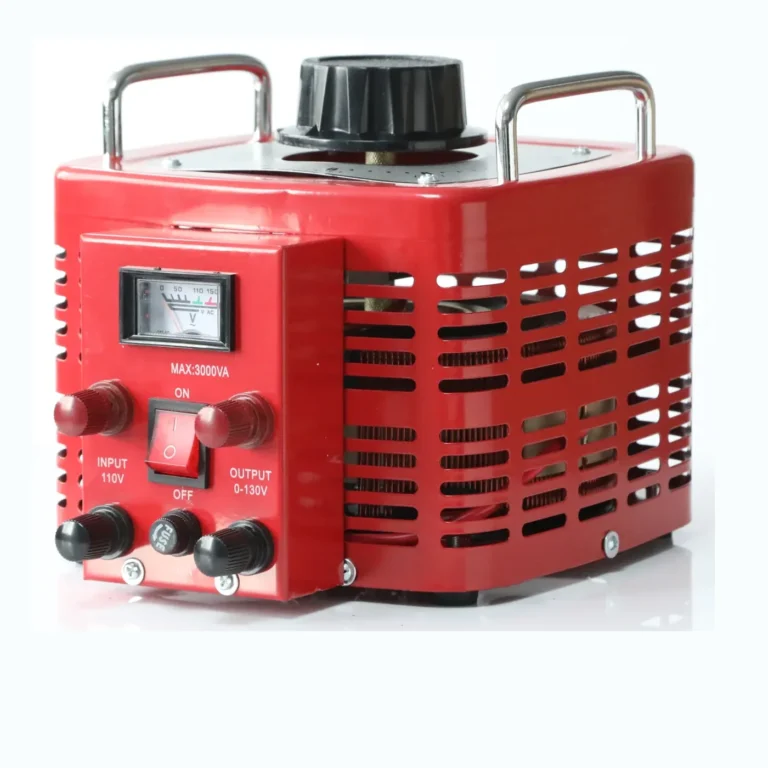
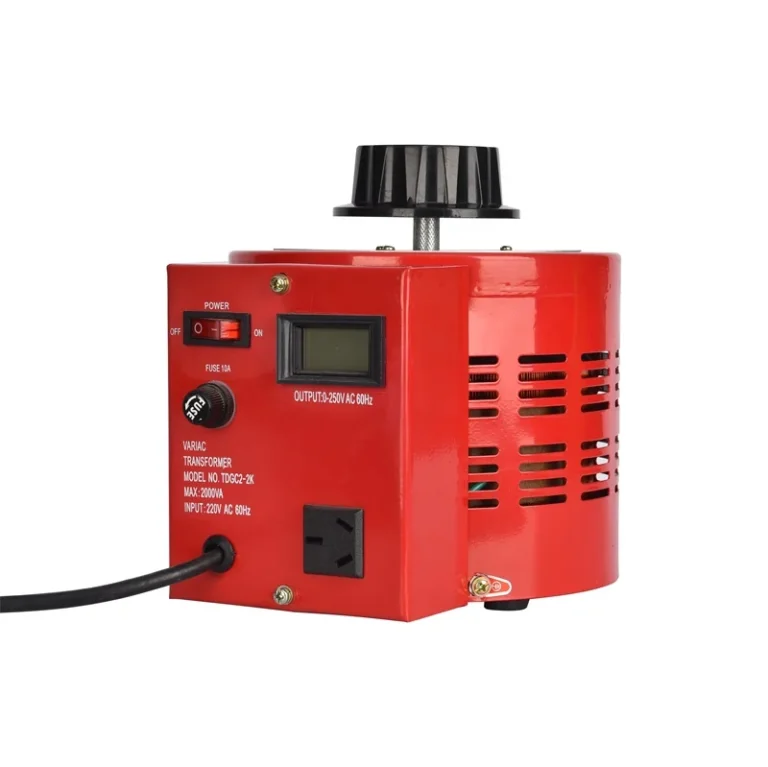
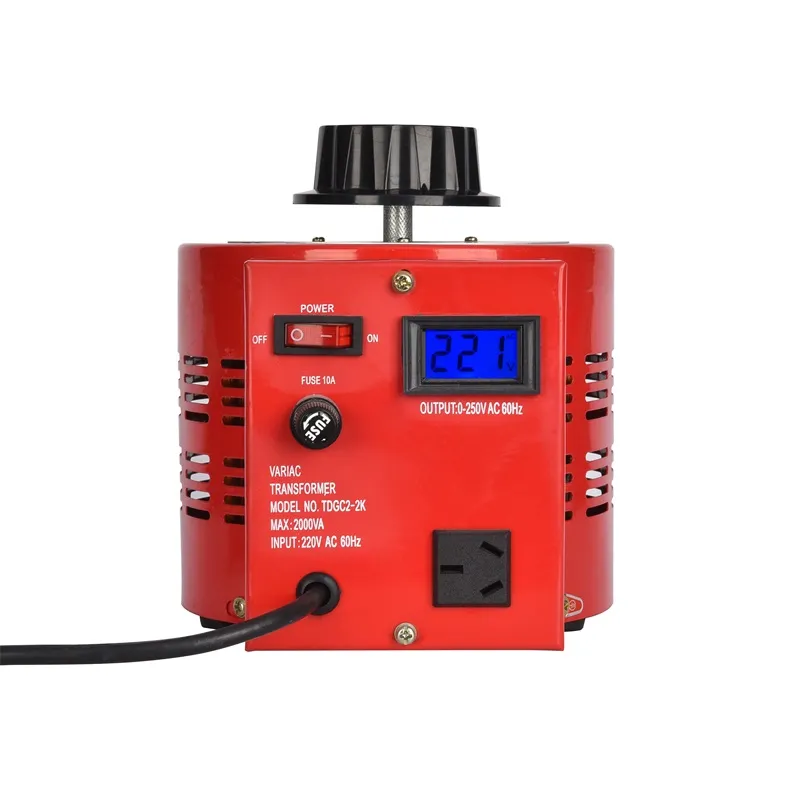
Wilmall is a variable transformer manufacturer based in Yueqing, Zhejiang, China. We build TDGC2J series variable transformers (variacs) from 0.5KVA to 5KVA with stepless 0-130V or 0-260V output, for laboratories, test benches, repair shops and industrial applications.
The variac family we supply
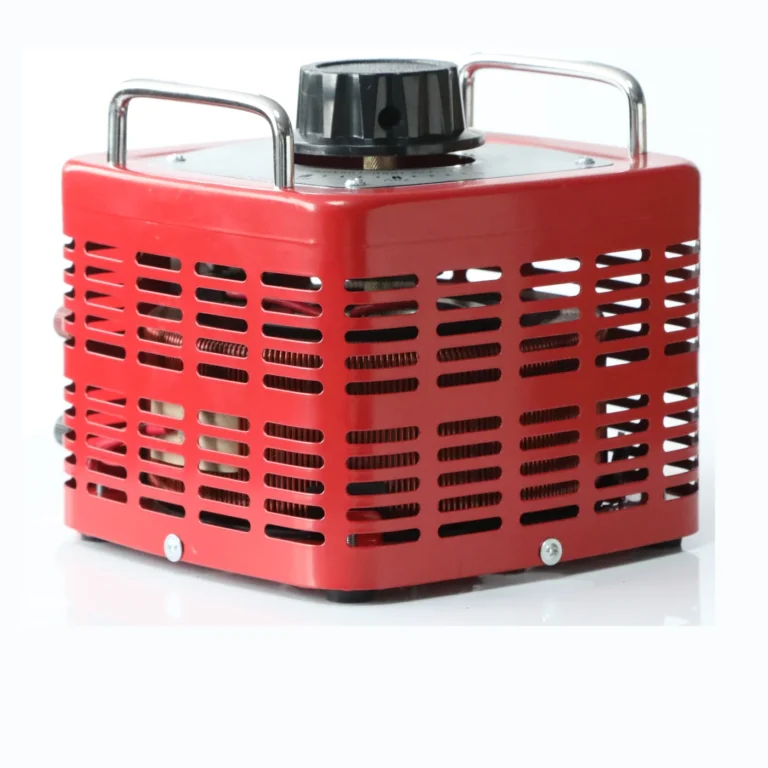
A variable transformer gives stepless AC voltage adjustment by moving a carbon brush along a single-layer winding. Our TDGC2J range covers 0.5KVA, 1KVA, 2KVA, 3KVA and 5KVA models with single-phase output.
- 0-130V output from a 220V input — for testing low-voltage circuits and 110V devices.
- 0-260V output from a 220V input — for over-voltage testing and adjustable bench supplies.
- Analog or digital display — voltmeter options to match your bench or product.
Typical applications
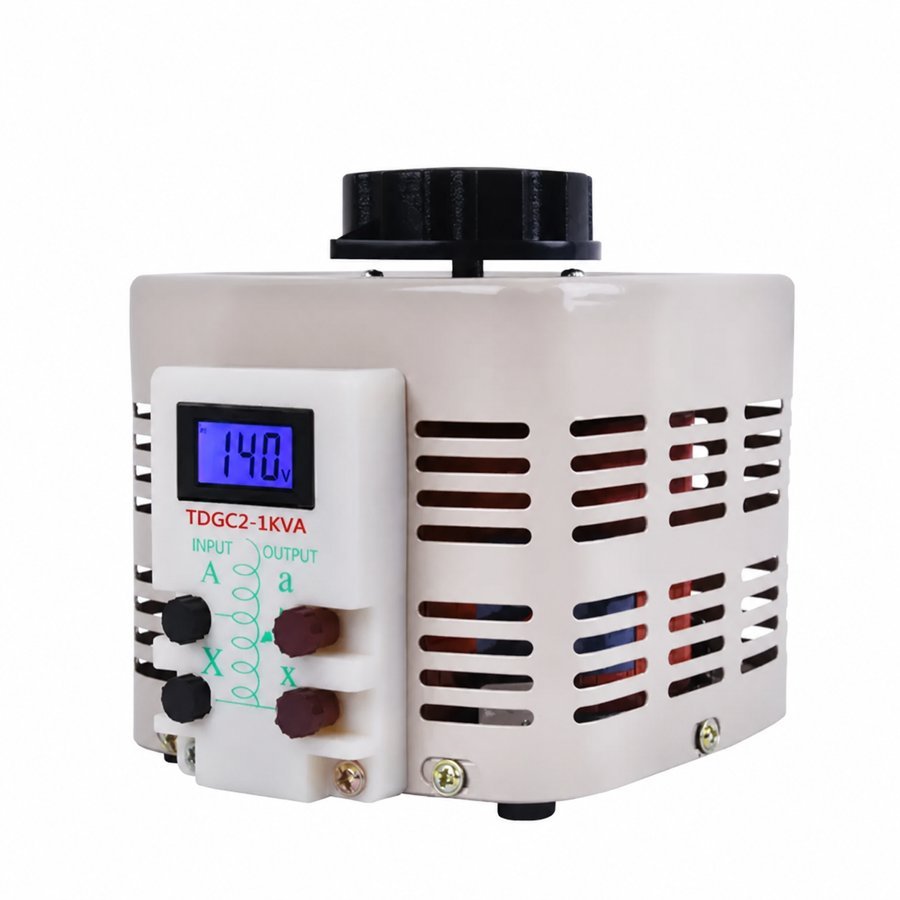
Variacs are used wherever adjustable AC voltage is needed:
- Laboratories — test and calibrate instruments at different voltages.
- Repair shops — bring equipment up gradually to find faults without surge damage.
- Manufacturing — soft-start motors, heaters and lighting during product testing.
- Audio — adjust mains voltage for vintage amplifiers and studio gear.
Choosing the right capacity
Match the variac VA to the load. A 0.5KVA unit suits small instruments and lamps; 1KVA covers most bench work; 2KVA and 3KVA handle larger tools and heaters; 5KVA supports production line testing. Remember that the output current is the limiting factor — at 110V output the same VA rating delivers roughly double the current of a 220V output.
| Model | Capacity | Output | Typical use |
|---|---|---|---|
| TDGC2J-0.5KVA | 500VA | 0-130V / 0-260V | Instruments, lamps |
| TDGC2J-1KVA | 1000VA | 0-130V / 0-260V | Bench testing |
| TDGC2J-2KVA | 2000VA | 0-130V / 0-260V | Repair shops, small tools |
| TDGC2J-3KVA | 3000VA | 0-130V / 0-260V | Heaters, motors |
| TDGC2J-5KVA | 5000VA | 0-130V / 0-260V | Production testing |
Quality and customisation
Each unit is tested for brush contact, output voltage range, insulation resistance and load performance before packing. Custom output ranges, colours and branding are available from MOQ 10 pcs. CE / RoHS documentation is provided.
How a variac differs from a voltage stabiliser
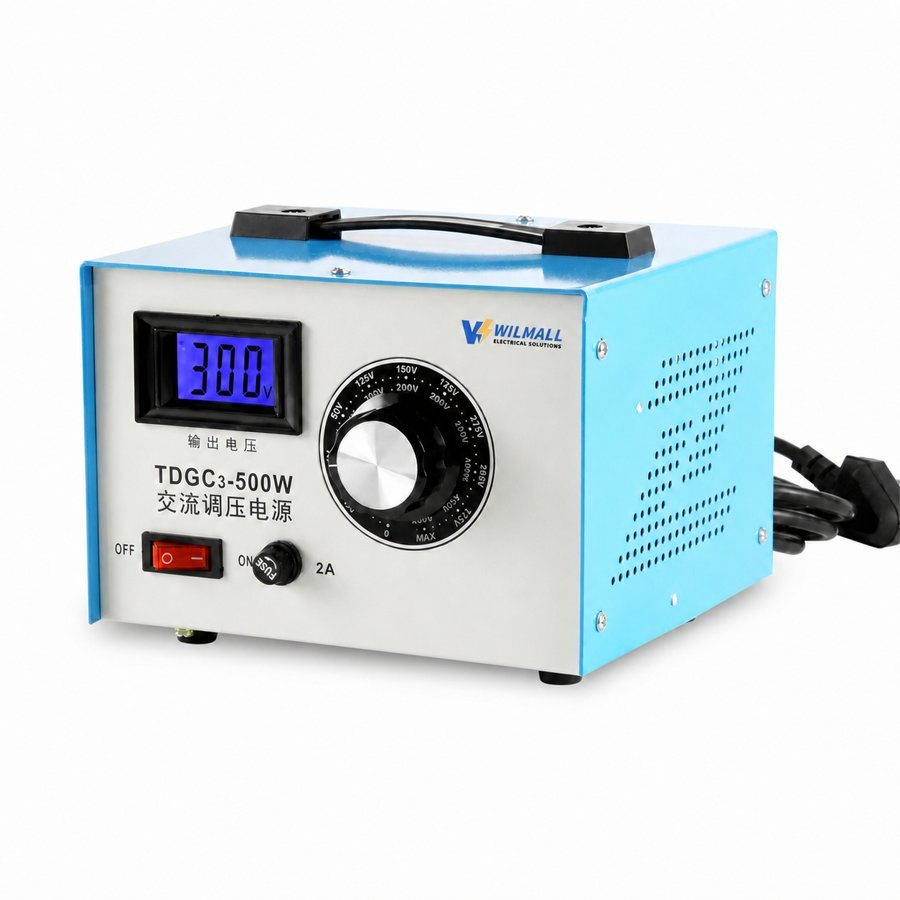
A variac adjusts output voltage manually and continuously — you turn a knob and the voltage follows. A voltage stabiliser, by contrast, holds the output at a fixed level automatically when the input fluctuates. If your goal is testing or controlled adjustment, you need a variac. If your goal is protecting equipment from an unstable grid, you need a stabiliser. The two are often confused, and choosing the wrong one wastes money.
Safety when using a variac
Because a variac is an autotransformer, the output is not isolated from the input — the neutral is common. For anything that must be isolated from the mains (oscilloscopes, audio gear, medical prototypes), use an isolation transformer ahead of the variac, or a variac with an isolation stage. Also remember that output current at low voltage can be high; size the cables and fuse accordingly, and always switch off before adjusting the brush or changing connections.
How buyers order variacs in bulk
Distributors typically stock one or two capacities that cover most customer requests — 1KVA and 2KVA are the fastest-moving sizes — plus a few 0.5KVA units for the hobby bench market. Ordering the same model repeatedly keeps your shelf range simple and lets the factory optimise production. We also private-label variacs for test-equipment brands, including custom scales on the dial.
Variac vs autotransformer: are they the same
Yes — a variac is a type of autotransformer with an adjustable brush. The difference from a fixed autotransformer is the moving contact that makes the output continuously variable. Because both share a single winding, neither provides galvanic isolation. If your application demands isolation, pair the variac with an isolation transformer or choose a different topology altogether.
One practical point for buyers: the same TDGC2J frame is available as a fixed-ratio autotransformer too. If your customer only ever needs one output level, a fixed unit is cheaper and has nothing to wear out. If they need adjustment across a range, the variac version is the right product. We can supply both from the same family, so you can cover both customer groups from one stock list.
Brush wear and maintenance
The carbon brush is the only wearing part of a variac. Under normal bench use it lasts for years; heavy industrial use will wear it faster. Signs of a worn brush are arcing at the contact, uneven output or a scratching sound. Spare brushes are cheap and easy to fit — clean the winding track occasionally with a soft cloth and contact cleaner, and the unit will run for decades.
Before storing variacs for long periods, turn the knob through the full range a few times to keep the brush contact clean. In humid climates, store units in the original carton with a desiccant bag, because moisture on the exposed winding track can cause arcing at first switch-on.
When you order spare brushes, mention the model number — brush size varies with capacity. We can include one spare brush per unit on request, which is a small cost that saves your customers from downtime when their bench tool finally needs service.
Frequently asked questions
The 2A Brush Rule: Matching Current, Not Just VA
One specification that trips up variac buyers is the current rating of the carbon brush. Every variac has a maximum current the brush can pass, and that limit binds before the VA rating at low output voltages. A 2KVA variac at 50V output, for example, cannot deliver the full 2KVA because the current is capped by the brush. When you choose a variac, check both the VA and the current rating, and confirm the current your load draws is within the brush limit. Our TDGC2 series states both figures on the label, and our team can confirm the right model for your load curve. If you need a low-voltage, high-current output, you need a larger variac even though the apparent power looks small. Getting this right the first time prevents the disappointment of a variac that trips or overheats at a modest load setting.
Brush Maintenance: The One Moving Part
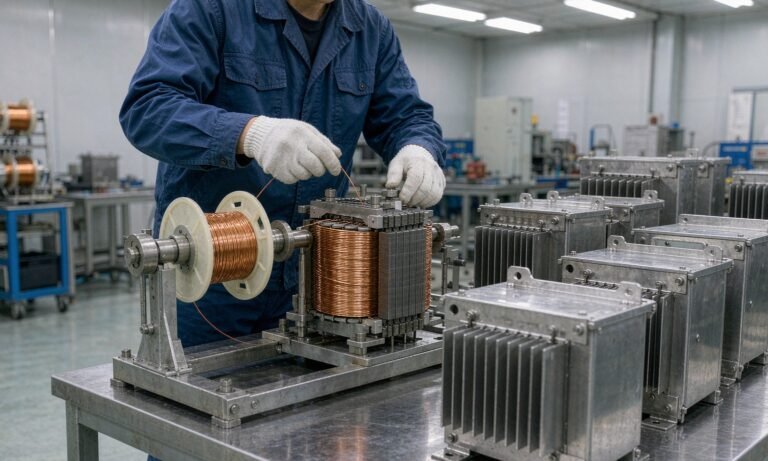
A variac has one moving part that matters: the carbon brush riding on the exposed winding. The brush wears over time, and a worn brush causes sparking, a rough knob feel, and a slightly uneven output. Maintenance is simple and cheap: keep the winding surface clean with a soft cloth, and replace the brush when it shows significant wear. We supply spare brushes for our TDGC2 and TSGC2 series, and replacement takes a few minutes with basic tools. For workshops and distributors, keeping a spare brush in stock avoids downtime, and it is a small consumable you can sell alongside the variacs. The winding itself, copper on a silicon steel core, lasts for many years if the brush is maintained and the unit is not overloaded. This is the difference between a variac that serves a decade and one that fails early, and it is all in the brush.
Variac Output Accuracy: What to Expect
A variac is an adjustable autotransformer, not a regulated power supply, and the output follows the input and the load. If your mains is 220V, the output can be set anywhere from near zero up to roughly 260V on the high range, but the actual voltage you read depends on the line voltage at that moment and the current draw. Expect a tolerance of a few volts, not millivolts. For testing and speed control, this drift is usually acceptable. For work that needs a rock-steady voltage regardless of mains fluctuation, add a stabilizer after the variac or use a regulated supply instead. Many workshops calibrate the dial to a multimeter and mark the actual readings, which removes most of the guesswork. If your application demands repeatable output, tell us, and we will recommend whether a variac alone, or a variac with a stabilizer, fits your bench.
Selling Variacs: What Stock Mix Works
For distributors, the variac sizes that move fastest are 1KVA, 2KVA, and 3KVA in single-phase, because they cover hobbyists, workshops, and light industrial testing. The 0.5KVA units sell to electronics hobbyists, while 5KVA and above go to industrial buyers who order less often but in larger quantities. Carry both the 0 to 130V and 0 to 260V output ranges if your market has both US-spec and general-spec equipment. Units with digital meters are strong sellers because buyers trust the readout. For a first container, a mix of 1KVA, 2KVA, 3KVA, and 5KVA covers most demand, and we can assemble a mixed order so your stock matches your market. Each unit ships with a spare carbon brush, which you can also sell as a consumable. If you tell us your market and the applications your customers run, we will recommend the mix that sells.
Toroidal vs EI for Continuous Duty
For loads that run continuously, the core choice makes a measurable difference. A toroid’s lower core loss means less heat at idle, which matters for audio equipment left powered on, security systems, and appliances that run 24 hours a day. An EI core runs slightly warmer at no load but is still well within its rated limits for most applications. The practical guideline we give buyers is simple: if the unit runs a few hours a day, EI is fine and cheaper. If the unit runs continuously, or if the application is sensitive to heat and noise, the toroid is worth the extra cost. We stock both types across the 100VA to 10KVA range, so you can match the core to the duty cycle without compromise. Tell us how many hours a day the load runs and we will recommend the core that balances price and operating cost.
What is a variable transformer used for?
A variable transformer, or variac, provides stepless AC voltage adjustment for testing, calibration, repair and soft-starting equipment at controlled voltages.
What output voltages do your variacs provide?
Our TDGC2J series provides 0-130V or 0-260V from a 220V input, depending on the model you choose.
Which variac capacity do I need?
0.5KVA suits instruments, 1KVA covers bench work, 2-3KVA handles tools and heaters, and 5KVA supports production testing.
Can you make a variac with my brand?
Yes, custom colours, labels and packaging are available from MOQ 10 pcs. Send your artwork and we will confirm.
Are your variable transformers CE certified?
Yes, CE and RoHS documentation is available for the TDGC2J series, with batch test reports on request.
Do you supply three-phase variacs?
We focus on single-phase TDGC2J units. For three-phase adjustable supplies, contact us with your load and we will advise on the best configuration.
Related reading
Get a factory-direct quote
Email sales@wilmall.com or WhatsApp +86 197 3022 6757 with your capacity and output range for pricing within 24 hours.