Transformer Cooling: Air vs Oil for Step Down Transformers
Transformer cooling method — air-cooled dry type versus oil-filled — determines how the transformer handles heat from winding losses. For low-voltage step-down transformers under 10KVA, dry type is the standard. This guide explains both methods and when to choose each.
Why cooling matters
A transformer loses 3-15% of its power as heat, depending on size and efficiency. This heat must be removed to keep the windings below their insulation temperature limit. Cooling method determines how the heat is removed.
Air cooling: dry type
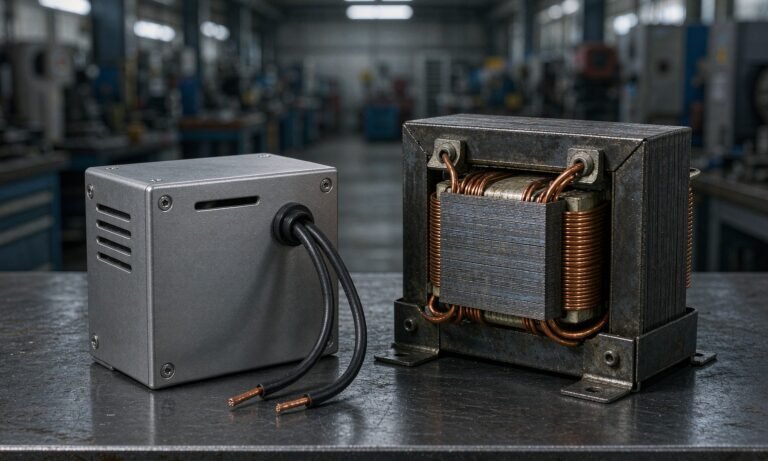
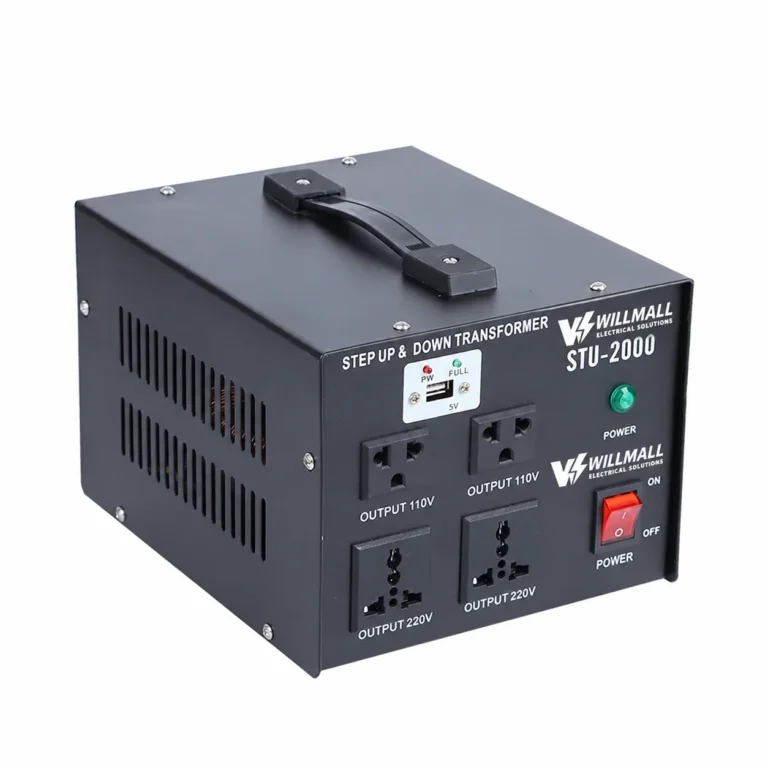
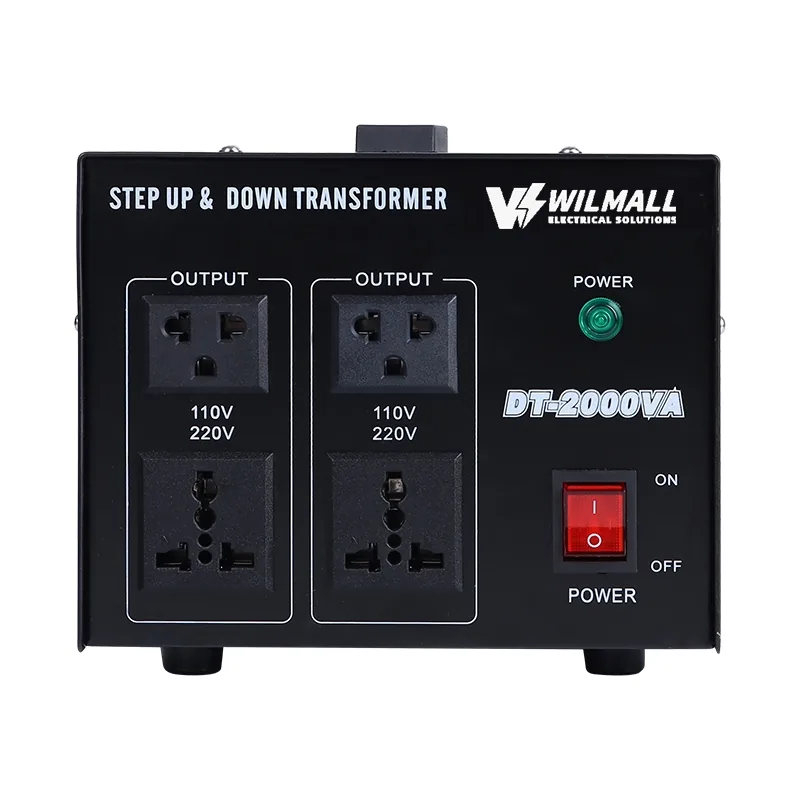
Dry-type transformers use ambient air to cool the windings. They are sealed (no oil) and rely on natural convection or forced air from a fan. Wilmall ST series step-down transformers are dry type, with an IP20 or IP54 enclosure that allows airflow around the case. Air-cooled transformers are safe for indoor use, lighter, and easier to install than oil-filled units.
Oil cooling: oil-filled
Oil-filled transformers submerge the windings in mineral oil. The oil circulates by convection, carrying heat to the tank walls, where it dissipates to ambient air. Oil cooling is more efficient for larger transformers (above 1000kVA) but adds weight, complexity and fire risk. Low-voltage step-down transformers under 10KVA are almost always dry type.
Air vs oil: when to choose each
For low-voltage step-down transformers under 10KVA, air-cooled dry type is the right choice. They are safe for indoor use, lighter and cheaper. Oil cooling is reserved for distribution transformers above 100kVA or special applications like mining or heavy industry.
Cooling for warm ambient
In warm climates, dry type transformers need derating — running at 75-80% of rated capacity to keep temperatures within the insulation limit. Oil cooling is more forgiving but is rarely used for small step-down units.
Cooling for continuous duty
Continuous duty transformers generate heat continuously. Wilmall ST series is designed for continuous duty at 80% of rated load, which keeps windings within temperature limits. For 100% continuous duty at full rating, choose a transformer with class H insulation and forced-air cooling.
Forced air cooling
Some industrial transformers have fans that push air through the windings for additional cooling. This allows higher continuous ratings from the same physical size. Wilmall builds STU series with optional forced-air cooling on request.
Common mistakes
- Sealing an air-cooled transformer in an unventilated box. Heat builds up, insulation ages fast.
- Choosing oil-filled for indoor use. Fire risk and ventilation requirements make oil-filled unsuitable indoors.
- Mounting in direct sunlight. Solar heating adds 20-30°C to ambient.
Estimating Heat Output and Ventilation Needs
You can estimate how much heat a transformer will produce without any instruments. A simple rule: for a dry-type transformer, roughly 5-8% of the rated load is lost as heat at full load. So a 2000VA unit running near its limit at 2000W through the load produces roughly 100-160W of heat that has to go somewhere. That is why the installation rules matter more than most buyers think. Give the transformer at least 20-30cm of free space on every side, do not stack it against a wall or inside a sealed cabinet, and keep it away from heat sources. If the unit must live inside an enclosure, add ventilation slots at the bottom and top so warm air can rise out, or fit a small fan for continuous duty. A transformer that runs cool keeps its insulation young and its copper windings efficient. We build our ST series with convection cooling as standard, and for industrial and continuous-duty applications we offer units with forced-air cooling. If you tell us your ambient temperature and how many hours a day the load runs, we can confirm whether a standard unit or a forced-air version fits your site.
What is an air-cooled transformer?
An air-cooled (dry type) transformer uses ambient air to cool the windings. Most low-voltage step-down transformers are dry type.
When do I need an oil-filled transformer?
For distribution transformers above 100kVA or special applications. Low-voltage step-down transformers under 10KVA are almost always dry type.
Can I use an oil-filled transformer indoors?
Generally no. Oil-filled transformers have fire risk and ventilation requirements. Use dry type indoors.
How do I cool a transformer in a warm climate?
Mount the transformer in a ventilated location, avoid direct sunlight, and run at 75-80% of rated capacity. Forced-air cooling helps for heavy-duty applications.
Where can I buy an air-cooled step-down transformer?
Wilmall builds ST series dry type step-down transformers. Factory direct from Yueqing, China, with MOQ 10 pcs.
Related reading
Get a factory-direct quote
Email sales@wilmall.com or WhatsApp +86 197 3022 6757.
How dry-type transformers cool
Dry-type transformers cool by natural convection. The windings and core heat up, warm the surrounding air, and that air rises and exits through the vents, drawing cooler air in from below. This is why transformers need clear space around them — blocking the vents stops the airflow and causes overheating.
Forced-air cooling for heavy duty
Some industrial transformers add fans to force air through the windings. This increases the continuous rating by 15-25% for the same physical size. Wilmall builds STU series with optional forced-air cooling for installations that run at high continuous load.
Oil-filled transformers explained
Oil-filled transformers submerge the core and windings in mineral oil. The oil circulates by natural convection, carrying heat to the tank walls where it dissipates. Oil cooling is efficient for large distribution transformers but adds weight, cost and fire risk, so it is rarely used below 100kVA.
When you need oil cooling
For most low-voltage step-down transformers under 10kVA, dry type is the right choice. Oil cooling is reserved for large distribution transformers above 100kVA, mining and heavy industrial applications. Buying oil-filled for a small step-down unit is unnecessary and impractical for indoor use.
Cooling in hot climates
In a 45°C ambient, a dry-type transformer loses some cooling capacity because the air entering the vents is already warm. Derate the transformer to 75-80% of rated load in hot climates, and consider forced-air cooling for continuous-duty applications.
Cooling and enclosure selection
The enclosure affects cooling. A sealed IP65 enclosure traps heat; an open IP20 enclosure allows airflow. For hot climates with continuous duty, choose the enclosure that balances protection and ventilation, or add a fan. Wilmall advises on the right combination for your environment.
How to check if a transformer runs too hot
A transformer running at normal load should feel warm but not hot. If the case exceeds 65-70°C, check the load against the rating, clear any blocked vents, and verify the ambient temperature. If it is still hot, the unit is undersized or defective.
Buying transformers with the right cooling
Wilmall ST series dry-type step-down transformers are designed for natural convection cooling, with optional forced-air for heavy duty. Factory direct from Yueqing, China, with copper winding, RCD protection and 12-month warranty. MOQ 10 pcs.
Cooling for continuous 24-hour operation
Transformers that run 24 hours (refrigerators, pumps, servers) generate heat continuously. The transformer must dissipate this heat to stay within its insulation limits. Dry-type transformers with good ventilation handle continuous duty well when sized with 25-30% margin. Blocked vents are the most common cause of continuous-duty failures.
Airflow design in enclosures
The enclosure vents create a chimney effect: warm air rises and exits the top, cool air enters at the bottom. Keep the bottom vents clear and ensure nothing sits on top of the case. For cabinets, add a vent fan or leave the cabinet door open during heavy use.
Cooling and transformer life
The Arrhenius rule says insulation life halves for every 10°C above its rated temperature. A transformer running at 70°C instead of 60°C ages about twice as fast. Proper cooling and margin directly extend the transformer life — a cheap installation habit with a big payoff.
Buying with the right cooling
For most low-voltage applications, dry-type natural convection cooling with 25-30% margin is correct. For heavy continuous duty in hot climates, choose forced-air or derate further. Wilmall advises the right cooling configuration for your installation.
Cooling versus size trade-off
A larger transformer has more surface area and dissipates heat better, but costs more. A smaller transformer running at high load runs hotter and fails earlier. The correct balance is a transformer sized for 70-80% of the load — big enough to stay cool, small enough to be economical.
Oil-filled versus dry type cost comparison
Oil-filled transformers cost more per kVA, weigh more and require oil maintenance. For a low-voltage step-down under 10kVA, dry type is cheaper, safer and simpler. The oil option only makes sense for large distribution transformers or special industrial applications.
Cooling checklist for installers
Leave clearance around the transformer, keep vents clear, avoid mounting in direct sunlight, and keep the area free of dust and debris. For hot climates, derate to 75-80% of rating. These simple steps prevent most cooling-related failures.
When to use forced-air cooling
If the transformer runs continuously near its rating, operates in a hot ambient, or sits in a poorly ventilated enclosure, forced-air cooling is the practical upgrade. A fan increases the cooling capacity by 15-25%, protecting the windings and extending life. Wilmall STU series supports optional fan cooling.
Final summary
For low-voltage step-down transformers under 10kVA, dry-type natural convection with 25-30% margin is the standard. For heavy continuous duty in hot climates, add forced-air or derate. Wilmall advises the right configuration for your installation. Contact sales@wilmall.com.
Cooling in cabinets and enclosures
Transformers inside cabinets need ventilation slots or a fan. A transformer in a sealed cabinet runs 10-20°C hotter than in open air. If the cabinet must be sealed for protection, add a fan or choose a larger transformer to compensate.
Contact Wilmall for cooling advice
Email sales@wilmall.com or WhatsApp +86 197 3022 6757 with your load, duty cycle and ambient temperature. Wilmall recommends the right cooling configuration — natural convection, forced-air or derated sizing — and provides batch test records. MOQ 10 pcs, factory direct from Yueqing, China.
Final recommendation
Choose dry-type natural convection for most low-voltage applications under 10kVA, with 25-30% margin. For heavy continuous duty in hot climates, add forced-air cooling or derate the load. Wilmall advises the right configuration and provides batch test records with every unit.
Contact Wilmall
Email sales@wilmall.com or WhatsApp +86 197 3022 6757 with your load, duty cycle and ambient temperature. Wilmall advises the right cooling configuration and provides batch test records with every unit. MOQ 10 pcs, factory direct from Yueqing, China.