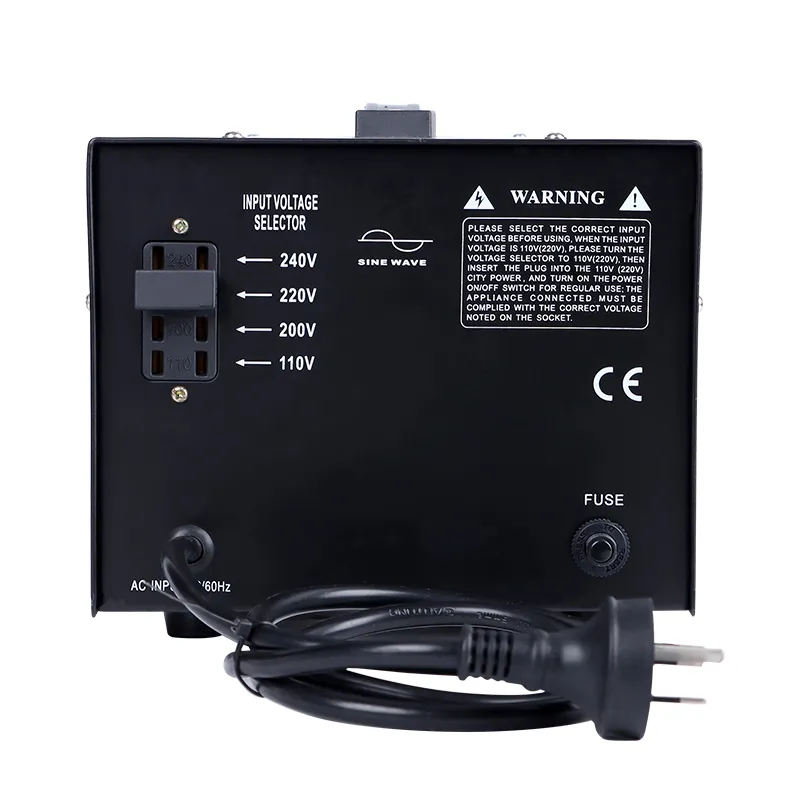
Step Down Transformer for Uzbekistan: 220V to 110V
Uzbekistan runs a single voltage across the whole country, 220V at 50Hz, and the wall sockets follow the European pattern. For someone arriving in Tashkent with a suitcase full of 110V equipment, that is both good news and bad news. The good news is that the standard does not change when you move between Tashkent, Samarkand and Bukhara. The bad news is that every one of your 110V appliances needs a step down transformer in front of it, and the hotels, laboratories and job sites that import this kind of equipment usually need several.
We are a transformer factory in Yueqing, China, and Central Asia has become a steady market for us over the past few years. Buyers from Uzbekistan tend to ask sharper questions than average, because they are usually buying for a business rather than a single room. So instead of a general introduction, let me go through what your supply looks like, what equipment typically needs converting, and how to size the unit without either overpaying or coming back for a second one.
Uzbekistan’s Supply: 220V, 50Hz and European Sockets
The nominal supply is 220V, 50Hz, the same as most of continental Europe and the same as Russia. The standard outlets are Type C and Type F, the two round-pin patterns you meet all over the region. Type C is the narrow Europlug you see on small electronics, and Type F is the recessed Schuko socket that takes a wider, earthed plug.
If your equipment came from the United States, Canada or Japan, two things are wrong for this market. The pins do not fit, and the voltage is wrong. A plug adapter solves the first problem and nothing else. If the nameplate says 100V to 120V and only that, the adapter will pass 220V straight into the appliance, and you will hear about it very quickly.
What Moves the Voltage Over the Year
The official figure is 220V, but the number you measure depends on where and when you measure it. In the winter heating season, when electric heaters go on across a residential district, the local voltage sags, and buyers in the older apartment blocks of Tashkent report readings well below nominal in the evening. In summer the load reverses and the voltage can sit high, particularly on circuits close to a distribution point with light loading. Industrial zones around Chirchiq, Angren and the free economic zones generally hold steadier, but nowhere in the region is a laboratory-grade supply.
This matters for one reason. If your transformer is already working near its limit, an evening of low voltage pushes current up and temperature up with it. That is the mechanism behind most premature transformer failures we see in this market, and it has nothing to do with the brand of the unit.
What Uzbekistan Does Not Need
One clarification that saves buyers money. Uzbekistan does not use a 110V supply anywhere, so nobody needs a step up transformer for local mains equipment. Everything you buy locally, and everything imported from Europe or Russia, will run directly on 220V. The transformer only enters the picture for equipment built for the North American or Japanese market. If your machine is 220V already, you do not need us at all, and I would rather tell you that than sell you something you will not plug in.
Who Actually Buys a 110V Step Down Transformer Here
The enquiries we get from Uzbekistan cluster around a few types of buyer.
Engineering and mining contractors top the list. They run imported American and Japanese equipment, and when a machine that cost more than a car arrives with a 110V control circuit or a 120V pump, the transformer is a rounding error in the project budget. Laboratories and universities come next, running analytical instruments and test gear specified for the US market, where the supply inside the instrument is genuinely fussy about voltage. Medical and dental clinics import imaging and treatment equipment with the same constraint.
Hospitality is a growing category. Hotels and serviced apartments in Tashkent that host international guests install 110V outlets for hair dryers, shavers and small appliances, and they order in batches rather than one at a time. Then there are the individuals and small workshops, often running a 110V power tool from a trade they learned abroad, or a household appliance brought home from years spent working overseas.
Different buyers, same underlying question. How big does the unit need to be?
Sizing a 220V to 110V Step Down Transformer
Start with the nameplate on the equipment, not with the product listing you found online. Watts, volts and frequency, all three. Then apply the same method we use on the factory floor.
- List every load you will run at the same time, with its real power in watts.
- Divide by the power factor if the nameplate gives one. If it does not, use 0.8 for anything with a motor, 0.9 for electronics, and 1.0 for pure heating loads.
- Add 25 percent for start-up current on motor loads.
- Add another 15 percent if your site sees voltage swings or you expect to run the unit for long hours.
- Round up to the next standard size. Never round down.
Here is what that looks like in practice for the loads we see most often.
| Equipment | Typical load | Notes that change the size | Suggested unit |
|---|---|---|---|
| Laboratory instrument | 200W to 800W | Often needs a stable output more than raw power | 1000VA to 2000VA |
| Dental chair and compressor | 600W to 1200W | Compressor start current is the real driver | 2000VA to 3000VA |
| Hotel guest hair dryer | 1200W to 1800W | Short duty but high current | 2000VA per room |
| 120V power tool | 700W to 1500W | Universal motors surge hard on start | 3000VA upward |
| US spec water pump | 500W to 1100W | Continuous duty plus start surge | 3000VA upward |
| Office printer and IT rack | 300W to 900W | Fuser heaters draw in bursts | 2000VA |
Read the third column twice. Two buyers with the same wattage figure can end up with different transformers because one is running a heater and the other is starting a compressor ten times an hour. The second buyer needs the bigger box, and it has nothing to do with how much they paid for the appliance.
Fixed, Bidirectional or Adjustable
Once you know the VA figure, the rest is about what the job actually needs.
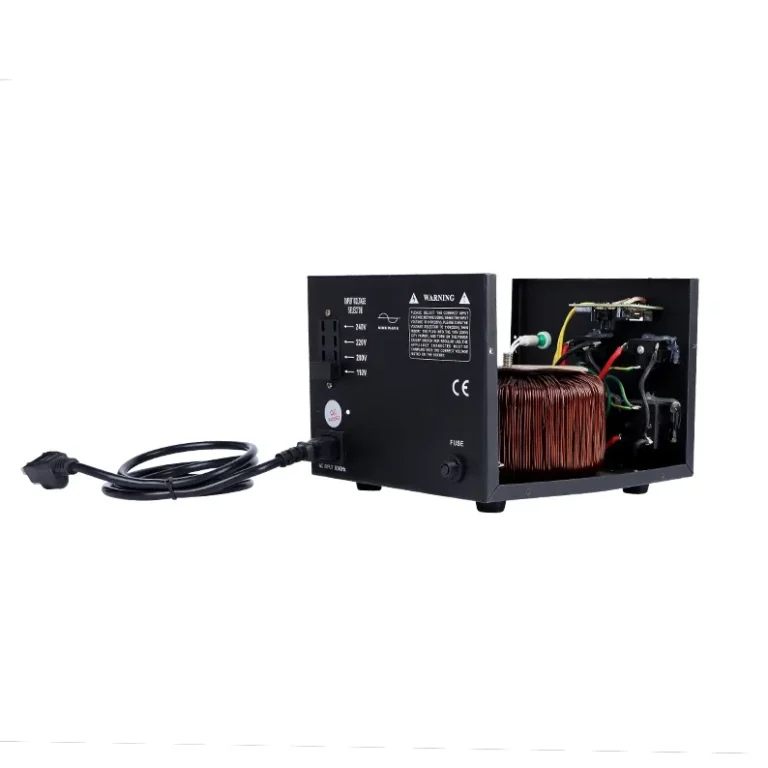
A fixed step down unit is what most Uzbekistan buyers order. Our ST-2000 is a 2000VA step down transformer that takes 220V in and delivers 110V out, with RCD protection included so an appliance fault trips the unit rather than the winding. For a dental surgery, a lab bench, a hotel room or a single imported machine, that is usually the end of the conversation.
If the same site also needs to run 220V equipment from a 110V source, or you want one box that copes with both directions, the STU-3000 and STU-5000 are the higher power bidirectional options, and the DT-1000VA is a bidirectional automatic unit that handles the switching itself. That last one is popular with workshops that repair imported equipment, because the direction keeps changing as machines come and go.
For test benches, calibration work and anyone who needs to vary the output rather than fix it at 110V, the Variac range covers 500VA, 1KVA, 2KVA and 3KVA with a smooth adjustable output. If you are not sure which family applies, the full step down transformer range is a good place to compare, and you are welcome to send us the application and let us match it.
Two Things to Check in Older Buildings
Most of the problems we hear about from Uzbekistan are not transformer problems. They are building problems, and they are worth ten minutes of your time before you install anything.
The first is the wiring itself. Older residential blocks in Tashkent and other cities often have aluminium conductors of a modest cross-section. Aluminium is a perfectly serviceable conductor, but it corrodes at connections, and a loose connection adds resistance exactly where you do not want it. If your socket voltage drops noticeably when a load switches on, that is a sign to get an electrician to look at the circuit before you add a transformer to it. Feeding a 2000VA load through a tired circuit is how fires start.
The second is earthing. Type F sockets have an earth contact, but that contact is only useful if the building wiring actually connects it. In some older installations it does not. An RCD built into the transformer is a real safety benefit, but it works best on a properly earthed circuit. Ask your electrician to verify the earth before the unit goes into service. It takes a few minutes with a tester and it is worth every one of them.
Beyond that, the practical rules are the same everywhere. Leave clearance around the vents, do not put the unit in a closed cabinet, keep it away from water and dust, and do not run it off a long thin extension lead. A transformer is a simple device and it will serve you well if you let it breathe.
Getting the Order to Tashkent, and What to Send Us
We ship FOB Ningbo or Shanghai with a production lead time of 15-25 days from deposit, and our minimum order is 10 pcs. For Uzbekistan, most of our shipments move by rail or by road through the region rather than by sea, and your freight forwarder will usually have a preferred route and a preferred border crossing. If you do not have a forwarder yet, tell us the destination city and we will ask our own agent what the current options look like. What we can control is the export packing and the documents on our side, and those we prepare carefully.
That document set normally includes the commercial invoice, packing list, certificate of origin and the batch test record for your units. If your customs broker needs anything else, tell us at quotation stage. Asking for a new certificate two days before a truck leaves the factory is a bad way to spend a week.
If your project is in another 220V market, our Step Down Transformer for Peru: 220V to 110V Guide covers the same conversion from the other side of the world, and the sizing method does not change. Country by country, the rest is in our more buying guides.
What to Send Us for a Quote
You do not need to write a technical brief. A photo of the equipment nameplate, the number of units you want, the city you are shipping to and whether you need the unit to be portable or panel mounted is enough for us to quote accurately. If you have several machines, send several photos. We would rather look at the labels than guess.
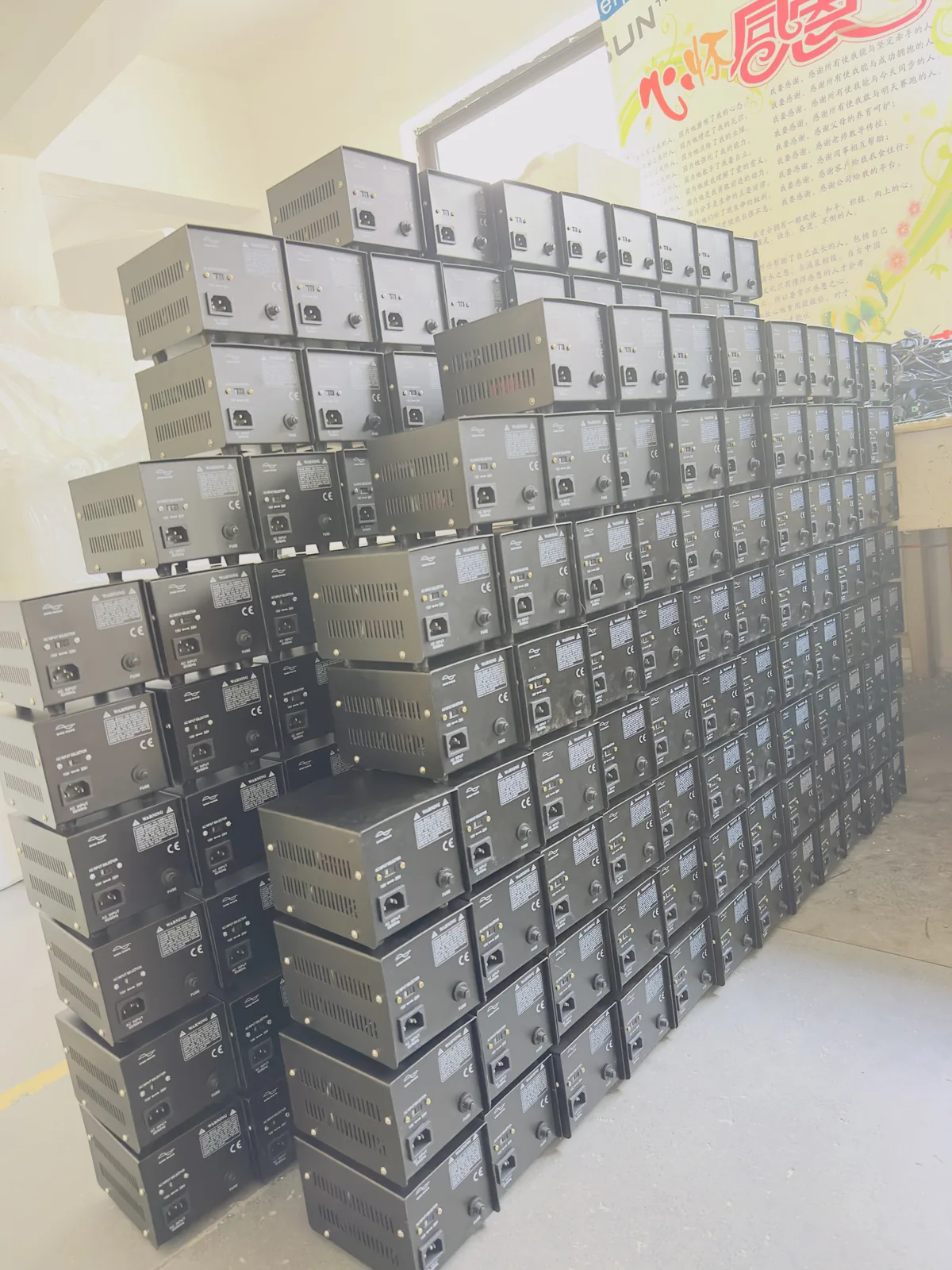
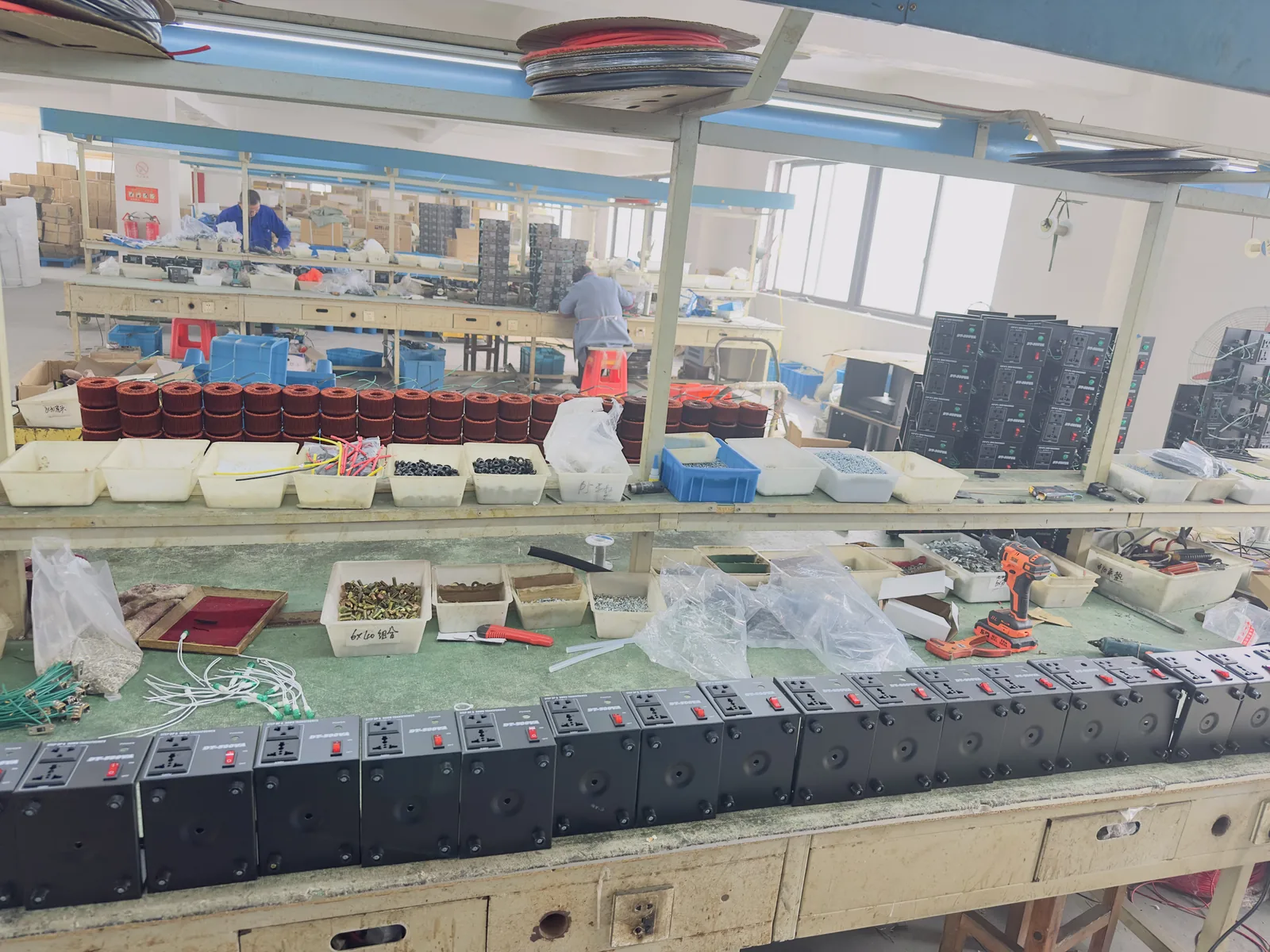
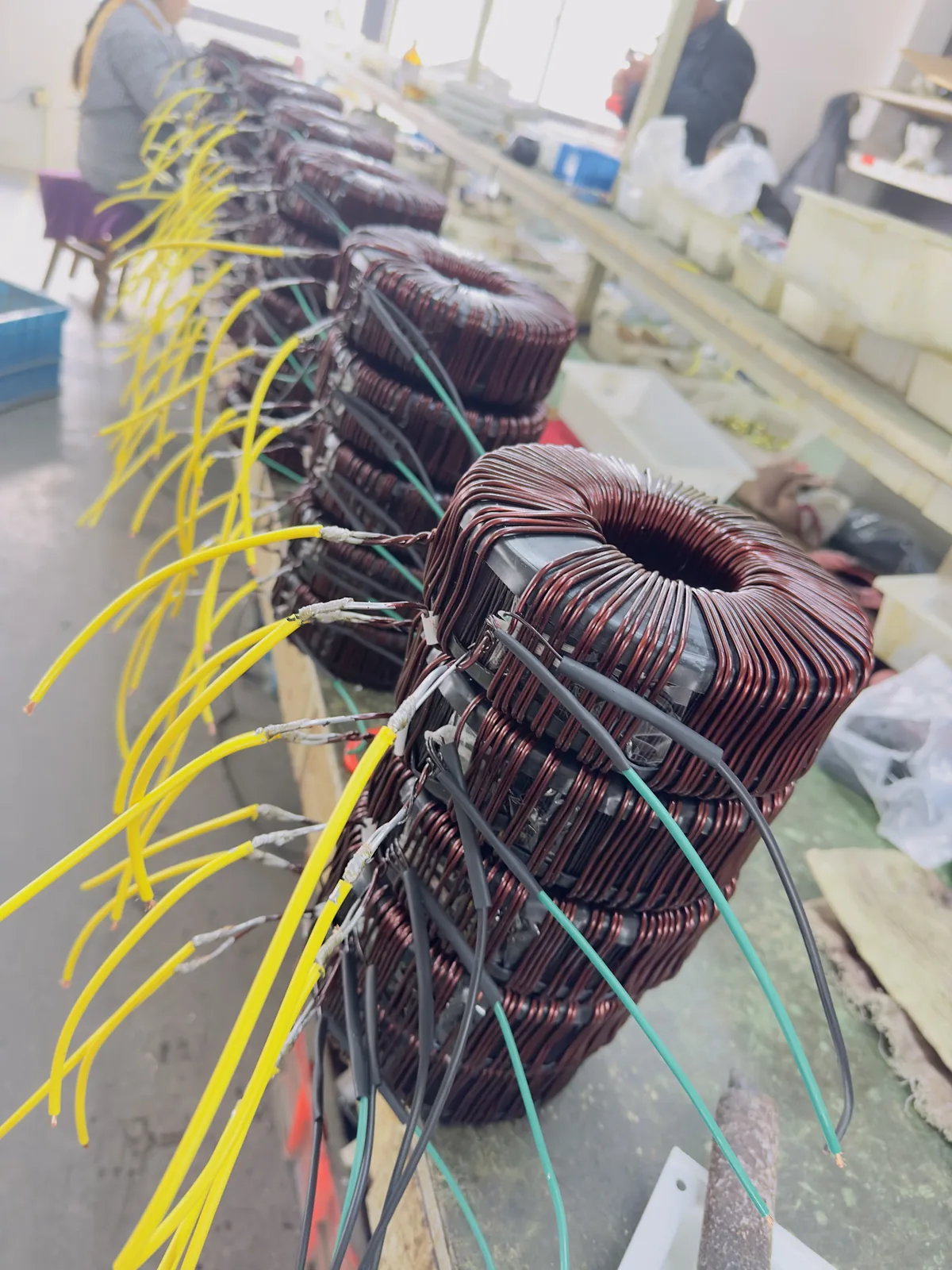
Every unit we make is wound with copper and 100 percent tested in our own factory in Yueqing before it is packed, and it leaves with a batch test record. That is not an optional extra for export orders. It is simply how a transformer should leave a factory.
Step Down Transformer for Uzbekistan: Buyer Questions
These are the five we answer most often for this market.
What voltage does Uzbekistan use, and do I need a transformer?
Uzbekistan uses 220V at 50Hz with Type C and Type F sockets. Locally bought and European equipment runs directly. You only need a step down transformer if your equipment is rated 110V or 120V for the North American or Japanese market, in which case 220V would damage it.
Which size step down transformer should I order for a dental clinic?
Start with the chair and compressor nameplates, not the room. A typical chair with an air compressor runs 600W to 1200W, but the compressor start current decides the transformer size. We normally recommend 2000VA to 3000VA for this job. Send us the plates and we will confirm.
Do I need a stabiliser as well as a step down transformer?
Only if the voltage at your site swings widely and your equipment is sensitive to it. A step down transformer matches the voltage level; it does not correct the incoming supply. For most loads a correctly sized transformer with margin is enough. Tell us what you are running and we will advise honestly.
Can I run a 110V water pump on a transformer in Uzbekistan?
Yes, provided the transformer is sized for the starting current, which is several times the running watts for a motor. Pumps also run continuously, so the unit must carry that load without overheating. A 500W to 1100W pump usually needs 3000VA or more.
How do you ship transformers to Tashkent and what is the lead time?
Production takes 15-25 days from deposit, with a minimum order of 10 pcs and FOB Ningbo or Shanghai terms. Uzbekistan shipments usually move by rail or road rather than sea. We prepare the invoice, packing list, certificate of origin and batch test record, and can adapt to your broker’s requirements.
Importing 110V equipment into Uzbekistan and need it to run safely on 220V? Send us your nameplate photos and quantity, and we will recommend the right step down unit and quote it FOB with export packing.
Or talk to us directly: WhatsApp +86 197 3022 6757 · Email sales@wilmall.com
MOQ 10 pcs · Lead time 15-25 days · FOB Ningbo or Shanghai · 12-month warranty