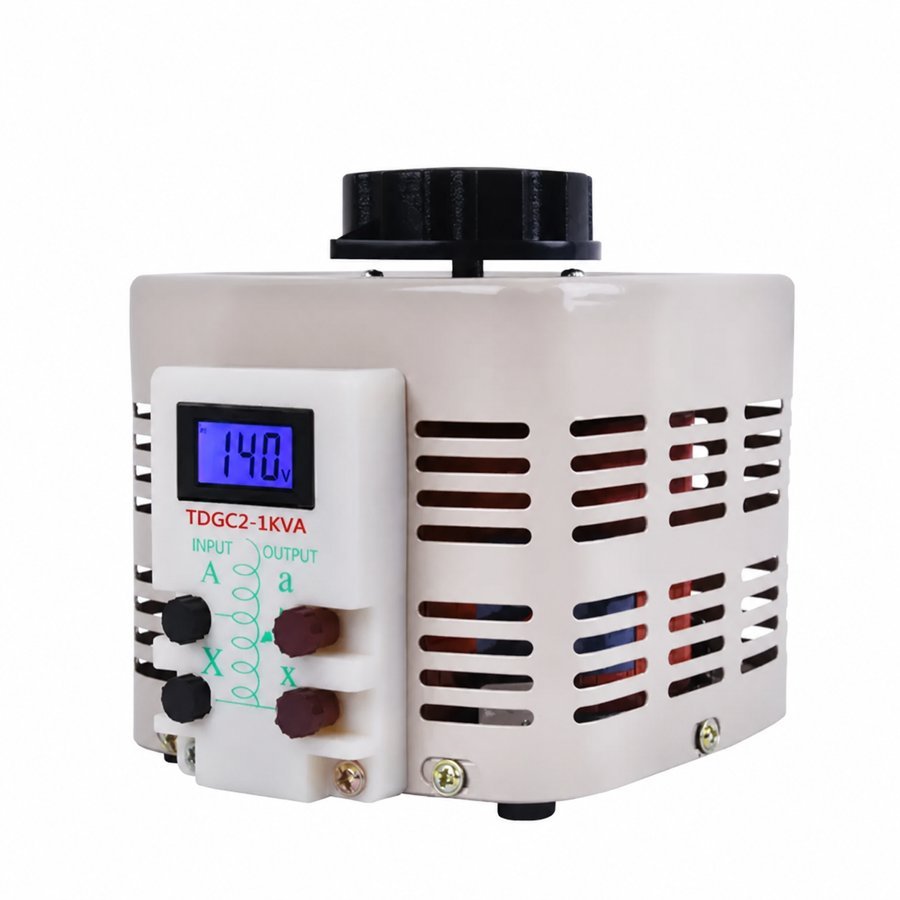
How to Use a Variac for Motor Speed Control
Every workshop has that moment: you have a motor that runs too fast, and you wonder if a Variac can slow it down. The short answer is yes – sometimes. The longer answer is that it depends entirely on the type of motor, and getting it wrong burns out the motor or the Variac or both. This guide walks through which motors a variable transformer can safely control, which ones it cannot, and how to set it up so the gear lasts.
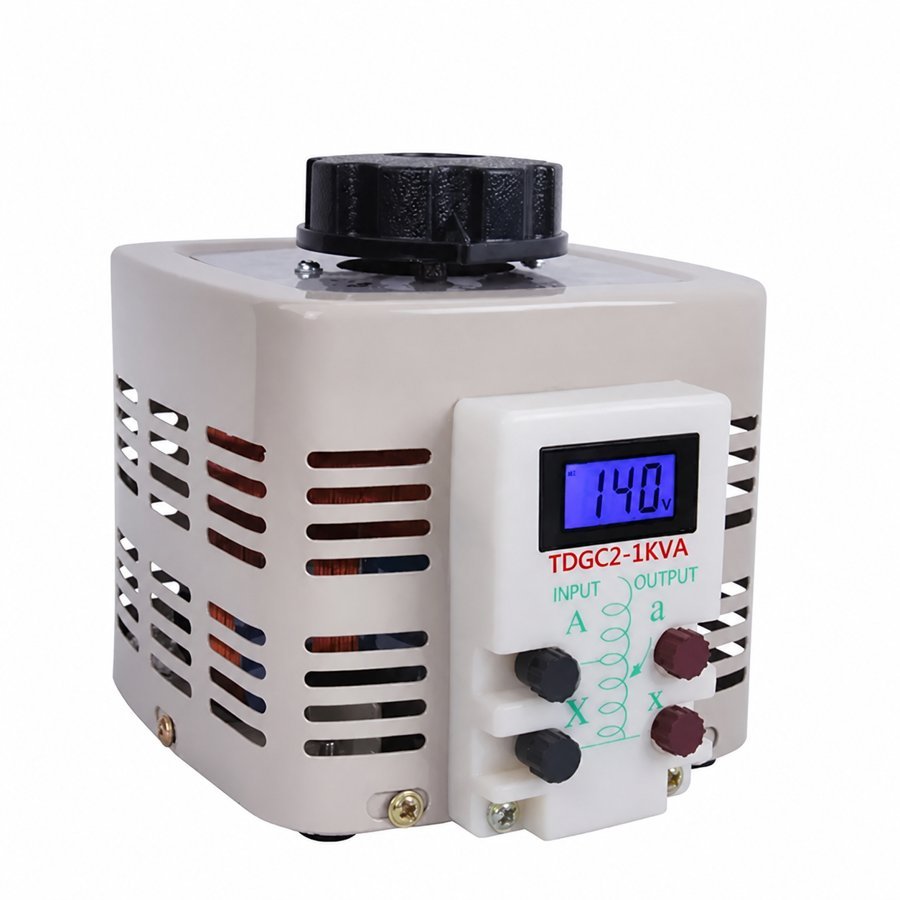
How a Variac controls speed
A variable transformer changes the voltage feeding the motor. For the motor types that respond to voltage – universal motors and DC motors – lower voltage means lower speed, and the relationship is smooth and stepless. That is the classic workshop trick: a Variac in series with a drill or a sewing machine motor lets you dial the speed from a crawl to full.
Here is the catch: induction motors, which drive most pumps, fans and compressors, do not behave that way. Drop the voltage on an induction motor and it does not slow down gracefully – it loses torque, runs hotter, and the slip increases until it overheats. A fan can tolerate that; a compressor cannot. For induction motors the honest answer is a VFD, not a Variac.
Which motors work with a Variac
| Motor type | Variac works? | Notes |
|---|---|---|
| Universal motor (drills, mixers) | Yes | Speed follows voltage, smooth control |
| DC motor (with brushes) | Yes | Voltage controls speed directly |
| Resistive loads (heaters, lamps) | Yes | Classic Variac duty |
| Single-phase induction (fans) | Partial | Slows down but loses torque, watch heat |
| Three-phase induction | No | Use a VFD instead |
The rule of thumb we give buyers: if the motor has brushes, a Variac will control it beautifully. If it is an induction motor, a Variac can slow it in an emergency but it will run hot, and for continuous use you want a VFD. For resistive loads – heating elements, incandescent lamps, test benches – a Variac is the right tool, period.
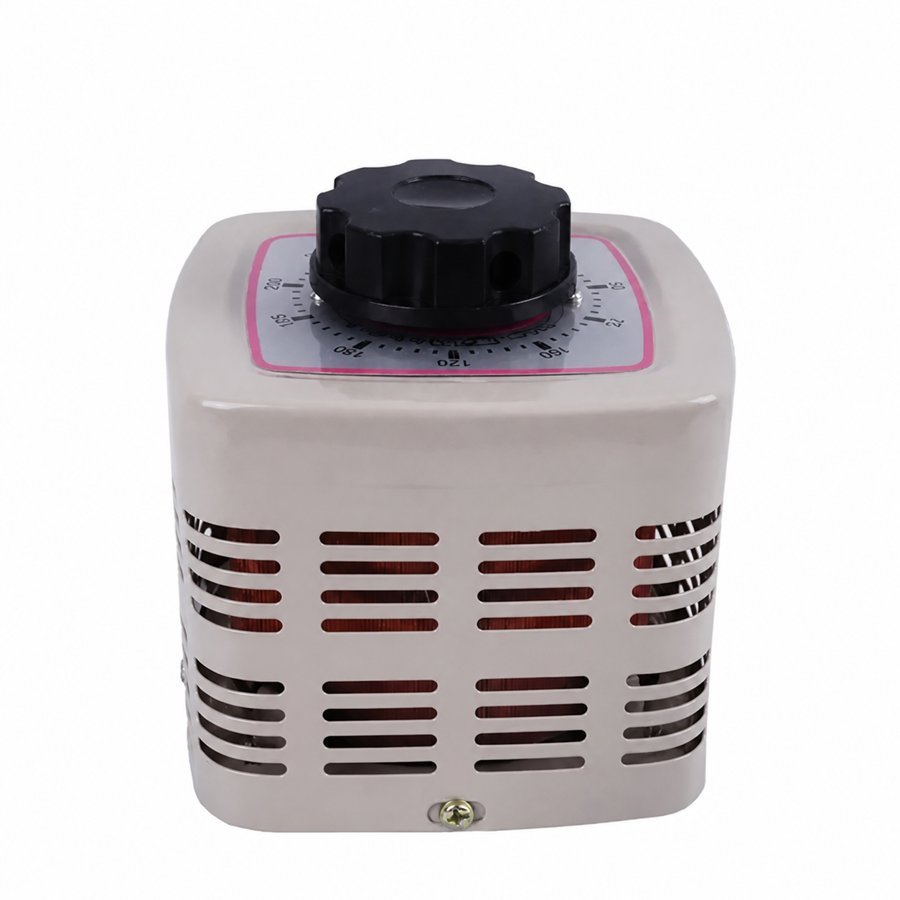
Sizing the Variac for motor duty
Size it like any motor load: the running watts plus serious margin for start-up. Motors draw several times their running current at start, so take the motor watts, multiply by two to three, and pick that rating. A 500W universal motor wants at least a 1KVA Variac. And remember the knob position rule: a Variac rated 2KVA delivers that at full output voltage – the current limit does not grow as you turn the voltage down, so do not expect more headroom at low settings.
Duty also matters. A test bench that runs a motor for minutes at a time is light duty. A workshop running a motor for hours off the Variac is continuous duty, and the Variac should be sized and ventilated for it. Our TDGC2 series covers 500VA to 30KVA, so there is a rating for every job.
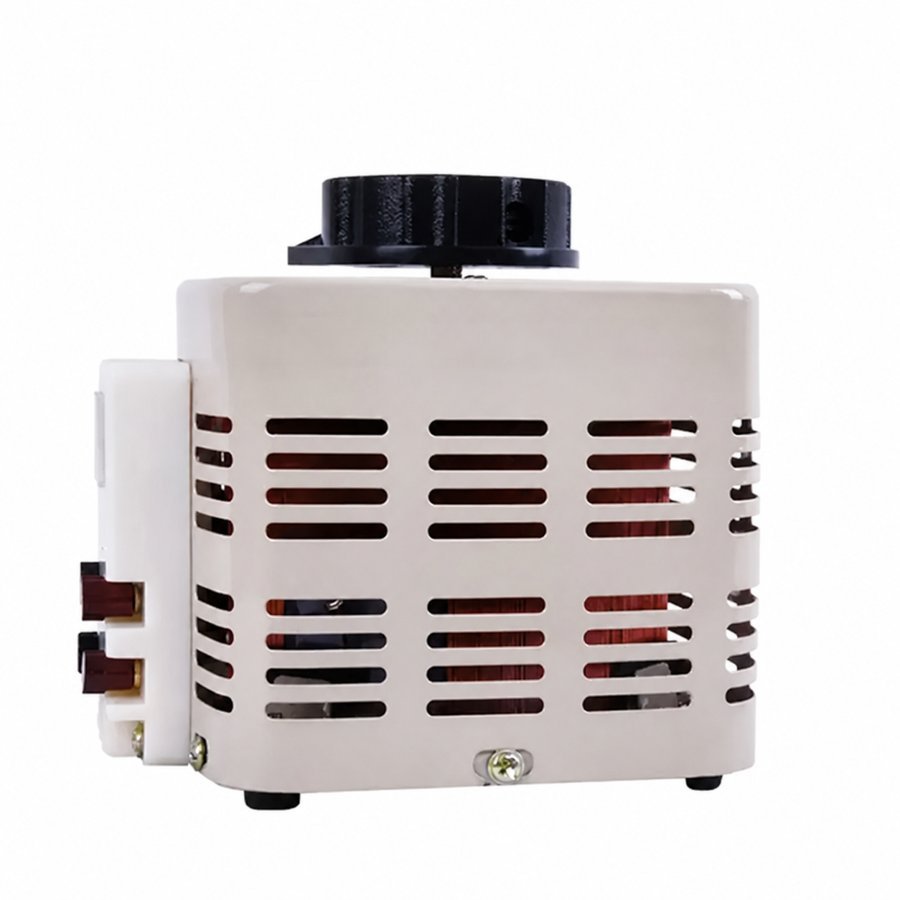
Setting it up safely
Wire the Variac between the supply and the motor, and run the motor on the output. Use the input terminals for the line side and the output terminals for the motor, with the knob at zero before you power up – that way the motor never sees a voltage spike on switch-on. For brushed motors, keep the load within the current rating and give the unit airflow; a Variac running a motor all afternoon gets warm, and it needs to breathe.
One more thing buyers forget: the current limit is about output current, not watts. A 1KVA Variac at 220V gives you roughly 4.5A. Drop the output to 110V and the usable current stays about 4.5A, so the wattage halves. Plan around current and you will not be surprised.
Common mistakes with motor control
- Using a Variac on an induction motor for long duty. It runs hot and loses torque – use a VFD.
- Under-sizing. Motor start-up is 2-3x running current. Add margin.
- Forgetting the current limit. Rating is current, not watts at every voltage.
- Starting with the knob up. Power up at zero and turn up slowly.
- Blocking the airflow. A Variac under load needs ventilation.
Why buy from a factory directly
Wilmall manufactures TDGC2 and TSGC2 variable transformers from 500VA to 30KVA, single and three phase, with copper winding, factory-aligned brush assemblies and load tests on every unit. MOQ 10 pcs, 15-25 day lead time, FOB Ningbo or Shanghai. Tell us your motor type and watts and we confirm the rating within 24 hours.
Duty cycle and continuous use
A workshop Variac does not get a day off. It runs motors, heaters and test rigs for hours, and that changes the sizing conversation. A Variac used for occasional bench tests can run closer to its rating. A Variac that controls a motor all afternoon needs margin, airflow and honest continuous-duty rating – the same logic as any transformer, because that is what it is.
Heat is the enemy here. The brush contact and the winding both generate heat under load, and a Variac running warm hour after hour wears its brush faster and ages the winding insulation. Give it space on the bench, keep the vents clear, and size with margin. A 2KVA Variac loafing along at 1.2KVA will outlive a 1.5KVA unit run flat.
Alternatives: VFDs and soft starters
When a customer asks about motor speed control, we mention the alternatives because they matter. A VFD (variable frequency drive) changes both voltage and frequency, which is the right tool for three-phase induction motors – it gives full torque at any speed. A soft starter limits the start-up current of a motor without changing speed. A Variac is the simple, robust middle ground for brushed motors and resistive loads.
The honest advice: if your motor is a brushed universal type and you want simple, rugged speed control, the Variac is the right and cheapest answer. If it is a three-phase induction motor that needs speed control with torque, a VFD does the job the Variac cannot. Knowing which tool fits saves you a burnt-out motor and a wasted purchase.
Buying for resellers
Variacs sell steadily to workshops, labs, universities and maintenance teams, and resellers stock a small range rather than one size. A sensible shelf is 500VA for hobby and lamp work, 1KVA and 2KVA for the workshop middle ground, and a 3KVA for the heavier bench work – plus the three-phase units for anyone testing three-phase gear.
We private-label Variacs for resellers from MOQ 10 pcs, with your brand, custom sockets and analog or digital display. Digital display models with LCD readout are popular in newer workshops – the output voltage and current on the screen beats squinting at a dial. Send us your target market and we will recommend the range.
The short version for buyers
A Variac controls brushed motors and resistive loads with a clean sine wave; it does not belong on induction motors. Size on current with margin, start at zero, keep it ventilated. The TDGC2 range covers 500VA to 30KVA, and we confirm the rating from your load in one message.
Reading the Variac nameplate
A Variac nameplate lists the VA rating, the input voltage and the output range – for example 1KVA, 220V input, 0-250V output. The number that matters for motor work is the output current, which you get by dividing the VA by the output voltage. A 1KVA unit at 250V gives about 4A. Keep your motor load within that current and the Variac will serve you for years. Photograph the nameplate and we will confirm the match for your motor.
And the practical last word: keep the knob clean and the brush seated. A Variac that sits unused for months can develop a tarnished track where the brush parks, and the first turn feels gritty or dead. Running the knob through its full range a few times before a serious session clears the track and seats the brush. It is a five – second habit that keeps the unit feeling new for years.
Frequently asked questions
Can a Variac control the speed of any motor?
No. A Variac controls brushed motors (universal, DC) and resistive loads smoothly. Induction motors lose torque and overheat when the voltage drops – for those, use a VFD.
What size Variac do I need for a motor?
Take the motor watts, multiply by two to three for start-up, and pick that rating. A 500W motor wants at least a 1KVA Variac.
Why does my induction motor overheat with a Variac?
Induction motors are designed for fixed voltage. Dropping the voltage increases slip and current draw, which heats the windings. A VFD is the right tool for induction motor speed control.
Does a Variac give more current at lower voltage?
No. The output current limit stays roughly the same at any knob position, so the wattage drops as the voltage drops. Size on current, not watts.
Can I order Variacs with my brand?
Yes, OEM branding from MOQ 10 pcs per model, with custom sockets and analog or digital display on request.
Related reading
- How to Choose a Variable Transformer
- Variac vs Voltage Stabilizer: What Is the Difference?
- Variable Transformer (Variac) Range
Get a factory-direct quote
Email sales@wilmall.com or WhatsApp +86 197 3022 6757 with your motor type and watts. We confirm the rating within 24 hours. MOQ 10 pcs.