Step Down Transformer for Water Pump: Sizing & Wiring
Water pumps are where transformer sizing mistakes get expensive. A pump is a motor, and a motor draws several times its running current every time it starts – plus, in a pump, it starts against water pressure, which makes the surge even worse. If you are running a US-spec 110V pump in a 220V country, or feeding a 380V three-phase pump from a 220V single-phase supply, the transformer choice is the difference between years of service and a pump that burns out in a season. This guide covers the sizing math, single-phase versus three-phase, and the wiring details that matter.
Why pumps need oversized transformers
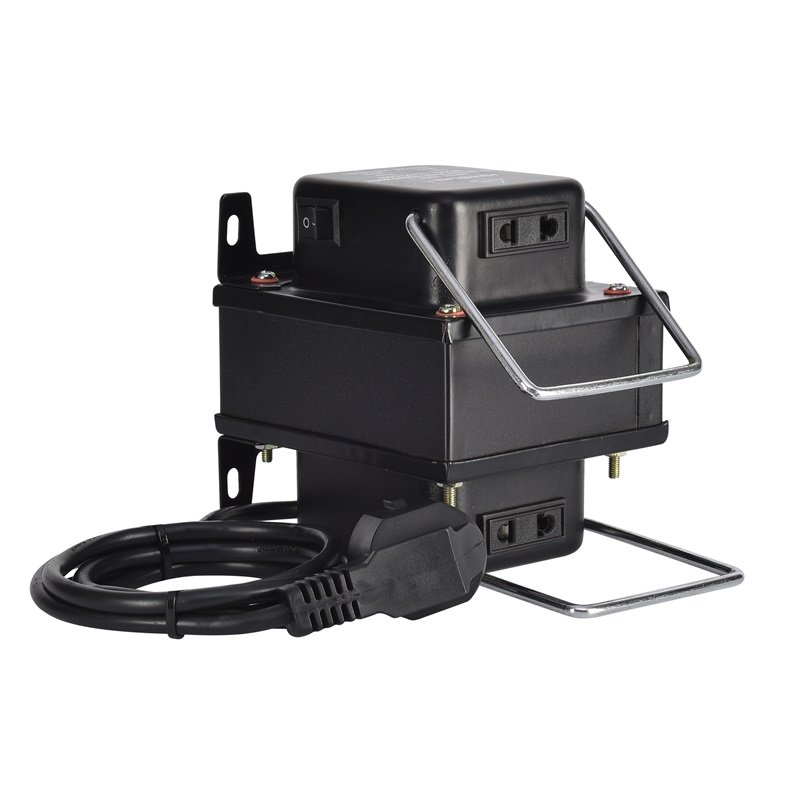
The label on a pump shows its running watts. The reality is that when the motor starts, it draws a locked-rotor current of 4 to 7 times that for a second or two, until it spins up and the back-EMF settles. A pump starting against a closed valve or a full pipe draws even more. If you size the transformer to the running watts, every start-up is a strain – the voltage sags, the motor struggles, and after enough cycles something gives.
Here is the rule we give every buyer: size a pump transformer at two to three times the running watts, minimum. A 750W pump wants a 2000VA transformer. A 1,500W pump wants 3000-5000VA. It looks like overkill until you watch a marginal transformer brown out on every pump start, and then it looks cheap.
Transformer size for water pumps
| Pump type | Running watts | Start-up surge | Recommended transformer |
|---|---|---|---|
| Small submersible / pond pump | 200-400W | ~1,600W peak | 1000VA |
| Home pressure pump | 500-750W | ~3,000W peak | 2000VA |
| Borehole / well pump (1HP) | 750-1,100W | ~4,400W peak | 3000VA |
| Sump / sewage pump | 800-1,200W | ~4,800W peak | 3000-5000VA |
| Large borehole pump (2HP) | 1,500-2,200W | ~8,800W peak | 5000-8000VA |
The bigger the pump, the more the start-up dominates. A small pond pump starts gently enough that 1000VA covers it. A 2HP borehole pump has a brutal start-up and wants serious iron – this is not the place to save money. When in doubt, we say the same thing every time: move up a size.
Single-phase versus three-phase pumps
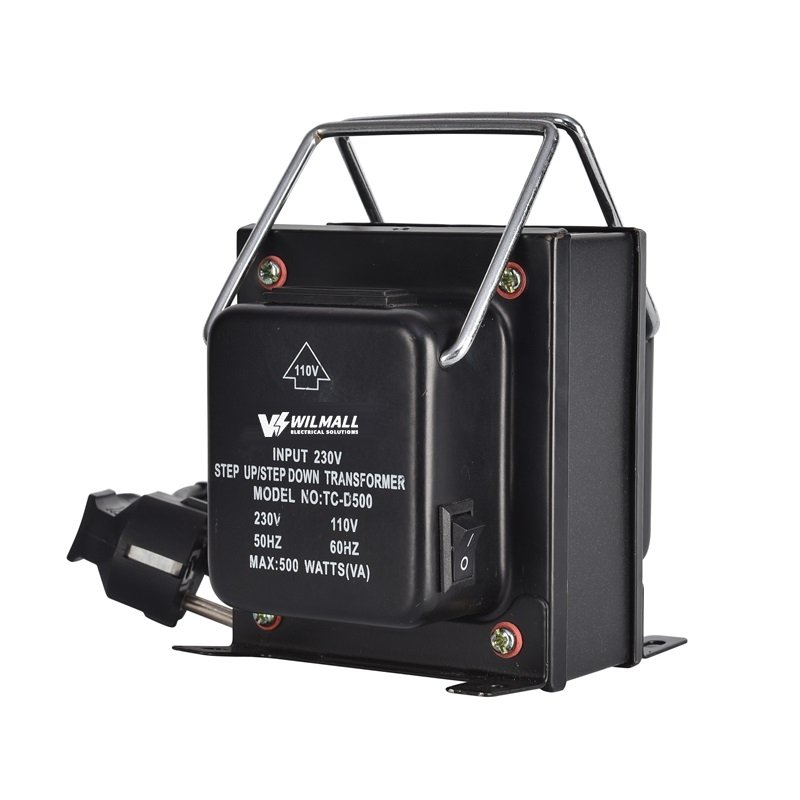
Small domestic pumps run on single-phase 110V or 220V. Bigger agricultural and industrial pumps are often three-phase 380V or 415V. If you have a three-phase pump but only single-phase supply, the answer is not one transformer – it is a single-phase-to-three-phase conversion, which is a different machine entirely, or a phase converter with a transformer. What we do supply is the step up and step down side: feeding a 380V three-phase pump from a 380V three-phase supply that needs isolation or voltage correction, and stepping 110V single-phase pumps up or down as your grid requires.
If your pump is three-phase, check your supply first. A transformer only changes voltage – it does not create a phase you do not have. Tell us your pump nameplate and your supply, and we will tell you honestly what works. Some customers need a transformer, some need a different approach, and we would rather you know before you order than after.
Wiring pumps to transformers
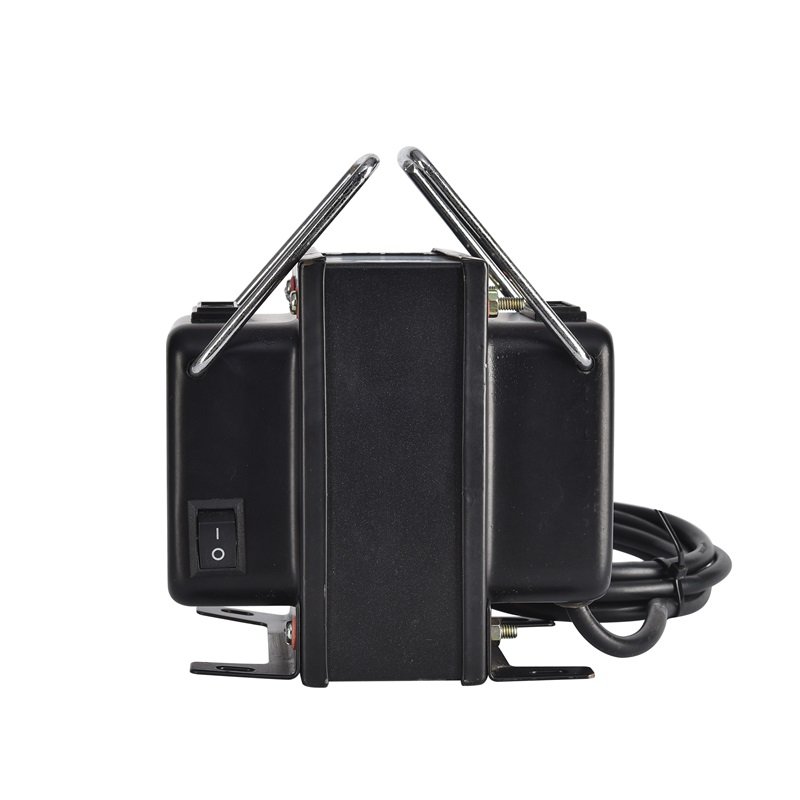
A pump transformer should be wired close to the pump, with cable sized for the start-up current, not the running current. Use the transformer terminals for a permanent installation, or a dedicated outlet for a plug-in pump. Keep the wiring short and the connections tight – a loose connection on a motor circuit is how fires start. RCD protection on the output is important for pumps in wet environments; water and electricity need that layer between them.
Common mistakes with pump transformers
- Sizing to running watts. Pump start-up is 4-7x running current. Size at 2-3x minimum.
- Forgetting the start-up frequency. A pump that cycles every few minutes stresses the transformer more than one that runs long.
- Assuming a transformer makes three phases. It changes voltage, not phase count.
- Thin wiring. Start-up current needs cable sized for the surge.
- No RCD near water. Pumps in wet locations need the extra protection.
Why buy from a factory directly
Wilmall supplies step down and step up transformers for pumps across Asia, the Middle East and Africa. Copper winding, generous motor-margin sizing, RCD protection and batch test records with every shipment. MOQ 10 pcs per model, 15-25 day lead time, FOB Ningbo or Shanghai. Send us your pump nameplate and we confirm the size within 24 hours.
Duty cycles and start frequency
Pumps do not run like other loads. A pump that feeds a pressure tank cycles on and off dozens of times a day – it starts under full load, runs briefly, and stops, over and over. Each start is a current surge on the transformer. Compare that with a fan that runs for hours at a steady draw, and you can see why pump transformers need the margin: it is not one big surge, it is many surges, repeated, for years.
The thermal effect is cumulative. Every start pushes the transformer windings a little hotter for a moment, and a transformer that cycles hard all day runs warmer than its label suggests. This is why we tell pump buyers to treat the 2-3x sizing rule as a floor, not a suggestion. A pump that cycles frequently gets the top of the range.
Pressure pumps and boreholes
A home pressure pump – the kind that keeps water flowing to taps – is usually a single-phase motor in the 0.5 to 1.5HP range, running 750W to 1,500W. It starts against a closed or partially open valve, which loads the motor harder at start. A borehole pump, on the other hand, is often bigger and starts against the full head of water in the pipe, which makes the start-up current hit even harder.
For a borehole pump, we like to see the transformer sized at the top of the range and installed close to the pump with short, heavy wiring. The longer the cable between transformer and pump, the more voltage you lose under load – and a borehole pump that sees low voltage at start struggles and overheats. Keep the run short and the cable thick.
Buying for resellers and contractors
Contractors installing pumps for households and farms buy transformers in batches, and the question is always the same: match the transformer to the pump, not the other way around. We supply pump-matched step down transformers for contractors across Asia, the Middle East and Africa, private-labelled where needed, from MOQ 10 pcs.
If you install a range of pumps, stock a matching range of transformers: 1000VA for small submersibles, 2000-3000VA for 1HP pressure pumps, 5000VA+ for the big boreholes. That way every job has the right box on the shelf, and every pump gets started on a transformer that is not straining. Send us the pump models you install and we will map the transformer range.
The short version for buyers
Size a pump transformer at 2-3x the running watts, expect the start-up to repeat all day, keep the wiring short and thick, and fit RCD near water. The ST and STU series cover the pump range, and we confirm the size from your nameplate in one message.
Checking the pump nameplate
The pump nameplate tells you what you need: the input voltage, the full-load current and the power in watts or horsepower. For a single-phase pump, the full-load current at 110V times the voltage is your running watts. Apply the 2-3x rule and you have the transformer size. If the nameplate gives horsepower instead of watts, roughly 1HP is 750W. Photograph the nameplate and send it to us – we will confirm the transformer before you buy.
And a word on surge protection: pumps start hard, and the start – up surge can travel back through the supply and annoy other equipment on the same circuit. The transformer smooths much of that, but if your pump shares a circuit with sensitive electronics, a surge suppressor on the transformer input is a cheap extra layer. It costs little and it protects the transformer, the pump and everything else on that line.
Frequently asked questions
What size transformer do I need for a 1HP water pump?
A 1HP pump runs at roughly 750-1,100W but starts at 4-7x that. Size at 2-3x running watts, so a 3000VA transformer is the safe choice for a 1HP home pressure pump.
Can a transformer convert single-phase to three-phase for a pump?
No. A transformer changes voltage, not phase count. For a three-phase pump on a single-phase supply you need a phase converter or VFD, not a transformer. Send us your nameplate and we will advise.
Why does my pump trip the transformer on start?
Motor start-up draws 4-7x running current. If the transformer is sized to running watts, every start-up overloads it. Move up to 2-3x the running watts.
Does a pump transformer need RCD?
Yes. Pumps work near water, and RCD protection trips on leakage in milliseconds if a fault develops. It is the layer between the pump and anyone touching it.
Can I order pump transformers with my brand?
Yes, private labelling from MOQ 10 pcs per model, with RCD and motor-rated margin as standard.
Related reading
- Step Up vs Step Down Transformer: What Is the Difference?
- Three Phase Step Down Transformer Guide
- Step Up and Step Down Transformer Range
Get a factory-direct quote
Email sales@wilmall.com or WhatsApp +86 197 3022 6757 with your pump nameplate and supply voltage. We confirm the size within 24 hours. MOQ 10 pcs.