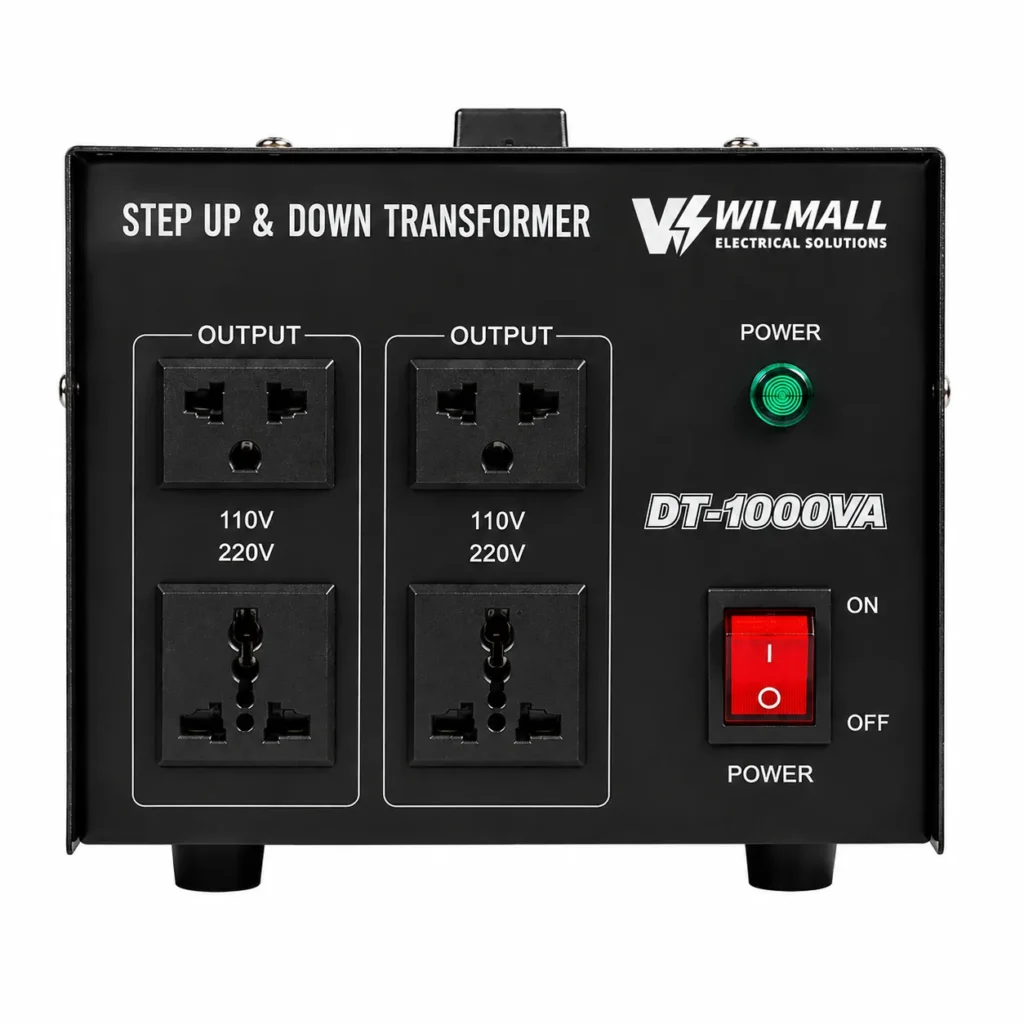
Step Down Transformer for Electric Oven and Range
An electric oven is one of the biggest loads in any kitchen, and most US ranges are hardwired at 120V or 240V with specific circuit requirements. If you imported a 110V countertop oven or a built-in range and your country runs 220V, you need to think in watts, not in “it says 1500W so 1500VA”. Here is the practical guide to powering an electric oven through a step down transformer without burning anything out.
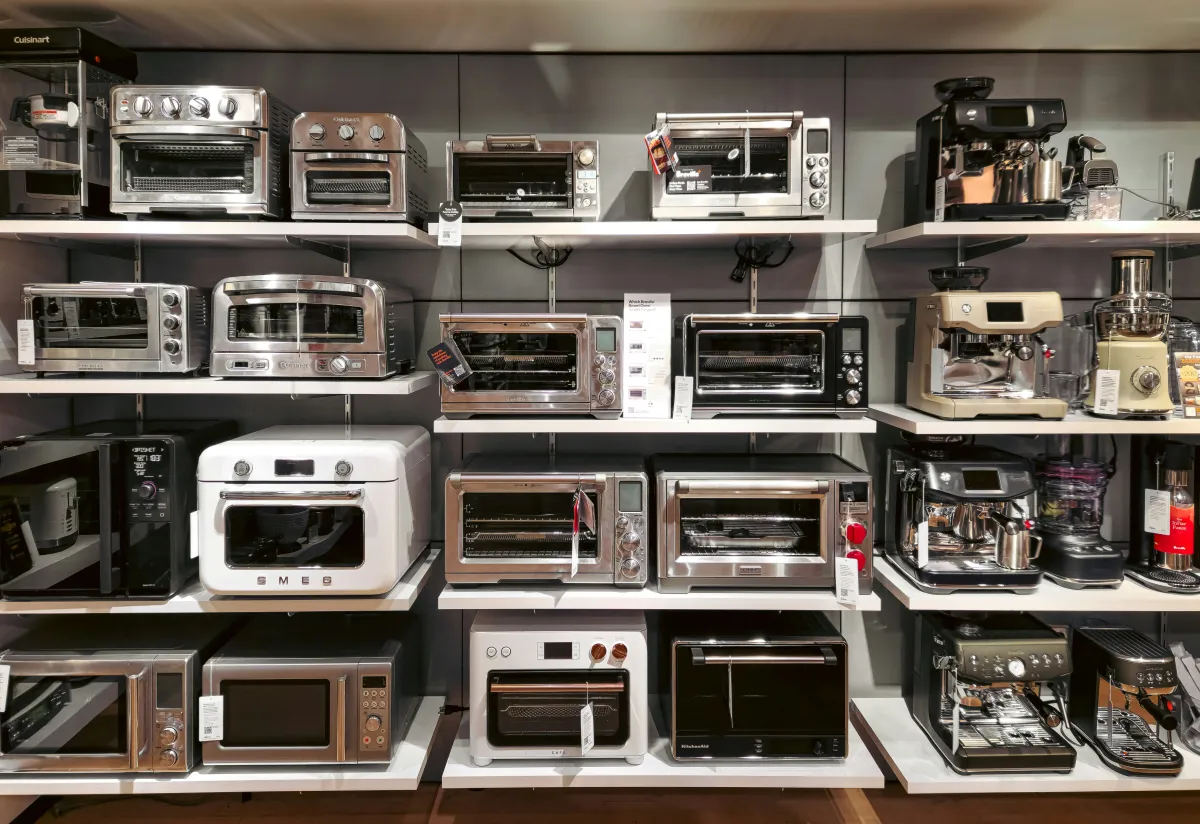
Electric ovens are continuous heaters
Unlike a microwave that runs three minutes at a time, an oven runs 30-60 minutes straight while the elements cycle on and off. The elements are on maybe 70% of the time during baking. That means the transformer sees a heavy, sustained load, not a burst. It must be rated for continuous duty at that load, which is why we always size ovens with more margin than other appliances.
The other thing to know: oven elements are purely resistive, so watts and VA are nearly the same number. That removes one layer of guesswork. What matters is the total draw and how long it runs.
Step down transformer size for electric oven
| Oven type | Element wattage | Duty | Recommended transformer |
|---|---|---|---|
| Countertop toaster oven | 900-1500W | intermittent | 2000VA |
| Countertop convection oven | 1200-1800W | intermittent | 2000VA |
| Built-in single oven (US 120V) | 1500-2000W | long cycles | 3000VA |
| Built-in range (US 240V) | 3000-5000W | long cycles | needs 240V tap, 5000VA+ |
Most buyers on this site are powering countertop ovens, and the ST-2000 (2000VA) covers up to about 1500W with comfortable margin. For built-in ovens that draw 1800W and stay on for an hour, step up to the STU-3000. And one warning: US built-in ranges often run on 240V with a neutral, not 120V. If your oven plugs into a US 240V outlet, a standard 110V step down transformer will not work — talk to us first, because that needs a 240V tap configuration.
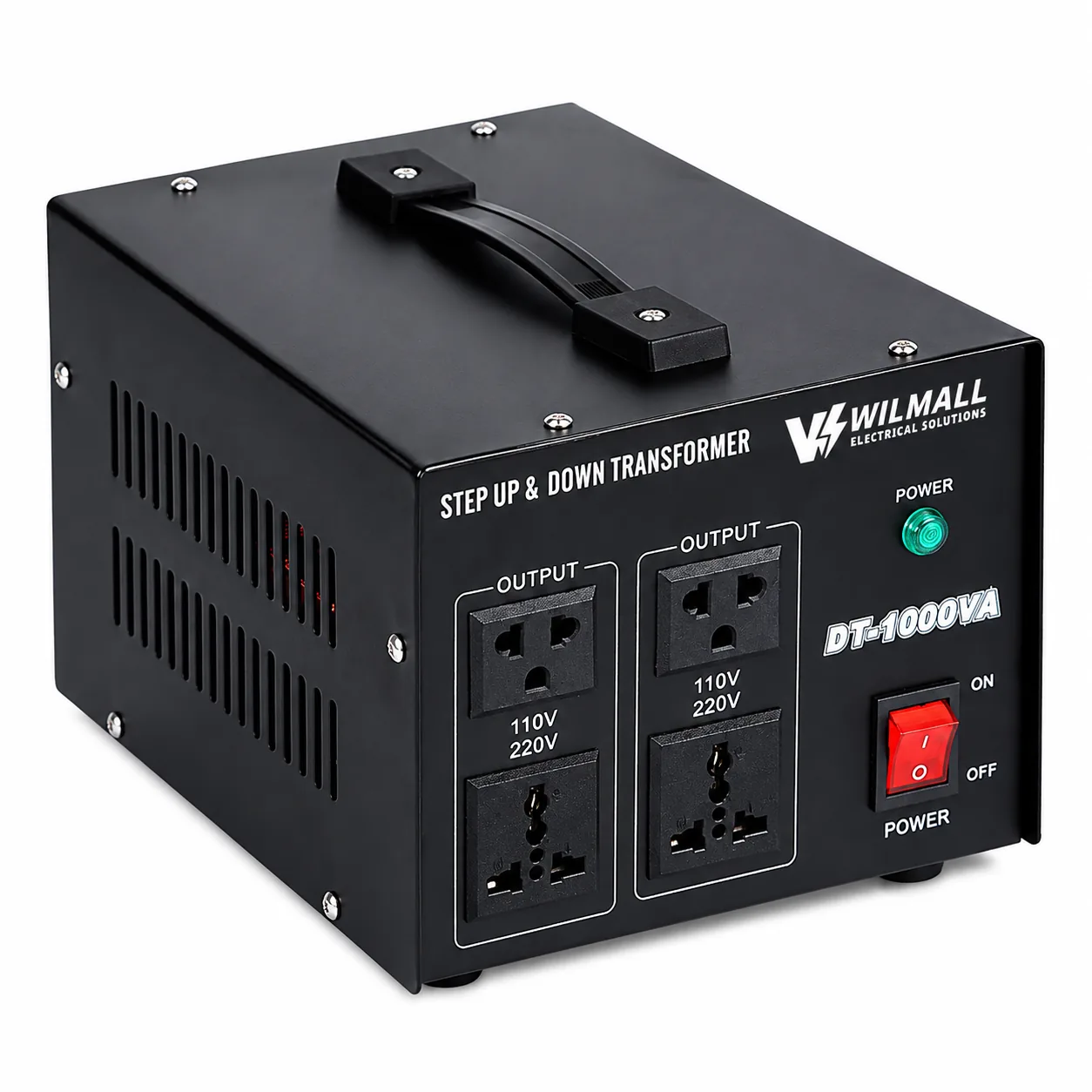
The 240V tap question for ovens
Here is the thing about ovens: they draw power for a long time, so small voltage differences matter more than with other appliances. A 220V-primary transformer on a 240V grid delivers about 115-120V instead of 110V. The elements run hotter, the oven overshoots its set temperature, and baked goods come out uneven. For an oven, order the transformer wound for your actual grid voltage, or with input taps. It is a free option at the factory and it makes the oven behave like it did in the US.
Hardwired ovens and plug-in transformers
Built-in ovens are often hardwired rather than plugged in. For those, order a transformer with terminal output instead of a socket, and let your electrician land the cables. For countertop ovens, the plug-and-socket version is fine. If you are unsure, tell us whether the oven has a plug or bare wires and we will match the output config.
Why copper winding matters for ovens
An oven transformer runs hot for long periods, and heat is what kills transformer insulation. Copper conducts better than aluminium, so a copper-wound transformer runs cooler at the same load and lasts several times longer. On a 2000W continuous load, the difference between copper and aluminium winding is the difference between a unit that lasts three years and one that lasts ten.
Common mistakes with oven transformers
- Assuming a US 240V range works on a 110V transformer. It does not. Check the oven voltage first.
- Sizing on the average instead of the element-on load. The elements cycle on; size for the on state.
- Using a 220V-primary unit on a 240V grid. The oven runs hot. Order the right primary.
- Enclosing the transformer. A long baking session needs airflow.
- Forgetting the neutral on 240V ranges. Some US ranges need the neutral; tell us the wiring.
Why buy from a factory directly
Wilmall builds step down transformers from 500VA up to project sizes, with copper winding, RCD protection and a 12-month warranty. We have done many oven and kitchen programs for appliance importers in the Middle East, Africa and Asia, including private labelling. MOQ 10 pcs per model, 15-25 day lead time, FOB Ningbo or Shanghai with full documentation.
Oven safety: earth and RCD
An oven is a big metal box full of heating elements, and it lives in a kitchen full of water and people. Earth it properly and protect it with RCD. The transformer itself must be earthed through the supply, and the oven chassis must be earthed through the transformer output. Wilmall ST and STU series include RCD protection as standard, which trips on any leakage before anyone gets a shock.
Do not run an oven transformer on a two-pin outlet or with an adapter that drops the earth. In a wet kitchen, that is how accidents happen. If your building has old wiring without earth, tell us — we can advise on the safest configuration for your situation.
Single vs double oven: adding the loads
If you run two ovens, or an oven and a cooktop, do not add the nameplates together and buy one huge transformer. The elements cycle, and two big loads rarely peak at the same moment. The practical approach is one transformer per oven, which also isolates a fault to one appliance. If you insist on one unit, add the peak draws, apply 30% margin, and expect it to run hot.
For bakeries running several ovens, we do transformer banks with individual breakers. Each oven gets its own circuit, the bank is sized for the realistic simultaneous peak, and a fault on one oven does not stop the line. That is the setup most commercial kitchens end up with.
Voltage drop in long cable runs
Kitchens are rarely next to the distribution board, so cable runs matter. A long thin cable between the transformer and the oven drops voltage under load, and an oven is a heavy load. For runs over 5 metres, use 2.5mm2 or 4mm2 cable, or the oven will underperform at the end of the run. If you are unsure, the electrician should measure the voltage at the oven terminals while the elements are on.
This is a common hidden cause of “the oven is slow” complaints. The transformer is fine, but the cable is robbing 10 volts. Short, thick cable runs keep the oven at full power.
Buying for resale: the oven range
For importers, the oven transformer market breaks into two SKUs: 2000VA for countertop ovens and 3000VA for built-ins, plus the occasional 240V-tap unit for US ranges. Stocking those two sizes covers almost every enquiry. Private labelling, country-specific sockets and cartons are available from MOQ 10 pcs, and we can include the wiring diagram on the side of the case — installers love that.
Warranty, spares and support for ovens
Every Wilmall transformer carries a 12-month warranty covering winding and RCD faults, with batch test records shipped alongside. Ovens are heavy, long-cycle loads, so if anything is going to surface, it surfaces in the first weeks — and the warranty covers that window. After the first month, a correctly sized copper-wound unit simply runs for years.
Ready to order
Send us the oven model, the element wattage, the plug type and your country voltage. We confirm the transformer size, the winding and the socket configuration in writing, then produce in 15-25 days and ship FOB Ningbo or Shanghai. MOQ 10 pcs per model, private labelling available.
The bottom line for ovens
An electric oven is a simple, heavy, continuous load. Give it a transformer one size up from the label maths, wound for your grid voltage, with RCD and good airflow, and it will bake as well in Cairo or Nairobi as it did in Chicago. That is the whole recipe.
Frequently asked questions
Electric Oven and Range Sizing: The Biggest Kitchen Load
An electric oven or range is the largest load in most kitchens, and it needs the largest transformer. A US-spec oven can draw 2000W to 3000W when the elements are on, and a range with multiple elements running can draw far more. The practical sizing for a single oven is 3000VA to 5000VA, and for a range with several elements, 5000VA to 10000VA, because the elements can run together during cooking. The oven cycles its elements to hold temperature, so the transformer handles repeated surges. This is a case where sizing the simultaneous load matters absolutely, because the oven rarely runs alone. Our ST series goes up to 10KVA, and we can build larger custom units for commercial kitchens. Send us the oven’s nameplate rating and how many elements run at once, and we will confirm the right size.
The Kitchen Load Question for Ovens
When an oven shares a transformer with other kitchen appliances, the load question is about timing. Ovens cycle their elements, so the current peaks and dips, and the moment of peak is when other appliances usually are not running, because you are cooking, not boiling a kettle at the same time. That means sizing for the oven alone with 30 percent margin often covers a kitchen in practice. If you do run heavy appliances simultaneously, such as an oven and a microwave, add their wattages. For most homes, a 5000VA transformer covers a single oven and the usual kitchen mix. Send us your oven’s nameplate input rating and your typical kitchen usage, and we will confirm the size that fits both.
What size transformer do I need for an electric oven?
A countertop oven up to 1500W needs a 2000VA transformer. A built-in oven drawing 1800W on long cycles needs 3000VA. US 240V ranges need a 240V tap configuration, not a standard 110V unit.
Can I run a US 240V range on a step down transformer?
Only with a transformer that provides a 240V output tap. A standard 220V to 110V step down will not power a 240V range. Send us the oven wiring details first.
Why does my oven transformer run hot?
Ovens are long-cycle loads. If the transformer is undersized or the primary voltage is wrong, it runs hot. Size with margin and mount it in open air.
My grid is 240V. What transformer do I need for my oven?
Order a transformer wound for the 240V primary or with 220V / 240V input taps, so the output stays at the rated 110V.
Can I hardwire a transformer to a built-in oven?
Yes. Order the terminal-output version and have an electrician land the cables. We build both plug-in and hardwire configurations.
Related reading
- Step Down Transformer 220V to 110V: Sizing and Safety
- Transformer Sizing Calculator
- Step Up and Down Transformer Products
Get a factory-direct quote
Email sales@wilmall.com or WhatsApp +86 197 3022 6757 with the oven model, its wattage, and your country. We will confirm the winding and price it factory direct. MOQ 10 pcs, 15-25 days.