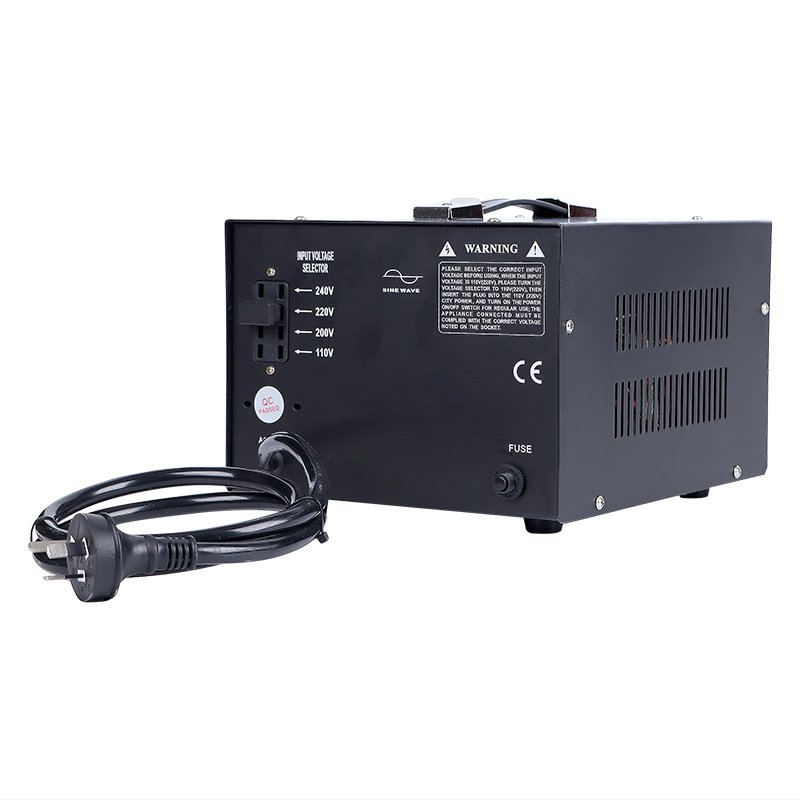
Step Down Transformer for Kenya: 240V to 110V Guide
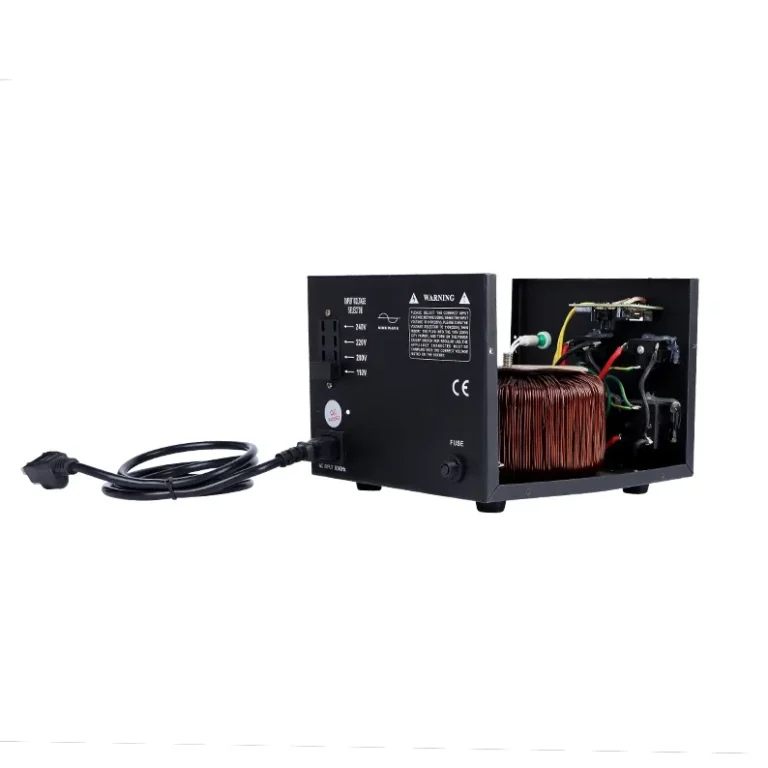
Kenya runs on 240V / 50Hz, while many US and Japanese appliances are rated 110V or 100V. A step-down transformer for Kenya converts the local supply safely so imported appliances work as designed. This guide covers sizing, safety and what to buy for the Kenyan market.
Kenya voltage reality
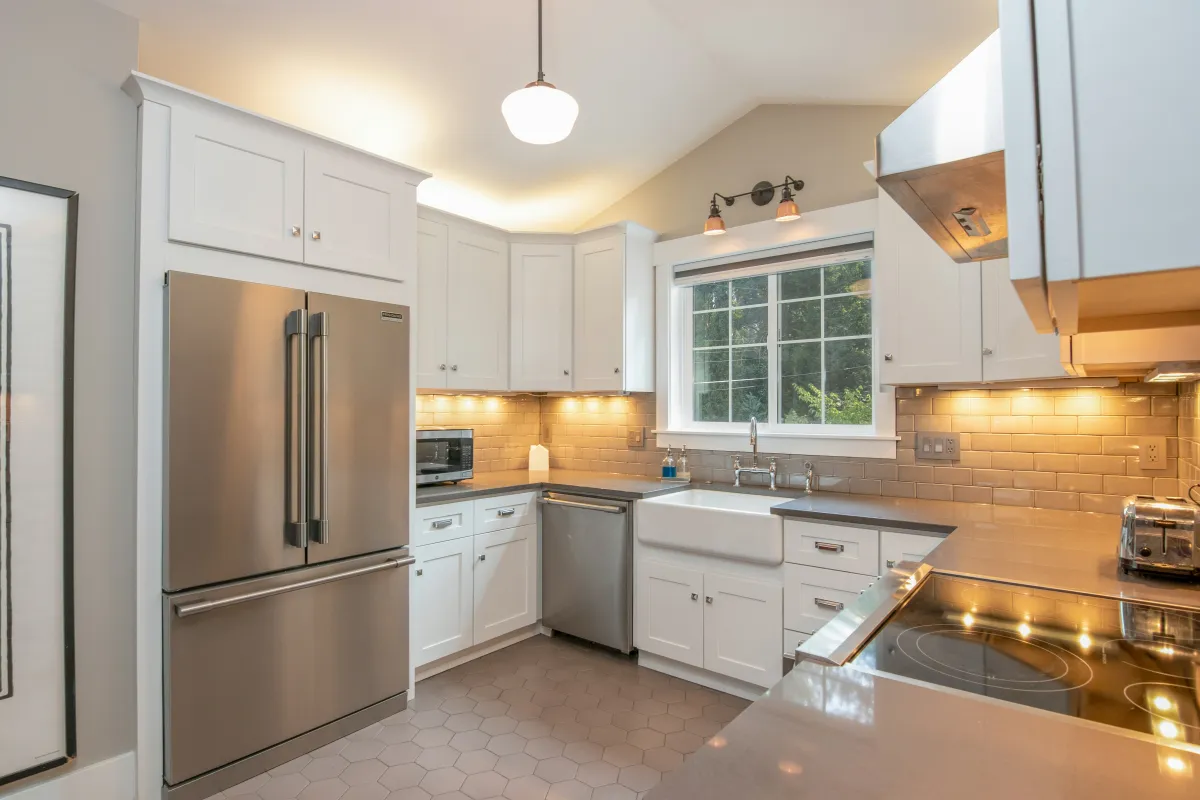
Kenya’s standard supply is 240V / 50Hz, managed by Kenya Power across the national grid. Appliances imported from the United States (120V), Japan (100V) and some other markets need conversion before use. The steady flow of used and new imported appliances through Nairobi, Mombasa and Kisumu keeps demand for step-down transformers year-round.
What Kenyan buyers need
- 240V to 110V step-down transformers for US appliances — the staple product.
- 240V to 100V units for Japanese appliances like rice cookers and air purifiers.
- Step-up transformers (110V to 240V) for equipment moving in the opposite direction.
- Transformer + stabiliser combos for areas with unstable supply.
Sizing a transformer for Kenya
| Appliance | Typical wattage | Recommended model |
|---|---|---|
| TV, phone chargers, lamps | 100-300W | ST-1000 (1KVA) |
| Blender, mixer, coffee machine | 300-800W | ST-1000 / ST-1500 |
| Refrigerator / freezer | 300-800W (surge x3) | ST-2000 (2KVA) |
| Microwave, iron, air fryer | 1200-1800W | ST-2000 or larger |
| Washing machine, water pump | 1000-2500W | STU-3000 / 5000 |
240V input and output accuracy
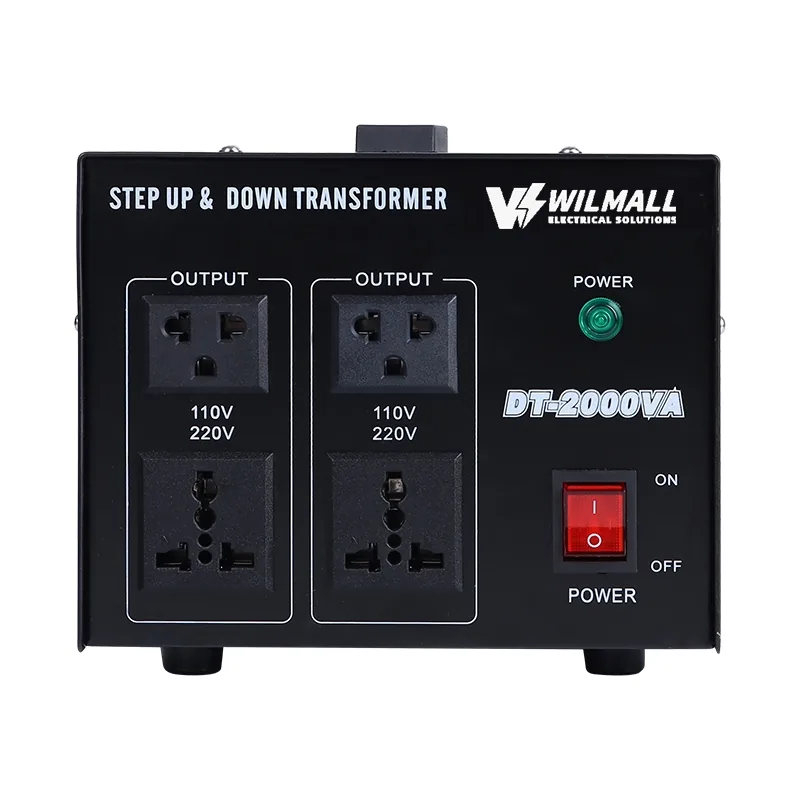
Kenya’s 240V nominal supply is at the top of the common range. A transformer wound for a 220V primary will still run on 240V, but the output rises proportionally — a unit wound for 110V output can deliver around 120V on a 240V input. For sensitive electronics, order a unit wound for the 240V primary or with input taps (220V / 240V) so the output stays accurate. We build both options.
The same tap logic applies to Japanese appliances. Most 100V devices operate within the tolerance of a 110V output, so a standard step-down works fine. For motorised 100V 50Hz-only units, request a multi-tap secondary (100-110V) and we will wind the output closer to the device’s rating.
Grid stability and generator use
Power supply in Kenya can be unstable in some regions, with voltage dips and outages common outside the main cities. Many businesses run on generators. A transformer with healthy capacity margin handles these swings better than an electronic converter, which can shut down when input voltage drops. For generator use, a transformer with 25-30% margin is the safer choice.
Generator output also varies with load — a heavily loaded generator dips while a lightly loaded one runs high. A transformer absorbs this range without complaint, which is why copper-and-steel transformers remain the dependable choice for the Kenyan market over compact electronic converters.
Safety and RCD protection
For the Kenyan market we recommend RCD-protected models such as the ST-2000, which trips on leakage current and protects users from shock in damp or humid conditions. Thermal protection and fused inputs add another layer of safety. These features matter for both home users and commercial buyers in Nairobi and Mombasa.
Transformers vs electronic converters in Kenya
Both products sell in Kenya, but they serve different buyers. Electronic converters are compact and cheap, suited to small resistive loads like phone chargers and lamps. For refrigerators, washing machines, water pumps and anything with a motor, the transformer is the dependable choice — it handles start-up surge, runs continuously, and tolerates the voltage swings common on the grid and from generators.
For distributors, offering both covers the full market, but the transformer range is where the reliable repeat business sits. A customer who burns out an electronic converter on a refrigerator will come back for a transformer — and remember which brand sold them the converter.
What to stock for the Kenyan market
The practical range for Kenyan importers is ST-1000, ST-2000 and STU-3000. Households buy in this order: small appliances first (ST-1000), then refrigerators (ST-2000), then washing machines and pumps (STU-3000). Adding a 500VA unit for the used-Japanese-appliance niche gives full coverage. All models are available with private labelling from MOQ 10 pcs.
Buying for resale in Kenya
Importers and distributors in Kenya stock 1000VA, 2000VA and 3000VA step-down transformers as the core range. Private labelling with your brand, English labels and export-grade cartons is available from MOQ 10 pcs. CE / RoHS certificates and batch test reports are provided with every order for smooth customs clearance.
We ship FOB Ningbo or Shanghai with commercial invoice, packing list and the relevant certificates. Production takes 15-25 days after order confirmation, and sea freight to Mombasa typically adds 30-40 days. Many of our Kenyan partners order in container quantities of mixed models to keep stock levels healthy between shipments.
The Wilmall factory advantage for Kenya
Wilmall is a Yueqing transformer factory with in-house winding, assembly and testing. For Kenya, that means a 240V-primary standard, Kenyan-spec output sockets, English labels and retail cartons all from one order. Because we build rather than trade, you can request changes — tap voltage, cable length, label language — without a middleman marking them up. Every unit is load-tested before packing.
Frequently asked questions
Kenya’s 240V Reality and Generator Power
Kenya runs on 240V at 50Hz, which sits at the top of the standard input range, and the grid, while improving, still has moments of instability and scheduled interruptions in some areas. For a Kenyan home or shop running US-spec 110V appliances, a step-down transformer rated for 220-240V input handles the mains directly. The practical considerations are the same as across East Africa: generator power for the periods when the grid drops, voltage fluctuation, and the need for a transformer with margin. Our ST series accepts 220-240V input and outputs 110V, and the STU series adds RCD protection and auto-selecting input for mixed situations. If you run appliances through a transformer in Kenya, size with 30 percent headroom, and consider a stabilizer if the supply from your generator swings noticeably. Send us your appliance list and we will confirm the right size for Kenyan conditions.
Sizing for Kenyan Homes and Shops
The sizing math for Kenya follows the standard rules with local adjustments. A home running a TV, a decoder, a laptop, and a few lights needs about 1000VA, and adding a fridge or a freezer pushes you to 2000VA to 3000VA because of the compressor surge. A shop running a display fridge, a freezer, and lighting can need 3000VA to 5000VA. Kenyan buyers who run appliances during grid outages must also factor in the generator output, which can fluctuate more than mains. Our ST and STU series cover the household range, and we supply up to 10KVA for shops and small businesses. For resellers in Nairobi, Mombasa, or Kisumu, the volume sellers are the 1000VA, 2000VA, and 3000VA sizes, and we keep those in production rotation for faster repeat orders.
After-Sales and Warranty for Kenyan Buyers
The after-sales arrangement matters for Kenyan buyers, because shipping a failed transformer back to China is rarely practical. Our policy is replacement-first: if a unit fails within the 12-month warranty, we ship a replacement with the next container to Mombasa or Nairobi and settle the details afterwards. Every order includes the batch test certificate, so you have documented proof that the units were tested before packing. For distributors, this warranty is a selling point, because a customer with a failed unit who gets a quick replacement becomes a repeat customer. We also answer sizing and application questions after the sale, so if you add a new appliance, you can ask whether your transformer still covers it. If you are comparing suppliers for the Kenyan market, ask specifically how a warranty claim is handled from Kenya, because the answer tells you more than the price.
Importing Transformers into Kenya: Documentation and Timing
Importing transformers into Kenya uses the standard export documents, and getting them right avoids delays at Mombasa port. The commercial invoice, packing list, and bill of lading are essential, and your customs broker may also need a certificate of origin and, in some cases, the KEBS conformity documentation depending on the product category and quantity. We provide the commercial invoice, packing list, and batch test certificate with every order, and we can arrange the certificate of origin for Kenyan shipments. Sea freight from Ningbo or Shanghai to Mombasa typically takes 30 to 45 days, so plan about 45 to 70 days from order to delivery. For urgent small orders, air freight is available. We have shipped to Kenyan importers for years, so the common documentation questions are familiar. If your forwarder or buyer needs a specific document, tell us at the quotation stage and we will plan it into the production schedule rather than chasing it at the port.
The Wilmall Advantage for Kenyan Distributors
Kenyan distributors choose us because we are the factory, not a trading company, which means better prices, honest documentation, and support that continues after the sale. Every order includes the batch test certificate, the units carry a 12-month replacement-first warranty, and the MOQ is 10 pieces for standard models. We keep the volume sizes in production rotation, which shortens repeat order lead times, and we can assemble mixed orders of household units and commercial sizes in one container. Send us your target sizes and quantity, and we will quote a distributor price with the freight to Mombasa.
What voltage does Kenya use?
Kenya uses 240V / 50Hz. US appliances rated 110V and Japanese units at 100V need a step-down transformer before use.
What size transformer do I need for a refrigerator in Kenya?
A refrigerator draws 300-800W with a start-up surge of about three times, so a 2000VA step-down transformer is the recommended size.
Do I need a special transformer for Kenya’s 240V supply?
For accurate output, order a unit wound for the 240V primary or with 220V / 240V input taps. A 220V unit will run but the output voltage rises.
Can a step down transformer run on a generator in Kenya?
Yes. Transformers tolerate generator output swings better than electronic converters, provided the transformer has healthy capacity margin.
What is the MOQ for transformers shipped to Kenya?
Our MOQ is 10 pcs per model. We can mix capacities and voltages in one order and ship FOB Ningbo or Shanghai.
Related reading
- 110V vs 220V: A Voltage Guide for Buyers in Africa
- Step Down Transformer Manufacturer in China
- Step Up and Down Transformer Products
Get a factory-direct quote
Email sales@wilmall.com or WhatsApp +86 197 3022 6757 with your appliance list and target market. We reply within 24 hours.