Enclosed vs Open Frame Transformer: Which One to Choose
Enclosed vs Open Frame Transformer: Which One to Choose
When you buy a transformer for an industrial machine, a lighting system, or an OEM product, one of the first questions your supplier will ask is: open frame or enclosed? The choice between an enclosed vs open frame transformer is not cosmetic. It affects safety, heat management, mounting, maintenance, shipping, and final price. This guide compares both construction styles across the factors that actually matter, so you can specify the right unit for your project the first time.
What Is an Open Frame Transformer?
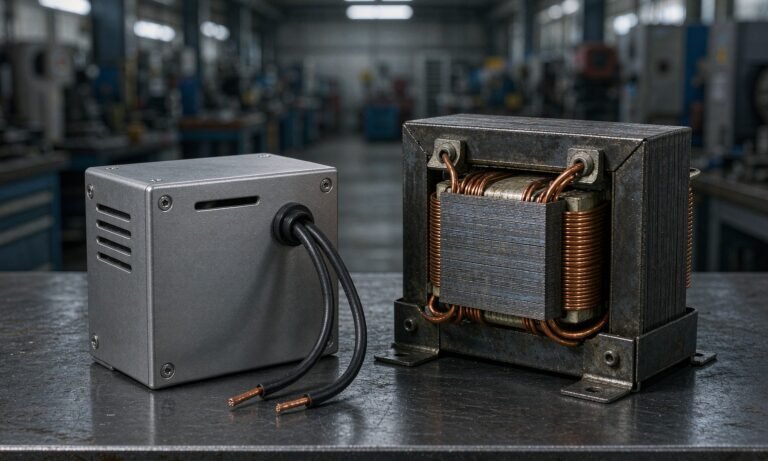
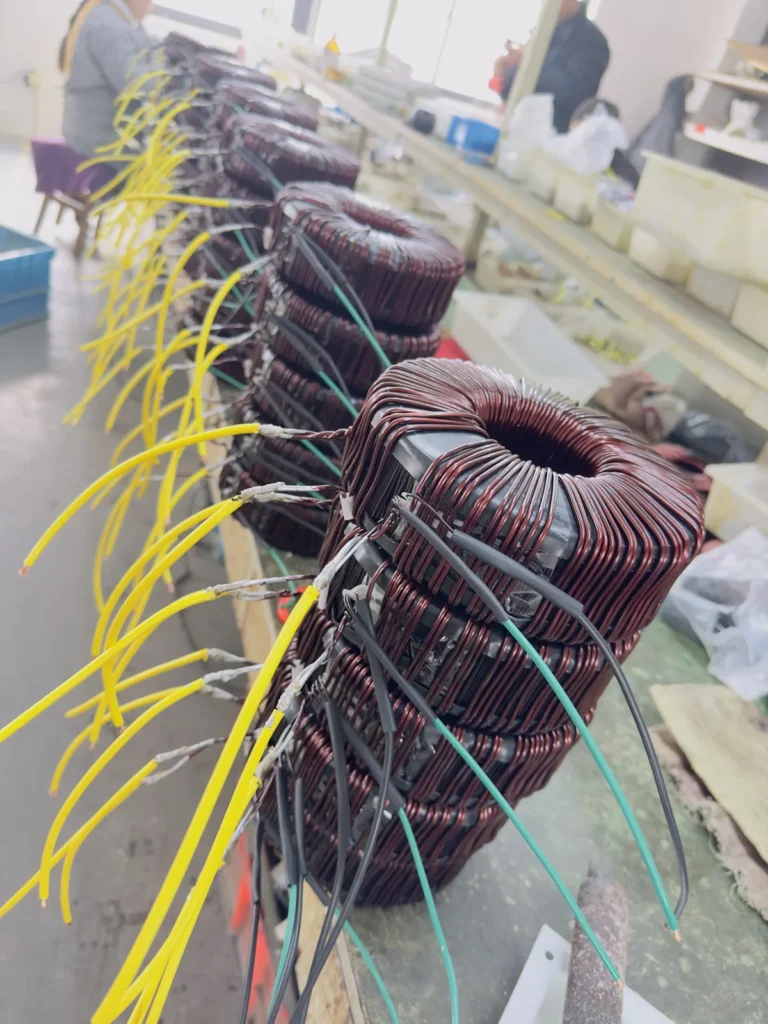
An open frame transformer — also called an open type or bare type — has no box around it. The wound coils, silicon steel core, and terminations are exposed, usually with a set of mounting feet welded to the core clamp. It is the most basic and lowest-cost construction, and it is the standard format inside equipment where the transformer is mounted inside a larger machine enclosure or control cabinet.
Because there is no housing, an open frame unit relies on natural air circulation for cooling. Heat from the windings and core radiates directly into the surrounding air, so an open frame transformer can typically be loaded closer to its nameplate rating for a given temperature rise than an equivalent enclosed unit. It is also lighter, easier to inspect, and simpler to re-terminate if the primary voltage changes.
What Is an Enclosed Transformer?
An enclosed transformer ships inside a protective enclosure. There are two common variants:
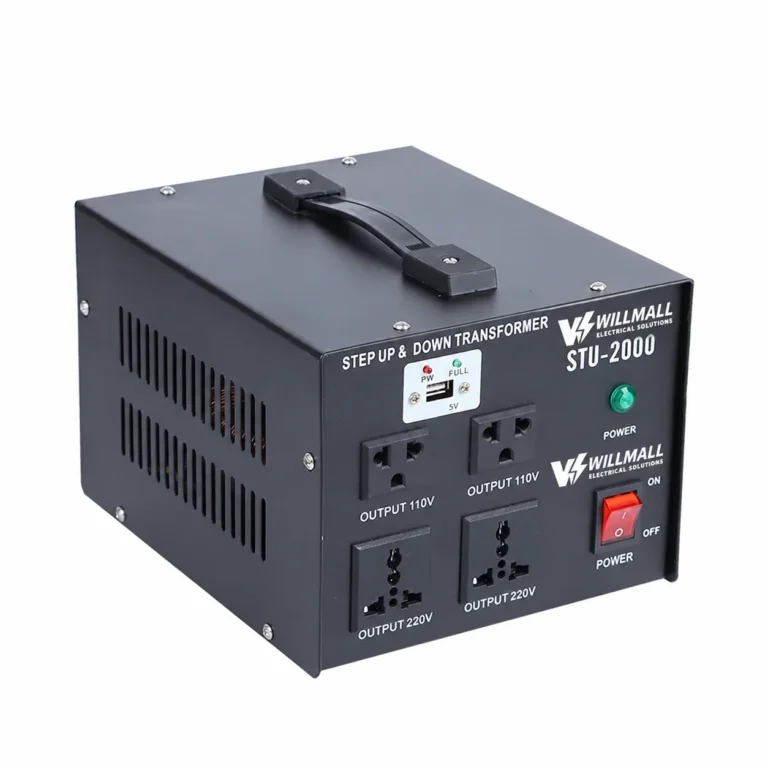
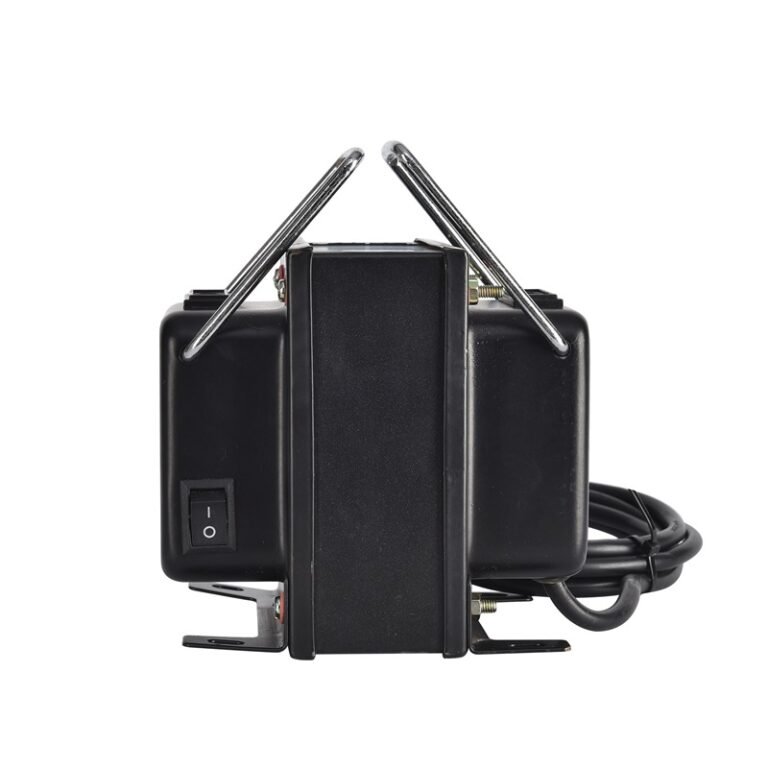
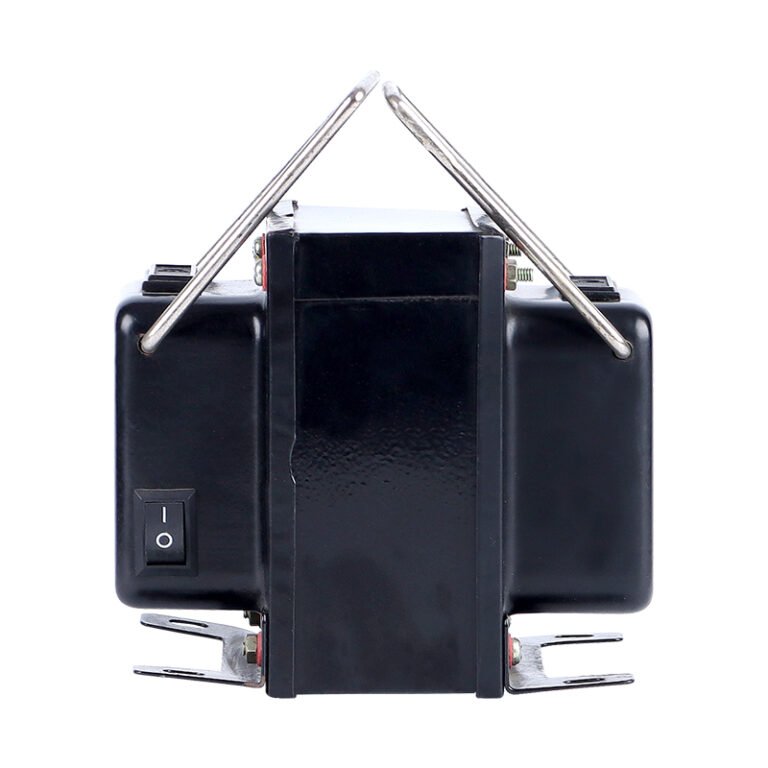
- Ventilated sheet-steel enclosures. A welded steel box with louvred vents, a gasket-sealed cover, and cable glands or knockout holes for wiring. This is the most popular style for stand-alone installations such as an isolation transformer beside a machine, a step-up/down unit feeding a workshop, or a voltage converter for imported equipment.
- Potted or encapsulated units. The winding is embedded in a resin compound inside a plastic or metal shell. This gives very high protection against dust, humidity, and vibration, at the cost of reduced cooling and lower continuous capacity for a given VA. Potting is common in marine, food-processing, and outdoor lighting applications.
Enclosed transformers are ready to use out of the box. They include terminals or receptacles, a built-in switch or fuse option, and an earthing point, so an installer can connect them without building a separate cabinet.
Enclosed vs Open Frame Transformer: Key Differences
| Factor | Open Frame Transformer | Enclosed Transformer |
|---|---|---|
| Protection (dust, touch) | None — must be inside a cabinet | Good — suitable for floor or wall mounting |
| Cooling | Best — free air circulation | Reduced — enclosure traps heat |
| Ingress protection | IP00 | IP20 to IP54 depending on design |
| Mounting | Feet for internal mounting | Feet or wall brackets, free standing |
| Wiring access | Exposed terminals | Terminal box or cable glands |
| Maintenance / inspection | Very easy | Requires removing the cover |
| Safety (finger touch) | Live parts accessible | Live parts shielded |
| Price | Lower | Higher (enclosure adds cost) |
| Typical application | Inside machinery and panels | Stand-alone installations |
The table above is the short version. The engineering decision really comes down to one question: is the transformer going to live inside a larger assembly, or does it need to work as a self-contained unit in its final location?
When to Choose an Open Frame Transformer
Select an open frame transformer when:
- It is mounted inside a machine, panel, or enclosure. The host cabinet already provides mechanical and finger protection, so a second enclosure is pure added cost and wasted space.
- Heat is a concern. A densely packed cabinet benefits from the superior airflow around an open unit. This is why most step-down transformers inside CNC machines and injection moulding presses are open frame.
- You are an OEM. If you build hundreds of units per year, buying open frame transformers and integrating them into your own chassis reduces both component cost and overall footprint.
- Maximum flexibility is needed. An open unit is easier to modify — moving a terminal, changing a tap, or fitting a thermal switch.
When to Choose an Enclosed Transformer
Select an enclosed transformer when:
- It will be mounted in a public or unsupervised area. A workshop floor, a warehouse wall, or a hotel electrical room demands finger-safe construction. A steel enclosure protects both people and the unit.
- Dust, moisture, or foreign objects are present. Food plants, farms, sawmills, and coastal installations quickly kill an open unit. A ventilated or potted enclosure extends service life dramatically.
- You need a plug-and-play solution. Enclosed units arrive with terminals, earthing stud, and often a switch or fuse, so installation is a wiring job, not a fabrication job.
- The transformer will be shipped and handled roughly. A rigid steel housing prevents coil damage during transport, which matters for export orders to remote sites.
Enclosure Protection Ratings Explained
If you go with an enclosed transformer, the IP code tells you exactly what it can withstand:
- IP20: protected against fingers and objects over 12mm, no water protection. Suitable for indoor electrical rooms.
- IP23: adds protection against spraying water. Acceptable for covered outdoor positions and washdown-adjacent areas.
- IP44/54: protected against splashing water and limited dust ingress. The right choice for outdoor or humid industrial environments.
- IP65+: effectively dust-tight and water-jet resistant — usually a potted/encapsulated construction. Use it only when required, because continuous load capacity drops.
A common mistake is buying an IP54 enclosure “just to be safe” for an indoor, clean application — you pay for the enclosure and lose cooling capacity for no benefit. Match the IP rating to the real environment.
Derating: The Cooling Trade-Off
Because an enclosure traps heat, the same core-and-coil set cannot carry the same continuous load in an enclosed version as it can in an open frame version. As a rule of thumb, expect a ventilated steel enclosure to reduce continuous capacity by roughly 10–20% for the same temperature rise, and a potted unit by 20–30%. A responsible manufacturer derates the nameplate accordingly rather than letting you discover the problem at full load. Ask for the temperature-rise data and the rated duty cycle before you compare prices between styles.
Open Frame and Enclosed Options at Wilmall
Wilmall Transformers, a low-voltage transformer factory in Yueqing, Zhejiang, China, manufactures both construction styles across the full product range:
- ST/STU/DT series step-up and step-down transformers from 500VA to 30KVA, in open frame or ventilated steel enclosure, with single-phase and three-phase versions.
- TC control transformers (40VA–1.5KVA) normally supplied open frame for panel mounting, or in a small enclosed case for machine-side use.
- TDGC2 variable transformers (Variacs) always enclosed in a ventilated housing with a knob and scale, because the brush assembly must be protected.
With 15 years of export experience to the Middle East, Southeast Asia, Africa, South America, and Central Asia, we know which construction each market demands. Every unit carries CE/RoHS compliance, is fully tested before shipment, and comes with a 12-month warranty. We supply factory direct with an MOQ of 10 pieces and a lead time of 15–25 days, and we accept OEM/ODM customisation of voltage, enclosure colour, terminals, labels, and packaging.
Enclosed vs Open Frame Transformer FAQ
Is an open frame transformer dangerous?
It has live terminals exposed, so it must be mounted inside a guarded location — a panel, cabinet, or machine housing with proper interlocks. Used correctly, it is as safe as any industrial component. It is simply not suitable for floor mounting in public areas.
Can I run an enclosed transformer at full nameplate load?
Yes, if the nameplate already reflects the derated capacity of the enclosed version. If a manufacturer labels an enclosed unit with the open-frame rating, that is a warning sign — run it at 80–90% and check temperature rise.
Does an enclosure reduce noise?
Somewhat. A steel housing dampens the high-frequency components of transformer hum, which is a bonus in offices and hotels. If noise is critical, also ask about core clamping quality and rubber mounting feet.
Which style is better for shipping overseas?
Enclosed units survive rough handling better and arrive ready to install, which is why most of our export customers choose enclosed transformers for stand-alone applications. Open frame units ship very safely too when packed on proper pallets with coil protection.
Can Wilmall supply the same transformer in both styles?
Yes. We can wind the same specification as open frame, ventilated enclosed, or potted. This is a common request from OEMs who want one internal version and one customer-facing version.
Enclosure Types and Protection Ratings Explained
The difference between an enclosed and an open-frame transformer is more than cosmetics, it is protection. An open-frame unit has exposed windings and terminals, which makes it cheaper, lighter, and easier to inspect and repair, but it must be installed inside a cabinet or an area where nothing can touch it. An enclosed unit sits inside a metal or plastic case with ventilation, protecting the windings from dust, moisture, and accidental contact, at the cost of higher price and slightly warmer operation because the case holds heat. For a workshop or a panel, the open-frame type inside a cabinet is common. For a home, a shop floor, or anywhere children or customers can reach it, the enclosed type is the safer choice. We supply both, and we can fit IP-rated enclosures for wet or dusty environments on request.
Request a Quote / Contact Wilmall
Not sure whether you need an enclosed or open frame transformer? Send us your VA rating, input/output voltage, ambient conditions, and mounting location, and our engineers will recommend the right construction — usually within one working day. Reach us on WhatsApp or by email at info@wilmall.com, or use the inquiry form on this page. Wilmall Transformers — 15 years of factory-direct transformer supply from Yueqing, China.