24V Control Transformer for Industrial Use: A Guide
24V Control Transformer for Industrial Use: A Complete Guide
If you build, service, or specify control panels, you already know that a 24V control transformer for industrial use is one of the most reliable building blocks of a modern machine. From PLC cabinets and motor starter panels to HVAC controllers and packaging lines, the 24V AC auxiliary supply powers relays, contactors, indicator lamps, sensors, and valve solenoids with a safe, predictable voltage that is easy to protect and monitor. This guide explains what a 24V control transformer does, how to size one correctly, how to wire it safely, and what to look for when buying from a manufacturer.
What Is a 24V Control Transformer?
A control transformer is a single-phase, isolating transformer that steps the mains supply — typically 220V, 230V, 380V, or 415V AC — down to a low control voltage, most commonly 24V AC. It is designed for a short period of high inrush current at switch-on, which is exactly what industrial coils demand. Unlike a general-purpose power transformer, a control transformer is specified not only by its continuous rating but also by its ability to supply the momentary inrush of the largest contactor or relay in the circuit without dropping the voltage so low that the coil fails to pull in.
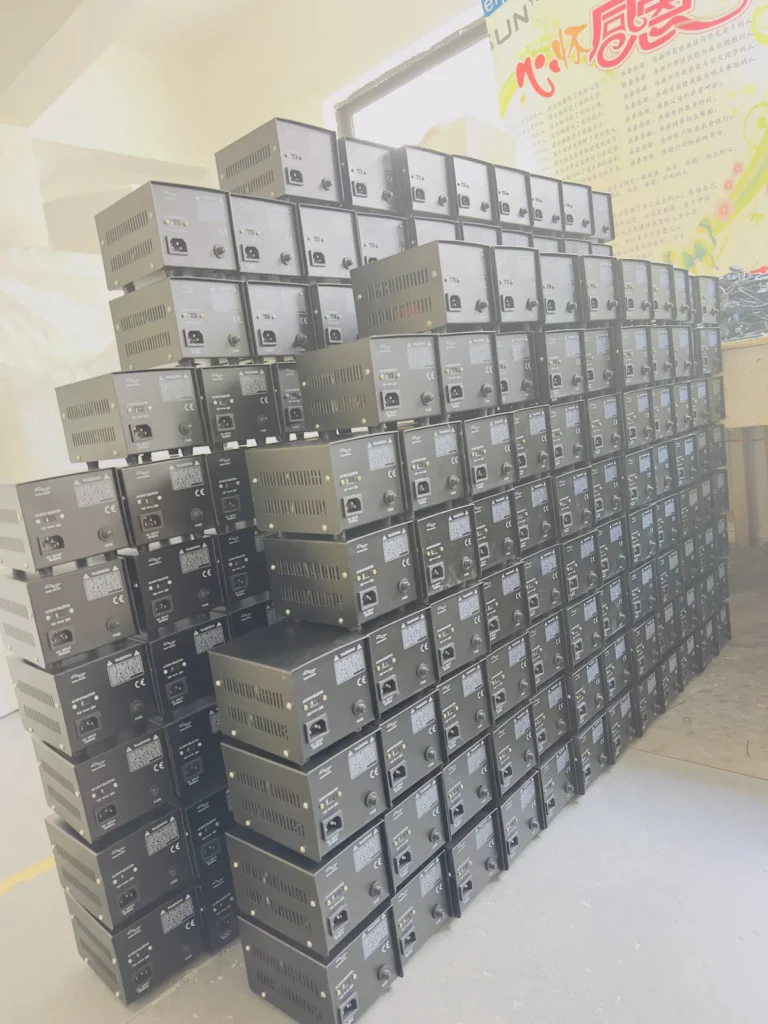
At Wilmall Transformers, the industrial range is built around the TC and JBK3 series control transformers, with ratings from 40VA up to 1.5KVA and custom capacities available on request. Every unit is wound on high-grade silicon steel, vacuum-impregnated with Class F insulation, and terminated on a DIN-rail-mountable terminal block so wiring stays clean and serviceable inside a panel.
Why 24V AC Is the Standard for Industrial Control Circuits
There are solid engineering reasons why a 24V control transformer for industrial use has become the default in control panels around the world:
- Personnel safety. 24V AC is regarded as an extra-low voltage (ELV) and, in dry conditions, is generally outside the range where dangerous currents can flow through the human body. It is far safer to touch during live maintenance than 110V or 230V control circuits.
- Reduced shock and spark risk. Lower voltage means lower energy available in a fault, which matters in dusty plants, chemical environments, and areas where flammable gases may be present.
- Standardisation. Contactors, relays, PLC input modules, solenoids, and timers from every major brand — Schneider, Siemens, ABB, Omron, Fuji — offer 24V AC coil variants, so spares and replacements are always available.
- Lower heat in the cabinet. Coil wattage for a given pull-in force is lower than at higher voltages, keeping cabinet ambient temperature down and extending component life.
- Clean isolation from the power bus. The control circuit is galvanically separated from the incoming supply, so transients and noise on the power side do not travel straight into sensitive PLC inputs and sensors.
How to Size a 24V Control Transformer for Industrial Use
Getting the VA rating right is the single most common source of field problems. Undersize the transformer and contactors chatter, relays buzz, and the output voltage sags below the dropout level of the coils. Oversize it and you simply pay more than you need to. Use this sizing method:
- List every device on the control circuit — relays, contactors, indicator lamps, solenoid valves, small sensors, and PLC inputs powered from the 24V bus.
- Record the sealed or holding VA of each device from its datasheet. This is the steady-state load.
- Identify the device with the highest inrush VA, usually the largest contactor or the valve solenoid, since it must be energised while others are already sealed.
- Apply the standard selection rule: transformer VA = (total sealed VA × 0.8) + (largest inrush VA), then round up to the next standard rating.
Our control transformer range covers 24V control transformers and other common secondary voltages.
As a practical example: a panel with two 15VA contactors (sealed 7VA each), three 3VA relays, and one 40VA inrush solenoid needs roughly (2 × 7 + 3 × 3) × 0.8 + 40 = 66VA. A 100VA unit is the safe, standard choice. When in doubt, select one size up — a control transformer is most reliable when it runs below 80% of its rated load.
Common Ratings for 24V Control Transformers
| Transformer VA | Typical Control Load | Max Continuous Output (24V AC) |
|---|---|---|
| 50 VA | 1–2 small relays, PLC input supply | ≈ 2.1 A |
| 100 VA | Small contactor + relay group | ≈ 4.2 A |
| 200 VA | Starter panel, HVAC control | ≈ 8.3 A |
| 300 VA | Machine tool control circuits | ≈ 12.5 A |
| 500 VA | Multi-station conveyor control | ≈ 20.8 A |
| 1000 VA (1 KVA) | Large panels with many solenoids | ≈ 41.7 A |
| 1500 VA (1.5 KVA) | Machine tool + lighting bus | ≈ 62.5 A |
Wilmall offers the TC series from 40VA to 1.5KVA and can custom-wind higher capacities for OEM projects. If your panel draws more than 1.5KVA at 24V, it is usually better practice to split the load across two transformers than to push a single unit.
Wiring and Installation Tips
A 24V control transformer is only as safe as the way it is installed. Follow these rules on every panel:
- Fuse both the primary and secondary. The primary fuse protects against internal winding faults; the secondary fuse (usually 1–2A per 100VA) protects the wiring and loads. Never rely on the primary fuse alone.
- Earth the core and screen. A control transformer with a copper screen between primary and secondary must have that screen earthed at the panel earth bar. This bleeds electrostatic noise away from the PLC.
- Do not connect the 24V secondary to earth unless the circuit is designed as a referenced system. An ungrounded (floating) 24V bus is common; if you earth one side, verify that all sensors and PLC commons are compatible.
- Keep primary and secondary wiring segregated inside the cable duct to avoid induced noise on long 24V runs.
- Allow ventilation. Mount the transformer away from heat sources and other transformers so the Class F insulation keeps its temperature rise margin.
- Match the primary tap. Many models offer multi-tap primaries (e.g., 220/230/240V). Select the tap closest to the actual local supply, especially in countries where mains fluctuates.
Applications of a 24V Control Transformer
The 24V control transformer for industrial use appears in almost every sector:
- Motor control centres and magnetic starter panels
- CNC machine tools and production automation
- Packaging, labelling, and bottling lines
- HVAC controllers, VAV boxes, and chiller control panels
- Elevator control cubicles and access systems
- Water treatment and pump control panels
- Conveyor systems, hoists, and material handling equipment
- Welders, presses, and metal forming machinery
Buying a 24V Control Transformer from Wilmall
Wilmall Transformers is a low-voltage transformer factory in Yueqing, Zhejiang, China, with 15 years of export experience supplying the Middle East, Southeast Asia, Africa, South America, and Central Asia.
Every unit carries CE and RoHS compliance, is 100% tested at no-load and full-load before dispatch, and is backed by a 12-month warranty. For panel builders and OEMs, we accept MOQ from just 10 pieces, with lead times of 15–25 days. Custom terminal arrangements, mounting brackets, labels, and packaging can all be produced to your drawing.
24V Control Transformer FAQ
Can I use a 24V control transformer to power 24V LED lighting?
Yes, within the load rating, but be aware that electronic LED drivers draw an inrush current at power-on. Size the transformer to the total connected load plus at least 30% margin, and confirm the drivers are not of a type that requires a pure sine-wave supply.
What happens if I oversize the control transformer?
Nothing harmful. The transformer only delivers the current the load demands. Oversizing gives extra margin for future additions and reduces temperature rise, at the cost of a slightly larger and more expensive unit.
Is 24V AC the same as 24V DC?
No. A 24V AC transformer output is alternating current and is not interchangeable with 24V DC. If your PLC or sensors require DC, you need a power supply after the transformer, or a dedicated DC supply.
Can the transformer handle frequent switching of contactors?
Yes. Control transformers are specifically wound and rated for the repeated inrush currents of industrial coils. This is why a general-purpose transformer should not simply be substituted.
Do you make custom primary voltages such as 380V or 415V?
Yes. We wind custom primaries for 380V, 400V, 415V, 440V, and other supplies as standard OEM options, with or without multi-tap inputs.
The Inrush Problem in Industrial Control Panels
The most common reason a 24V control transformer fails on site is not the transformer itself, it is the inrush current from the coils it feeds. Contactors, relays, and solenoid valves draw several times their holding current for the first few cycles when they energize, and if the transformer is sized only on the steady-state total, the voltage sags and the contactor chatters or fails to latch. The fix is to add 20 to 30 percent margin on top of the calculated load and to use the inrush figure for coil-heavy panels, not just the running VA. For a panel with a PLC, six relays, and four contactors, a 150VA transformer is usually safer than a 100VA unit even if the steady-state total looks like it fits. We print the inrush guidance on our datasheets, and our engineers will walk through your load list with you before you order.
Request a Quote / Contact Wilmall
If you need a reliable 24V control transformer for industrial use, tell us your primary voltage, the total sealed VA and the largest inrush VA of your circuit, and the mounting style you prefer. Our engineers will confirm the right model within one working day. Send your enquiry by WhatsApp or email to info@wilmall.com, or simply use the inquiry form on this page. Wilmall Transformers — 15 years of factory-direct transformer supply from Yueqing, China.