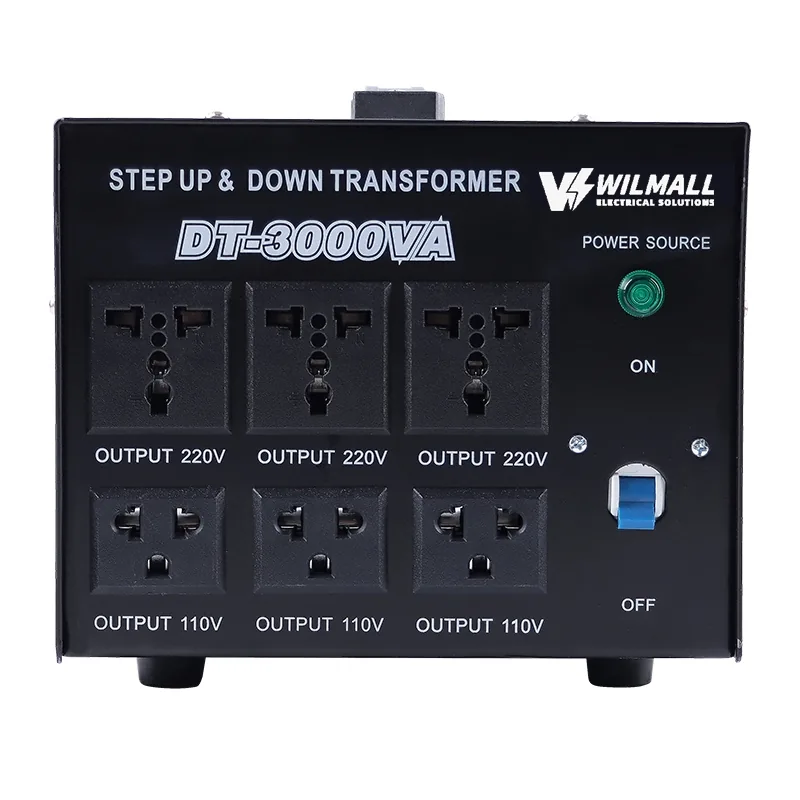
Voltage Converter for Brazil | 220V to 110V | Wilmall
Voltage Converter for Brazil: Step Down 220V to 110V Safely
Brazil has one of the most unusual electrical systems in the world because there is no single national mains voltage. Depending on the state, the city, and sometimes even the neighborhood, you will find 127V, 220V, and occasionally 110V outlets — all at 60 Hz. If you import US-style or Japanese-style equipment rated for 110V–120V and your facility is fed by a 220V network, a voltage converter for Brazil is not a convenience. It is the only safe way to run that equipment without burning it out.
Wilmall Transformers is a low-voltage transformer factory in Yueqing, Zhejiang, China, with 15 years of experience exporting electrical components to South America, the Middle East, Southeast Asia, Africa and Central Asia. Brazilian importers, distributors and machine builders regularly buy our ST and STU step down series for exactly this job. This guide explains how Brazilian voltages actually work, how to size a converter correctly, and what to check before you place your order.
Why Brazil Needs a Voltage Converter
Brazil adopted 127V in most of the country decades ago, but rapid urban electrification in the south and northeast led many utilities to deploy 220V distribution instead. The result is a patchwork. Rio de Janeiro, Minas Gerais, Espirito Santo and most of the northern and northeastern states are predominantly 220V. Sao Paulo, Parana and Rio Grande do Sul are mostly 127V, yet large commercial and industrial areas inside the same city can be fed at 220V. This is why “which voltage is my outlet?” is one of the first questions a Brazilian electrician asks.
Connecting a 110V appliance directly to a 220V outlet has predictable consequences:
- Resistive loads such as kettles, coffee machines, irons and toasters draw roughly double their rated current and overheat rapidly, often melting insulation or starting a fire.
- Motors and compressors in refrigerators, water pumps and air conditioners run at nearly twice their intended speed. The overvoltage stresses the winding insulation and the mechanical overload can destroy the compressor within seconds.
- Electronics with a switching power supply but no universal-range input may blow the input capacitor or the mains fuse immediately, taking the whole board with them.
Some Brazilian regions still use nominal 110V or 115V. A step down transformer rated 220V to 110V covers both 110V and 127V equipment comfortably, because most equipment designed for the US market accepts 110V–120V input. If your buyers have dual-voltage appliances (rated 100V–240V), no converter is needed at all — always check the nameplate first.
How a Step Down Voltage Converter Works
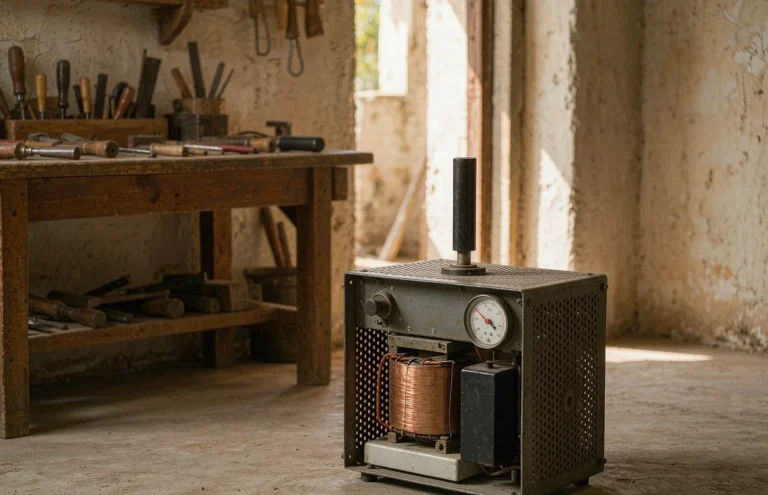
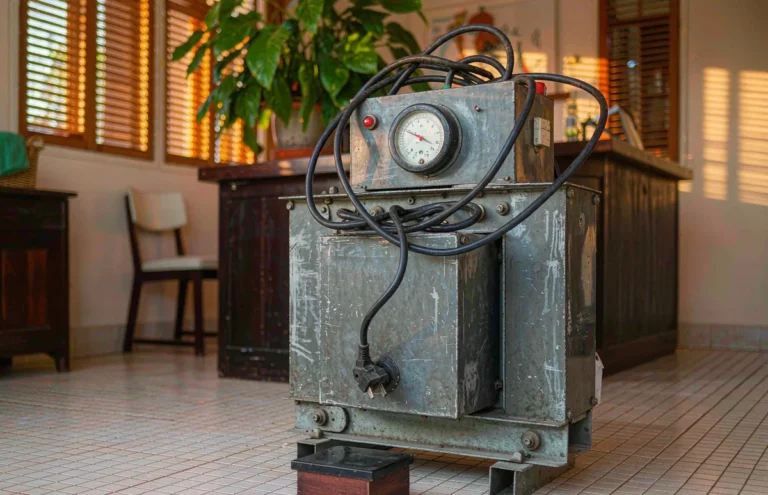
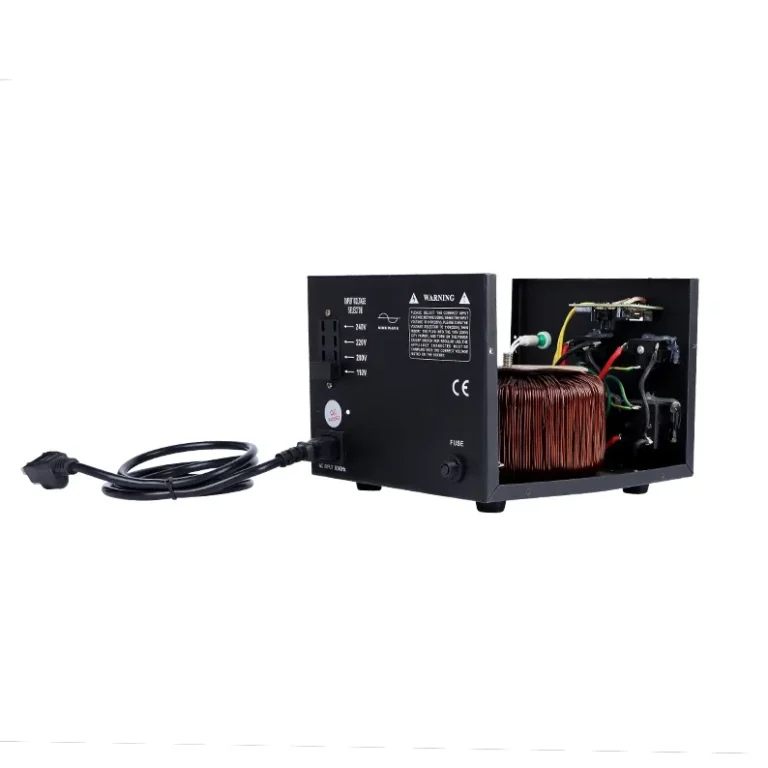
A step down transformer is a magnetic device with two separate windings wound on a laminated cold-rolled silicon steel core. The primary winding connects to the 220V supply and the secondary winding delivers 110V. Because the two windings are galvanically isolated, a step down transformer also provides electrical isolation between the utility grid and the appliance — a real safety advantage in wet locations, kitchens and outdoor installations.
Two features matter most in practice:
- Continuous duty rating. A transformer rated for continuous use carries its full nameplate load 24 hours a day. Cheap “intermittent duty” consumer units are only rated for short bursts such as power tools, and they overheat quickly under LED lighting, refrigeration or commercial kitchen loads.
- Protection devices. Built-in thermal cut-outs, overload breakers and residual current devices shut the unit down before overheating or leakage current becomes dangerous.
The output voltage also stays stable. A properly designed step down transformer holds 110V within a few percent from no load to full load, because the turns ratio is fixed by the windings — a real advantage for sensitive audio, measurement and medical equipment.
Choosing the Right Voltage Converter for Brazil
Step 1: Add Up the Connected Load
List every appliance that will run at the same time and add their wattages from the nameplates. Do not rely on the transformer VA rating alone. Convert the total wattage to VA and add a safety margin. As a rule of thumb, operate the converter at 70–80% of its rated capacity.
Step 2: Account for Motor Starting Current
Refrigerators, water pumps, air conditioners and washing machines draw 4–7 times their running current for a fraction of a second at start-up. Size the converter so this surge stays inside the transformer’s short-time overload capability. A motor load of 500 W running power should use at least a 1,000 VA converter, and ideally 1,500 VA.
Step 3: Match the Input Tap to Your Local Grid
Brazilian 220V networks can drift by as much as ±10%. Wilmall converters offer multiple input taps (typically 200V / 220V / 230V / 240V), so you can select the tap that matches the local voltage and keep the output stable at 110V even when the grid fluctuates.
Specification Table: Wilmall ST / STU Step Down Series
| Model | Capacity | Current at 110V | Safe Continuous Load | Typical Use |
|---|---|---|---|---|
| ST-500 | 500 VA | 4.5 A | up to 350 W | TV, monitor, laptop, router, small appliances |
| ST-1000 | 1,000 VA | 9.1 A | up to 700 W | Multiple electronics, blenders, coffee machines |
| ST-2000 | 2,000 VA | 18.2 A | up to 1,400 W | Kitchen appliances, power tools, washing machines |
| STU-3000 | 3,000 VA | 27.3 A | up to 2,100 W | Air conditioners up to 1 HP, refrigerators |
| STU-5000 | 5,000 VA | 45.5 A | up to 3,500 W | Home appliances, small commercial equipment |
| STU-10000 | 10,000 VA | 90.9 A | up to 7,000 W | Commercial kitchens, workshops, clinics |
All ST and STU models use cold-rolled silicon steel cores, varnish-impregnated windings and double-layer insulation, and are available from 500 VA up to 30 kVA. Copper or aluminium windings can be specified depending on your budget. Every unit is CE and RoHS compliant, hi-pot tested before dispatch, and covered by a 12-month warranty.
Applications in Brazil
A voltage converter for Brazil is used across many sales channels:
- Residential importers and e-commerce sellers who buy US-market appliances in Miami or via third-party marketplaces and resell them to Brazilian end users in 220V states.
- Kitchen equipment distributors supplying US-standard ovens, coffee machines, mixers and blenders to restaurants and hotels.
- Medical and dental clinics running US-manufactured sterilizers, autoclaves, dental chairs and diagnostic devices rated 110V.
- Industrial machine builders integrating 110V control panels, sensors, drives and PLC peripherals into equipment powered from a 220V Brazilian plant.
Safety and Certification
Never run a converter without overload protection on the output side, and never connect two transformers in series. Use properly rated cables: a 110V output at 18 A needs at least 2.5 mm² wiring. Install the unit in a ventilated, dry location and ground the chassis where the model provides an earthing terminal.
Wilmall step down transformers are manufactured with double-layer insulation, varnish impregnation for moisture and vibration resistance, and each unit is hi-pot tested at twice the rated voltage plus 1,000 V before it leaves the factory. Production quality is one of the reasons our converters are used in mission-critical applications across South America.
Frequently Asked Questions
Will a voltage converter for Brazil work on both 127V and 220V outlets?
A single-ratio step down unit converts one fixed input to 110V. If you need one unit to work on both 127V and 220V, choose a multi-tap model with 110V / 127V / 220V primary taps, or use a TDGC2 variable transformer for bench testing across different Brazilian supplies.
Can I run a 60 Hz US appliance in Brazil?
Yes. Brazil uses 60 Hz, exactly like the US, so frequency compatibility is never an issue for step down applications.
What is the MOQ and lead time for Wilmall converters?
Our minimum order is 10 units, with a production lead time of 15–25 days depending on capacity, enclosure type and customization. Larger container orders can be scheduled to match your freight booking.
Do you support OEM branding for the Brazilian market?
Yes. Wilmall supports full OEM/ODM customization: your label, manual language, carton printing, plug configuration and even custom input taps. Many of our South American distributors sell under their own brand with our factory as the manufacturing partner.
Can you ship to Brazil with customs documentation?
Yes. We ship to major Brazilian ports and provide commercial invoices, packing lists, and CE/RoHS documentation to support customs clearance. We can also advise on the correct INMETRO-relevant paperwork for your product category.
Is the transformer safe for 24-hour continuous operation?
Yes. All ST/STU models are continuous-duty rated. Keep the unit in a ventilated location and do not exceed the recommended continuous load shown in the table above. At the recommended load, surface temperature stays within the designed rise limit.
Brazil’s 127V and 220V Mix: What You Actually Need
Brazil’s dual-voltage system is the reason the converter question there needs care. Most Brazilian states use 127V in homes, but many cities and industrial areas use 220V, and some neighborhoods have both on different floors of the same building. If you bring a 110V US appliance, a 127V outlet will run it directly, but a 220V outlet will destroy it without a step-down converter. The first step is to check the actual voltage at the socket you plan to use, not the nominal voltage for the city. Then choose a converter that matches: 220V to 110V for a 220V socket, and no converter needed for a 127V socket with a 110V appliance. Our ST series handles 220V to 110V, and we can confirm the right model once you tell us the socket voltage and the appliance load. This two-minute check prevents the most common damage we see reported from Brazil.
Get Your Voltage Converter for Brazil
Wilmall Transformers is a factory-direct manufacturer in Yueqing, Zhejiang, exporting low-voltage transformers and voltage converters to South America for 15 years. We support OEM/ODM customization from voltage taps and terminal layouts to your own label and packaging. Request a quote through the website form, contact us on WhatsApp, or email info@wilmall.com — our engineers will confirm the correct capacity for your load and market within one business day.