Step Down Transformer for Azerbaijan: 220V to 110V Guide
If your enquiry comes from Baku or from one of the oilfield service companies around the Caspian, the brief is usually not a fridge. It is a piece of North American or Japanese kit on a rig, in a workshop, or on a vessel that was specified in 110V and now has to run on a 220V site. Azerbaijan’s supply is 220V at 50Hz, which is close to Europe, but the equipment mix and the working conditions are their own story, and the transformer has to suit both.
I build step down and step up transformers in Yueqing, China, and Azerbaijan has been a steady part of our export book, mostly through Baku traders and through engineering firms servicing the energy sector. The questions have a shape, so here are the answers the way I would give them on a call, without the sales talk.
Azerbaijan Supply: 220V, 50Hz, and an Industrial Mix
Azerenergy runs the grid at a nominal 220V, 50Hz, which lines up with Russia, Turkey, Georgia and most of the former Soviet belt. The 50Hz figure is the part North American buyers miss. Frequency is the one thing a transformer cannot touch. A 110V 60Hz appliance run through a step down unit meets the grid’s 50Hz on the other side, because only the voltage gets swapped. Switch-mode-powered electronics do not mind the frequency shift. Motor-driven kit does, and it runs a little slower and a little warmer than at home.
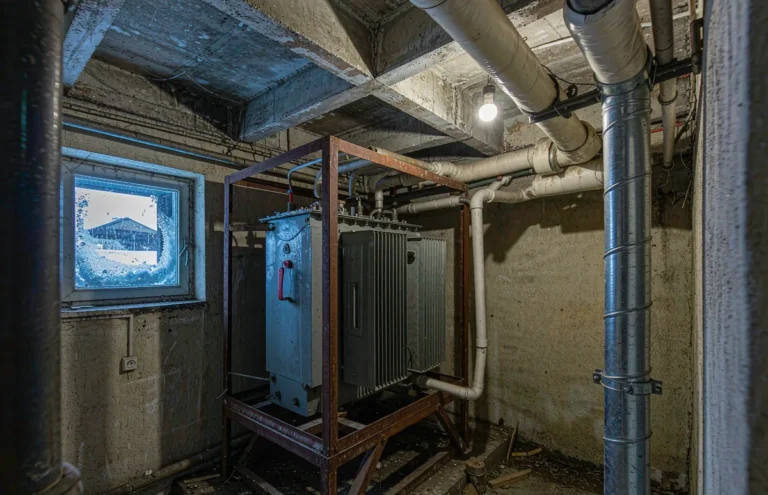
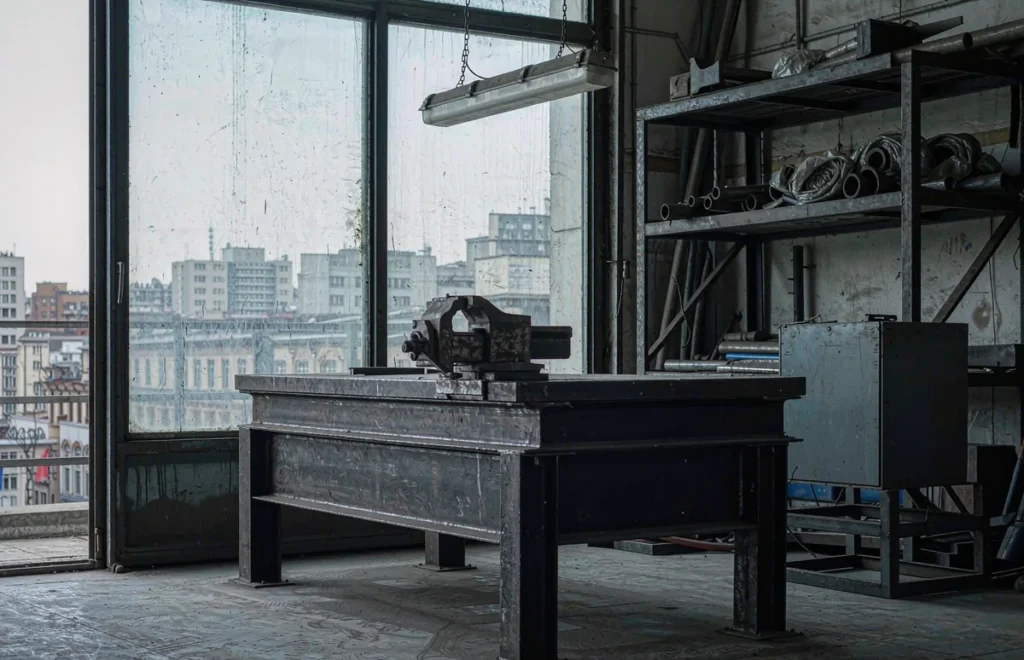
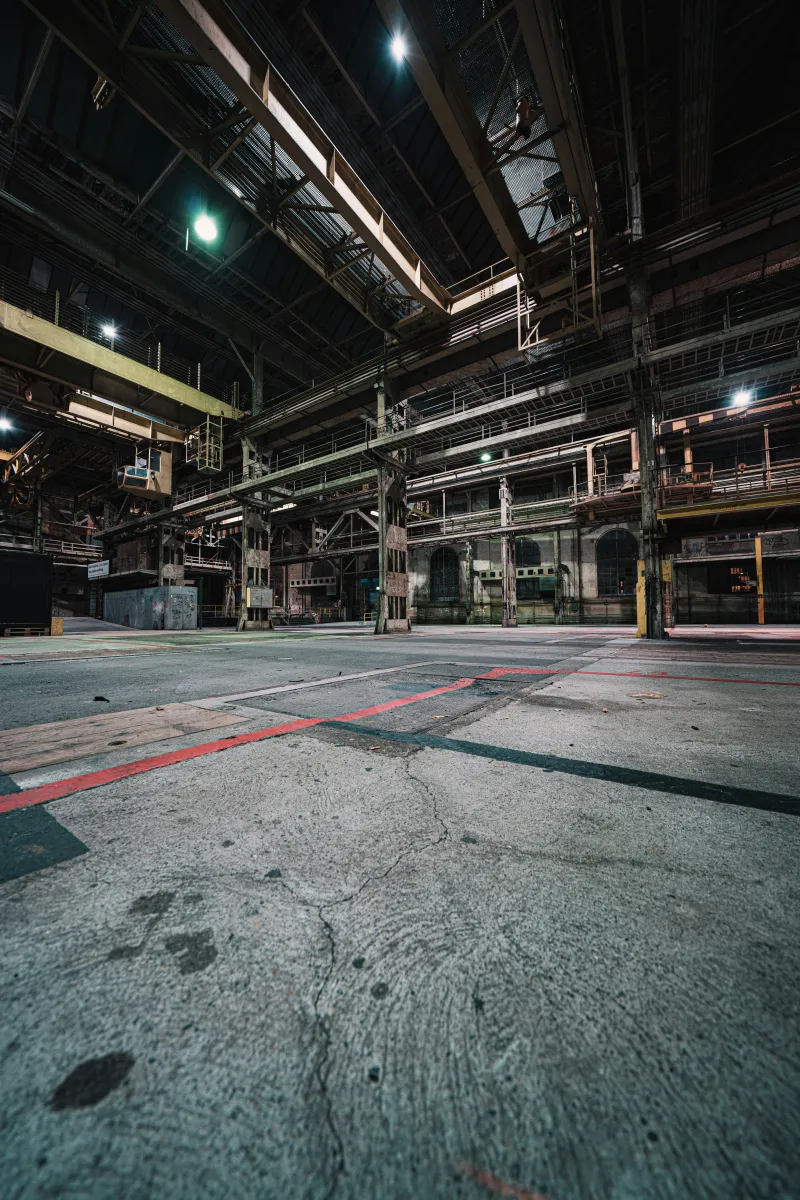
The Azerbaijani case is more industrial than the household markets we serve. A lot of the 110V equipment is on sites where the supply is steady but the environment is hard: dust, damp, temperature swings, and vibration from nearby plant. That pushes the brief from “just change the voltage” to “change the voltage and survive the location,” and the enclosure and the protection details start to matter as much as the ratio.
A second point: many sites already carry 380V three-phase for the big drives, and the 110V requirement is for a control panel, a test bench, or a single imported machine on a single-phase feed. Knowing which feed you are tapping decides whether you need a single-phase step down unit or a different arrangement entirely. Tell us the source voltage at the point of connection, not the site headline, because the two are not always the same.
Plug and Socket: Type C and Type F
Azerbaijan uses Type C, the two-pin Euro plug, and Type F, the side-earthed Schuko pattern, which is the standard for modern installations. Both are 220V, so the transformer input lead is straightforward. The 110V outlet, again, should match the appliance, not the wall, because your machine may have arrived with a North American plug.
For industrial kit the more common detail is the terminal box rather than a plug. A great deal of oilfield and workshop equipment connects by fixed wiring into a junction box, and the transformer feeds it through a suitably rated cable and gland. We build units with terminal connections for exactly that duty, and we can fit the gland type your site expects. If the enquiry is “a box with lugs,” say so, because that changes the build.
Because a lot of Azerbaijani documentation is bilingual, ask for Russian and, where the equipment is Gulf-sourced, Arabic on the rating label and the manual. We print both and we keep the artwork on file, so a repeat order carries the same labels without you resending them. This is a small thing that saves a week at the receiving end.
Sizing for Industrial and Oilfield Loads
Start from the nameplates, as always. On an industrial site a 110V control panel might be 100W to 500W. A single-phase imported compressor 750W to 3000W with a hard start. A test bench with several instruments 500W to 2000W. A workshop tool, a pump or a fan 300W to 1500W. A small HVAC or a drinks unit 1000W to 2500W. A vessel or rig item with a motor plus heaters can be 2000W to 5000W on the heater cycle.
Then work out what runs together and be honest about it. On a rig or in a workshop several tools may be live at once, and a compressor may start while something else is already drawing. That simultaneity is the number that decides the unit, not the biggest single item. Build the list with your electrician, because the site plan knows more than the memory does.
Multiply every motor and compressor by the start factor, 2.5 to 3 times running watts. Take a 1500W unit: at start it can briefly draw 3750W to 4500W, and a transformer rated at only 1500VA will hum, drop out or burn on each start. Industrial compressors are the worst offenders because they start against pressure, which is a hard load. I never quote one on running watts alone.
Enclosure, IP Rating and Site Conditions
For Baku and the coastal sites, damp and salt air are the enemy of any electrical enclosure. A unit that would be fine in a dry warehouse will corrode in a year on a Caspian jetty if the enclosure is wrong. Tell us the location and we specify the enclosure finish and the gasket accordingly. For most indoor industrial use a sealed sheet-steel case with a decent gasket is enough. For outdoor or washdown duty we step up the protection.
Heat is the other limit. Transformer capacity is set by how hot the insulation gets, and ambient temperature sets the floor everything else sits on. A unit comfortable in a 25 degree workshop runs noticeably hotter in a 45 degree plant room, and if it was already near its rating the insulation pays the difference. Give it airflow: at least 100mm clear on every vented face, no stacking boxes against the case, and never inside a sealed cabinet.
Vibration matters on rigs and on moving plant. An iron-core transformer is mechanically tough, but the terminal connections and the internal bracing should be checked for the duty. We build for this, and if the unit will be moved or mounted on a vibrating frame, tell us so the build is braced for it. A loose connection from vibration is the most common fault we see on returned site units, and it is avoidable.
Reference Table for Azerbaijan Setups
These are the enquiries we get most from Baku and the energy-service trade. Use the table for a first pass, then send the true nameplate figures.
| Application | Typical load | Suggested unit | Why this one |
|---|---|---|---|
| 110V control panel or relay bank | 100 – 500 W | TC series control transformer | Coil and control duty, not power load |
| Test bench with instruments | 500 – 2000 W | ST-2000 with RCD | Mixed light loads, one at a time |
| Single imported compressor | 750 – 3000 W | STU-3000 on its own circuit | Start surge of 2.5 to 3 times |
| Workshop with several tools | 1500 – 3500 W | STU-3000 or STU-5000 | Several motors live together |
| Rig or vessel item with heater | 2000 – 5000 W | STU-5000 bidirectional | Motor plus heater cycle on one feed |
| Bench checking imported gear | 500 – 2000 W variable | Variac 1KVA to 3KVA | Adjust output to check nameplate |
The table assumes a steady 220V supply. On most Azerbaijani industrial sites that holds, so the sizing question is the start surge and the environment, not the voltage swing. Two units on separate circuits still beat one big box where a fault has to be contained, and on a rig that containment is a safety point, not just a convenience.
Poti, Turkey and Iran: Getting the Goods In
Azerbaijan is served a few ways, and the route depends on your forwarder and the sailing schedule. A common sea route is to the Port of Poti in Georgia, then overland by road through the border, which suits Baku and the west of the country.Stock for the south and for some energy sites moves overland from Turkey. Some cargo also comes via Iran. Tell us which you prefer at quotation stage, because the documents and the Incoterms differ by route. Poti and Batumi are also the entry points for the Georgian market itself, which sits on the same 220V at 50Hz and has its own winter voltage problem, and I set that out in our guide to a step down transformer for Georgia.
Shipment is FOB Ningbo or Shanghai, so you or your freight agent take the main leg and set the route. Give us the discharge port and the consignee for the documents, because the bill of lading, packing list, commercial invoice and certificate of origin have to match the entry your agent submits. Fixing it while the units are still with us is cheaper than amending a bill after the boat has sailed.
For industrial buyers the document set often needs more than the standard three. You may want a test certificate per batch, a Russian datasheet, and a declaration of conformity for the customs entry. Tell us early and we prepare the pack with the units, so the container clears without a document chase. A missing Russian label is the usual reason a box sits in a warehouse at the border.
What We Build and How We Supply Azerbaijan
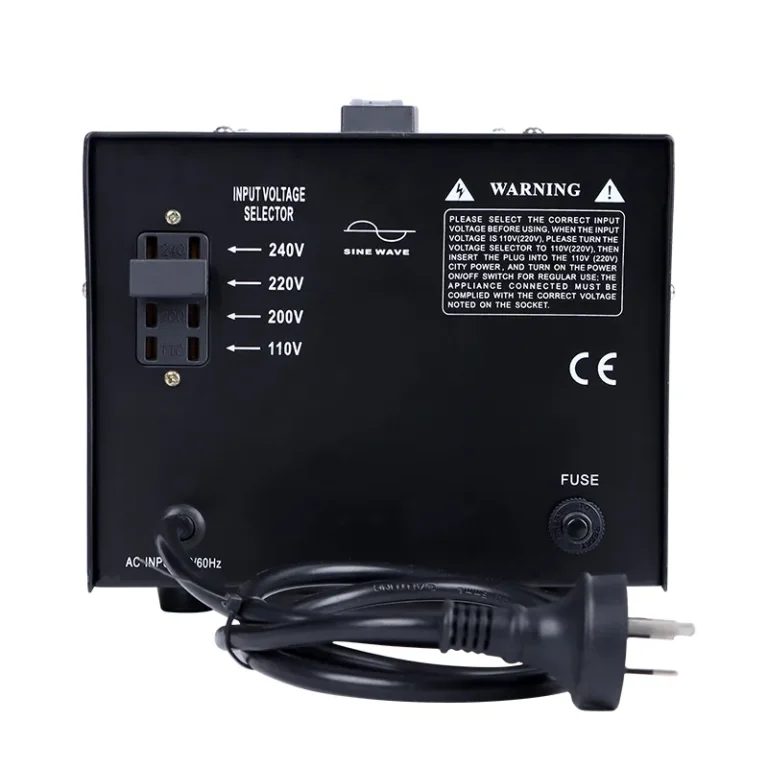
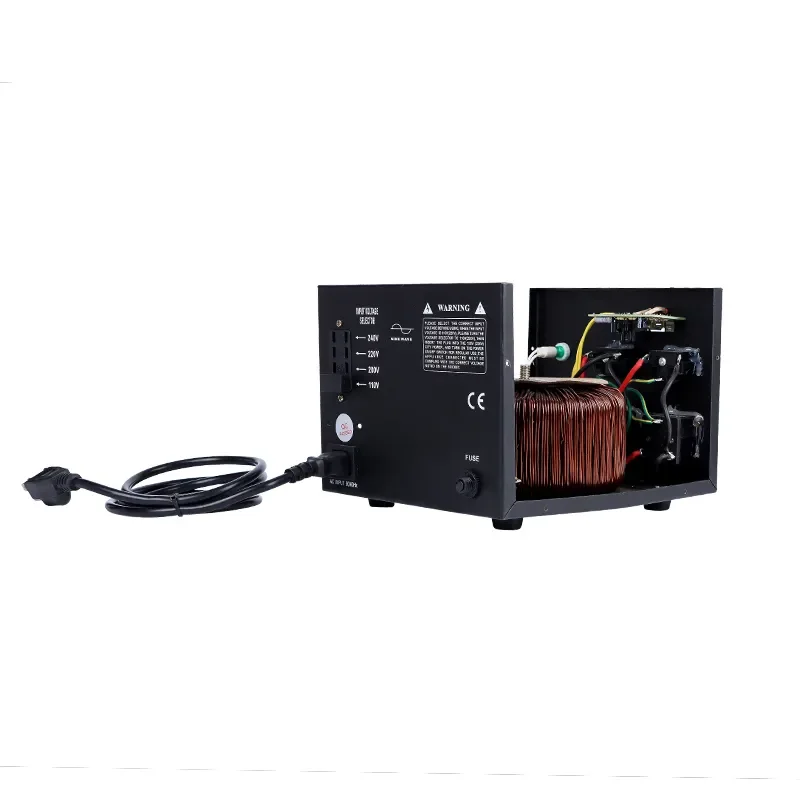
I am at the factory, not a trading desk, so the unit I quote is the one we wind. The ST-2000 is a 2000VA step down unit, 220V in to 110V out, with the RCD in the enclosure. For a Baku bench or a single control load it is the unit I quote most into the region, and the ST-1500 covers the smaller single loads.
Heavier duty lands on the STU line. STU-3000 and STU-5000 step up as well as down, which matters here because equipment arrives from North America, Europe and Turkey at once and the same box may need to go both ways, which is exactly what the STU is built for. For panel and relay duty we use the TC series control transformer, and when the load is a desk or a trolley the DT-1000VA handles it automatically in either direction.
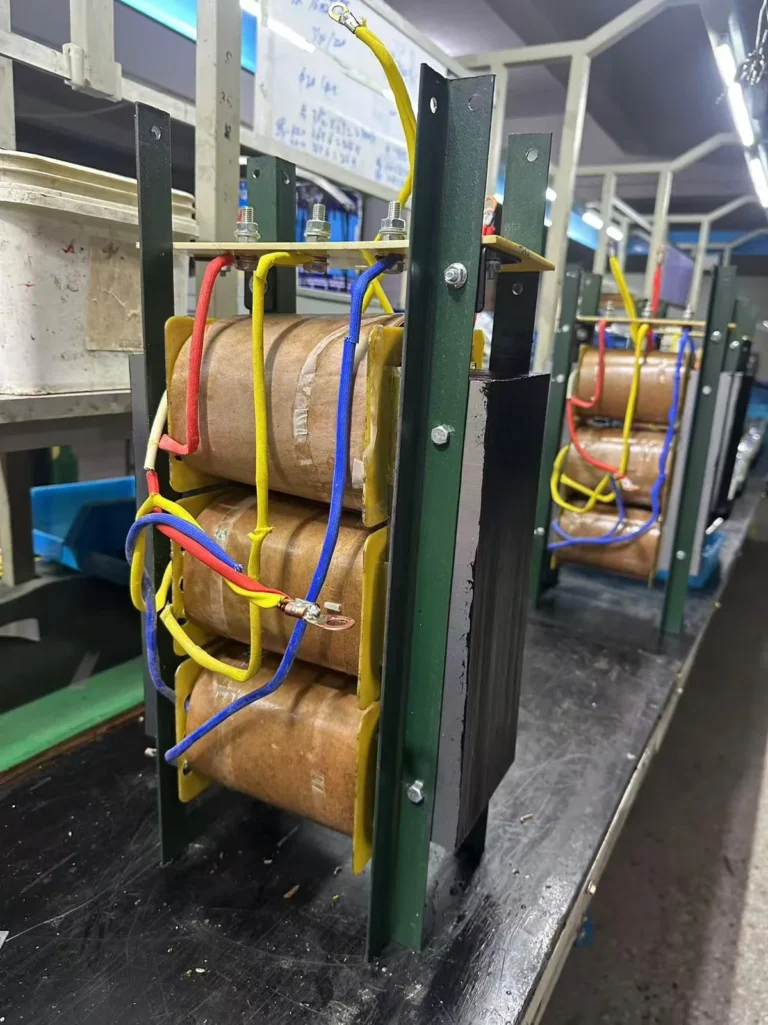
Delivery is FOB Ningbo or Shanghai. Every unit is covered for twelve months. We wind in copper and run a full test on each one at the Yueqing factory before dispatch. Your batch test card shows input voltage, output on load and no-load current, which is the proof that answers any warranty question afterwards. You can order as few as 10 pieces, and the job runs 15 to 25 days, where quantity and custom labelling decide the precise day.
We settle on T/T with 30 percent down and 70 percent against the bill of lading copy, or an at-sight credit, or Trade Assurance when that works for the buyer. Usance letters of credit are off the table, because the time from sailing to settlement is too long for a works to carry.
Getting a Size From Your Site List
No finished specification is required to start. Send what is on hand: the equipment list with each nameplate wattage, a photo of a nameplate if that saves time, how many machines need a 110V feed, which have motors or compressors, the source voltage at the point of connection, and where the unit will mount. With that I can pick the size, quote how many and give a dispatch window, normally the same working day.
A pair of reads worth your while as you set the list out. Our Voltage Converter for Kazakhstan guide covers the neighbouring Caspian market on the same 220V, 50Hz supply, so much of the sizing logic carries across. For whether you need to step down, step up or both, the step up & down transformers page explains each arrangement. You will also find voltage guides by country for the rest of the map.
If a rating is unclear, send a photo of the terminals and we will work it out. Sizing a step down transformer for Azerbaijan is routine for us, and we would rather spend ten minutes on WhatsApp than have you find out on a rig that the unit you bought cannot start the compressor.
Frequently Asked Questions
These are the questions Baku traders and energy-service engineers ask most, with my straight answers underneath.
What voltage and frequency does Azerbaijan use?
Azerbaijan runs on a nominal 220V supply at 50Hz, provided by Azerenergy, in line with Russia, Turkey and Georgia. Wall sockets are Type C and Type F. A step down transformer for Azerbaijan changes voltage only, not frequency, so a 60Hz North American motor still sees 50Hz and runs a little slower and warmer.
Can a transformer survive an oilfield or Caspian site?
Yes, with the right enclosure. Damp, salt air and vibration are the enemies, so tell us the location and we specify the finish, gasket and bracing. An iron-core step down transformer for Azerbaijan is mechanically tough, but the terminal connections must be braced for a vibrating frame.
How do I size a transformer for an imported compressor?
Use 2.5 to 3 times running watts for the start surge, because a compressor starts against pressure and that is a hard load. A unit at 1500W running can pull 3750W to 4500W for an instant. The STU-3000 on its own circuit is the arrangement I would recommend.
Can you label the unit in Russian and Arabic?
Yes. A lot of Azerbaijani documentation is bilingual, so we print Russian and, for Gulf-sourced equipment, Arabic on the rating label and manual, and keep the artwork on file for repeats. The ST-2000 and the STU series both ship with the labels you specify.
How do I import transformers to Baku via Poti or Turkey?
Minimum order is 10 pieces, built and tested in our Yueqing factory, shipping FOB Ningbo or Shanghai. Routes run via Poti in Georgia or overland from Turkey or Iran. Lead time is 15 to 25 days, with Russian datasheets and test certificates prepared for the customs entry.
Send us the 110V machines on your Azerbaijani site, which have motors or compressors, and the source voltage at the point of connection. That gives us enough to send a proposed unit, a quantity and a price, normally the same day, and it catches a wrong-size order before dispatch.
Or talk to us directly: WhatsApp +86 197 3022 6757 · Email sales@wilmall.com
MOQ 10 pcs · Lead time 15-25 days · FOB Ningbo or Shanghai · 12-month warranty