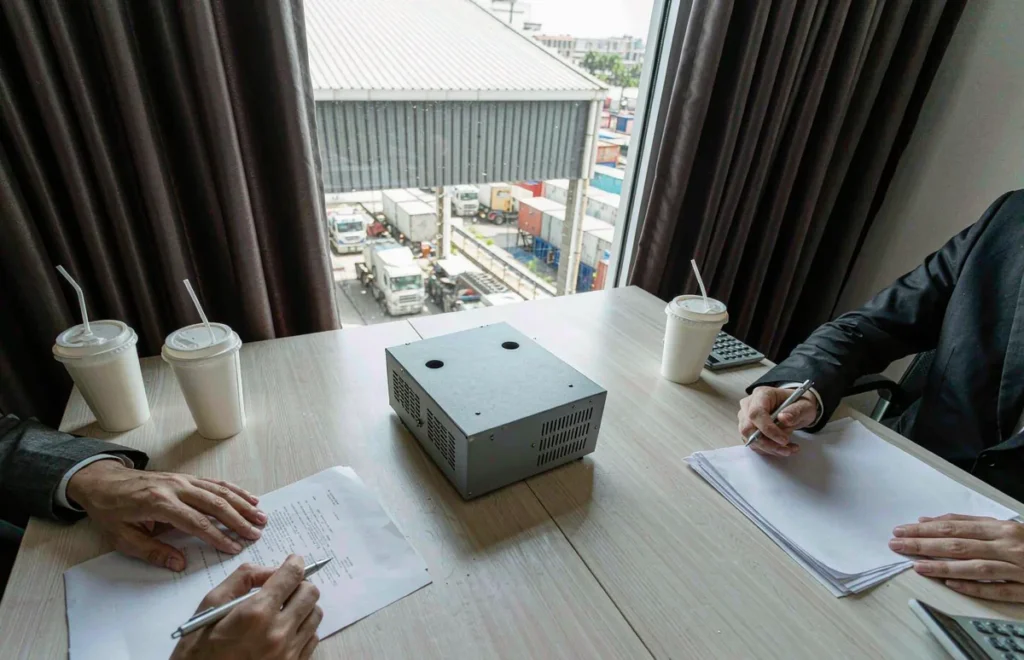
Transformer Payment Terms: T/T, L/C and Deposits Explained
Transformer payment terms come up in almost every quotation conversation, and they cause more delay than price does. A buyer in one country expects open account, a buyer in another expects a letter of credit, and a first-time buyer expects to pay after the goods arrive and have been tested. None of those expectations is unreasonable, and none of them is how a Chinese factory normally ships. What actually matters is that you and your supplier agree on a route that protects both sides before production starts, because that is the point at which the money and the goods can still be steered.
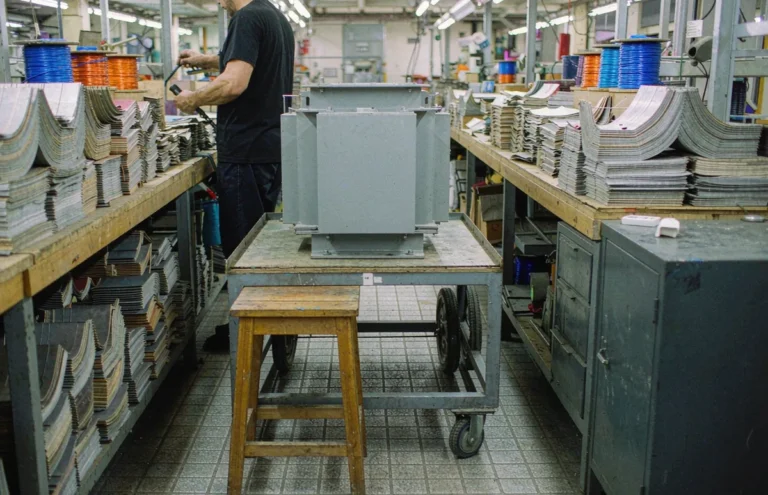
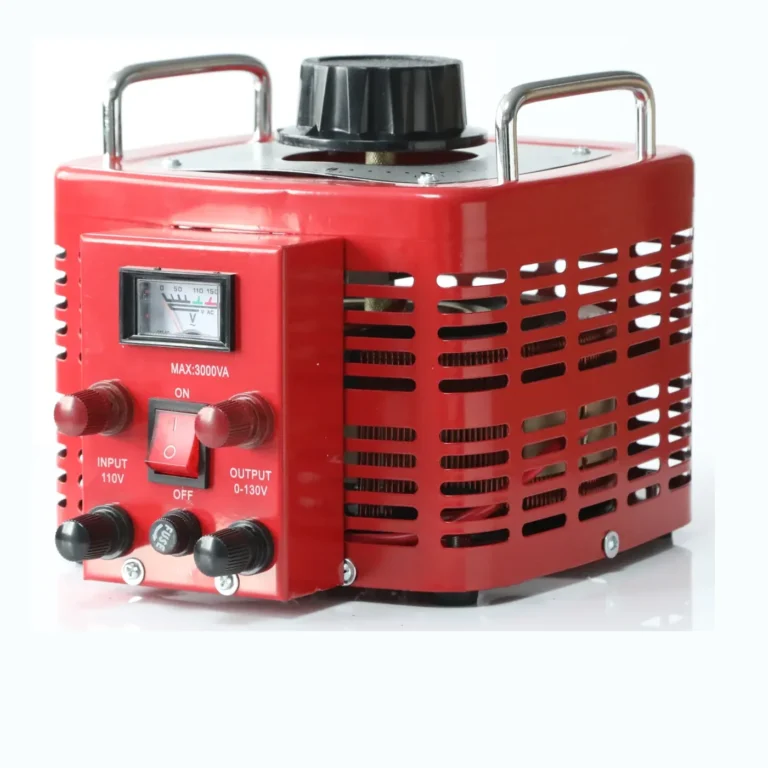
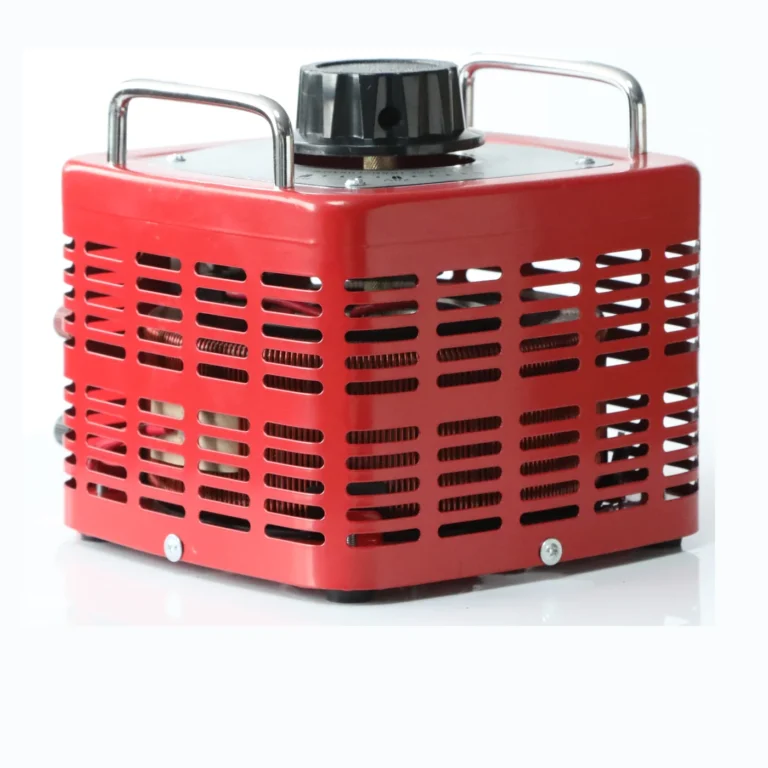
I work at a low voltage transformer factory in Yueqing, China. We build step down and step up transformers and we ship them all over the world, so I have seen these conversations go well and I have seen them go badly. Below is how transformer payment terms actually work from our side, what we will and will not accept, and how to decide which route fits the size of the order you are placing.
Transformer Payment Terms in Plain English: Three Routes
Practically speaking, almost every export order we handle goes through one of three payment structures. They differ in who carries the risk and when, and in how much paperwork is involved.
The first is a T/T deposit with a balance payment against a copy of the bill of lading. This is the default for the great majority of our orders, and it is what I quote unless you ask for something else. It is quick, cheap and the bank charges are small.
The second is a letter of credit at sight. An L/C moves the risk onto the banks on both sides and is common for larger orders, for government and tender business, and in markets where the buyer’s bank expects it. It works well when the paperwork is correct and badly when it is not.
The third is an escrow-style arrangement through a platform such as Trade Assurance, where funds are held by the platform until agreed conditions are met. This is most popular with first-time buyers who want a neutral party holding the money, and it is a reasonable middle ground when the order is small enough that an L/C is not worth the cost.
Everything else, from open account to cash against documents to a straight prepayment of the full amount, is a variation or a special case. Let me take the three main routes one at a time.
Route One: T/T 30% Deposit and 70% Against Copy of B/L
This is the structure I would recommend to most buyers, and it is what we ask for by default. You send 30 percent by telegraphic transfer when you confirm the order, we buy the material and build the goods, and the remaining 70 percent is due when we send you a copy of the bill of lading showing the goods are actually on board and sailing to you.
Why this split? The deposit covers the copper, the core steel and the labour that go into your specific build. Transformers are not generic catalogue stock that can be sold to the next buyer if you walk away. Once we have wound your units with your voltage, your socket type and your label, the order is yours. The deposit is what makes it safe for a factory to start work on a custom batch rather than insisting on full prepayment.
The 70 percent balance against a B/L copy is the other half of the bargain. It means you are not paying the full amount for goods that may still be sitting in a warehouse. The B/L copy shows the vessel, the voyage, the container number and the sailing date, so you can verify from the other side of the world that your consignment has genuinely shipped before you release the balance. You get proof of shipment before you pay the rest, and we get paid before the original documents are released. Both sides have something in hand until the goods are afloat.
What “Copy of B/L” Actually Means in Practice
There is a difference between a copy of the bill of lading and the original set, and it is worth being precise about it, because the phrase gets used loosely.
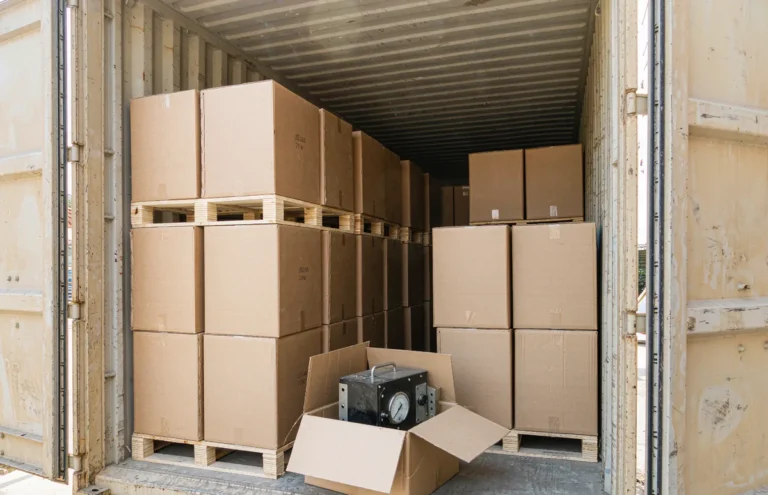
A copy or a scanned image of the B/L is a PDF we send you by email or WhatsApp showing that the container has been loaded and the vessel has sailed. It is sent for your verification and for your balance payment. It is not the document that releases the cargo. The original set of bills of lading is what your agent needs at the destination port to clear the goods, and those originals only travel once the balance has reached our account.
So the sequence is: deposit, production, shipment, scan of the B/L to you, balance payment, originals couriered to you or telex released to your agent. If you are working with a freight forwarder, tell us early whether you want the originals couriered or a telex release, because the two take different amounts of time at the destination and the choice affects your clearing schedule.
Route Two: L/C at Sight, and When It Is Worth the Cost
A letter of credit at sight is a commitment from your bank to pay us against a defined set of documents. If the documents match the L/C exactly, the bank pays. If they do not, the bank does not, and everybody loses a week while the discrepancy is resolved.
The advantage is real. You are not sending cash to a supplier you have not met. The bank is standing between us. For orders in the tens of thousands of dollars, for tender and government business, and in markets where the buyer’s finance department requires an L/C as a matter of policy, it is the right instrument and we are comfortable working with it.
The cost is also real. Banks charge issuance fees, amendment fees, negotiation fees and a discrepancy fee if something does not match, and those add up to a meaningful percentage on a small order. An L/C on a five thousand dollar order is usually a poor use of money. An L/C on a fifty thousand dollar order is often exactly the right answer.
What to Check Before You Open the L/C
Most L/C problems are caused by a handful of clauses that were written into the draft without anyone checking whether the supplier can actually satisfy them. Read the draft before it is issued, not after.
Check the latest shipment date against our production time. We run 15 to 25 days from deposit confirmation, so an L/C that requires shipment within twenty days of issue is asking for something we may not be able to do. Give us the production window plus the booking time plus some margin.
Check the description of goods against what we will actually print on the invoice and the packing list. If the L/C says “step down transformer 2000VA, 220V to 110V, RCD protection” and our invoice says “ST-2000 step down transformer, 2000VA, 220V to 110V, RCD”, that mismatch is a discrepancy and it can hold up payment. Send us the draft wording and we will tell you whether the documents will match it.
Check the port of loading and the port of discharge. We ship FOB Ningbo or Shanghai, and the L/C must name a port we can actually load from. Partial shipment and transhipment clauses matter too, especially if your cargo is going to be consolidated or transhipped, which happens often on routes to landlocked and secondary markets.
Check the required documents. If the L/C demands a certificate of origin certified in a particular way, a specific inspection certificate or a legalised invoice, tell us at the quotation stage. Any of those can be arranged, but not in the two days before the vessel sails.
What We Do Not Accept
Two things are worth stating plainly, because buyers sometimes assume otherwise. We do not ship on open account terms for a first order, and we do not ship on a usance or deferred L/C where payment falls due sixty or ninety days after the bill of lading. A small factory funding copper and core steel up front cannot carry that, and any supplier who agrees to it is either pricing the cost of the money into your price or taking a risk they may not survive. On repeat business with a record behind it, we are happy to talk about more flexible terms. That is a conversation that gets easier every time an order ships cleanly.
Route Three: Trade Assurance and Platform Escrow
If this is your first order with a Chinese supplier and you want a neutral party holding the money, Trade Assurance on a platform is a sensible option. The platform takes the payment, we ship, and the funds are released when the agreed conditions are met. It gives a first-time buyer a level of comfort that a direct transfer does not, and it gives us a documented order that both sides can point to.
The trade-off is cost and time. Platform fees are a percentage of the order value, and the payment cycle is slower than a direct transfer. For small trial orders that is a fair trade. For a five thousand piece production run it becomes expensive, and by then you will usually find that a direct T/T with a deposit is more efficient for both of us.
My honest advice for a first order is this. Use whichever route lets you sleep at night, place a small order, and judge us on how that order goes. The way to reduce your risk is not to negotiate the hardest possible payment terms. It is to make the first order small enough that the risk does not matter, and to make it clean enough that the second order can be bigger and paid on better terms. The mechanics of that first small order, from sample cost to what to measure on arrival, are in our sample order guide.
Matching the Payment Route to the Order Value
Here is how I would choose between the three routes in practice. These are general guidelines rather than rules, and your own finance team may see it differently.
| Order value | Route I would use | Why |
|---|---|---|
| Sample order, a few pieces | Full T/T in advance, or platform escrow | Bank and platform costs are small at this size and the paperwork is minimal |
| Under 5,000 USD | T/T 30 percent deposit, 70 percent against B/L copy | Fast, cheap, and the deposit is small enough that the risk is contained |
| 5,000 to 20,000 USD | T/T 30 / 70, or platform escrow for a first order | Deposit protects the factory, balance against B/L copy protects you |
| 20,000 to 100,000 USD | L/C at sight, or T/T 30 / 70 if you have an order history | L/C cost becomes justified and your finance team usually prefers the bank route |
| Above 100,000 USD, or tender business | L/C at sight | Bank intermediation is expected and often contractually required |
| Repeat order with a clean history | T/T 30 / 70, sometimes 20 / 80 | Terms improve with a track record, and we will discuss it |
One thing the table does not capture: whatever route you choose, the deposit percentage and the balance trigger should be written into the proforma invoice and confirmed in writing before production starts. Verbal agreements on payment terms are how disputes begin, and a proforma invoice that states the terms clearly is the cheapest insurance in international trade.
First Order? Start Smaller Than You Think
Almost every buyer who regrets a payment decision regrets it because the first order was too big. A container of transformers is a serious commitment of working capital, and if the specification turns out to be wrong for your market, you own the problem.
The pattern that works is straightforward. Place a small trial order first, often somewhere around our minimum order quantity of 10 pieces. Test the units properly. Check the build quality, the winding, the temperature rise under your actual load, the RCD function and the labelling. Then place the production order with confidence, knowing what you are buying and having a shipping record with us that both sides can point to.
There is a second benefit to the small first order. It establishes a payment history, and payment history is what buys better terms later. After two or three clean shipments we are usually willing to discuss a lower deposit or a longer balance window, because we know how you operate. That is worth more over a few years than winning a hard negotiation on the first order.
Invoicing, Currency and Exchange Rates
We invoice in US dollars, and the proforma invoice sets out the unit price, the quantity, the total, the Incoterm and the payment terms. Read the proforma carefully before you pay the deposit, because it is the document that governs everything that follows. If the description of goods, the voltage, the socket type or the quantity is not what you agreed, raise it then. It is a two-minute email at that point and a week of email later.
On currency, if you are paying in a currency other than US dollars, ask your bank about the conversion cost before you commit to a route. Correspondent bank charges and exchange spreads vary a lot between banks and between countries, and on a small order those charges can be a noticeable percentage of the total. Some buyers ask us to quote in euros or in their local currency, and we can do that, but the rate is fixed for a short period and the invoice currency has to match what your bank expects.
Ask for the invoice to be issued in the company name that will be making the customs entry. If the importer of record differs from the payer, tell us before the invoice is raised, because a mismatch between the invoice, the bill of lading and the customs entry is a problem to fix at the destination and it slows down clearing.
Payment Security: How Not to Lose Money
This deserves a section of its own, because payment fraud in international trade is common and it is almost always avoidable.
The single most important rule is this. Only ever send money to a bank account in the company name that appears on your contract or proforma invoice. If the account holder name does not match the company you are dealing with, stop. That is the red flag, regardless of what explanation is offered.
Be extremely careful about any email that tells you the bank details have changed. This is the most common fraud in our industry. Someone compromises an email account, watches the correspondence, and then sends a message that looks exactly like the real thing announcing new bank details shortly before a balance payment is due. Our bank details will not change mid-order. If you receive a message saying they have, call the person on the phone using a number you already had, not a number from the email, and confirm before you send anything. If our details ever do change, we will tell you on a video call and confirm it in writing, and we will not be offended if you check.
A couple of smaller habits. Send the deposit from a company account rather than a personal one where you can, because it keeps the paper trail clean for both your finance team and your customs broker. And keep the bank advice slip for every transfer, since that is the document that resolves any question about whether and when a payment arrived.
What You Get for the Money
Payment terms are easier to agree when both sides know exactly what is being bought. What you are paying for is a unit wound with copper, tested one hundred percent in our own factory in Yueqing, and shipped with a batch test record showing input voltage, output voltage under load and no-load current. Every unit carries a 12-month warranty, and the batch record is what makes a warranty conversation short rather than long.
The document set with the shipment is the standard one: commercial invoice, packing list, bill of lading and a certificate of origin, plus CE documentation and the test record. If your bank or your broker needs something additional, tell us at the quotation stage. Preparing paperwork while the goods are on our floor is straightforward. Preparing it after the vessel has sailed is a different experience entirely.
How to Open the Conversation
You do not need a purchase order to talk about terms. Tell us the model or the load you need, the quantity you have in mind, your destination country, and which payment route you would prefer. We will send a proforma invoice with the price, the Incoterm, the production window and the payment terms stated plainly, and you can take it to your finance team from there.
Two things worth reading while you put that together. Our guide to How Much Does a Transformer Cost: Price Guide 2026 explains what drives the unit price, which helps when you are comparing quotes that are not really quoting the same thing. If you are still working out which product you need, our page on step up & down transformers covers the difference in plain terms. There is a wider set of more transformer buying guides on the site as well, covering MOQ, lead times and specification questions.
If anything about the terms is unclear, ask. We would rather spend ten minutes explaining how the balance payment works than have a shipment held up at the destination over a document that could have been issued correctly the first time.
Frequently Asked Questions About Transformer Payment Terms
These are the payment questions buyers put to us most often, and the answers below are the ones I give on the phone.
What are your standard transformer payment terms?
Our default is a T/T 30 percent deposit and 70 percent against a copy of the bill of lading. The deposit funds the copper, core steel and labour for your specific build, and the balance is due once we send you a scanned bill of lading showing the goods are on board. L/C at sight and platform escrow are also available.
Do you accept a letter of credit at sight?
Yes, and it is a good fit for orders in the tens of thousands of dollars, for tender business, and where your finance department requires it. Send us the draft L/C before it is issued so we can check the latest shipment date, the goods description, the ports and the required documents against what we can actually produce and present.
Can I pay the full amount after the transformers arrive?
We do not ship on open account for a first order, and we do not accept usance or deferred L/C terms where payment falls due sixty or ninety days after the bill of lading. Once you have a record of clean shipments with us, we are happy to discuss a lower deposit or a wider balance window on repeat business.
How do I avoid payment fraud when buying transformers from China?
Only ever send money to an account in the company name shown on your proforma invoice, and treat any email announcing changed bank details as fraud until you have confirmed it by phone on a number you already had. Our bank details will not change mid-order. Keep the bank advice slip for every transfer.
Which payment route suits a first transformer order?
For a first order, start small, often around our minimum order quantity of 10 pieces, and use either full T/T in advance or platform escrow through Trade Assurance. Judge us on how that small order goes. A clean first shipment is what earns better terms on later orders, including a lower deposit percentage.
Tell us the model, the quantity and your destination country, and we will send a proforma invoice with the payment terms stated plainly. No purchase order needed to start the conversation, and we will tell you honestly which route fits the size of the order you have in mind.
Or talk to us directly: WhatsApp +86 197 3022 6757 · Email sales@wilmall.com
MOQ 10 pcs · Lead time 15-25 days · FOB Ningbo or Shanghai · 12-month warranty