Step Down Transformer for Laboratories: 220V to 110V Guide
A laboratory is the one customer type that reads the datasheet before the quotation. Rightly so. When a bench holds a chromatograph, a centrifuge, an incubator and a microscope that all arrived from the United States, and the wall behind them supplies 220V, the transformer sitting between the two is not a convenience item. It is part of the measurement chain, whether or not anybody wrote it into the method.
I work at a transformer factory in Yueqing, China, and laboratory enquiries come through my desk regularly. University research groups, food testing labs, water analysis labs, hospital pathology departments and private contract labs. They ask sharper questions than most buyers and they usually send a proper load list with it. Here is what I tell them, in the order the conversation usually runs.
Why a Laboratory Needs More Than a Voltage Change
The short answer is that instruments care about the quality of the supply as much as the number on it. A centrifuge does not mind a bit of waveform distortion, but a detector on a chromatograph can show a baseline that drifts all afternoon because something on the same circuit is injecting noise. A balance reading to a tenth of a milligram will misbehave if the supply wobbles while it settles. Once you have chased a phantom problem for a week and found it was the supply, you stop treating the transformer as a commodity.
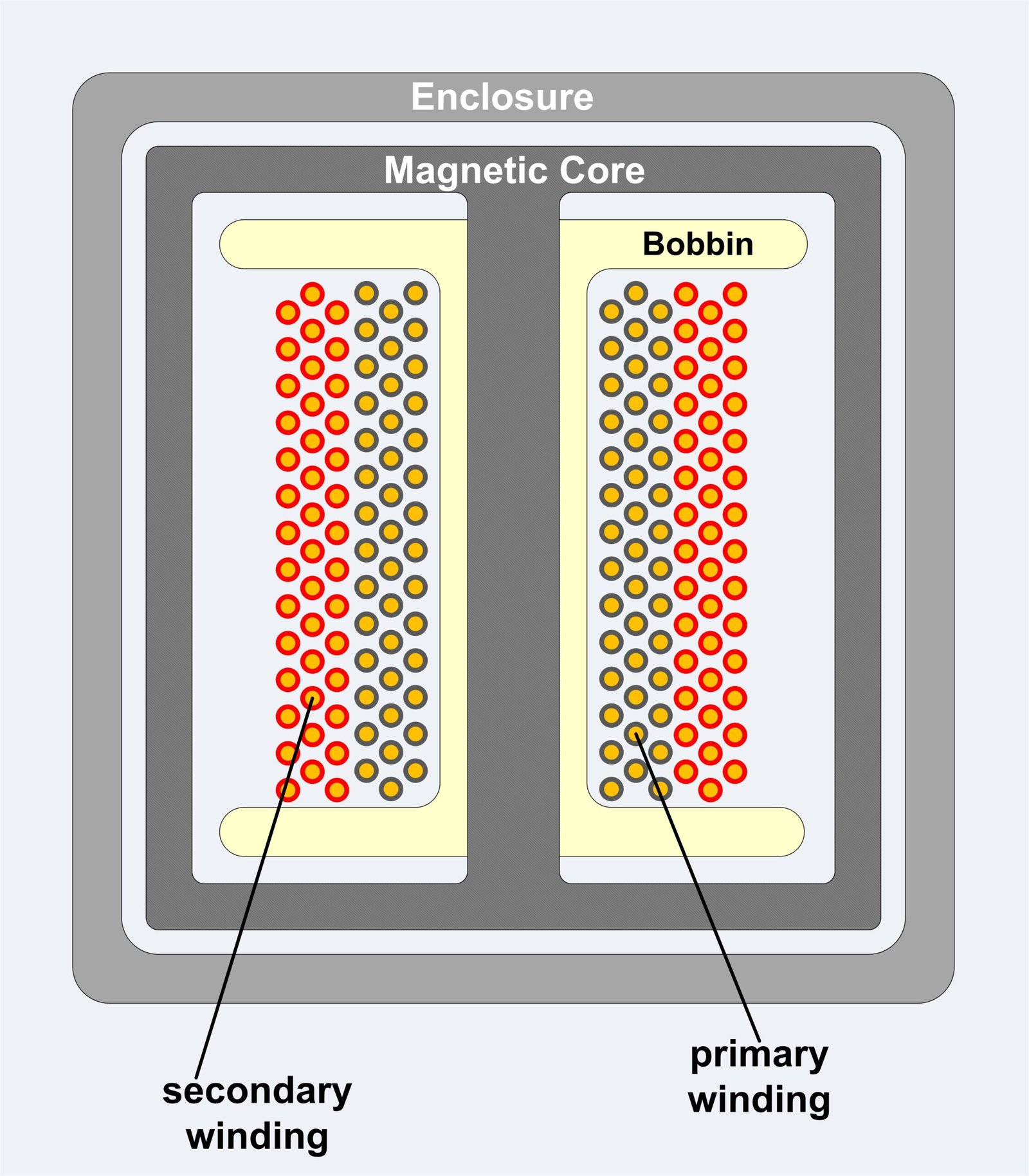
Then there is the interference question that runs the other way. Laboratories are full of switching power supplies, pump drives, compressors and vacuum systems, and each of them puts harmonic current back onto the supply. A plain step down transformer passes a good deal of that straight through to the instruments downstream. An isolation transformer with separate primary and secondary windings does not, and it also breaks the direct connection between the instrument chassis and the mains reference, which is worth having when several sensitive instruments share a bench.
One thing I want to be straight about, because it comes up on every lab project. A transformer changes voltage. It does not change frequency. If your mains is 50Hz and the instrument was built for 110V at 60Hz, you get a clean 110V at 50 cycles. Chromatographs, detectors, incubators and anything with an internal switching supply will not care. A centrifuge motor will run roughly seventeen percent slower and a little warmer, which usually only changes cycle time, not results. Send us the model list and we will flag the exceptions before you buy.
Which Laboratory Equipment Usually Runs on 110V
When a lab sends me an equipment list, I split it into three groups: instruments that need a clean isolated supply, motor loads that need sizing for inrush, and items that already work on 220V. The clean supply group is the interesting one.
- Gas and liquid chromatographs, 300W to 2000W depending on the detector and the column oven, and they hold a very steady load for hours.
- Mass spectrometer benches and vacuum pumps, 500W to 2500W, where the roughing pump has a real motor inrush on start.
- Spectrophotometers, plate readers and analysers, 100W to 600W, sensitive to supply noise more than to voltage error.
- Centrifuges and microcentrifuges, 200W to 2000W, with start current at 2.5 to 3 times the running figure and a long spin cycle afterwards.
- Incubators, drying ovens and water baths, 300W to 2000W, mostly resistive heating held for long periods.
- Microscopes with camera systems and motorised stages, 50W to 300W, small but vulnerable to spikes.
- PCR machines and thermal cyclers, 300W to 1000W, with a rapidly switching heating load.
- Freezers at minus eighty and minus twenty, 400W to 1200W, compressor driven and running around the clock.
- UPS units and instrument racks built for 110V, where the load is whatever is plugged into them plus their own charging current.
- Ultrasonic baths, shakers and homogenisers, 100W to 800W, intermittent duty with motor or transducer surges.
What does not need us, and I say it on nearly every lab call: laptops, monitors with a 100-240V rating, most modern balances, and a growing share of bench instruments that already accept a universal input. Those are happy on your 220V socket. On a lab load sheet this matters more than in most buildings, because counting dual voltage items pushes you into a bigger box whose only real effect is to add another device to your calibration and maintenance list.
How to Size a Step Down Transformer for a Laboratory
The method I use for labs has one extra step compared with ordinary sizing. First, group the instruments by bench or by room, because that is how they are actually used. Second, add the simultaneous load in each group and apply 25 to 30 percent headroom. Third, and this is the lab specific part, decide which groups need an isolating arrangement and which can share a plain step down unit.
Sizing off one big central number for a whole building rarely ends well here. A lab with four benches, each drawing between one and two kilowatts, is four separate sizing conversations with four different noise environments. It is also a maintenance question, because taking the whole building down to replace one unit is not something a research group will accept during a running experiment.
A Worked Example: An Analytical Bench
Take one bench holding a liquid chromatograph at 900W, a detector at 150W, a desktop centrifuge at 500W and a plate reader at 200W. The realistic worst case is the chromatograph and detector running all day with the centrifuge spinning up occasionally: 900 + 150 + 200 = 1250W, plus the centrifuge at 500W when it runs, giving 1750W. Add 25 percent for headroom and you reach roughly 2200VA. A 3000VA isolation style unit covers the bench, keeps the centrifuge start from disturbing the detector, and leaves room for one more instrument when the grant money arrives.
Compare that with a minus eighty freezer sitting alone in a service corridor on a dedicated circuit, drawing 800W with a compressor that starts several times a day. A 1500VA step down transformer is plenty, and there is no reason to pay for an isolating arrangement there, because nothing on that circuit is trying to measure anything.
| Laboratory area | Typical simultaneous load | Suggested unit rating | Why this size |
|---|---|---|---|
| Analytical bench with HPLC and detector | 1200 – 1800 W | STU-3000 bidirectional | Steady load plus a centrifuge start, clean output matters |
| Sample preparation bench | 600 – 1200 W | ST-2000 2000VA with RCD | Shakers, baths and a small centrifuge on one bench |
| Microscopy and imaging room | 200 – 700 W | DT-1000VA bidirectional | Small sensitive load, low noise requirement |
| Incubator and oven bank | 1000 – 2500 W | STU-3000 bidirectional | Heating loads held for many hours at a time |
| Centrifuge room | 800 – 2000 W | STU-3000 bidirectional | Motor inrush at 2.5 to 3 times running current |
| Minus eighty freezer bay | 400 – 1200 W | ST-1500 1500VA | Compressor duty, no measurement equipment sharing it |
| Electronics and calibration bench | 200 – 1000 W variable | Variac 1KVA to 3KVA | Adjustable output for verifying instrument tolerances |
Harmonics, Grounding and Noise in Practice
If a lab tells me there is a noise problem, these are the things I ask about in order. Is the instrument sharing a supply with a compressor or a pump drive? Are the signal cables run alongside power cables in the same trunking? Is the instrument ground tied to the building earth at one point or at three? In my experience more than half of the noise complaints we get end up being a layout problem rather than a transformer problem, and a properly installed isolating unit removes the rest.
Grounding arrangement is the part people get wrong most often. The enclosure must be bonded to the building earth, and the 110V output should be a proper fixed circuit feeding proper sockets. If your lab also has a clean earth bar for instrumentation, tell us, because it changes what we recommend. If you want the background on the difference between isolating and autotransformer arrangements before deciding, our piece on Isolation Transformer vs Autotransformer Explained sets out where each type makes sense, including the trade offs on size and price.
Where a Stabiliser Earns Its Place
Some labs ask whether a transformer alone is enough, and the honest answer depends on how bad the incoming supply is. If your mains wanders between 200V and 240V, a fixed ratio step down unit will hand that wander straight through, so your 110V output swings with it. Instruments with a switching supply cope comfortably. Instruments that calibrate against the supply, or that reference a supply-derived timing signal, do not.
In that case the usual arrangement is a step down transformer feeding the instrument, with an automatic voltage stabiliser ahead of it on the mains side. That combination keeps the output within a narrow band regardless of what the grid is doing, and it costs far less than replacing instruments that were damaged by a brownout. Tell us your measured mains range and we will say plainly whether you need the stabiliser or whether it is money you can keep.
The Units We Build for Laboratory Work
We are a factory rather than a trading company, so I can tell you exactly what leaves our line. The ST-2000 is a 2000VA step down transformer that takes 220V in and gives 110V out with RCD protection built into the enclosure. For a sample preparation bench or a small instrument cluster, that is the unit on most of our lab quotations.
Heavier benches pull us into the STU series. STU-3000 and STU-5000 are bidirectional, so they step up as well as down, and they carry the heavier laboratory loads: analytical benches, oven banks and centrifuge rooms. Bidirectional is not a gimmick here. A lab that imports 110V instruments this year will buy a 220V instrument next year, and re-wiring the wall box is a nuisance nobody has budgeted time for.
The DT-1000VA is our bidirectional automatic unit and it suits imaging rooms, small benches and instrument carts where a modest load needs to work in either direction without anyone thinking about it. The Variac models come in four ratings: 500VA, 1KVA, 2KVA and 3KVA. Adjustable output sounds ordinary until a technician needs to confirm how an instrument behaves at 105V or at 115V, or to bring a fresh instrument up slowly after transport. Once a lab owns one, it never goes back in the store cupboard.

MOQ, Delivery Window and Batch Records
The numbers are simple, and lab buyers usually ask for them first. Our minimum order is 10 pieces, whether you are equipping one bench or sampling before a full department roll-out. We build in 15 to 25 days, and the quantity ordered plus any custom labelling decides which end of that range you get. We ship FOB Ningbo or Shanghai and every unit carries a 12-month warranty. Each carton contains a test record from the batch your unit came from, showing input voltage, output voltage under load and no-load current, because we wind and 100 percent test everything in our own factory here in Yueqing.
Customisation is where lab orders get specific. We can set the output to 110V or 120V depending on what your nameplates say, fit the socket type your benches use, print your institution or distributor label on the faceplate, and pack units individually so they can go straight to each room. If your project is being installed in stages, give us the schedule and we will stage the shipments rather than send a pallet of twenty units for the stores team to log and shelve.
We wind with copper here, not aluminium, and that is not a slogan. Aluminium windings run hotter at the same rating, and heat is what shortens insulation life. On a lab bench where a unit is switched on in the morning and stays on until the last technician leaves, that difference shows up well before the ten year mark.
What We Need Before We Can Size a Bench
There is no requirement for a finished specification before we talk. Whatever you have is enough to begin. The instrument list with the wattage from each nameplate, a photo of one nameplate if that is quicker than typing, your mains voltage and frequency, whether any bench needs an isolating arrangement, the socket type your benches use, and the date the equipment has to be running. From that we size the unit, quote the quantity and give you a delivery window, normally the same working day.
If your site also runs clinical or point of care equipment alongside the research benches, it is worth skimming our Step Down Transformer for CPAP Machine and Medical Equipment guide, since small medical loads follow the same logic. There are more application guides on the site covering workshops, clinics and classrooms, and if you would rather look at the hardware first, the step up & down transformers category page lists the arrangements we build most often for labs.
If a rating looks odd, send the instrument list with a photo of your sockets and we will read it. Sizing a step down transformer for a laboratory is routine work for us, and we would much rather spend ten minutes on WhatsApp than have you explain to a department head why the detector has been offline for a week.
Laboratory Transformer Questions I Get Asked Most Weeks
These are the questions that come up on nearly every laboratory enquiry, answered plainly and without the brochure voice.
Should a laboratory use an isolation transformer or a plain step down transformer?
It depends on what sits downstream. If a bench holds a detector, a plate reader or anything that measures, an isolating arrangement is worth the extra cost because it blocks noise between instruments. For a freezer in a service corridor or a single pump, a plain step down unit such as our ST-2000 2000VA transformer is the sensible choice.
How much headroom should I allow for laboratory instruments?
Add 25 to 30 percent on top of the simultaneous load for each bench. Where a centrifuge, a vacuum pump or a compressor is involved, remember the start current is 2.5 to 3 times the running figure for a moment, so size to the motor rather than to the average. Steady analytical loads need less headroom than motor driven ones.
Will 50Hz mains affect a 110V instrument built for 60Hz?
The transformer changes voltage only, never frequency, so the instrument sees a clean 110V at 50Hz. Detectors, ovens, incubators and anything with a switching supply are unaffected. A centrifuge motor runs roughly seventeen percent slower, which normally only changes cycle time. Send us the model list and we will flag anything unusual.
Can a step down transformer help with electrical noise on an instrument?
Often yes, but it is not a cure for everything. An isolating arrangement stops noise passing between instruments on the same supply, which is the usual culprit on a shared analytical bench. If the noise comes from signal cables run beside power cables, no transformer will fix it and the wiring layout has to change instead.
Do I need a voltage stabiliser as well as a transformer?
Only if your incoming mains swings widely. A fixed ratio step down transformer passes that swing straight through to the 110V side. Instruments with a switching supply cope well, but ones that calibrate against the supply do not. Tell us the measured mains range at your site and we will say plainly whether a stabiliser is needed.
Your instrument list costs nothing to send and it is the fastest way to avoid a sizing mistake. Tell us which 110V machines you run on each bench, whether any bench needs an isolating arrangement, and which country you are in. From there we come back with a recommended unit, a quantity and a price, usually before that day is out.
Or talk to us directly: WhatsApp +86 197 3022 6757 · Email sales@wilmall.com
MOQ 10 pcs · Lead time 15-25 days · FOB Ningbo or Shanghai · 12-month warranty